Category: Crime

  • Newswire: Nancy Pelosi announces a formal Impeachment investigation into President Donald Trump

    By Addy Baird, BuzzFeedNews

    Nancy Pelosi, House Speaker

    WASHINGTON — After months of tamping down calls for impeachment, House Speaker Nancy Pelosi announced Tuesday that she’s on board, a move that could upend Donald Trump’s presidency just barely a year out from the 2020 election.
    “Today I’m announcing the House of Representatives is moving forward with an official impeachment inquiry,” the speaker told reporters after meeting with the Democratic caucus Tuesday afternoon. Pelosi said she will direct six House committees to investigate Trump “under that umbrella of impeachment inquiry,” adding, “The president must be held accountable. No one is above the law.”
    While the Judiciary Committee has already begun an impeachment investigation, Pelosi announced that the Intelligence, Foreign Affairs, Oversight, Ways and Means, and Financial Services committees will now formally join them in a broader inquiry.
    The committees’ investigation is just a first step toward impeachment — a majority of the full House would still need to vote on articles of impeachment in order to indict Trump. The Senate is then responsible for holding an impeachment trial, but Republicans are unlikely to pursue one.
    Pelosi’s announcement comes amid reports that Trump withheld aid from Ukraine and pressured its president to investigate former vice president Joe Biden’s family ahead of the 2020 election.
    Trump’s reaction to the announcement, predictably, was a series of tweets sent from Trump Tower as Pelosi spoke and in the minutes after. In one, he wrote that Democrats “purposely had to ruin and demean” his “important” day at the United Nations “with more breaking news Witch Hunt garbage.” He also noted that Democrats hadn’t yet seen a transcript of his call with the Ukrainian president.
    Democrats’ messaging on impeachment has been muddled in recent weeks. The Judiciary Committee has begun the formal process of setting up an impeachment investigation, and many of its members have argued since July that the House is already in an inquiry stage. While Pelosi had backed those efforts, she resisted calls for impeachment.
    More than 170 Democrats had come out in support of an impeachment inquiry as of Tuesday afternoon, including many members in more conservative districts. Their support for the measure appeared to finally sway Pelosi, who has argued for months that the House cannot pursue an inquiry without having all the facts and has publicly worried impeachment would be too divisive and could lose Democrats their majority.
    Congresswoman Terri Sewell of the Alabama 7th District was among those who announced her support for the Impeachment investigation following Speaker Pelosi’s lead.
    CNN reported Tuesday afternoon that Pelosi was encouraging her members to state their positions on an inquiry now, in order to make it clear to the public that there is a groundswell of support in the caucus. Pelosi also reportedly said she believes now that the American public understands the issue.
    Several Democratic presidential contenders have announced or renewed calls for Trump to be impeached as the Ukraine story has unfolded. And many of the speaker’s allies announced their support for an inquiry Tuesday ahead of Pelosi’s own announcement.
    “We cannot delay. We must not wait. Now is the time to act,” Rep. John Lewis of Georgia said on the House floor. “I have been patient as we tried every other path and used every other tool … I truly believe the time to begin impeachment proceedings against this president has come.”
    While the full story about Trump’s recent phone call with Ukrainian President Volodymyr Zelensky remains unclear, the Washington Post reported on Monday that Trump put a hold on $400 million in aid to the country in the days before the call. When the two leaders did speak, Trump reportedly pushed for information on Biden’s son, Hunter Biden, who had a seat on the board of a Ukrainian natural gas company. (Notably, Joe Biden is currently leading the Democratic primary field.)
    The House and Senate have been working to get information related to a whistleblower’s complaint, which is reportedly related to Trump’s interactions with Ukraine, but have been stymied by the Trump administration. Pelosi also announced that the House will hold a vote Wednesday to formally condemn Trump’s attempts to block Congress from obtaining the complaint. The Senate passed a (similarly nonbinding) resolution Tuesday afternoon requesting a copy of the whistleblower’s complaint as well.
    Trump tweeted Tuesday that he had ordered the “complete, fully declassified and unredacted transcript of my phone conversation with President Zelensky of Ukraine” to be released on Wednesday. “You will see it was a very friendly and totally appropriate call. No pressure and, unlike Joe Biden and his son, NO quid pro quo!,” he wrote.
    But Democrats were quick to say that releasing the transcript was not enough, and soon after Trump’s announcement, Intelligence Committee Chair Adam Schiff made an announcement of his own, saying on Twitter that the whistleblower who originally raised concerns about the call wanted to speak to the committee and has requested guidance from the acting director of National Intelligence about how to do so.
    “We‘re in touch with counsel and look forward to the whistleblower’s testimony as soon as this week,” Schiff wrote.
    Paul McLeod contributed to this story.

  • Greene County’s four operating bingo facilities contribute $359,960 to local entities for month of August

    Shown above: Brenda Burke representing the Greene County Commission; Forkland Mayor Charlie McAlpine, Dr. Marcia Pugh, CEO of the Greene County Health System, Bingo Clerk Emma Jackson, Union Councilman Alonzo Thompson; Ruth Thomas representing the City of Eutaw, Boligee City Councilwoman Ernestine Wade and Bingo Clerk Minnie Byrd.

    The Greene County Sheriff’s Department reported a total distribution of $357,960 for the month of August 2019 from four licensed bingo gaming operations in the county. The bingo distributions for August are contributed by Greenetrack, Inc., Frontier, River’s Edge and Palace. Green Bingo is still not in operation.
    The recipients of the monthly distributions from bingo gaming designated by Sheriff Benison in his Bingo Rules and Regulations include the Greene County Commission, the Greene County Sheriff’s Department, the cities of Eutaw, Forkland, Union, Boligee, the Greene County Board of Education and the Greene County Hospital (Health System).
    Greenetrack, Inc. gave a total of $67,500 to the following: Greene County Commission, $24,000; Greene County Sheriff’s Department, $9,000; City of Eutaw, $4,500; and the Towns of Forkland, Union and Boligee each, $3,000; Greene County Board of Education, $13,500, the Greene County Health System, $7,500.
    Frontier (Dream, Inc.) gave a total of $67,500 to the following: Greene County Commission, $24,000; Greene County Sheriff’s Department, $9,000; City of Eutaw, $4,500; and the Towns of Forkland, Union and Boligee each, $3,000; Greene County Board of Education, $13,500, Greene County Health System, $7,500.
    River’s Edge (Next Level Leaders and Tishabee Community Center Tutorial Program) gave a total of $71,600 to the following: Greene County Commission, $24,000; Greene County Sheriff’s Department, $9,000; City of Eutaw, $4,500; and the Towns of Forkland, Union and Boligee each, $3,000; Greene County Board of Education, $13,500, and the Greene County Health System, $11,600.
    Palace (TS Police Support League) gave a total of $151,360 to the following: Greene County Commission, $-0- (no distribution); Greene County Sheriff’s Department, $80,960; City of Eutaw, $24,640; and the Towns of Forkland, Union and Boligee each, $7,040; Greene County Board of Education, $7,040 and the Greene County Health System, $17,600.

  • Newswire: Affluent society blamed for speed up in removal of Kenyan forest

    Kenyan children planting trees

    Sep. 16, 2019 (GIN) – Since independence, natural resources in Kenya have been on a fast track to extinction. Today, nearly half of all its forests are gone, resulting in more droughts, floods and other dire consequences for communities, ecosystems, food security and infrastructure.

    From 10% of the country covered in forest in 1963, noted Kaluki Paul Mutuku, Youth4Nature Regional Coordinator – Africa Group -only 6% was covered in 2009.

    The nation’s forests have been victims of agricultural expansion, unregulated logging and urbanization.

    In 1977, deforestation moved from the back page to the front page with the launch of the Green Belt Movement by Kenyan environmentalist Wangari Maathai. Its mission was to plant trees across Kenya to fight erosion and to create firewood for fuel and jobs for women.

    Some 30 million trees were planted by some 900,000 Green Belt women who were paid a few shillings for their work. For her initiative, Ms. Maathai went on to become the first African woman to win a Nobel Peace Prize for “her contribution to sustainable development, democracy and peace.”

    Ms. Maathai passed away in 2011 but her campaign did not die with her. This year, urgent calls to save the forests were again in the news with a highly-critical open letter signed by U.N. staffer Gabriel Rugalema and economist Susan Mugwe.

    “Kenya must move fast to reverse deforestation,” was the heading of their piece published by Business Daily of Kenya.

    “Currently, we are losing 50,000 hectares of forest each year – primarily due to the emergence of an expanding affluent society that wants to dine on steak, drive cars, recline on comfortable seats, live in elegant houses and consume fresh fruits and vegetables. To meet this demand, commercial agriculture for products such as livestock, horticulture, timber and rubber are increasingly encroaching on forest lands,” they wrote.

    “If we do nothing to reverse it, Kenya shall be a complete desert in 113 years,” they warned.

    Meanwhile, an informal study by professor Julius Huho of Garissa University had dismaying news about the state of environmental studies in centers of academic learning.

    “Students didn’t seem interested in learning about climate change,” Huho recalled. “They attributed its relevance just to farming activities. Only 14.9% thought it should be included in all levels of education (primary to universities). In secondary schools, learners should have a deeper understanding of global warming and climate change and how it can be dealt with.”

  • Newswire: Congressional Black Caucus: Reflecting on 1619, Preparing for 2020

    By Barrington M. Salmon

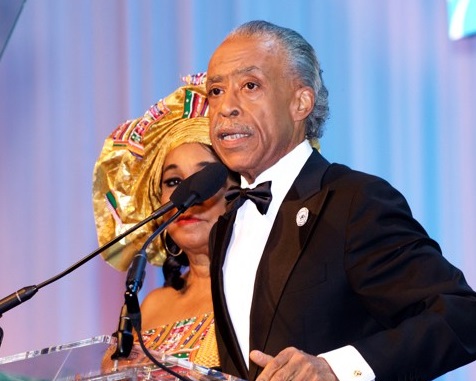
    Rev. Al Sharpton receives the Harold Washington Award during the CBC-ALC Phoenix Awards dinner. Beside him is the presenter, U. S. Rep. Frederica Wilson PHOTO: Don Baker Photogra

    (TriceEdneyWire.com) – Thousands of Black community activists, organizational leaders and political observers descended on the Walter E. Washington Convention Center last week to dive into the Congressional Black Caucus Annual Legislative Conference.
    The mood was a mélange of reflection and contemplation about the past and excitement and trepidation about the future. This year’s theme, “400 Years: Our Legacy, Our Possibilities”, suffused throughout the public policy forums, panel discussions and conversations in the convention hallways and corners as registrants, lawmakers, thought leaders and millennials delved into a range of issues and concerns.
    “I’m feeling the weight of pride and joy of our struggle on how to make what was professed real in the United States,” said Virginia State Sen. Jennifer McClellan, who won a special election in 2017 held to fill the vacancy left by now Democratic U.S. Rep. Donald McEachin. “The foundation of democracy and all systems we have today was built on the power structure of serving White men. I feel pride, frustration and sadness with how far we’ve come and how far we have yet to go.”
    Sen. McClelland was a panelist at the National Town Hall, an event attended by several hundred people, which is viewed as the official opening of the annual legislative conference. Moderated by Dr. Johnnetta Cole, chair and seventh president of the National Council of Negro Women, panelists had a vigorous debate that touched on slavery, resistance, reparations, the vital importance of voter mobilization and participation, predatory capitalism, and keys to success in the future.
    National Urban League President/CEO Marc H. Morial said African-Americans face an existential crisis generated by a man in the White House who continually adds fuel to a racially toxic environment, utters vile anti-Black racist rhetoric, denigrates African-Americans and people of color and is implementing policies that are antithetical to Black people.
    Morial said while Blacks are right to be alarmed, their concerns about the retrenchment of civil rights by the Trump administration and Republican lawmakers must be met with resistance and the use of the ballot box, among a variety of other tools, to effect change.
    “Today our progress is under vicious attack as this administration rolls back gains. It is most extreme and potentially dangerous,” he said. “It is an intentional, malicious and diabolic plan taking place in state legislatures. They have had great success implement voter ID restrictions and closing polling stations.”
    Morial pointed to the U.S. Supreme Court’s decision in 2013 to strike down a key provision of the
    landmark 1965 Voting Rights Act. “Shelby (v Holder) is our Plessy, our Dred Scott,” Morial said, referring to the landmark 1896 Supreme Court ruling that codified that racial segregation in public facilities was constitutional under the “separate but equal” doctrine. It also declared that African-Americans were not and could never be citizens of the United States. “They trick, deceive and thwart our efforts to participate. We have to be ‘woke!’ not tricked and bamboozled.”
    Derek Johnson, president of the National Association for the Advancement of Colored People, echoed Morial who said he’s tired of talk and that it’s time for action.
    “We have to move past rhetoric to action,” Johnson told the audience. “During Freedom Summer, Fannie Lou Hamer, Bob Moses and others focused on getting access to healthcare (for African-Americans), voting rights and education. They renewed the fight to how to leverage the vote. In a democracy, the vote is our currency.”
    Johnson reiterated that organizing and mobilizing the Black vote is imperative if Blacks hope to blunt the racist agenda embraced, advocated and codified by Donald Trump. And mobilizing low-frequency voters takes on added importance because the outcome for president will be determined by one or two percent, he added.
    Rev. Al Sharpton, once a presidential candidate himself, received the Harold Washington Award during the CBC-ALC Phoenix Awards dinner. He told the audience that America is now “at a crossroad” with the upcoming 2020 election. He called on voters to “stop this back biting and infighting and jealousy and win this battle once and for all!”
    Dr. Shantella Sherman told a Trice Edney Newswire reporter that while the planners and organizers did a fabulous job this year as they have in the past, her frustration is that she wants to see more.
    “I think for folks who’re uninitiated to the CBC Foundation and this event, they are excited. I’m always excited by new blood and new energy that comes every year, but as a reporter and attendee for the past 20 years, I’m less inspired. I want the rubber to hit the road,” said Sherman, a eugenics and race historian and founder and publisher of ACUMEN Magazine, a historical magazine that fuses history and journalism. “I don’t want to see you talking about the same thing year after year.”
    She added, “Everything at CBCF is amazing. But I need an action plan. I didn’t see anything about ‘this is what we’re going to do about this.’ There were far too many extremely intelligent, high-falutin folks with 15 degrees and a home on the hill but can you get your hands dirty to ensure that your kids can vote and that we can hold onto the gains we’ve made?”
    Sherman talked about the Gary Plan, which was conceived by original members of the Congressional Black Caucus. It was an action plan calling on the federal government to support a multi-billion program for Black business and economic support, education and housing because CBC members understood that this was a marathon.

  • Greenetrack wins major victory for gaming in Greene County by recent decision of the Alabama Tax Tribunal

    By: John Zippert, Co-Publisher

    On August 29, 2019, Jeff Patterson, Chief Judge for the Alabama Tax Tribunal rendered a decision voiding over $75 million in sales taxes and $746.292 in consumer use taxes claimed by the State of Alabama against Greenetrack, Inc.
    These taxes and interest were imposed by the State of Alabama after an audit for the period January 2004 to December 2008 and related solely to bingo operations at the taxpayer’s facility – Greenetrack.
    Luther ‘Nat’ Winn, CEO of Greenetrack, in an interview with this reporter, said, “We are pleased that the Tax Tribunal, headed by a judge, appointed by Governor Kay Ivey, took an objective view of this matter and gave us a fair hearing on the law and the merits of our case.”
    “This matter has been going on for over a decade and we are pleased to see it ended in our favor. Gov. Bob Riley conducted the original tax audit as part of his efforts to closedown Greenetrack and electronic bingo in Greene County,” added Winn
    The thirteen page analysis and decision of the Alabama Tax Tribunal reviews the history of Greenetrack’s exemption from sales tax on gaming, starting with dog racing
    and continuing to include simulcasting of dog and horse races as well as gaming through electronic bingo, which was the subject of the tax liability that was in dispute.
    The original legislation, Act 1975-376, allowing dog racing at Greenetrack imposed various license fees and taxes by the Greene County Racing Commission, also included Section 16, which stated “the license fees, commissions and excise taxes imposed herein shall be in lieu of all license, excise and occupational taxes to the State of Alabama.”

    Greenetrack relied on the exemption specified in Section 16 to cover all gaming activities including bingo, which has grown to be the largest part of its revenues.The Tax Tribunal also cites later tax legislation, passed by the Alabama Legislature in 1986, which imposed sales taxes on merchandise, food and beverages sold at dog racetracks within the state. This legislation imposed other occupational, income and ad valorem property taxes on dog tracks but specifically exempted sales tax on admissions and the wagering handle at these facilities.
    The Tax Tribunal in its decision voiding the sales taxes imposed on bingo gaming in Greene County said that it was not a legislative body and could not “displace the legislature by amending statutes to make them express what we think the legislature should have done.”
    At the end of his decision, Jeff Patterson, chief Judge of the Alabama Tax Tribunal, gives the State of Alabama thirty (30) days to appeal its decision to the Circuit Court. When asked if he expected the State of Alabama to appeal, Winn said, “I cannot speak for the State but I hope they will not appeal and have confidence in the decision of their Department of Revenue administrative judges.”
    Knowledgeable observers of the bingo battles between the State of Alabama, Greenetrack and other bingo operators feel this is a great victory that could have imposed retroactive sales taxes on gaming in Greene County that would have closed down this tourist industry, which is providing jobs and fee revenues to government agencies, municipalities, education, healthcare and other services in the county.

  • Newswire: NAREB urges Black Americans not to defer their dream of homeownership

    By:WASHINGTON INFORMER, BlackPressUSA

    — “Statistics show that there are 1.7 million Black millennials making $100,000 or more and could improve their financial futures with homeownership or participation in real estate investment opportunities.
    NAREB is determined to reach them with messages that rebut, yet improve, some of their current lifestyle choices,” says Donnell Williams, the newly installed president of NAREB. What’s more, he adds, homeownership is critical. “One clear message to millennials: Think about a house before you buy the car.”

    According to the National Association of Real Estate Brokers (NAREB) wealth building usually begins with that first investment in owning your own home. Whether you purchase a first-time “starter” home or inherit a property or residence, you start down the road to building wealth. But something has changed in the Black community. The U.S. Census Bureau’s latest statistics indicate that the Black homeownership rate has dropped once again.

    Now at 40.6%, the rate starkly signals a continual loss of wealth for Black Americans. By comparison, the non-Hispanic White homeownership rate for the same period was reported to be 73.1%, a nearly 30% difference. There’s a problem and NAREB is on point to stop the loss and return Black Americans to wealth building through homeownership of real estate investment.

    NAREB is aware that the Black community, particularly its local and national leaders, may need a clear, strong wake-up call to reverse this daunting downward trend.
    What are the causes? But more importantly, what are the solutions? What can the community of concern do to prompt home purchase and therefore, wealth building?
    These and other questions are slated to be addressed at NAREB’s annual “State of Black America” forum to be convened at the Congressional Black Caucus Foundation’s 2019 Annual Legislative Conference, Thursday, Sept. 12, 2019, 2:00p.m.- 4:00p.m.
    Expert panelists, steeped in the issues, the disparities and likely solutions to raising Black homeownership are committed to working with NAREB on its mission to restore confidence in the real estate market, identify critical systemic blockages, and outline the concerted advocacy strategies that lawmakers at every level of government need to keep in mind to improve Black homeownership outcomes.
    During the forum, Donnell Williams, the newly installed president of NAREB, will announce an aggressive program to reach out and encourage Black millennials to consider, or re-consider, homeownership as a wealth building tool.

  • Newswire: BCRI gets 17 new board members with Angela Davis fiasco behind

    By Erica Wright, Birmingham Times

    Birmingham Civil Rights Institute


    Following backlash from a decision to rescind an invitation to civil rights activist Angela Davis, the Birmingham Civil Rights Institute (BCRI) will get a dozen new board members.
    The Birmingham City Council on Tuesday confirmed the appointment of 17 members – 12 new — to the BCRI board. Two additional seats are pending Council approval on next week’s regular agenda.
    Earlier this year, several board members resigned following an outcry after the board rescinded the Fred Shuttlesworth Human Rights Award to international activist and Birmingham native Angela Davis.
    “We’re delighted to bring forth the slate of names of board members who have been chosen in a period of some disruption that found us in a very awkward position as an organization and in search of new leadership to help us pursue our mission to promote and preserve human and civil rights for all people,” said Andrea Taylor, president and CEO of the BCRI.
    The BCRI reappointed five members, who will be serving their second term, in addition to new members.
    The five reappointed were Rosilyn Houston, a senior executive with BBVA USA; Danny Markstein, president of Markstein, a full service marketing and communications agency; John Oros, president of the Greater Birmingham Convention and Visitors Bureau; Jonathan Porter, vice president at Alabama Power and Reverend Thomas Wilder, pastor of historic Bethel Baptist Church.
    The new appointed members are Cassandra Adams, Samford University Cumberland School of Law; William Burgess of Burgess Fine Arts; Dr. Tamera Beasley, Pediatrics at the University of Alabama at Birmingham; Nyesha Black, Regional Planning Commission; Robert Dickerson, a local businessman and executive director of the Birmingham Business Resource Center; Daryl Grant, an executive at KPMG Advisory Services; Angela McKenzie, Regions Bank; Richard Rice, The Rice Firm, LLC; John Saxon, John D. Saxon P.C.; David Thomas, District Manager at Starbucks; Reverend Gwendolyn Webb, with Foot Soldiers International and Hopewell Missionary Baptist Church and Yolanda Clayton, who formerly served as a chief of staff for Jefferson County Commission District 1.
    In March, the BCRI received more than 50 nominations.
    “We narrowed that down . . . to a group of about 20 and we had three days of interviews with those 20 individuals to determine their qualifications, interests, skills and their willingness to serve and from that number we selected 12 new prospective board members for the BCRI,” Taylor said.
    A few days after the BCRI rescinded the award, three board members resigned which were Mike Oatridge, Walter Body and Janice Kelsey. As a result of that, two other board members subsequently resigned. After those five resigned, it left eight members on the board.
    The eight remaining board members were eligible for a second term on the board and encouraged to reapply, however two chose not to, leaving six current board members to reapply.
    Taylor appeared at the city council meeting with 18 appointments – six returning and 12 new- however, one of the returning board members, Isaac Cooper, name was taken off the slate to further amend his term appointment and his name will be on the slate next week for the council to confirm along with one other board member.
    Their bylaws allow for up to 27 members, but for now, 21 is ideal.
    Councilor Steven Hoyt applauded the BCRI for its diligence in selecting new board members.
    “I’m glad that you and the board found it necessary to have such diversity, you have to have it in order to be conscious of where we are and the climate we’re . . . and the more we can promote [diversity)] , I think the better we can expect our society to be.”

  • Newswires: Brennen Center report finds 17 million voters purged nationwide between 2016 – 2018

    By Stacy M. Brown, BlackPressUSA

    Voting stickers

    A Brennan Center analysishas found that at least 17 million voters were purged nationwide between 2016 and 2018, similar to the numbers discovered between 2014 and 2016.
    Using data released by the Federal Election Assistance Commission, the Brennan Center found that counties with a history of voter discrimination have continued purging people from the rolls at high rates.
    “This phenomenon began after the Supreme Court’s 2013 ruling in Shelby County v. Holder, a decision that severely weakened the protections of the Voting Rights Act of 1965,” the report states.
    “Before the Shelby County decision, Section 5 of the Voting Rights Act required jurisdictions with a history of discrimination to submit proposed changes in voting procedures to the Department of Justice or a federal court for approval, a process known as ‘preclearance,’” the report’s authors wrote.
    The Brennan Center first identified this troubling voter purge trend in a major report released in July 2018.
    As the nation heads toward the all-important 2020 election cycle, many said they’re concerned with voter purging and the ever-present threat of voter disenfranchisement.
    “Automatic voter registration is a great way to be sure that every eligible American is registered to vote,” said Dr. Margaret Groarke, an associate professor of political science at Manhattan College in New York.
    “Whether this prevents voter suppression is complicated by the fact that there are many ways that people suppress the vote,” Groarke said.
    “Key strategies today are over-inclusive voter purges, strict voter ID laws, and making threats that people with unpaid fines or warrants shouldn’t come near the polls,” she said.
    “Automatic voter registration might counteract the effect of purges, but will do nothing to stop other strategies,” Groarke said.
    The Brennan Center report follows aCenter for American Progress analysis that examined how conservative lawmakers are suppressing the votes of people of color, young people, and those with disabilities.
    From discriminatory voter ID laws in places such as North Dakota, South Carolina, and Michigan to failures to provide early polling places in a majority-black neighborhood in Texas and the freezing of more than 50,000 voter registrations in Georgia, voter suppression is rampant in 2018, according to the CAP report.
    “Voter suppression is widespread again this year, and these efforts from conservative lawmakers largely target people of color, young people, and people with disabilities,” Connor Maxwell, a research associate for Race and Ethnicity Policy at the CAP, said in a news release.
    “Despite these efforts, there are many steps people can take to ensure their vote counts on election day,” Maxwell said.
    Voting is a fundamental right for all U.S. citizens, “so we encourage everyone to double-check their voter registration; determine ahead of time whether you need to bring certain materials to the polls; and take advantage of the many voter assistance hotlines if you run into problems,” said Danielle Root, a voting rights manager at the CAP.
    In its report, The Brennan Center noted why voter purges could prove problematic.
    “If a voter moves from Georgia to New York, they are no longer eligible to cast a ballot in the Peach State. As such, they should be removed from Georgia’s voter rolls,” Brennan authors said, as an example.
    The report continued:
    “Similarly, voters who have passed away should be removed from the rolls. Reasonable voter list maintenance ensures voter rolls remain up to date. Problems arise when states remove voters who are still eligible to vote.
    “States rely on faulty data that purport to show that a voter has moved to another state. Frequently, these data get people mixed up. In big states like California and Texas, multiple individuals can have the same name and date of birth, making it hard to be sure that the right voter is being purged when perfect data are unavailable.
    “Troublingly, minority voters are more likely to share names than white voters, potentially exposing them to a greater risk of being purged and voters often don’t realize they’ve been purged until they try to cast a ballot on Election Day – after it’s already too late.”
    The Brennan Center’s report authors said as the 2020 election cycle heats up, election administrators must be transparent about how they’re deciding what names to remove from the rolls.
    They must be diligent in their efforts to avoid erroneously purging voters, the report’s authors said.
    “And they should push for reforms like automatic voter registration and election day registration which keep voters’ registration records up to date,” the authors wrote.
    This post originally appeared in The Washington Informer.

  • Newswire : Gov. Kay Ivey says ‘Heavens no,’ she won’t resign over 1967 blackface skit

    By Mike Cason | mcason@al.com

    Gov. Kay Ivey made her first public appearance today since apologizing last week for wearing blackface during a racist skit when she was a student at Auburn University in 1967, an incident the governor says she does not remember.

    The governor spoke to reporters this morning after a ceremony about the state’s bicentennial at the Archives and History building in Montgomery.
    Associated Press reporter Kim Chandler prefaced the first question by saying that Ivey had told her last spring that she had never worn blackface. Today, Chandler asked Ivey today what she remembered and her reaction to the revelation about the skit.
    “I was shocked to hear the tape,” Ivey said. “I didn’t remember being at the Baptist Student Union for any kind of skit like that for sure. But I’ve apologized for it. I should not have done that. And I know it’s important to apologize to the people of Alabama. And since I took office in 2017, my goal has been to make Alabama as good as it can be and certainly better, or to leave the state better than when I found it.”
    On Thursday, Ivey’s office released a statement and a video apologizing for the skit at the Baptist Student Union, which came to light while Auburn University was converting archived records to digital format, including a 1967 interview on the Auburn student radio station during which Ivey and her then-fiance talked and laughed about the skit.
    The Alabama NAACP and two African American lawmakers – Reps. Juandalynn Givan and John Rogers of Birmingham – called on Ivey to resign because of the incident. Others said they were disappointed but accepted Ivey’s apology and said they hoped it could bring attention to improving race relations and issues important to African Americans.
    “Governor Ivey wants us to look at the record,” Bernard Simelton, President of the State of Alabama NAACP said, “Here it is. During Governor Ivey’s administration, she refused to Expand Medicaid, did not support Birmingham increase in minimum wage; Governor Ivey even signed a bill approving the Alabama Memorial Preservation Act of 2017. A law that upholds racism and the effects of racism. If you want to heal the land, or correct errors, or even make right the wrongs, you have the power to do that. You are the leader who can do away with the status quo, and you are in a key position to leave a legacy that heals the hearts of Southerners who got slavery and the confederacy wrong, heal Alabamians and lead Americans. We are better than honoring those who led us into darkness, calamity and shame. No, we don’t need to erase our history, but we do need to make right, what was done wrong.”
    The issues mentioned in the press release have divided black and white politicians in Alabama for several years.
    Democratic lawmakers have called for Medicaid expansion since it became available under President Obama’s Affordable Care Act. Ivey has not supported expansion, nor has the Republican-controlled Legislature.
    Ivey’s office issued a statement last week indicating she has no intention of resigning. Ivey was asked today about her response to the calls for resignation.
    “Heavens no, I’m not going to resign,” the governor said. “That was something that happened 52 years ago and I’m not that person. And my administration stands on being inclusive and helping people. We’ve got a lot of good things going on with our rebuild Alabama and broadband access being expanded and improving our education, etc. So, no, I’m full speed ahead.”
    Ivey said she had heard positive comments since her apology.“Not only from African-Americans, I’ve heard a lot from them as well, but also most of the comments I’ve had have been very encouraging and very supportive and very understanding,” Ivey said. “And I’m grateful for that support and that understanding. It was a mistake when I was a student in college and I do apologize. And I’m grateful for everybody’s support, including African Americans.”

  • Newswire : Leader in women’s issues to head U. N. AIDS program

    Winnie Karagwa Byanyima

    Aug. 26, 2019 (GIN) – The U.N’s office on AIDS has named a longtime activist on women’s issues to head the global health agency.

    Ugandan humanitarian Winnie Karagwa Byanyima’s career began as a member of parliament in the National Assembly of Uganda. She became the Director of Women and Development at the African Union Commission and worked on the Protocol on the Rights of Women in Africa.

    “I am honored to be joining UNAIDS as the Executive Director at such a critical time in the response to HIV,” said Ms Byanyima. “The end of AIDS as a public health threat by 2030 is a goal that is within the world’s reach, but I do not underestimate the scale of the challenge ahead. Working with all its partners, UNAIDS must continue to speak up for the people left behind and champion human rights as the only way to end the epidemic.”

    Ms Byanyima, who also headed the development group Oxfam International, is the first woman Executive Director to lead the agency since its launch in 1996..

    She succeeds Michel Sidibйwho was appointed Minister of Health and Social Affairs of Mali.

    Dr. Penninah Iutung, Africa Bureau Chief of the AIDS Health Foundation, said: “With young women and girls being disproportionately affected by HIV/AIDS, particularly in Africa, a strong UNAIDS leader can inspire them to pursue their dreams and stay healthy. We are excited and look forward to working with a new and transforming UNAIDS.”

    Ms. Byanyima is married to Kizza Besigye, a Ugandan opposition leader for many years.