Category: Crime

  • Newswire : Nigerian nun shames Catholic Church for silence on sex abuse

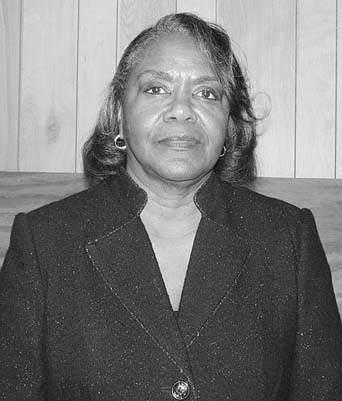
    Sister Veronica Openibo


     Feb. 25, 2019 (GIN) – A Nigerian nun faced a Vatican summit on sexual abuse in the Church and delivered a stinging indictment to stone-faced church leaders who failed to take action against abusers.
    
         It was the third day of the Vatican summit. Sister Veronica Openibo did not mince words.
    
         A member of the Society of the Holy Child Jesus, Sister Openibo said she had watched the American-made movie “Spotlight” about a U.S. newspaper, the Boston Globe, whose reporters discovered a decades-long cover-up of child abuse within the local Catholic Archdiocese.
    
         At the end of the film was a long list of cases and dioceses where the abuses had occurred, and reading about the number of children affected and seeing the vast amount of money spent on settlements, she said that tears of sorrow flowed.
    
         “How could the clerical Church have kept silent, covering these atrocities?” she asked.
    
         Sister Openibo, who serves on the executive board of the International Union of Superiors General, acknowledged that the church has at times failed to live up to its own moral code.
    
         “Yes, we proclaim the Ten Commandments and parade ourselves as being the custodians of moral standards and values and good behavior into society. But why did we keep silent for so long?”
    
         Openibo, one of only three women to address the event and the only speaker from Africa, went on to say the scandal had “seriously clouded the grace of the Christ mission”.
    
         “Is it possible for us to move from fear of scandal to truth? How do we remove the masks that hide our sinful neglect?” she asked.
    
         Openibo, who has worked in Africa, Europe and the US, said: “Too often we want to keep silent until the storm has passed. This storm will not pass by. Our credibility is at stake.”
    
         During the summit, bishops from the United States, Europe and Australia have urged caution when it comes to universal changes in church rules, saying that local cultures could require nuanced policies. But Sister Openibo said that church leaders should not make excuses when it comes to confronting abuse.
    
         “The fact that there are huge issues of poverty, illness, war and violence in some countries in the Global South does not mean that the area of sexual abuse should be downplayed or ignored,” she said. “The church has to be proactive in facing it.”
    
         The pontiff and the 190 bishops and cardinals in attendance watched videotaped testimony from survivors of abuse telling of their trauma and the cruel indifference shown by church leaders.
    
         One woman from Africa told the summit that a priest who had begun raping her at age 15 forced her to have three abortions, and beat her when she refused him sex. A survivor from Chile told the bishops and religious superiors they had inflicted even more pain on survivors by discrediting them and protecting priests who abused.
    
         A list of 21 “reflection points” written by the pope is expected to provide the basis for the development of new anti-abuse procedures for bishops. 
  • Newswire: Director Spike Lee wins first Oscar at 91st Annual Academy Awards

    Spike Lee embraces actor Samuel L. Jackson at Academy Awards

    By Lauren Victoria Burke, NNPA Newswire Contributor

    Director Spike Lee, who was famously passed over for Best Film and Best Director for his 1992 film “Malcolm X,” won his first Oscar at the 91st Annual Academy Awards.
    Wearing a purple suit and hat and seated in the front row at the Dolby Theatre on Hollywood Boulevard in Los Angeles, Lee was nominated for two Oscars: Best Adaptive Screenplay for “Blackkklansman,” and for Best Director of the same film.
    Though Lee did not win for Best Director for “Blackkklansman,” the evening featured a great deal of diversity as the Director of the film “Roma,” Alfonso Cuarón, was awarded for Best Director.
    Lee’s production company, 40 Acres and a Mule Filmworks, has produced over 35 films since 1983. Lee, 61, has created several memorable films including, “She’s Gotta Have It” (1986), “School Daze” (1988), “Do the Right Thing” (1989), “Mo’ Better Blues” (1990), “Jungle Fever” (1991) and “Malcolm X” (1992).
    When Best Actor nominee Denzel Washington, who starred in “Malcolm X,” lost to Al Pacino for his performance in “Scent of A Woman” it was considered one the biggest snubs in Oscars history. Overall, “Malcolm X” won no major awards.
    “It was so funny and so horrifying because it was based on the truth and truth is so precious these days,” said legendary singer and film director, Barbra Streisand, as she introduced Lee’s film “Blackkklansman,” at the Academy Awards.
    Though Lee was born in Atlanta, he was raised on New York and has made Brooklyn, NY his hometown.

  • Newswire: Will Reparations become Democrats’ campaign theme?

    By Stacy M. Brown, NNPA Newswire Correspondent
    @StacyBrownMedia

    Statue of Slavery

    A new refrain could be taking center stage during the 2020 Presidential Campaign. Senators Kamala Harris of California and Elizabeth Warren of Massachusetts, both 2020 presidential candidates, said they support reparations for African Americans to redress the legacy of the slavery.
    The senators’ statements came as many are observing the 500thanniversary of the transatlantic slave trade and the 400th year since the first African was brought to Virginia.“ I think that we have got to address that again. It’s back to the inequities,” Harris said during in an interview with The Breakfast Club radio show. “America has a history of slavery. We had Jim Crow. We had legal segregation in America for a very long time,” she said.
    Harris continued:
    “We have got to recognize, back to that earlier point, people aren’t starting out on the same base in terms of their ability to succeed and so we have got to recognize that and give people a lift up.”
    When she told the radio show’s host, Charlamagne Tha God, that “Livable Incomes for Families Today,” the Middle Class Act tax cut plan is one way to address the rising costs and the inequities of living in the U.S., the host asked if her comments were about reparations. “Yes,” Harris said.
    She also noted the “systemic racism” in the criminal justice system .“We have a problem with mass incarceration in particular of black and brown men,” Harris said. “There is no question that no mother or father in America should have to sit down when their son turns 12 and start having the talk with that child about how he may be stopped, arrested or killed because of the color of his skin,” she said, addressing police brutality.
    Warren also said she supported reparations for both African Americans and Native Americans. “America has an ugly history of racism,” Warren said after addressing Democrats at an annual state dinner in New Hampshire, according to The Boston Globe. “We need to confront it head-on. And we need to talk about the right way to address it and make change.”
    Warren later expanded on her ideas for Native American reparations in a statement, writing that, “tribal nations have unique interests, priorities and histories, and should not be treated monolithically.”
    “I fully support the federal government doing far more to live up to its existing trust and treaty responsibilities and that includes a robust discussion about historical injustices against Native people.”
    She continued: “Tribal nations have a government-to-government relationship with the federal government, and they deserve a seat at the table in all decisions that will affect the well-being of their people and their communities.”
    Another Democratic Presidential hopeful, Julian Castro, also has said he endorses reparations.
    A 2017 article in Quartz, noted that to “repair this breach, it’s becoming increasingly clear that reparations for black slavery and its legacy—including Jim Crow—must be part of the equation.”
    The article continued:
    “Facing what activist Randall Robinson calls ‘the debt’ to people of African descent, those of us who are low on melanin content (aka ‘white’) will have to address the often uncomfortable history of how lighter skin color conferred, and continues to confer, economic advantage. To do otherwise is to live a destructive lie, perpetuating a perverted myth of deservedness that holds back our entire society and each of us individually.”
    As Ta-Nehisi Coates wrote in his groundbreaking 2014 Atlantic article, reparations are “the price we must pay to see ourselves squarely.”
    “Reparations,” he continued, “beckons us to reject the intoxication of hubris and see America as it is—the work of fallible humans. An America that looks away is ignoring not just the sins of the past but the sins of the present and the certain sins of the futureCoates said.

  • Newswire : . U.S. State Department raises travel warning over Haiti unrest

    Demonstrations fill streets in Haiti

    Feb. 18, 2019 (GIN) – Demonstrators are filling the streets of downtown Port
    au Prince in Haiti as anger and frustration over government mismanagement
    and corruption boils over.

    Protestors are now demanding the resignation of Haitian President Jovenel
    Moise over the disappearance of nearly $2 billion for a program earmarked
    for the poor.

    The Venezuelan PetroCaribe Discount Oil program provided cheap petroleum
    products and generous credit terms to Central American and Caribbean
    nations, throwing them an economic life-line when oil was selling for $100
    per barrel.

    But instead of paying for hospitals, schools, roads, and other social
    projects, the money was mostly diverted into other projects, according to a
    January report from Haiti’s Superior Court of Auditors.

    As demonstrators chanted: “Kot kòb PetroCaribe a?” – “Where’s the
    PetroCaribe money?”, the President and Prime Minister Jean Henry Céant, in
    an address to the nation, promised to conduct a full investigation into the
    missing funds.

    The straw that broke the camel’s back, according to Kim Ives, writing for
    Haiti Liberte, was the apparent betrayal of President Moïse against the
    Venezuelans after their display of solidarity. On Jan. 10, 2019, in a vote
    at the Organization of American States (OAS), Haiti voted in favor of a
    Washington-sponsored motion to say that Nicolas Maduro was “illegitimate,”
    despite winning an election in May 2018 with over two-thirds of the vote.

    “Today’s revolution shows all signs of being as profound and unstoppable as
    that of 33 years ago against playboy dictator Jean-Claude “Baby Doc”
    Duvalier,” Ives wrote. Duvalier escaped from Haiti on Feb. 7, 1986 to exile
    in France on a U.S. Air Force cargo plane. It was the beginning of five
    years of popular tumult.

    The spreading unrest, now in its second week, is beginning to take a
    humanitarian toll as protesters clash with police, stone ambulances and
    erect roadblocks shutting off major highways and roads. Canada has advised
    citizens to avoid all travel to Haiti and the U.S. State Department raised
    the travel warning to a level 4, telling U.S. citizens: “Do not travel to
    Haiti due to crime and civil unrest.” The Department of State also ordered
    the departure of all non-emergency U.S. personnel and their family members.

    “We are living in misery and hunger,” Harold Lazard, 43, a chemistry
    professor, said in a media interview. The population wants the president to
    go, “so there can be change, there can be another system, one where we have
    hospitals that function, healthcare, education, security. With this system
    we have here the poor are dying of hunger with only dirt to eat.

    “It’s not the opposition who closed the country but the population,” he
    said. “It’s the population that has decided it no longer wants to live in
    hunger, in misery.”

    Ives added: “Ironically, it was Venezuelan solidarity which may have
    postponed for a decade the political hurricane now engulfing Haiti.”

  • Newswire :Citizenship question could hurt Census count of Black America

    By Khalil Abdullah

    Special to the Trice Edney News Wire from Ethnic Media Services

    (TriceEdneyWire.com) – The Constitution requires that America’s decennial census count all persons residing in the United States, not just citizens, a clearly stated objective now at risk.
    In a lawsuit brought by plaintiffs including states, cities and civil rights organizations, New York Southern District Judge Jesse Furman ruled on Jan. 15 in their favor against Commerce Secretary Wilbur Ross’ intention directing the Census Bureau to include a question asking census respondents whether they and everyone else in their households are U.S. citizens.
    At issue is not only whether the question’s inclusion is legal, given administrative timelines that were missed, but whether it would depress participation, particularly among ethnic populations, thus resulting in an inaccurate count.
    Jeri Green, Senior Advisor on the 2020 Census at the National Urban League, termed Ross’ action “a thinly veiled attempt to sabotage and affect congressional and Electoral College representation by deliberately undercounting vulnerable populations and erasing them from the census count.”
    Green noted that “out of roughly 11 to 12 million undocumented immigrants in America, about 620,00 are black, according to the most recent statistics by the Migration Policy Institute. But equally at risk, however, are the 4.2 million documented black immigrants who comprise a rising share of the black population in the United States.”
    Green participated as a panelist in a media conference call co-sponsored by the Leadership Conference Education Fund and Ethnic Media Services.
    Census data is used to determine congressional reapportionment as well as the basis to accurately and fairly distribute federal money to states, counties and cities for a variety of programmatic and infrastructure needs. From schools and hospitals to social services, there is virtually no civic arena that is left unaffected by census apportioned revenue – between $700 to $800 billion annually. Data collected in 2020 will inform all such determinations for 10 years, until the next census in 2030.
    However, today’s political environment is often inflamed by debates over immigration and related issues, such as a proposed expansion of a wall on America’s southern border or a recently published story in The Washington Post on non-citizen voting in North Carolina — votes sometimes cast due to ignorance of, or misunderstandings about citizenship status.
    Like the National Urban League’s concerns about the dilution and disempowerment of the black vote, and underfunding of programs and services, the National Association of Latino Elected Officials (NALEO) shares the same perspective relative to its Latino constituents.
    Angela Manso, Director of Policy and Legislative Affairs, NALEO Educational Fund, cited Census Bureau findings in Providence County, R.I., that “over 78 percent of the Latinos surveyed believe that a citizenship question would make people afraid to participate in the census.”
    Manso contends Secretary Ross’ insistence to include the question is “designed to erase our presence in this country and impact our growing political force.”
    A newly released Pew Research Center analysis of the 2020 electorate underscores demographic shifts that will produce a greater number of eligible ethnic minority voters, especially Latinos.
    John C. Yang, President and Executive Director, Asian Americans Advancing Justice, a panelist on the call, argued for the elimination of the question as well. He explained that its addition would likely produce a lower turnout among Asian Americans, this country’s fastest growing ethnic cohort. A significant percentage of that growth is due to recent immigrants. “One in four Asians in the United States,” Yang said, “are new Americans and have never participated in the Census, and a citizenship question endangers an accurate count.”
    Panelists urged Congress to “step in” to resolve the contention over the citizenship question by introducing legislation that would bar its usage. There are concerns that even with Judge Furman’s ruling in New York, a potentially favorable outcome for opponents of the question’s inclusion in a Maryland lawsuit and yet a third trial in California that is anticipated to produce a ruling similar to New York’s, the Supreme Court could decide to hear the case on the government’s expedited appeal.
    Though presumably adherence to precedents would prevail at the country’s highest court, a new law specifically excluding the citizen question could put the issue to rest and beyond the reach of Secretary Ross or others who may seek to exploit its use to accomplish a political agenda.
    A House bill, the Census IDEA Act, sponsored by Rep. Carolyn Maloney, D-N.Y., that would bar the question’s use, only a few days ago saw a companion bill introduced by Sen. Brian Schatz, D-HI.
    Yet, while the panelists argued that a fair and accurate census should be a bi-partisan issue — as an inaccurate count reduces revenue for Americans in need everywhere, not to mention violates the principle of equality under law — attempting to enact legislation brings its own risks.
    For one, not only would both the Senate and the House have to pass legislation, the President would have to sign it into law. Should he choose to veto it, it would take 67 senators to override.
    Terri Ann Lowenthal, a former staff director of the House subcommittee charged with overseeing the census, said the most likely route to pass legislation addressing the citizenship question would be to attach it to a “must-pass bill,” like an appropriations bill.
    Meanwhile, with court cases still pending and the final status of the question still unresolved, key deadlines are at risk. A critical public education awaits implementation and there may be a delay in printing the final census forms until after this summer’s target date. Green noted that Census Bureau enumerators, drawn from the communities they survey to conduct the door-to-door interviews when individuals fail to respond to mailed surveys, have yet to be hired and trained. But to hire the 500,00 people needed for the task, the Census Bureau expects to screen 2.5 million applicants.
    Green also pointed out that, given the 2020 census will be the first to utilize the Internet as medium of response, the consequences of the digital divide and lack of Internet access may negatively affect response rates from already hard to count communities, typically low-income and rural, and ones where the number of children present in a household are often unreported.
    Beth Lynk, Census Counts Campaign Director for The Leadership Conference Education Fund, speaking of the New York ruling, said that “each of the dozens of defects the judge found” would provide a sufficient basis to exclude the question. Especially relevant to traditionally hard to count populations, Lynk cited a quote from Judge Furman’s 277-page decision: “Hundreds of thousands, if not millions of people would go uncounted if the citizenship question is included.”

  • Newswire : Alabama Press Association censures Goodloe Sutton and Democrat-Reporter for editorial urging revival of the Klan to “clean-up” socialism in Washington D. C.

       The Alabama Press Association (APA) Board of Directors voted Tuesday to censure Goodloe Sutton and suspend the association membership of The Democrat-Reporter. Sutton wrote an editorial last week calling for the Klan to ride again to rid the nation’s capital of socialism. The APA members have a right under the bylaws to address the question of expulsion of the newspaper at their next membership meeting.
     Goodloe Sutton, the editor and publisher of the Democrat-Reporter in Linden, Ala., wrote the editorial titled “Klan needs to ride again” that ran in the paper last week.
            “Time for the Ku Klux Klan to night ride again,” read the Feb. 14 editorial. “Democrats in the Republican Party and Democrats are plotting to raise taxes in Alabama. They do not understand how to eliminate expenses when money is needed in other areas. This socialist-communist idealogy [sic] sounds good to the ignorant, and uneducated, and the simple minded-people.”
            “Seems like the Klan would be welcome to raid the gated communities up there,” concluded Sutton. “They call them compounds now. Truly, they are the ruling class.”
            Linden, the county seat of Marengo County, is a town of about 2,100 in the western part of the state, near the Mississippi border. The newspaper, a weekly that has won awards for investigative journalism, had a reported circulation of 3,000 in 2015.
            Melissa Brown, a reporter for the Montgomery Advertiser, spoke to Sutton Monday to confirm he had written the editorial and to clarify his comments.
            “If we could get the Klan to go up there and clean out D.C., we’d all been better off,” Sutton told the Advertiser. When asked what he meant by “clean out,” Sutton suggested lynching, saying, “We’ll get the hemp ropes out, loop them over a tall limb and hang all of them.”
            When the Advertiser asked whether it was appropriate to call for the lynchings of Americans, Sutton was not swayed. “It’s not calling for the lynchings of Americans,” said Sutton, whose family has owned the newspaper since 1917. “These are socialist-communists we’re talking about. Do you know what socialism and communism is?”
            When asked if he recognized the Ku Klux Klan as a violent and racist organization, the Advertiser reported that Sutton compared it to the NAACP. “A violent organization? Well, they didn’t kill but a few people,” Sutton said. “The Klan wasn’t violent until they needed to be.”
            `Democratic Sen. Doug Jones and Rep. Teri Sewell, whose district includes Linden, called for Sutton to step down on Monday evening.
            “OMG! What rock did this guy crawl out from under?” wrote Jones on Twitter. “This editorial is absolutely disgusting & he should resign — NOW! I have seen what happens when we stand by while people — especially those with influence — publish racist, hateful views. Words matter. Actions matter. Resign now!”
            “For the millions of people of color who have been terrorized by white supremacy, this kind of ‘editorializing’ about lynching is not a joke — it is a threat,” wrote Sewell, who is African-American. “These comments are deeply offensive and inappropriate, especially in 2019. Mr. Sutton should apologize and resign.”
            Republican Richard Shelby, Alabama’s senior U.S. senator, urged Sutton to apologize and resign in a Tuesday-morning statement to Yahoo News.
            “The rhetoric displayed by the Democrat-Reporter is disturbing, disgusting and entirely unacceptable,” said Shelby through a spokesperson. “I urge the newspaper to issue an apology and the publisher to resign from his duties. We cannot tolerate this sort of repulsive speech, particularly from our fourth estate.”
            The Democrat-Reporter did not immediately respond to a request for comment on the calls for a resignation. “This is not the first racist editorial coming from Goodloe Sutton and the Democrat Reporter. He railed against the Obama Administration on a weekly basis and he has written articles and editorials that were uncomplimentary toward local Black elected officials or many years,” said John Zippert, Editor and Co-Publisher of the Greene County Democrat 
            In December, the Senate passed its first-ever anti-lynching bill, making the act a federal crime. Estimates suggest that more than 4,000 Americans, most of them African-American, were lynched in the United States between 1882 and 1968.
  • Newswire: Angela Davis speaks In Birmingham on day she was supposed to receive award from Birmingham Civil Rights Institute

    Article and Photo by: Marika N. Johnson

    Angela Davis speaks with Imani Perry at Birmingham program

    A civil rights icon, Dr. Angela Davis spoke to a sold-out free event in Birmingham on Saturday, February 16, 2019,brought by a grassroots organization, The Birmingham Committee for Truth and Reconciliation. This event communicated her wisdom and words to a community of thousands of varied ethnicities and religious backgrounds.Her former Sunday school teacher anddriving force of the creation of the Birmingham Civil Rights Institute, Odessa Woolfolk, was in attendance, along with Mayor Randall Woodfin and a plethora of other dignitaries. Dr. Davis encouraged activism and brought a message of hope and the trajectory of change.

    She also shared her dismay and suprise about the rescinding of the Fred Shuttlesworth award from the Birmingham Civil Rights Institute. The Institute had originally announced that they were to honor the Birmingham, Alabama, native Angela Davis with its annual Fred L. Shuttlesworth Human Rights Award but then decided that her current beliefs were not congruent with theirs. Reports all indicate the decision was largely, though not exclusively, due to pressure from Jewish individuals and organizations over Davis’s outspokenness on Palestinian human rights and vocal support for boycott, divestment, and sanctions. (BDS) against Israel. Davis told Democracy Now!on January 11, adding that the BCRI’s decision appears to be an effort to sabotage black solidarity with Palestine. “This was not primarily an assault against me as an individual; it was an assault against a whole generation of activists who have come to recognize how important internationalism is,” Davis said.

    Dr. Davis ended her hour long talk in a discussion-like forum with Dr. Imani Perry, also from Birmingham and now professor of African-American studies at Princeton University, with encouragement to the youth of today and how it was the young people’s movement in Ferguson that RE-ignited the national and even INTERnational discussion on unfair policing policies. “…sometimes we HAVE to do some things differently!”

  • Newswire: Trump’s National Emergency Declaration called unconstitutional, ‘egregious abuse of power’

    By Hazel Trice Edney


    (TriceEdneyWire.com) – U. S. House Majority Whip James E. Clyburn (D-S.C.), the highest ranking African-American in the U. S. Congress, has assailed President Donald Trump’s immigration national emergency as an “egregious abuse of power” and calls on his fellow congressional members to challenge his actions.
    “The President’s declaration of a manufactured national emergency in order to erect an ineffective, wasteful, and medieval wall sets a dangerous precedent,” Clyburn said in a statement. “All of us who have taken an oath to the Constitution must challenge this egregious abuse of power and uphold the checks and balances that are the foundation of our republic.”
    Clyburn joins a chorus of voices expressing outrage about Trump’s action which could draw $5.7 billion of tax payer dollars for a wall that more than 58 percent of Americans say they do not want, according to a recent PRRI survey.
    “This declaration has more to do with the President’s bruised ego than actually doing what is best for America. The author of ‘The Art of The Deal’ couldn’t make a deal to build a wall. This is a fake solution to a fake crisis and we must stand firm in keeping the nation focused on the real issues impacting Americans,” says Congressional Black Caucus Chair Karen Bass (D-Calif.).
    The Washington Post has reported that a coalition of 16 states have filed a federal lawsuit to block Trump’s plan for a border wall. Like Clyburn, the complaint filed in the U. S. District Court for the Northern District of California, argues that Trump’s declaration of a national emergency was unconstitutional.
    The lawsuit is being brought by states with Democratic governors, except Maryland’s Larry Hogan, a Republican who has challenged Trump on several major issues.
    Trump is clear that he is declaring the national emergency because Congress refused to provide enough money for a border wall that he promised as a presidential candidate and also promised that Mexico would pay for it. But, then Mexico President Enrique Pena Nieto refused to pay for the wall, saying “Mexico doesn’t believe in walls.” Trump was then stuck with the unkept campaign promise and now appears desperate for a way to make good.
    The 16 states suing Trump are California, New York, Colorado, Connecticut, Delaware, Hawaii, Illinois, Maine, Maryland, Michigan, Minnesota, Nevada, New Jersey, New Mexico, Oregon and Virginia.
    In a Rose Garden announcement of his intent to declare the emergency, Trump claimed he is protection the nation from caravans of people that he says are bringing drugs and crime into the U. S. through the Southern border, a claim that experts have refuted as false.
    “So, we’re going to be signing today, and registering, national emergency. And it’s a great thing to do because we have an invasion of drugs, invasion of gangs, invasion of people, and it’s unacceptable,” Trump said in his Rose Garden announcement, calling the emergency a “National Security and Humanitarian Crisis”.
    As Trump continues to dig in his heals, predicting an eventual win in the U. S. Supreme Court, civil rights leaders are fighting their war in the court of public opinion.
    CBC Chairwoman Bass concludes, “There are families who can’t make ends meet because their wages are too low. Citizens are being denied equal access at the ballot box because of voter suppression. We have a criminal justice system that still treats Americans better if they are rich and guilty than if they are poor and innocent. Black boys and girls are dying prematurely from gun violence while Black women are losing their lives during childbirth. These are just some of the real crises confronting America. Mr. President, it’s time to finally demonstrate the leadership worthy of the office you hold.”

  • Stories from the early Greene County Movement, Part II

    Mary Dean Williams-Mack – Class of 1965


    As a senior at Carver High School in 1965, Mary Dean Williams was looking forward to graduation, but the chances of marching across that state seemed very slim.  The local Civil Rights Movement had gained momentum.  

    Mrs. Williams-Mack recounted the following: “Life as we knew it was quickly changing and you could feel it in the air. Yet reality hovered over us like a dark cloud. We were marching through the streets of Eutaw for freedom, but we would not march across our high school stage in our caps and gowns to receive our diplomas.”
    During the Greene County student movement, Dr. Martin Luther King, Jr. came to Eutaw. He visited with the students at First Baptist church and assured them he would give them a graduation ceremony they would never forget. And he did. On May 30, 1965, the Carver High seniors traveled to Selma for their graduation exercises held at Brown Chapel AME Church. Dr. King delivered the commencement address and presented each senior with his/her diploma. A reception followed at the Elks Club across from the Selma jail.

    Jacqueline Allen – Class of 1965

    Ms. Allen was a senior at Carver High School in 1965. From her account: “Students from Eutaw and surrounding schools came together to participate in demonstrations in what became the Civil Rights Movement in Greene County. We shocked the conscience of the people of Eutaw as we pushed to abolish segregation here at home. We were a part of a movement and we only wanted to have an opportunity for a better life.” As a senior, Mrs. Allen was also looking forward to graduation as one of the class salutatorians. She shared the following: “ …I was one who greatly anticipated giving my speech at the graduation ceremony. But no one anticipated what happened here. My dream of giving my graduation speech and participating in all the other events that normally take place prior to graduation came to a standstill.”

    Louvella Murray – Class of 1965


    In her reflections of that early Movement period, Ms. Murray states that she can so vividly recall how life was for them and events of the protest. 

    “ I can close my eyes and see us in Eutaw not able to sit in the Dairy Queen; sitting in the balcony of the movies, not allowed to sit in the main section; and I can see the unthinkable cruelty directed at us united in the struggle for freedom.” She recounts how her mother, Rosie Bee Edwards hummed spirituals as she prepared sandwiches and meals for the marchers.
    Many of the movement organizers stayed at her mother’s house in the projects, and when the manager found out that they were staying and working out of their house, her family had to move. Ms. Murray sadly stated that her mother was never recognized for accommodating the Civil Rights workers; her name does not appear on the plaque in from of First Baptist Church.
    Additional stories of youth in the local Civil Rights Movement will continue next week.
    

  • Senator Doug Jones introduces legislation to help Alabama residents

    Senator Doug Jones and Congresswoman
    Terri Sewell

    Senator Doug Jones has been a U. S. Senator, representing Alabama since his victory in the December 2017 Special Election. He has been working to introduce legislation, some with bi-partisan Republican sponsors to improve the life of Alabama residents.
    Senator Jones sends press releases each time he introduces and passes legislation to benefit the lives of ordinary people in Alabama and across the nation. Some of his recent press releases on legislation are described below.
    Jones will have to run for re-election for a full six-year term in November 2020. He is expected to have strong Republican opposition. He will be running on his record of positive and progressive legislation enacted by the Senate and Congress during his time in Washington D. C.
    Senators Doug Jones (D-Ala.) and Ted Cruz (R-Texas) announced that their bipartisan Civil Rights Cold Case Records Collection Act   was signed into law by the President on January 8, 2019. Their legislation requires the review, declassification, and release of government records related to unsolved criminal civil rights cases. Senators Jones and Cruz have led a months-long bipartisan effort to provide public access to unsolved civil rights crime documents through their legislation. Congressman Bobby L. Rush (D-Ill.) led the companion legislation in the House of Representatives. 
     “This moment has been years in the making. I want to thank my colleagues Senator Ted Cruz and Congressman Bobby Rush for their strong partnership throughout this effort, which started with a group of talented high school students who encountered a problem and wanted to find a solution.I am excited that their classroom idea and the solution we worked on together has now been signed into law by the President of the United States.
    I also appreciate the comments the President made in his signing statement in support of our legislation and his encouragement that Congress appropriate funds for its implementation. This law sends a powerful message to those impacted by these horrific crimes and to young folks in this country who want to make a difference. I know how deeply painful these Civil Rights-era crimes remain for communities so by shedding light on these investigations I hope we can provide an opportunity for healing and closure,” said Senator Jones.
    U.S. Senators Doug Jones (D-Ala.) and Lamar Alexander (R-Tenn.) on January 15, 2019 re-introduced their Automotive Jobs Act legislation, which would delay President Trump’s proposed 25-percent tariff on imported cars, trucks, and auto parts. In May 2018, the President directed the U.S. Commerce Department to initiate a Section 232 investigation to determine whether imported automobiles, trucks, and parts are a threat to U.S. national security and to subsequently levy tariffs. The Commerce Department is expected to finish its investigation and make its recommendation to the President in February. The Jones-Alexander legislation would require the International Trade Commission (ITC) to conduct a comprehensive study of the well-being, health, and vitality of the United States automotive industry before tariffs could be applied.
     “Automobile tariffs are nothing but new taxes on American consumers and only serve to threaten an industry that is vital to Alabama’s economy and supports 57,000 good jobs,” said Senator Jones, who heard concerns from representatives of all four Alabama automakers during a roundtable discussion in Mobile this fall.
    “As the son of a steelworker, I know well that there is a need to address the bad actors like China who’ve taken advantage of us on trade and I share the President’s goal of reviving our domestic manufacturing industry. However, that should be done in a way that doesn’t hurt other major job-creating industries and increase costs for American consumers. By having a deeper look at the state of the auto industry, an ITC study would shed light on the impacts that tariffs would have and would make it undeniably clear to the President that this industry is not a national security threat.”
     U.S. Senator Doug Jones on January 25, 2019 introduced legislation that would require federal workers who were impacted by the shutdown to receive their full back-pay plus any interest accrued. Last week, Congress passed the Government Employee Fair Treatment Act of 2019, which would require that all impacted federal employees receive compensation for wages lost during the government shutdown. While this is an important step, the shutdown has forced many federal workers to incur additional costs associated with loans, late bill payments, and the other effects of missing paychecks. 
      “If the federal government can charge you interest for being late on your taxes, then it should be paying interest on late paychecks,” said Senator Doug Jones, who has also requested his paycheck be withheld until federal workers receive their back pay. “The more than 5,500 federal workers in Alabama didn’t ask for a shutdown and shouldn’t be punished for it. It’s only fair that the government pays them back with interest for putting them out of work indefinitely or forcing them to work without pay.”