Category: Health

  • Newswire : State of the Dream 2026 finds Black America facing a recession across jobs, housing, and technology

    By Stacy M. Brown
NNPA Newswire Senior National Correspondent

    Black unemployment surged to 7.5 percent by December 2025, a level that would signal a recession if it were reflected across the national workforce. But the latest “State of the Dream 2026” report makes clear the damage extends far beyond jobs. From broadband access and housing to artificial intelligence and federal workforce policy, the Joint Center for Political and Economic Studies finds that 2025 marked a sharp economic breakdown for Black America driven by policy reversals and the removal of long-standing safeguards.

    Released this week, “State of the Dream 2026: From Regression to Signs of a Black Recession” draws on research from the Joint Center and partners including United for a Fair Economy, the Center for Economic Policy Research, the National Community Reinvestment Coalition, and the Onyx Impact Group. The report situates rising unemployment within a wider retreat from equity-focused policy across nearly every sector shaping economic opportunity.

    Employment remains the most visible signal. Black unemployment rose from 6.2 percent in January 2025 to 7.5 percent by December. Black youth experienced severe instability, with unemployment spiking from 18.6 percent in September to 29.8 percent in November before falling back to 18.3 percent in December. The report finds that if Black workers had maintained their 2024 prime-age employment rate, roughly 260,000 more Black adults would have been working in 2025, including about 200,000 prime-age Black women.
    The collapse of federal employment accelerated the trend. Roughly 271,000 federal jobs were eliminated in less than a year, hitting Black workers particularly hard because they have historically been overrepresented in government roles offering stable wages, benefits, and protections. Before the cuts, Black Americans made up nearly 19 percent of the federal workforce, compared with about 13 percent of the overall labor force.
    “Federal employment has historically functioned as an important sector for Black workers,” the report notes, warning that buyouts, hiring freezes, and the dismantling of diversity-focused recruitment pipelines removed one of the most reliable pathways to middle-income stability.
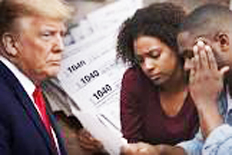
    Tax policy deepened the strain. The One Big Beautiful Bill Act of 2025 made permanent tax cuts for high-income households and corporations while reducing investment in poverty-alleviating programs. Business preferences such as Section 199A, bonus depreciation, and estate tax benefits overwhelmingly favored wealthy households, while refundable credits that matter most to Black workers were left unchanged.
    Black-owned businesses faced a parallel contraction. Executive orders issued early in 2025 redirected federal support away from disadvantaged firms, lowered small, disadvantaged business contracting goals, and moved to dismantle the Minority Business Development Agency. The Joint Center estimates these actions threaten $10 billion to $15 billion annually in lost federal support for Black-owned firms. At the same time, the U.S. Treasury Department’s Community Development Financial Institution Fund, a key source of capital for minority businesses, was defunded.
    Beyond jobs and business, the report documents setbacks in broadband policy that risk widening the digital divide. The cancellation of the Digital Equity Act, the removal of mobile hotspots and school bus Wi-Fi from E-Rate eligibility, and weaker broadband pricing transparency requirements undercut efforts to expand internet access and adoption in Black households.
    The information environment also shifted. While federal social media policy remained largely unchanged, platforms themselves pulled back on fact-checking and content moderation. The report notes that these platform-driven decisions reshaped the online information ecosystem, raising concerns about misinformation and its impact on communities that already face barriers to accurate and timely information.
    Artificial intelligence policy marked another turning point. A new executive order titled “Removing Barriers to American Leadership in Artificial Intelligence” moved federal policy away from precautionary regulation toward a deregulatory, innovation-first approach. The report warns that unchecked AI deployment risks embedding bias into hiring, lending, housing, and public services without accountability.
    Workforce policy changes further reinforced inequality. While apprenticeship programs expanded, initiatives designed to advance African American workforce participation stalled or were cut, setting the stage for reinforcing racial disparities rather than closing them.
    Housing remains one of the most entrenched fault lines. U.S. Census Bureau data show Black homeownership at 45 percent compared with 74 percent for white households, a nearly 30-point gap that has persisted for generations.
    “At a moment when hard-won rights and safeguards are being eroded, rigorous analysis is essential to building a fair economy,” Joint Center President Dedrick Asante-Muhammad said in the report.

  • DeAngelo Hall Qualifies for Sheriff of Greene County

    DeAngelo Hall has officially qualified to run for Sheriff of Greene County.

    “The journey continues,” Hall said. “I ask the citizens of Greene County to keep me in their prayers as we move forward with a safe, respectful, and clean campaign.”

    Hall also reflected on the personal significance of the moment, noting that he wished his grandmother, Velma Robinson, were present to witness the occasion. “I can still hear her saying, ‘Praise the Lord,’” he said.

    Hall currently serves as Constable and remains committed to public service, accountability, and community safety.

    — DeAngelo Hall

    Constable, Greene County

    Candidate for Sheriff


  • Eutaw City Council approves Human Trafficking Prevention Month Proclamation

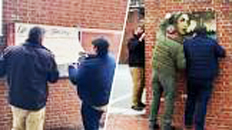
    Two representatives of the Tuscaloosa Area Human Trafficking Taskforce, Johnathan Lovejoy and Carey Branscome stand behind Mayor Corey Cockrell, as he signs proclamation

    The Eutaw City Council met on January 13, 2026, for its regular meeting. Mayor Corey Cockrell and all Council members were present.
    The Council approved a proclamation naming January as Human Trafficking Prevention Month and designating the City of Eutaw as a Trafficking Free Zone. Mayor Cockrell signed the proclamation during the meeting after the Council approved it. Human trafficking is a grave problem of exploitation of women and children for sexual purposes. Many of the victims are immigrants, homeless people or persons from other countries.
    Shuryon Macon, a municipal bond specialist with the firm of Knight & Day Group of Houston, Texas addressed the City Council. He said he was available to help finance large projects to generate jobs and services for the people of the city and other communities. He said he had met with the mayor and was interested in helping to finance projects . In response to a question from Councilwoman Valerie Watkins, he said his fees were paid out of the bond proceeds and would not be an upfront obligation of the city.
    The City Council also heard from Anita Lewis, Executive Director of the Greene County Housing Authority (GCHA) and Marilyn Armstead, grant writer for the Housing Authority on the need for funding to improve the sewage and water system serving Branch Heights and King Village, sub-divisions under the control of the GCHA . These water and sewer systems are tied into the City of Eutaw systems. Other Council members supported that sewage back-ups and water problems were occurring all over the city. Mayor Cockrell said the city was looking for grant funds from ADECA and other sources to deal with the city’s infrastructure problems – streets, water, sewer, park improvements and other needs.
    In other actions, the Eutaw City Council approved travel for Mayor Cockrell and Joe Powell to attend a water infrastructure training in Demopolis on February 18, 2026; approved the K-9 contract for purchase of a police K-9 dog; and approved payment of bills.
    In his Mayor’s report, Cockrell highlighted that he was holding community meetings in each council district to listen to residents and project some of the services and activities are planned. He also passed out a list of monthly special events, he was planning for 2027. He also indicated that a water department clerk had been employed and would start work soon. Cockrell also stated he was working with the County Commission to find solutions to the problems of the Greene County EMS ambulance services.


  • Greene County Commission holds meetings to consider repairs to the jail, ambulance service and golf course

    The Greene County Commission has met three times this month, a work session on January 7, a regular meeting on January 12 and a follow-up meeting on January 16 to deal with critical items tabled in the prior meeting. All members of the Commission were present for the three meetings.
    The Commission received a request from Sheriff Benison for repairs to the jail. At the January 16th meeting, the Commission approved spending an estimated $40,000 for repairs from left over COVID funds that are still on hand.
    The Commission considered the status of the Greene County ambulance services at each of the three meetings. The Commission advanced $87,000 to the ambulance service to pay bills, including payrolls, at a special meeting in December 2025. The Commission advanced these funds with the understanding that some portion of the funds would be returned based on contributions from municipalities, agencies and businesses service by the ambulance service
    The Commission also pressed the EMS Board to reorganize and have full representation from all supportive municipalities and agencies interested. The Commission also is examining the finances of the EMS to see what long term support is needed to supplement the fees received from Medicaid, Medicare, insurance companies and users of the service. A meeting of the Greene County EMS Board is scheduled for Wednesday, January 21, 2026 , at 5:00 PM in the William M. Branch Courthouse to make further decisions on the future of this vita service.
    After the discussion, a representative of Jamie Gray, State EMS Director, read a letter indicating that the state had selected ASAP Emergency Medical Service to “provide temporary operational oversight of EMS services in Greene County… This arrangement will remain in effect until such time that Greene County can submit formal confirmation and provide a guarantee to the State Office of EMS that continued oversight and operation of EMS can occur without interruption.” Commission Chair Garria Spencer said that the Commission will be working with the County EMS Board to provide these assurances to the state as it works to reorganize the Board and staff of the EMS.
    The Commission approved an agreement that the Department of Parks and Recreation do an assessment over the next six months of upgrading, beautifying and adding to the nine-hole public golf course owned by the County. The study will allow for a plan to improve the golf course area, over time and provide additional park and creational opportunities for residents of Greene County.
    In other business, the Greene County Commission approved:
    • A resolution for installation of doors and hardware, at a cost of $19,000 to the Eutaw Activity Center annex, utilized by the Greene Co. Children’s Policy Council.
    • Several requests from the Greene County Highway Department, including submission of the 2025 County Rebuild Alabama Annual Report; fund annual membership in the ACCA for $1,400; and support training for the staff at a Conference in Huntsville, AL on February 4-5, 2026.
    • Approved appointment of Tamieka King as District 2 representative to the Green Thumb Improvement District Board.
    The Commission also received a December financial report from CFO Altheria Wilder. The report showed that the Greene County Commission had a total of $ 9,330, 992 in bank of which $ 2,591, 261 are unrestricted and $6,739,731 were restricted for specific program purposes. The report indicated that the Commission had paid $2,011,740 in claims and bills, including payroll, for December2025. An additional $82,794 was paid in electronic claims mostly for payroll taxes and retirement fees.

  • Newswire : 10 Meaningful ways to observe Martin Luther King Day Of Service and make an impact

    Source: Universal History Archive / Getty

    As the holiday quickly approaches, tap in to some ways that you can make a difference, whether big or small, to honor a legend’s dream.

    By Davonta Herring, NewsOne

    Martin Luther King Day—more specifically, Martin Luther King Day of Service—is right around the corner. Every year, the holiday gives us a moment to pause, reflect, and tap back into the legacy of Dr. Martin Luther King Jr., one of the most influential civil rights leaders this country has ever known. Dr. King wasn’t just about powerful speeches and historic marches; he was about action, community, and showing up for one another in real, tangible ways.
    Dr. King’s birthday became a federal holiday in 1983, with the first official observance taking place in 1986. Years later, Congress designated it as a “Day of Service,” shifting the focus from a day off to a day on. The idea is simple but powerful: instead of just honoring Dr. King with words, we honor him through service. By giving back, helping others, and strengthening our communities, we live out the values he fought for.
    On MLK Day of Service, communities across the country come together to volunteer, organize, donate, and uplift. From food drives and marches to teach-ins and mentorship programs, the day is all about collective impact. It’s one of the few holidays rooted in the idea that change doesn’t just come from the top – it comes from everyday people doing what they can, where they are. 
    What makes this day especially meaningful is that anyone can participate. You don’t need a big platform, a lot of money, or a large group to make a difference. Whether you’re moving solo, with friends, or as part of an organization, there are countless ways to show up and serve with purpose. Even small actions can ripple outward and create real change. 
    If you’re looking for ways to get involved this year, here are 10 meaningful ways to observe MLK Day of Service and make an impact – all rooted in community, intention, and love for the people
    1. Volunteer At Local Shelters & Food Banks
    Spend the day serving meals, organizing donations, or helping families in need. It’s one of the most direct ways to support your community and meet people where they are. 
    2. Organize A Community Clean-Up
    Grab some gloves, trash bags, and a few friends to clean up a park, a block, or a neighborhood. A cleaner environment shows care, pride, and respect for where we live.
    3. Mentor A Youth Or Student
    Offer guidance, encouragement, or academic support to a young person. Your lived experience and advice could be exactly what they need to stay motivated and focused. 
    4. Donate To Civil Rights Or Social Justice Organizations
    Even with limited time, giving financially is still impactful. Supporting organizations that fight for equity helps sustain long-term change beyond one day.
    5. Host Educational Events Or Discussions
    Create space for conversation around Dr. King’s legacy, civil rights history, or current social issues. Knowledge-sharing keeps the movement alive and evolving. 
    6. Support Black-Owned Businesses
    Put your dollars where your values are. Shopping Black helps circulate money within the community and supports entrepreneurs building generational wealth. 
    7. Create Care Packages For Essential Workers
    Assemble bags with snacks, hygiene items, or thank you notes for healthcare workers, teachers, or first responders. A small gesture can go a long way.
    8. Advocate For Policy Change Or Attend Rallies
    Use your voice by calling representatives, signing petitions, or attending peaceful demonstrations. Civic engagement is a key way to honor Dr. King’s work.
    9. Use Social Media To Spread Awareness & Inspire Action 
    Share resources, volunteer opportunities, or educational content. Your post might motivate someone else to get involved or think differently. 
    10. Commit To A Year-Round Service Plan
    Martin Luther King Day is a starting point, not the finish line. Choose one cause you care about and find ways to serve consistently throughout the year.
    MLK Day of Service reminds us that change isn’t seasonal – it’s a lifestyle. However you choose to participate, the goal is to move with intention, compassion, and community at the center. That’s how we truly honor the dream!

  • Newswire : Newly released photos show Rosa Parks at the Selma-to-Montgomery March in 1965


     Parks speaks in front of the Alabama State Capitol on March 25, 1965.
    Matt Herron / Jeannine Herron and Stanford University Libraries via AP file

    By The Associated Press

    MONTGOMERY, Ala. — Seven decades after Rosa Parks was thrust indelibly into American history for refusing to give up her bus seat in Montgomery, Alabama, new photos of the Civil Rights Movement icon have been made public for the first time, and they illustrate aspects of her legacy that are often overlooked.
    The photos were taken by the late Civil Rights photographer Matt Herron, and they depict Parks at the march from Selma to Montgomery in 1965 — a five-day-long, 54-mile (87-kilometer) trek that is often credited with galvanizing political momentum for the U.S. Voting Rights Act of 1965.
    History lessons tend to define Parks by her act of civil disobedience a decade earlier, on Dec. 1, 1955, which launched the Montgomery Bus Boycott. On Friday, some boycott participants and many of the boycott organizers’ descendants gathered to mark 70 years since the 381-day struggle in Alabama’s capital caught national attention, overthrowing racial segregation on public transportation.
    The never-before-seen photos released to the Rosa Parks Museum in Montgomery in December 2025, taken a decade after the boycott, are a reminder that her activism began before and extended well beyond her most well-known act of defiance, said Donna Beisel, the museum’s director
    “This is showing who Ms. Parks was, both as a person and as an activist,” Beisel said.
    There are plenty of other photos placing Parks among the other Civil Rights icons who attended the march, including some that were taken by Herron. But others were never printed or put on display in any of the photographer’s numerous exhibits and books throughout his lifetime.
    Herron moved to Jackson, Mississippi, with his wife and two young kids in 1963 after Civil Rights activist Medgar Evers was assassinated. For the next two years, his photos captured some of the most notable people and events of that time. But in most of his photos, Herron’s lens was trained on masses of everyday people who empowered Civil Rights leaders to make change.
    Herron’s wife, Jeannine Herron, 88, said that the photos going public this week were discovered from a contact sheet housed in a library at Stanford University.
    The photos weren’t selected for print at the time because they were blurry or included people whose names weren’t as well known in Parks’ case, the new photos show her sitting among the crowd, looking away from the camera.
    Now, Jeannine Herron is joining forces with historians and surviving Civil Rights activists in Alabama to reunite the work with the communities that they depict.
    “It’s so important to get that information from history into local people’s understanding of what their families did,” Jeannine Herron said.

  • Newswire : Report: No Alabama county saw more than 3 votes cast by noncitizens

    Alabama voting booth

    Three in four Alabama counties were found to have no record of noncitizen voting activity.

    By Jacob Holmes, Alabama Political Reporters


    New data reported by Alabama Secretary of State Wes Allen shows that no Alabama county saw more than three votes potentially cast illegally by noncitizens.
    Allen announced last week that 186 individuals would be purged from voter rolls after identifying them as potential noncitizens through the United States Citizenship and Immigration Services (USCIS) Systematic Alien Verification for Entitlements (SAVE) program. Of those 186 individuals, Allen said voting records showed 25 of them had actually cast ballots.
    APR emailed Allen’s office seeking clarification on whether those individuals cast votes over multiple election cycles or a single cycle. A spokesperson for the office responded that because referrals have been made to law enforcement, “we can’t provide specific information about any case.”
    Allen released a breakdown Monday of how many potentially illegal ballots were cast in each Alabama county. The 25 “non-citizen registered voters with voting history” were spread across 18 Alabama counties. That means the purge only identified any cases of noncitizen voting in 25 percent of Alabama’s 67 counties.
    The 18 counties identified were Baldwin, Blount, Chilton, Clarke, Colbert, Franklin, Henry, Houston, Jefferson, Lee, Madison, Marion, Marshall, Mobile, Montgomery, Morgan, Pike and Tuscaloosa.
    Of those 18 counties, 13 of them saw just one potential noncitizen each with a recorded voting history. Colbert, Jefferson and Lee Counties had two potential noncitizen voters each while Baldwin and Montgomery had three apiece.
    It follows that in 13 Alabama counties; potential noncitizen votes could only affect the outcome of any particular race if it came down to one vote. Similarly, in the other counties, the noncitizen vote would only impact races separated by up to two or three votes. Those situations do arise at the smallest, most localized races, but are rare.

    Henry County, one of the smallest counties listed, saw 9,320 ballots cast in the 2024 general election. The potential noncitizen vote would account for just over 0.01 percent of the vote in that instance. Over in Madison County, in that same election, its potential one noncitizen vote would account for 0.0005 percent of the vote, rounded to the nearest ten-thousandth of a percent. 
    The closest race in 2024 came down to 40 votes in Monroe County, where there is no evidence that noncitizen voting could have occurred.
    A Republican primary for the Alabama State Senate seat representing Auburn did come down to a tie in 2022, in Lee County, where two potential noncitizens have a voting history. It is unclear, however, whether either of those individuals voted in that particular race or cycle.
    While individuals have been purged from the rolls and referred to law enforcement, the actual citizenship status of each individual has not yet been confirmed. While Allen’s release refers to the individuals purged as “illegally registered noncitizens,” the legal status of the voters has not been proven in court, and the program used to identify potential noncitizens is known to contain potential errors. Allen’s office afforded flagged individuals on the voter rolls the opportunity to respond and show proof of citizenship, and purged those who did not respond with that proof. 
    “Our elections must be decided by American citizens and only American citizens,” Allen said. “While liberal organizations and media outlets claim noncitizen voting is not a problem, my office has proven otherwise. Under my watch, illegal registration and illegal voting by noncitizens will not be tolerated in Alabama. My office will continue to identify these violations, refer them to law enforcement, and ensure the full force of the law is applied.”

  • State Rep. Curtis Travis seeking re-election

    It is election year in Alabama and State Rep. Curtis Travis (D – District 72) has announced he is seeking re-election. The first term Democrat’s district covers portions of Tuscaloosa, Bibb, Hale and Greene counties.
    As a political novice, Travis knocked off incumbent State Representative Ralph Anthony Howard in the May 2022 Democratic Party Primary with 52% of the vote. He was then unopposed in the fall General Election which led him to being sworn into office for the next term.
    The Tuscaloosa County Legislative Committee member was born and raised in Sawyerville in Hale County. He graduated from Akron High School then earned a Bachelor of Science Degree in Petroleum Engineering from the University of Alabama. Travis then obtained a master’s degree in environmental engineering.
    Travis’ career experience includes working as a builder, a manager, and an assistant pastor.
    Rep. Travis is a member of the Agriculture and Forestry Committee, Ethics and Campaign Finance Committee, Ports, Waterways and Intermodal Transit Committee, and Transportation, Utilities and Infrastructure Committee.
    Among the more prominent legislation he has sponsored or co-sponsored is a 2024 bill that allows simulcast racing for parimutuel wagering in Greene County, a 2024 bill that provided fair and reasonable terms for sale of agricultural equipment, Ad valorem taxes, a bill setting reappraisal of Class II and Class III property every three years, and legislation preserving Alabama’s state tax exemption on overtime pay.
    Rural expansion of broadband internet, rural healthcare and support for volunteer fire departments have been among his top priority issues.
    Party primaries are scheduled for Tuesday, May 19 with the General Election set for Tuesday, November 3

  • Tonjula Carey announces candidacy for District Court Judge


    My name is Tonjula Carey and I’m proud to announce my candidacy for District Court Judge in Greene County, Alabama.
    Greene County has always been a part of my story. Being surrounded by great people who believe in hard work and values is what makes this community so special. My roots are here and so is my heart. Greene County is more than just a place, it’s home.
    I’m running because I believe in a District Court that reflects the strength, resilience, and values of our community. A court that serves with integrity, transparency, and respect.
    After completing law school, I made the intentional decision to return back to Greene County. I wanted to pour back into the community that poured so much into me. My experiences here helped shape my character, values, and passion for justice. I knew I wanted to use my legal training to serve the people who helped mold me, to give back in a meaningful way, and to help strengthen the systems that impact our everyday lives. Coming back to Greene County wasn’t a career move, it was a calling. Having served in this community the past few years, I know that it is my purpose to be at the forefront of Justice and Change.
    As I begin this journey, I look forward to building a relationship with even more of the incredible people who make Greene County the strong and vibrant community it is today. In the months ahead, I’ll be sharing more about my vision and how we can work together to ensure our courts are accessible, transparent, and worthy of the trust placed in them.
    If you believe in building a court system that reflects our community’s values and serves with fairness and integrity, I invite you to join me — because justice matters, and so does your voice. Whether you can volunteer your time, help spread the word, or simply share your support, we welcome you. This campaign will be powered by people, and we can’t do it without you. Let’s do this, TOGETHER. I hope to earn your support, your prayers, and your vote in the Primary Election on May 19, 2026.

  • Greene Co. Racing Commission 2025 distribution totals nearly $2 million

    The Greene County Racing Commission (Linette Brown- Chairperson, Morris Hardy-Vice Chairman and Donald Means - Secretary) is proud to announce that its fourth -quarter distribution of $500,000 to local agencies, along with $10,000 to the Courthouse Fund brings its total 2025 distributions to the agencies and charities of Greene County, Alabama to nearly $2 million dollars.
    On August 8, 2025, the Racing Commission also disbursed its 2025 Charity Awards totaling $116,500 The Racing Commission holds two Charity Days each year one in March and one in July, the proceeds of which are distributed as charity disbursements. The Commission’s goal is to assist as many qualified 501 (c) (3) nonprofit organization possible that provide vital services to the community.
    These organizations support a wide range of needs including health initiatives, food drives, parenting and adoption guidance, housing assistance, youth development camps, fire and emergency services, education and social services. The Racing Commission encourages the public to support Charity Days at the Palace.
    Disbursement under Senate Bill #40, Act No. 223-206 (“Bill”) for the year total $1,700,000, with an additional $40,000 for the courthouse fund. Under the Bill, each recipient percentage is determine by legislation. The Statement of Distribution provides detail information on the amounts allocated to each recipient. These awards are made possible through proceeds generated from licensed gaming activities at the Palace Entertainment Center.
    The Racing Commission is proud to report that in 2025 it provided a total of $1,856,500 to the Charities, agencies, municipalities and citizens of Greene County.