Category: Politics

  • FOGCE Federal Credit Union holds Annual Meeting; Assets exceed $1.4 million; Savings at $923,381

    IMG_0508.JPGOn December 15, 2016, the Federation of Greene County Employees (FOGCE) Federal Credit Union held its 2016 Annual Meeting.
    Rodney Pham, Credit Committee Chair, on behalf of the Manager reported that the credit union had $1.416,308 in assets as of November 30, 2016. Of this amount $ 923,381 are shares deposited by members and $200,000 in non-member deposits from other credit unions and non-profit organizations. The balance of the assets are in reserve funds and undivided earnings.
    As of November, the credit union had $452,346.57 out in approximately 300 loans to members. The credit union makes loans against shares, personal loans, education, new and used car loans and other loans of benefit to members. Pham said, “The delinquency rate on loans was under 1%, which means our members understand that we are borrowing from each other and have a responsibility to pay back loans.”
    Carol Zippert, President of the credit union reported that the credit union began in 1975 with 25 members and less than $10,000 in assets and has grown to 848 members and $1.4 million in assets. “This is a great achievement for a Black owned financial institution in one of the smallest and poorest counties in Alabama, “ she said.

    The FOGCE – FCU is open to all people who live, work and worship in Greene County There is a ten dollar membership fee to join and a minimum share deposit of $25.00 then all other money you put in goes to your saving shares. FOGCE-FCU is regulated by the National Credit Union Administration (NCUA), which reviews the credit union annually and guarantees member’s savings to a maximum of $250,000 per account.
    Members of the credit union are the owners and have one vote towards electing the Board of Directors and Credit Committee of the FOGCE Federal Credit Union. The organization is a financial and economic development organization democratically controlled by its members. At the annual meeting, Willie Carpenter, Earnest Edmond and Carol P. Zippert were re-elected to the Board of Directors and Mary Dunn, Rodney Pham and Vonda Richardson were elected to the Credit Committee.
    The FOGCE-FCU has direct deposit of payroll for some Greene County employers and payroll deduction with most others. Members can save systematically and automatically through the payroll mechanism. Loan payments may also be made by payroll deduction.
    Darleen Robinson, Chair of the Supervisory Committee conducts annual reviews and internal audits of the credit union to insure that all funds are used properly and are accounted for correctly. “ We welcome members suggestions and questions so we can improve the work and performance of the credit union,” she said.
    John Zippert and Pamela Madzima of the staff of the Federation of Southern Cooperatives of which FOGCE-FCU is a member also attended the meeting and made supportive remarks.
    Carol Zippert said that FOGCE-FCU must increase its membership and attract more young adults and millennials to our membership. “We need to set a goal for 2017, to have $1 million dollars in membership savings. This will require new members and old members depositing at least $ 75,000 in new savings into the credit union. I believe we can do this if we work together,” said Zippert.

  • The day that Rev. Jesse Jackson took Fidel Castro to church

     By Don Terry (NNPA Newswire Guest Contributor)

     castrojackson_2695_dterry_web120-1280x640

     Rev. Jesse Jackson at memorial service for Fidel Castro in Havana

    HAVANA — On the evening of December 1, six days after Fidel Castro’s death at age 90, Rev. Jesse L. Jackson, Sr., stood in the pulpit of the packed First Presbyterian Church of Havana. Applause washed over him and moonlight danced on the warm waters of the nearby Caribbean.

    The international human and civil rights legend from Chicago was one of only two Americans invited by the Cuban Council of Churches to speak at an ecumenical memorial service that evening for the nation’s former president. The other American was Rev. Joan Brown Campbell, a longtime advocate for social justice and the first clergywoman to lead the National Council of Churches.

    Projected on the wall behind the pulpit as he spoke was a visual reminder of why Jackson is held in such high esteem by the country’s religious community: a black and white photograph, taken on June 28, 1984, of Jackson and Castro – the reverend and the revolutionary – at an event that continues to reverberate through Cuban society 32 years later, government officials and church leaders say.

    On that day, Jackson pulled off a near-miracle in a daring act of citizen diplomacy and liberation theology. He took Castro to church and in doing so helped open a door to the possibility of change and increased religious freedom across the island nation of 11 million souls.

    For the first time in 27 years Castro attended church. Although invited on many previous occasions over the years by Cuban and foreign church leaders, Castro always declined until Jackson persuaded Castro to accompany him to a Methodist church in Havana.

    “That visit was central to the new relationship between the state and the church,” Rev. Pablo Oden Marichal, an Episcopal priest and member of Cuban’s National Assembly, who was at the church that day in 1984, said during Jackson’s recent trip to Cuban. “From that circumstance a new relationship with the church and the government started. And Rev. Jesse Jackson was at the center of it.”

    While there remains much work to be done, that day was the beginning of a thaw in the icy — often repressive — relationship between the Cuban government and the country’s religious community. Cuba was officially an atheist state and “believers” like Rev. Marichal were barred from serving in the government. Slowly, that began to change after the two leaders walked into church together, joking and laughing when Jackson asked Castro, who was dressed in his green army fatigues, to take off his hat and remove his cigar before entering the sanctuary.

    “I want to remind you in these very brief remarks,” Castro told the crowded church that day, “of the very profound impression that the Rev. Jesse Jackson has made on all of us, because of his honesty, his talent, his sincerity, his honor, and the profound passion with which he fights for peace and friendship…And I consider him an extraordinary spokesman of the highest ideas of Christian thought.”

    It was Jackson’s first trip to Cuba; his first meeting with Castro. At the time, Jackson was running for President of the United States and arrived in Havana with a delegation of clergy and scholars, dozens of Secret Service agents and even more reporters and television news camera crews.

    Cuba was the third stop on Jackson’s four-nation fact-finding and peace-making tour of Central America. The drums of war were echoing through much of Latin America. Right-wing death squads were murdering peasants, priests and nuns. Cuba was in the crosshairs of the Reagan Administration, which accused the Castro government of exporting arms and rebellion from El Salvador to Southern Africa. Any talk of ending the crippling trade embargo against Cuba and normalizing relations was laughed at in Washington.

    At a news conference upon his arrival, Jackson said that he was “hopeful that our visit to the island will help break the cycle of misunderstanding and bring our people and our governments closer together so that we can begin to relate to each other as the neighbors that we are.”

    He had reason to be confident. A few months earlier, Jackson had pulled off his first near-miracle of the campaign season. No one believed he could do it, but he negotiated the release of an American Navy pilot, Lt. Robert Goodman, shot down over Syria and brought him home. Yet, Washington insiders told Jackson he was naïve and should not waste with his breath talking to Castro about setting captives free.

    The two men talked for eight hours. By the time they were finished, Castro had agreed to send home 22 Americans imprisoned in Cuba, mostly on drug charges. He also agreed to release and fly to Miami 26 Cubans, some of whom had been in prison for 20 years. The United States referred to the newly released Cubans as political prisoners. The Castro government called them terrorists and enemies of the state. Jackson simply called them free.

    Castro wanted something from Jackson during the trip. He asked Jackson to join him in speaking to 4,000 students at a local university. Jackson agreed. Then, as he told the congregation at the recent Havana memorial service, he asked Castro “point blank” why he did not go to church.

    Castro told Jackson that he grew up in the Catholic Church and loved it. He took to heart the teachings about defending the poor and weak. But when he came down out of the mountains after defeating dictator, Fulgencio Batista in 1959, he was shocked to find, Jackson said at the memorial service, “priests in the courtyards with guns, aiming at us, defending the graveyards of the rich.”

    Castro was bitterly disappointed and angry. He thought about burning the churches down. Instead, he turned his back and stayed away. “I reminded Fidel of minsters who preach and practice the theology of liberation,” Jackson said, “ministers and visionaries like Dr. Martin Luther King, Jr. I told him, ‘That’s the church of your dreams, so don’t give up on the church.’”

    The next day, Castro accompanied Jackson to the Methodist church where an ecumenical group, including various Cuban clergy and a delegation of African American ministers from the National Council of Churches and the Black Theology Project, was holding a service and meeting to study and commemorate the work of Dr. King and liberation theology.

    “Nobody knew Fidel was coming,” said Dr. Benjamin Chavis, a longtime civil rights activist and former head of the NAACP, who is now president of National Newspaper Publishers Association. “It was an exciting moment. Everybody stood up and clapped. The Cuban people were overjoyed. They were glad to see their leader coming to church.”

    Chavis was there that day. He appears in the photograph of Jackson and Castro taken at the church. Chavis is standing next to Castro on the right, preparing to introduce the Cuban leader. “We all knew we were not only witnessing history, we were participating in history,” Chavis said. “I’ve thought about that day a lot since then. It was inspirational.”

    Five months later, Castro and religious leaders sat down for the first of what became a regular series of meetings of the government and the Council of Churches. The first meeting was supposed to last about an hour. It went on for six, Marichal, the Episcopal priest, said. The church leaders outlined “the many cases of discrimination” against “believers in the country.” Believers could not serve in the government. They could not build new churches. “We came to Fidel,” Marichal said, “to ask him to stop it.”

    It took six years of constant talk and work, but eventually, in the early 1990s, believers were allowed to serve in the government. In 1992, Cuba officially became a secular state. Six years later the Pope visited Cuba for the first time. “Religious freedom in Cuba is tolerated far more than people think,” an American official at the U.S. Embassy in Havana told Jackson on his recent trip to the island. Building new churches, however, remains difficult.


  • Bias hinders diversity in hiring for environmental organizations

    By Anthony Advincula

    Special to the Trice Edney News Wire from New America Media

    panel-on-diversity

     Panel of experts comments on report on diversity in environmental groups

    Diversity at the leadership level in the environmental sector remains low despite a high proportion of well-educated and qualified people of color in the United States, according to a report released last Thursday. The problem: systemic bias in the hiring process, but also environmental organizations’ unwillingness to mandate diversity when using a search firm.

    Diversity Derailed: Limited Demand, Effort and Results in Environmental C-Suite Searches, produced by Green 2.0, found that nearly 90 percent of search consultants – which are frequently used by mainstream environmental NGOs and foundations – have encountered bias on the part of the organizations using them during their search for senior-level positions.

    Search firms often hold the key to diverse hiring in executive positions – the question now is how organizations can use search firms effectively. According to Green 2.0’s report, most search firms allow their client organizations to take the lead in terms of whether or not they’re interested in mandating a diverse slate of applicants. If a client does not mention that diversity is a priority, less than half of search firms report mandating a diverse slate.

    Notably, only 28 percent of environmental NGOs and 44 percent of environmental foundations mandate that there must be some sort of diversity represented on their short lists for candidates. The result? People of color account for just 12 to 16 percent of the staff at mainstream environmental organizations. And there’s even less diversity in upper management, according to Green 2.0 executive director Whitney Tome.

    The methodology used in the study includes surveys and in-depth interviews of 85 executive managers, hiring directors, and search consultants in the environmental field.

    University of Connecticut associate professor of sociology Maya Beasley, who authored the study, says that while there has been an increasingly diverse constituency in the United States, there has been a limited effort to address why environmental organizations are still racially homogeneous.

    “This [study] is one of the few to examine the specific organizational practices that show workplace inequality, not only in the environmental sector but in any sector or industry,” she says. “And it is the first study that solely focuses on the efficacy of search firms on the practices that they employ to increase diversity.”

    Although nearly three-quarters of NGOs and foundations could identify benefits associated with diversity in an organization, most admitted to having trouble diversifying, particularly at senior levels. Their reasons include that their organizations “do not have a culture of inclusivity,” that there is always a “bad cultural fit for applicants of color unrelated to their qualifications,” or that the people of color that they do recruit are “not well known so members of the search committee may be reluctant to support their candidacy.”

    But even beyond culture, nearly half of NGOs and one-fourth of foundations “agreed that there are not enough qualified [people of color] applicants.”

    On this, many environmental advocates and academics do not agree. “I can attest to the growing qualifications of people of color. We have a large pool of highly educated candidates,” says Michelle DePass, dean of the New School’s Milano School of International Affairs and director of Tishman Environment and Design Center. “The environmental leadership has still been white; that should not be so in the 21st century.”

    According to Beasley, it may be a long journey to fully achieve diversity at the leadership level in every sector, but it should start with major players in each organization. “What I’d like to emphasize is that the solution is not to take the bias out of people – that doesn’t work,” said Beasley. “Instead, what we want to work on is minimizing the impact of bias in searches, and it will work with organizations thereafter.”

    The study came up with several recommendations to increase diversity in leadership hiring:

    • Mandate diverse slates of candidates.
    • Minimize bias in the hiring process by using a diverse search committee and diverse interviewers, and by structuring the interview process as much as possible.
    • Assess diversity on an ongoing basis throughout the process and share the information with others.

    “The nonprofit sector is the third largest workforce in the world, after retail and manufacturing,” said Patricia Hampton, vice president and managing partner of Washington, D.C.-based Nonprofit HR. “But, unfortunately, we [people of color in NGOs and foundations] often have the quietest voice.”


  • Voter suppression laws helped Trump take the White House


    By Barrington M. Salmon (NNPA Newswire Contributor)

    Shortly after the United Sates Supreme Court gutted the Voting Rights Act in 2013, Republican state lawmakers began a calculated assault on the ballot box at the expense of Black and poor people across the nation; a coalition of civil and voting rights organizations fought back, primarily in the courts, against a wave of laws that restricted early voting, required photo IDs, limited pre-registration for 16- and 17 year-olds and closed polling centers.

    Now critics of those laws say that those measures may have tipped the November 8 presidential election in Donald Trump’s favor.

    Ari Berman, a political reporter and investigative journalist with “The Nation,” calls the GOP’s attack on voting rights the most under-reported story of 2016 and his reporting during the election campaign encapsulates the fallout from Republican lawmakers’ relentless and sustained voter suppression tactics on the election.

    “There were 25 debates during the presidential primaries and general election and not a single question about the attack on voting rights, even though this was the first presidential election in 50 years without the full protections of the Voting Rights Act,” he noted in a post-election story.             “Fourteen states had new voting restrictions in place for the first time in 2016 – including crucial swing states like Wisconsin and Virginia – yet we heard nary a peep about it on Election Day except from outlets like ‘The Nation.’ This was the biggest under-covered scandal of the 2016 campaign.”

    Berman continued: “We’ll likely never know how many people were kept from the polls by restrictions like voter-ID laws, cuts to early voting, and barriers to voter registration. But at the very least this should have been a question that many more people were looking into. For example, 27,000 votes currently separate Trump and Clinton in Wisconsin, where 300,000 registered voters, according to a federal court, lacked strict forms of voter ID. Voter turnout in Wisconsin was at its lowest levels in 20 years and decreased 13 percent in Milwaukee, where 70 percent of the state’s African-American population lives, according to Daniel Nichanian of the University of Chicago.”

    Rev. Dr. William Barber II has called his home state of North Carolina “ground zero for voter suppression.” “The court ruled on the most sweeping, retrogressive voter suppression bill that we have seen since the 19th century and since Jim Crow, and the worst in the nation since the Shelby decision,” said Barber, the president of the North Carolina state branch of the NAACP and also one of the lead plaintiffs in lawsuit against the state of North Carolina in a case that led to a federal court striking down the law. “The ruling in North Carolina was intentional discrimination of the highest order. They were retrogressing racially through redistricting. Over the past two election cycles, North Carolina has had an unconstitutionally constituted General Assembly. We should be appalled that anyone could rule that long.

    The macro question is that after Shelby, we’re in a different place in that there was no protection for civil rights. Shelby took us back across the Edmund Pettis Bridge. If preclearance was in place, they wouldn’t have passed these laws. They spent between $5 million – $6 million fighting us. To have the loss of the Voting Rights Act is an affront to the country.”

    Berman said North Carolina is a case study for how Republicans have institutionalized voter suppression at every level of government and made it the new normal within the GOP. He fears the same thing could soon happen in Washington when Trump assumes power.

    Going forward, Scott Simpson, the director of media and campaigns for the Leadership Conference on Civil and Human Rights, said that civil rights groups have a daunting, but not impossible task before them.

    “The important thing to note about this election is that it started in June 2013,” he said. “For all the laws, statewide and locally, the vast majority, the wheels were set in motion well before Election Day.”

    Simpson was referring to the raft of voter suppression laws passed by Republican lawmakers in a number of states in the aftermath of the 2013 Supreme Court decision to invalidate a key section of the landmark Voting Rights Act; Wisconsin, Georgia, Texas, Kansas and North Carolina were among those states that passed laws that made it harder to vote.

    “It’s so clear that the loss of the Voting Rights Act had an impact on the election,” Simpson explained. “People were scared off, turned away from polling places, saw long lines and left without voting and with all the changes, some were left confused. It was a travesty. In North Carolina, you had a razor-thin election and in Wisconsin you had a very close election, because of the voter ID law.”

    Simpson continued: “You shave a couple of percentage points in an election, say one or two percent, and there will be an impact.” Simpson said the recent election was framed in rhetoric and racial hostility “and we now have the Department of Justice with a man in charge (Jefferson Beauregard Sessions III of Alabama) who opposes the Voting Rights Act.”

    Berman said that we can already glimpse how a Trump administration will undermine voting rights, based on the people he nominated to top positions, those he has advising him, and his own statements.

    Berman wrote: “[Trump’s] pick for attorney general, Jeff Sessions, wrongly prosecuted Black civil rights activists for voter fraud in Alabama in the 1980s, called the Voting Rights Act ‘a piece of intrusive legislation,’ and praised the Supreme Court’s gutting of the Voting Rights Act in 2013 saying that “if you go to Alabama, Georgia or North Carolina, people aren’t being denied the vote because of the color of their skin.”

  • Eutaw City Council approves formal resolution accepting Branch Heights roads

    officer

    Chief Derick Coleman and new officer Patrick Shearry.


    At its regular meeting on December 13, 2016, the Eutaw City Council approved a resolution accepting the streets within Branch Heights for city maintenance.
    The resolution discusses the history of problems with repairs to the streets and roadways in the Branch Heights Subdivision, a predominantly Black housing area that was built with HUD funds through the Greene County Housing Authority. The subdivision is named for the first Black Probate Judge of Greene County. Some of the houses have been sold to individual families after the family had occupied them for at least 15 years.
    In 2004, Branch Heights was annexed into the City of Eutaw and the city has made some repairs to the streets on an “as needed” and “as funds were available” basis without formally accepting responsibility for the streets.
    This resolution officially accepts the streets in the William Mckinley Branch Heights subdivision for city ownership and maintenance and pledges to seek funds for the repair of the streets. The resolution lists the streets to be maintained as including the following:
    – William McKinley Branch Drive
    – Joseph Wilder Circle
    – John Chambers Court
    – Vassie Knott Court
    – Howard Irvin Drive
    – Office Lane
    – Levi Morrow Sr. Court
    – Harry Means Court
    – Frenchie Burton Road
    – Howard Brown Court
    – Joseph Court
    Many of these streets were named for pioneering Black members of the Greene County Commission and Greene County Housing Authority.
    In other business, the Eutaw City Council:
    • approved payment of November claims and bills;
    • heard a report that Mason and Gardner, CPA’s were updating the city computer system to handle the digital self-reporting water meters;
    • were introduced to new police officer, Patrick Shearry, of Scoba, Mississippi, who has completed officer training; and told by Chief Coleman that two other officers: Marlo Jackson and Tommie Johnson Jr. are planning to attend the police academy training in Tuscaloosa;
    • approved travel for Councilman Joe L. Powell to attend a committee meeting of the Alabama League of Municipalities
    • deferred the December 27, 2016 meeting due to the holidays; and set December 23 and 26 and January 2 as official holidays.
    Mayor Steele reported that the city employees were working to fix leaks in the water system to increase water pressure for the system. Work will soon be starting on the major $3.1 million approved USDA Rural Development water project. The Mayor also announced that work was about to begin on the resurfacing of Prairie Avenue.
    Council members reported problems with street lights on Springfield Avenue and the need to remove a dilapidated house on Tuscaloosa Street adjacent to the Eutaw Elderly Village.
    Councilwoman Sheila Smith asked about the policies on vicious dogs. She was told by the Mayor and Chief of Police that vicious animals, like Rottweilers, Pit Bulls and Doberman Pinchers had to be identified and secured by their owners to prevent attacking and biting people. “Stray dogs in Eutaw, have always been a problem and we have to pay animal control from Tuscaloosa to round them up and carry them away, “ said Chief Coleman. Smith said, “ I hope this policy on vicious dogs is being carried out because people have been bitten and intimidated by dogs in recent days.”

  • Deltas team with DHR providing Christmas gifts for children


    DST Christmas.jpg

    One of the community service goals of the Greene County Alumnae Chapter of Delta Sigma Theta Sorority, Inc. is supporting the Annual Adopt-A-Family Program of the Greene County Department of Human Relations.
    The Greene County DST Chapter adopted two families and provided the children with an assortment of gifts. The Deltas gave the children clothes and toys which included four bicycles, electronic games, books, board games and other delights.
    All the gifts were selected to fulfill the Christmas wishes of each child in the respective families. The various lists of the children were provided by the staff of DHR.

    Ms. Jacqueline Allen serves as chairperson of the DST Chapter’s Adopt-A-Family Committee. Ms. Andrea Perry is Chapter President. Mr. Wilson serves as director of the Greene County DHR office.

  • Black people are still in the dark when it comes to HIV

    By Angelo C. Louw (NNPA Newswire Guest Columnist)

    angelolouw_3089_web120Angelo C. Louw is the former editor-in-chief of South Africa’s largest youth magazine, UNCUT. He is currently a Fulbright/Hubert H. Humphrey Fellow based at the University of Maryland.
    With new infection rates and AIDS-related deaths on a decline globally, it seems we are finally gaining ground in the fight to end the epidemic. However, an alarming world trend in new HIV infections suggests that Black people have been left by the wayside.

    In an open letter to the Centers for Disease Control and Prevention, the L.A.-based AIDS Healthcare Foundation noted that while African-Americans made up a mere 12 percent of the total U.S. population, they accounted for close to half of new infections in the country. Yet, only one in every ten people on Pre-exposure prophylaxis (PrEP), a drug which has been proven to be effective in preventing the spread of HIV, were Black.

    “We call on you to re-balance your prevention efforts to align with what patients want and need so that we can achieve better success in preventing new infections,” the letter said.

    As an HIV-prevention campaigner, I know very well the struggle of addressing the “wants and needs” of people who are most likely to get HIV. Sometimes healthcare workers are guilty of making broad assumptions about their daily lives — I suppose, a consequence of the shoestring budgets at our disposal.

    “Black African men and women are advised to have an HIV test and a regular HIV and STI screen if having unprotected sex with new or casual partners,” suggests HIV in UK – Situation Report 2015 for targeted HIV-prevention messaging.

    This report found that even in the U.K., where White people make up the larger population of people living with HIV, Black people were more likely to contract HIV, because it was much more prevalent in that minority population.

    However, making sweeping assumptions about Black sexuality is counterproductive and it also feeds into the social stigma that is attached to the virus, a major driver of HIV, deterring people from seeking healthcare and family planning, because of what others might say.

    Growing up in what has been dubbed the world’s HIV capital, South Africa, I am all too familiar with false, racist rhetoric blaming high HIV prevalence in Back people on wayward sexual behaviors. The fact of the matter is, as Brazilian researcher Kia Caldwell points out, HIV is spread due to socio-economic circumstance and not bad sex habits.

    In a 2016 report on how HIV affects Afro-Brazilian females, Caldwell stressed the need for an intersectional approach to HIV research and health policy in her home country, which saw a decline in new HIV infections in all population groups, but Black females. She blames the Afro-Brazilian experience of HIV on widespread poverty and violence, and a lack of access to healthcare and employment, perpetuated by structural bias based on skin color.

    The South African Studies in Poverty and Inequality Institute noted this exact experience in its 2013 study of access to healthcare in South Africa. It found while healthcare services are available, poor Black people were less likely to visit local clinics as it often meant a day of unpaid leave, a precarious proposition for a casual employee.

    A researcher friend working in rural South Africa once told me that for a lot of men-who-sleep-with-men in these more remote communities, access to a safe setting for sex was hard to come by, let alone condoms or the time to find them. They struggle to have sex safely, even if they wanted to.

    The intricacies in the way HIV affects different groups of people can no longer be ignored, if we are to achieve UNAIDS 90-90-90 goals by 2020. The inclusion of local voices in HIV research, messaging and advocacy is essential — and I am not the only one who thinks so.

    UNAIDS states in its 2016 global HIV update: “Beneath this global figure lies multiple disparities—across regions, within countries, between men and women and young and old, and among specific populations being left behind. These disparities must be addressed in order to achieve the reductions required to end the AIDS epidemic as a public health threat by 2030.”

    If we are to stop the spread of HIV, we need to understand the real reasons why it’s still spreading in certain communities. To that end, including the voices of those most at risk is vital.


  • Congressman Cedric Richmond of Louisiana to lead the Congressional Black Caucus

    By Frederick Lowe

    Special to the Trice Edney News Wire from NorthStarNewsToday.com

    cedricrichmond

    U. S. Rep. Cedric Richmond (D-La.)

    (TriceEdneyWire.com) – Louisiana Congressman Cedric Richmond has been elected chairman of the Congressional Black Caucus for the 115th Congress, which begins Jan. 3, 2017.

    “I commend Representative Richmond on becoming the new chairman,” said G. K. Butterfield, the outgoing chairman. “We have much work ahead of us during the 115th Congress, and I am confident Representative Richmond will provide strong leadership on issues we champion to ensure all Americans have an equal and equitable opportunity to achieve the American Dream.”

    The 43-year-old Richmond represents Louisiana’s 2nd Congressional District, which includes most of New Orleans. He is a native of New Orleans.

    Richmond is a member of Committee on the Judiciary and Homeland Security. He has focused on reforming the criminal justice system.

    Richmond is a graduate of Morehouse College. He earned a law degree from Tulane University School of Law in New Orleans.  Richmond is also a graduate of the Harvard University Executive Education Program at the John F. Kennedy School of Government.

    Since the last election, the Congressional Black Caucus has grown and it now has 49 members. The CBC was founded in 1971.


  • Dylann Roof is found guilty in SC Federal Court

    By Frederick H. Low

    Special to the Trice Edney News Wire from TheNorthStarNewsToday.com

    dylannroof2

    Dylan Root

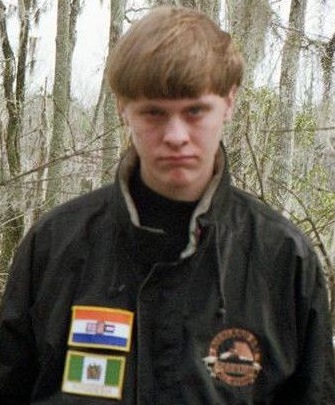
    (TriceEdneyWire.com) – A federal grand jury on Thursday convicted Dylann Roof of murdering nine Black churchgoers last year who were attending a Bible study at the historic Emanuel A.M. E. Church in downtown Charleston, S.C.

    The 12-member jury deliberated two hours before finding Roof, 22, guilty on all counts although he had admitted to the murders. He faces either life in prison or execution.

    Federal prosecutors charged Roof with the Hate Crimes Act Resulting in Death, the Hate Crimes Act Involving an Attempt to Kill, Obstruction of Exercise of Religion Resulting in Death, Obstruction of Exercise of Religion Involving an Attempt to Kill and Use of a Dangerous Weapon and Use of a Firearm to Commit Murder During and in Relation to a Crime of Violence, according to the 15-page indictment. Roof pled not guilty.

    In addition, he faces state murder charges bought by South Carolina, which is also seeking the death penalty. That trial is scheduled to begin in January.

    Roof sat for an hour with Emanuel parishioners on June 17, 2015, before firing his gun, a Glock .45-caliber pistol.

    Roof, 22, said he killed the churchgoers to incite a race war. The pistol was loaded with eight magazines of hollow-point bullets.

  • Emmett Till bill reauthorized


    Will it spur more of an effort to solve civil rights murders than the original legislation

    By Frederick Lowe

    Special to the Trice Edney News Wire from NorthStarNewsToday.com

    emmetttill-183x300

     Emmett Till

    (TriceEdneyWire.com) – President Barack Obama has signed legislation permanently reauthorizing a law that expands prosecution of civil rights-era murders after an earlier version of the law failed miserably to live up to expectations.

    The President, Dec. 16, signed the Emmett Till Unsolved Civil Rights Crimes Bill of 2007, which expands the authority of the Department of Justice and FBI to investigate and prosecute race-based murders.

    The legislation is named in honor of Emmett Till, a 14-year-old Chicago boy who was kidnapped and murdered on Aug. 28, 1955,  in Money, Miss., by Roy Bryant and J. W. Milam for allegedly whistling at Carolyn Bryant, a White woman.

    The teenager’s beaten and horribly mutilated body, tied to a heavy industrial fan, floated to the surface of the Tallahatchie River, where it was discovered by two boys swimming in the river.

    An all-White male jury found Milam and Bryant not guilty, but the two admitted killing Till in a Jan. 24, 1956 interview with Look magazine for which they were paid. Bryant operated a store and it went out business after blacks launched a boycott.

    The current Emmett Till legislation was scheduled to expire on Sept. 30, 2017, the end of the government’s fiscal year.  The legislation was passed in 2008, after being introduced by Congressman John Lewis, a veteran of the civil rights movement. Lewis’ bill limited investigations to violations that occurred before 1970.

    The original legislation failed to live up to its promise, according to a U. S. Senate review of the law. There has been only one successful prosecution as result of the bill. The Senate also noted other challenges such as the Fifth Amendment protection against double jeopardy and a pre-1994 five-year statute of limitations on federal criminal civil rights charges.

    “Ultimately, a DOJ report stated that it is unlikely that any of the remaining cases would be prosecuted,” the Senate reported. The Cold Case Justice Initiative of the DOJ last year closed 115 of the 126 cases on their list, often without pursuing potential witnesses or victims’ family members, the Senate said.

    Last year, civil right activists testified before the United Nations Human Rights Council in Geneva, Switzerland, that the DOJ and the FBI have not done enough to solve the murders of civil rights workers in the 1940s, 50s and 60s despite the Emmett Till legislation.

    The murders of black men, women and children have been extensive and almost no perpetrators have been brought to justice.

    The Equal Justice Initiatve, which is based in Montgomery, Ala., reported that nearly 4,000 black men, black women and black children were lynched between 1877 and 1950. Many lynching were extrajudicial but others were either organized or encouraged by law enforcement officials.

    Congress passed the expanded Emmett Till legislation on Dec. 13th. The legislation was introduced into the House of Representatives and the Senate. The Senate bill, S. 2854, and House bill, H. R. 5067, require the Department of Justice to reopen and review cases closed without an in-person investigation conducted by the DOJ or the FBI. The DOJ also must establish a task force to conduct a thorough investigation of Emmett Till Act Cases.

    “Perhaps most significantly to us is that the FBI will be required to travel to the communities to do their investigative work, not simply read over old files from a desk in Washington and make a couple phone calls,” said Janis McDonald, co-director of the Cold Case Justice Initiative, which is based at Syracuse University.

    The DOJ must indicate the number of cases referred by a civil rights organization, an institution of higher education or a state or local law enforcement agency.  The bill also requires the DOJ to report the number of cases that resulted in federal charges, the date charges were filed and whether DOJ declined to prosecute or participate in an investigation of a referred case and any activity on reopened cases.

    In addition, the law enforcement agencies must coordinate information sharing, hold accountable perpetrators or accomplices in unsolved civil rights murders and comply with Freedom Information Act requests.

    The legislation also allows DOJ to award grants to civil rights organizations, institutions of higher education and other eligible entities for expenses associated with investigating murders under the Emmett Till Act.

    One major issue facing this legislation is the extent to which it will be implemented in a U. S. Justice Department headed by Trump Attorney General nominee, Alabama Senator Jeff Sessions, who did not vote for this and other civil rights legislation during his Senatorial career.