Tag: Black History

  • Newswire: OP-ED: 250 Years of America – Progress on the Promise?

    Newswire: OP-ED: 250 Years of America – Progress on the Promise?

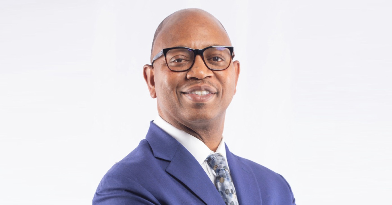
    By Delegate N. Scott Phillips, BlackPressUSA

    Let’s be clear, African Americans have done our part, we have fought in every war, built businesses, advanced science, created culture, and strengthened our democracy, often while being denied its full benefits. There has been undeniable progress, but significant challenges still remain.

    As Chairman of the Maryland Legislative Black Caucus, I believe this moment calls for our collective vigilance and less complacency. The distance between our founding ideals and our lived reality has narrowed since the civil rights movement, but it has not disappeared. Equity in economic and educational opportunity, access to affordable housing, fair protection under the law, and competent political representation remain unfinished business.

    Maryland has a lot to be proud of when it comes to the political ascension of African Americans in our state. None but the Old Line State can boast that Blacks serve as Governor, Attorney General, State Treasurer, US Senator, Mayors, and County Executives of over 62% of Maryland’s population and a legislative Black Caucus that comprises 29% of the legislature, the largest percentage in the nation. We have made meaningful investments in education, entrepreneurship, criminal justice reform, and community development. 

    The timing of this year’s Independence Day reflection is especially significant as Maryland prepares for Governor Moore to convene a special legislative session on congressional redistricting. Redistricting is far more than drawing lines on a map. It determines whose communities remain whole, and whose interests are represented in the halls of power.

    The Maryland Legislative Black Caucus believes that we have an obligation to ensure that African American voting strength is not diluted and that the hard-fought gains secured through generations of sacrifice are preserved. Fair representation is not about guaranteeing outcomes; it is about guaranteeing opportunity. Every Marylander deserves an equal voice in choosing those who represent them.

    The Maryland Legislative Black Caucus will continue to advocate for policies that expand opportunity, protect civil rights, and strengthen our democracy. We recognize that representation is only the beginning. True progress will be evident in positive measurable outcomes in economic mobility, educational achievement, better public safety, and fair access to justice for every Marylander.

    As we gather with family and friends this Fourth of July, let us celebrate how far America has come but never denying how far we still must go. Patriotism is not measured solely by our willingness to celebrate our nation’s achievements, but also by our commitment to perfecting our imperfect union.

    That is the work of the Maryland Legislative Black Caucus and all people of good conscience who lead while serving as educators, mavens of business and industry, faith leaders and community activists; and this task before us cannot be lost amid celebratory parades, commemorative speeches and patriotic celebrations from the city to the shore. It requires us to redouble our persistence, and principled leadership in the pursuit of America’s promise.

    Delegate N. Scott Phillips is the Chairman of the Legislative Black Caucus of Maryland.

    Read the original article here


    Featured Image: Delegate N. Scott Phillips is the Chairman of the Legislative Black Caucus of Maryland.

  • Newswire: A History Of The Racist Rebranding Of Watermelon In The US

    Newswire: A History Of The Racist Rebranding Of Watermelon In The US

    By Nicky Childers, NewsOne

    Dear reader, please feel free to roll your eyes right along with me. 

    Oh, watermelon. Ordinarily, this midsummer food and its holiday pass by without me paying it much, if any, attention.

    As a kid, I wasn’t all that into watermelon. Cantaloupe, either. The ones I had access to on summer lunch trays and from the local grocery store didn’t vibe with my burgeoning palate. 

    Eating watermelon meant undertaking the cumbersome task of sifting through a mess of black seeds for flesh that lacked any real flavor. Cantaloupe was no better. I found it just as bland and watered down.  

    All of that changed when I was around 8 or 9 years old, living in Alexandria, Egypt, with my biological mother. The watermelon there tasted sweeter, denser, and far more flavorful. It became one of my go-to delicacies for beating the heat, and I couldn’t get enough melon or any of the other succulent fruit Egypt had to offer. 

    Looking back, it makes all the sense in the world that the best watermelon I ever had was in Egypt, on the same continent as its birthplace. 

    Genetic research from the University of Munich has even traced the origins of the modern sweet variety to an ancient tomb in Egypt, uncovered in 1876. Leaves of the fruit found inside the 3,500-year-old tomb proved that local farmers were cultivating the sweet, red fruit we love today.

    DNA tests showed that this Egyptian variety of watermelon had its roots in a watermelon variety grown in Sudan. From there, researchers have traced the watermelon’s ancestry to the Kordofan melon, a wild, sweet, white-fleshed fruit believed to have been first domesticated in Sudan before making its way up the Nile into Egypt.

    Watermelon came to the United States via the transatlantic slave trade. Watermelon seeds were among the provisions carried on slave ships alongside crops like okra, sorghum, and black-eyed peas. Enslaved people kept garden plots on plantation land where they grew food like watermelon for themselves. 

    After emancipation, formerly enslaved people across the South began growing watermelon on their own land and selling it as a cash crop. The fruit was relatively cheap to grow and required little land or capital, which made it accessible to people who had just been declared free. Freed people used the fruit to enact and celebrate their new property rights, growing it, eating it, and selling it in the public square. 

    After the Civil War, Black farmers became the nation’s largest producers of watermelon, and the fruit became a means of building income and property ownership outside a plantation system designed to keep them landless. This also made it one of the first tangible paths to Black economic independence during Reconstruction.

    After my mother and I settled back into the United States, I quickly lost my newfound interest in watermelon and cantaloupe. All it took was one bite of cantaloupe added to my lunch tray, and I was reminded why I didn’t like it. Nothing about the melons from local markets carried the vitality of taste I remembered from those available in Alexandria. 

    What further moved me away from the fruit was hearing kids telling jokes on the playground about Black people eating fried chicken and watermelon. That planted in me the understanding that liking either one, as a Black person, would confirm I was lazy and dirty by default. It made little sense then to keep eating a fruit that barely tasted like anything, just to hand someone the satisfaction of watching me confirm for them a persistent stereotype they held about Black people. In my mind, avoiding the fruit felt like I was taking power away from the stereotype. 

    In reality, I was placing a restriction on myself and, in a way, bending to the very thing I thought I was resisting.

    What I didn’t know as a child huddled on that playground was that my impulse to avoid eating watermelon in mixed company had been carefully engineered generations before I was born. 

    Watermelon jokes are leftover remnants of a post-Civil War smear campaign designed to turn what had been a tool of self-reliance for Black people into a badge of laziness. The economic progress that watermelon paved the way for threatened the existing social and economic structures of that time. In response, critics weaponized the fruit through popular culture, print ads, and minstrel shows. They intentionally sought to create a narrative through imagery that Black people were unrefined, easily satisfied, lazy, and distracted by a piece of fruit. 

    The campaign gaslit the public by actively rebranding the watermelon, twisting a vivid sign of liberation into a manufactured symbol of laziness. By mocking the fruit, the original campaign removed economic progress entirely from the equation, creating a narrative that was easier to spread and harder to refute than a direct political argument for systemic oppression and inequality. 

    From a psychological standpoint, this caricature worked because it replaced a complex person with a simple, fixed image with the aim of permanently linking watermelon to Black people. Once that image was repeated enough, people stopped questioning it and instead reacted to the stereotype, rather than considering the multifaceted humanity standing before them.  

    The lasting legacy of this caricature is a persistent attempt to take away the simple right to look at that fruit with pride, denying us the enjoyment of something our ancestors cultivated to build economic freedom. 

    This is an excerpt; read the entire article here.


    Feaured Image: Woman eating watermelon (StockPlanets / Getty)

  • “5th Little Girl”, Sarah Collins Rudolph, sole survivor of the 16th Street Baptist Church bombing in Birmingham speaks at Second Baptist Church Black History program

    “5th Little Girl”, Sarah Collins Rudolph, sole survivor of the 16th Street Baptist Church bombing in Birmingham speaks at Second Baptist Church Black History program

    by John Zippert, co-owner

    On February 15, Second Baptist Church hosted a Black History program that brought Sarah Collins Rudolph to Greene County to talk about her experience as the sole survivor of the September 15, 1963 bombing, by the Klu Klux Klan, of the 16th Street Baptist Church in Birmingham. Sarah Collins Rudolph was the younger sister (aged 12 at the time) of Addie Mae Collins, one of four girls tragically killed in the bombing of the church, in the midst of the Civil Rights Movement.


    Sarah Collins Rudolph was in the ladies restroom in the basement of the 16th Street Baptist Church, with four other young ladies – her sister Addie Mae Collins, Denise McNair, Carole Robertson and Cynthia Wesley, all 14 years old. They were taking a break between Sunday School and a Youth Day program at the church.


    When the bomb exploded around 10:22 in the morning, Sarah Collins Rudolph said she had just walked across the rest room from the other four to wash her hands in the sink. The Klan placed the bomb in an outside stairway that led to the basement that was adjacent to the women’s rest room. The last thing she remembers before the blast, was Denise McNair asking her sister Addie Mae Collins to adjust a sash on her dress.


    Four of the girls were killed instantly by the blast and Sarah survived with serious injuries from the bomb, including glass and other fragments that cut her eyes, face, arms, legs and other parts of her body. She was rescued and sent to the hospital by the first church members that dug through the rumble from the explosion.


    Sarah was confined to the hospital for weeks after the explosion. She was blind in her right eye and had it replaced with a prosthetic eye. Her many cuts healed leaving visible scars both physical and psychological. She says, even today, when she hears loud noises, she revisits the terror of the bomb explosion. She relates this to PSTD experience by soldiers in war, reliving their combat experiences.Sarah was not able to attend the funerals of her sister and the other three girls because she was in the hospital. When she returned to school, she received no special counseling or other assistance to adjust to the explosion which changed her life.


    She finished high school and then worked in various capacities at industrial fabrication plants and domestic work, taking care of elderly and sick people. She married three times. She said that she eventually found a church in Birmingham that helped her to understand that by accepting Christ and his teachings could help her to live a fuller and more meaningful life.


    She testified at the trials of the three KKK members, who were eventually brought to justice for the horrendous crime of bombing the church in 1963, including ‘Dynamite Bob” Chambliss, Frank Cherry and Thomas Blanton.
    In the mid 1990’s more than thirty years after the bombing, she began giving interviews and speaking out about her life and experiences. She tried unsuccessfully to get compensation for herself and families of other victims of racial and civil rights crimes. So far she has been unsuccessful in getting any compensation from the state of Alabama or the Federal government, for her injuries and suffering from the 1963 bombing of the church.


    In her travels to speak on the bombing and being the only survivor, she met Tracy Snipe, a professor at Wright State University in Ohio, where he teaches history, politics and related subjects. Snipes collaborated with Sarah Collins Rudolph to write a book on her life including the 1963 bombing. The book is entitled “the Fifth Little Girl”. At the end of the Second Baptist Church Black History Program, participants were able to purchase copies of her book ($30.00) and have it inscribed to them by her.
    The program at Second Baptist Church was sponsored by United Purposes, and its community partners. The organization is headed by Miriam Leftwich, who organized the program and introduced Ms. Rudolph. The program also featured information on Black History, singing, poetry reading , and a liturgical dance presentation, mostly by young people to honor the guest speaker.


    This program had a very profound impact and impression on this writer and others who attended the program and were not aware that there was a fifth little girl, who survived the bombing , that has lived another more than six decades to give first-hand testimony about one of the most consequential events of the Civil Rights Movement and Black History in America.

    Sarah in the hospital with both eyes bandaged from the bomb explosion
    Sarah in the hospital with both eyes bandaged from the bomb explosion
  • Newswire: Biden-Harris Administration celebrates Juneteenth with concert and new initiatives to honor Black History

    By Stacy M. Brown
    NNPA Newswire Senior National Correspondent

    The White House marked Juneteenth with a vibrant celebration on the South Lawn on Monday, June 10. The celebration featured performances by celebrated African American artists, including Gladys Knight, Raheem DeVaughn, Patti LaBelle, Charlie Wilson, and Doug E. Fresh. Over 2,000 guests, including President Joe Biden and First Lady Dr. Jill Biden, attended the event, which officials said emphasized the Biden-Harris Administration’s dedication to preserving and honoring African American history.
    Since taking office, President Biden and Vice President Harris have prioritized advancing racial justice and recognizing Black history as an essential component of American history. The White House said the dedication is reflected in significant actions such as signing the Juneteenth National Independence Day Act into law, establishing the Emmett Till and Mamie Till-Mobley National Monument, and posthumously awarding the Presidential Medal of Freedom to civil rights icon Medgar Evers.
    Amid efforts to combat attempts to rewrite history and undermine racial progress, the administration hosted a live-streamed event featuring officials, artists, civil rights leaders, and scholars to discuss federal initiatives to protect African American history. The gathering highlighted ways the public can commemorate Juneteenth and emphasized the broader historical significance of African American experiences.
    In conjunction with the celebration, the President’s Committee on the Arts and the Humanities organized the second annual Juneteenth National Independence Day event in partnership with the White House. The large-scale concert also honored Black Music Month, showcasing African American musical legends and underscoring the cultural importance of this federal holiday.
    Harris declared June 19, 2024, one of three National Days of Action on Voting, focused on enhancing voter engagement and safeguarding voting rights. The White House noted that National Days of Action will also occur on August 6 and September 17, 2024.
    Aligned with Biden’s Executive Order on Promoting the Arts, the Humanities, and Museum and Library Services, several federal agencies announced new initiatives to protect African American history and culture. The National Archives Museum will display the original Emancipation Proclamation and General Order No. 3 from June 18 to June 20, 2024, while the National Park Service will offer free entrance to park sites on Juneteenth.
    The National Endowment for the Humanities (NEH) has launched a digital repository to deepen public understanding of African American history. Additionally, NEH will establish a nationwide program celebrating Juneteenth, leading to a grand 160th-anniversary celebration in 2025.
    In response to the rising incidence of book bans targeting historically marginalized groups, the U.S. Department of Education announced it had appointed a coordinator to address the impact of such restrictions on civil rights. The White House Initiative on Advancing Educational Equity will host events emphasizing the importance of culturally relevant education.
    The National Endowment for the Arts (NEA) plans to announce new recipients of the NEA Jazz Masters Fellowship, celebrating the contributions of African American musicians to jazz. The Institute of Museum and Library Services (IMLS) will highlight projects that preserve African American history as part of its “250: All Stories. All People. All Places initiative.”
    The administration said it has significantly invested in preserving African American history through infrastructure and preservation projects. The Department of Interior’s National Park Service (NPS) and the Historic Preservation Fund have allocated substantial funds for these efforts, including grants to support underrepresented communities and historic site nominations.
    Federal agencies, including the Department of Transportation, are working to document and uplift the stories of communities affected by past federal policies. The NEH prioritizes projects that preserve historical collections on slavery and its legacies. At the same time, the President’s Committee on Arts and the Humanities will launch initiatives to support underserved creative and cultural communities.
    “Through these actions and policies, the Biden-Harris Administration reaffirms its commitment to advancing racial equity and ensuring that America’s promise is realized for all citizens,” the White House said in a Fact Sheet.

  • Holds Black History Program Eutaw Housing Authority swears in new officials

    black history

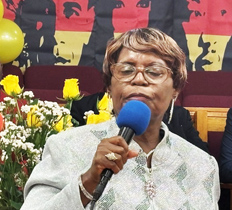
    The Eutaw Housing Authority Advisory Board swore in new officials at its regular meeting held February 23, 2016. The ceremony was conducted by City of Eutaw Municipal Judge Grace Stanford.  This event was followed by a Black History Program with a special focus on Greene County.

    LaTarsha Johnson served as mistress of order, followed by a greeting from Jacqueline Davis. Faye L. Tyree recited a reading on Shirley Chisom as a pioneering African-American politician. Chisom was the first African American woman to serve in Congress and the first African American woman to run for President of the United States.
    A panel consisting of Sara Duncan, Ovetta Smith, Leo Branch, Lorenzo French and Derrick Hall reflected by on history. Mrs. Ovetta Smith recalled times pass when she, Dr. Martin Luther King, Jr. and Julian Bond worked together to get people registered to vote. She also recalled an incident where Rev. Gilmore was beaten on the side of the head. She felt the injustice of it all just for standing up for what was right.
    Leo Branch recalled the sit-in under the Oak Tree in Forkland singing We Shall Over Come. He recalled when there was a time when we were not allowed to get an education. Now you can. Every child can get the education they need.
    Derrick Hall stated as a young man, his mother instilled in them to put God first, go to school and get the best education you can and respect your elders.
    Ms. Sarah Duncan remembered that Gilmore and Branch where two main pioneers in the Greene County movement.  They had the community support back then. Everyone loved one other; helped one other. “Only when we come together on one accord can we move forward as we did back then. It is important our children know where we came from and why it is important to vote and know our history to make things better for our livelihood,” she stated.
    Lorenzo French recited a Martin Luther King Jr. speech, his last one addressing the garbage workers in Tennessee. The youth present were asked questions and received prizes. Refreshments were served. The Black History program was enjoyed by all.