Tag: Iran

  • What to know about Trump-Xi summit with trade, Taiwan and Iran on the agenda

    What to know about Trump-Xi summit with trade, Taiwan and Iran on the agenda

    by E. Eduardo Castillo and Huizhong Wu, AP News

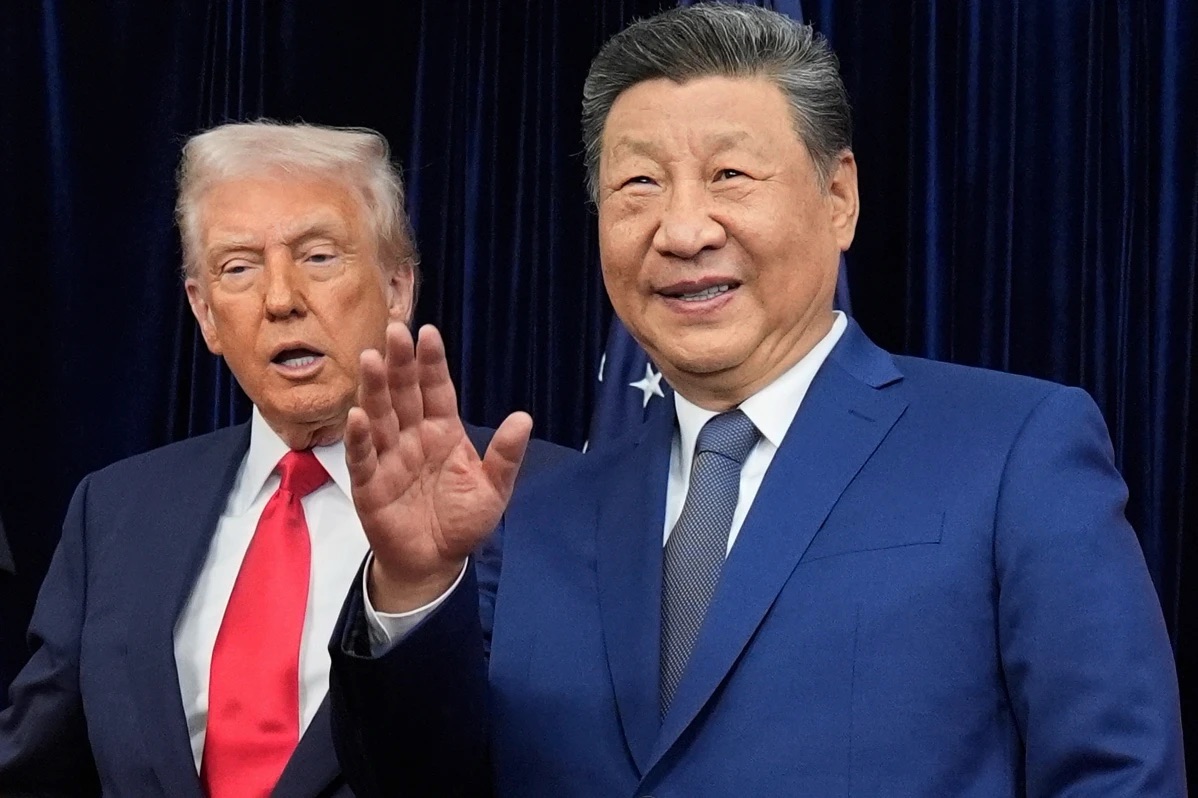
    BEIJING (AP) — As Presidents Xi Jinping and Donald Trump prepare for a highly anticipated summit, both China and the United States say their ties have been broadly stable in recent months — and they are planning on keeping it that way.

    But many issues are at stake in one of the world’s most consequential relationships, with no easy end in sight. 

    Few expect major breakthroughs to the long-running frictions between China and the U.S., which range from competition in technology to the thorny question of Taiwan, whose main ally is the U.S. Ending the war with Iran is likely to be added to the agenda, with Beijing being one of the unofficial mediators in the conflict.

    “On both sides there is a consensus that U.S.-China stability is important,” said Henrietta Levin, senior fellow for the Freeman Chair in China Studies at the Center for Strategic and International Studies in Washington. “Once you get past the question of stability, the ‘what’s next’ in the relationship gets a little more complicated, and so for that reason, the most likely thing to come out of the meeting is very little.”

    Here’s what to know about the summit:

    There may be a trade deal, but not a resolution

    The China-U.S. trade war started with Trump’s first term, but turned up a notch in April last year, on Trump’s so-called “Liberation Day,” when he announced 34% tariffs on all Chinese goods. China retaliated with counter tariffs and other measures, such as restrictions on rare earth exports. Tariffs reached as high as 145% in the escalating back and forth.

    The two sides, realizing the sky-high tariffs weren’t sustainable, then called for a trade truce, halting many of the punitive economic measures. The two leaders met in South Korea in Octoberand extended the truce for another year. China promised to purchase soybeans from American farmers, while the U.S. dropped tariffs by more than half.

    “China’s strategy was to promote stability by fighting back,” said Fudan University professor Zhao Minghao, an expert in international relations. “Both sides could very well issue a comprehensive trade agreement this time. But this doesn’t mean the war is over, and the agreement will have conditions.”

    Last year’s trade truce did not resolve any of the bigger picture issues, and it did not mean a return to how things were. China now has a new export permit requirement for rare earth exports that it can tighten at any time.

    Further, this time around, “there’s been a lack of the intensive type of engagement that has characterized past summits,” said Wendy Cutler, vice president of the Asia Society, and a former trade negotiator for the U.S. 

    China in April issued new regulations that built out a framework for identifying and countering foreign measures targeted at Chinese companies. Under the new rules, for example, China’s Ministry of Commerce told impacted companies, such as one petroleum refinery that bought Iranian crude oil, to ignore U.S. sanctions. 

    Although some say the sides could announce a continuation of the trade truce, they note they have continued to take targeted actions. “It’s a fragile truce,” said Cutler.

    The White House said Sunday they are also planning to discuss creating a new “Board of Trade” to keep their countries talking on economic issues.

    China’s ability to buy high-tech chips is still a thorny issue 

    The U.S. imposed restrictions on exports to China of advanced computer chips and related tech, such as the machines to make the chips, as early as Trump’s first term in office. 

    Nvidia, a California company and the leading designer of advanced chips, has pressed Trump to allow it to export them to China. Nvidia founder Jensen Huang has argued that selling the chips will build reliance on American tech for Chinese AI firms.

    But the increasing list of restrictions on chip exports may only push China deeper in its drive for self-reliance. “China’s attitude has changed subtly, it seems more focused on advancing its domestic chip industry rather than continuing to rely on advanced chips from the United States,” Zhao said in written comments. 

    China sees Taiwan as the ‘biggest risk’ in ties with the US

    Two weeks before the meeting, Chinese Foreign Minister Wang Yi said in a call with U.S. Secretary of State Marco Rubio that the bilateral relationship has remained generally stable, but Taiwan remains the “biggest risk” to their ties. China signaled again on Thursday that Taiwan would be a top priority for discussion. 

    Few expect a resolution to the Taiwan issue, lingering since China and Taiwan split in a civil war in 1949. While Beijing claims Taiwan, the island is a self-ruled democracy. 

    Tensions have only risen since Taiwan first elected Tsai Ing-wen as president in 2016. Her Democratic Progressive Party says Taiwan is functionally independent and its own sovereign state. Beijing has broken off communication with Taiwan’s government, and in recent years, started sending warplanes and warships closer to the island in almost daily drills. 

    The island’s current president, Lai Ching-te, is also from the DPP. Beijing has criticized Lai repeatedly, even depicting him as a “parasite” in propaganda imagery for its military exercises. 

    The U.S. is required by law to ensure Taiwan can defend itself but officially maintains a position of what has been called strategic ambiguity, leaving the question of whether the U.S. would get involved militarily if China decided to reclaim Taiwan by force. Trump has also said recently that he discussed arms sales to Taiwan with Xi, which led to further questions of whether the U.S. would support Taiwan

    “One possibility is that China and the U.S. can take the strategy of a sort of ‘reciprocal restraint’, such as reducing the number of American arms sales to Taiwan, in exchange for fewer military exercises from the mainland aimed at Taiwan,” said Zhao.

    The US wants China to put pressure on Iran

    As the world awaits an end to the war in Iran that has shaken the global economy, the conflict is likely to surface in the talks. 

    China has openly criticized the United States and Israel over the war. In addition, given its close political and economic ties with Iran, it is seen by some as an unofficial mediator that could influence Tehran. So far, Beijing has remained cautious, preferring to not get deeply involved.

    “I don’t think China has any interest in solving the problems the U.S. has created for itself in the Middle East,” Levin, of the Center for Strategic and International Studies, said. 

    A few days before the trip, U.S. Treasury Secretary Scott Bessent called on China to pressure Iran to open the Strait of Hormuz, and said that by buying Iranian oil, Beijing is funding terrorism.

    “Let’s see if China — let’s see them step up with some diplomacy and get the Iranians to open the strait,” Bessent said on Fox News. “Iran is the largest state sponsor of terrorism, and China has been buying 90% of their energy, so they are funding the largest state sponsor of terrorism.”

    Wu covers Chinese culture, society, and politics for The Associated Press, as well as the country’s growing overseas influence from Bangkok. She was previously based in Taiwan and China.

  • Newswire: Trump announces ceasefire with Iran, fends off allegations that the US caved

    Newswire: Trump announces ceasefire with Iran, fends off allegations that the US caved

    by Zack Linly, NewsOne

    On Tuesday evening, after weeks of mixed messaging on our progress in the Iran war turned into threats to end the nation’s entire “civilization,” President Donald Trump took to his Truth Social platform to announce a two-week pause on his plans to start bombing Iranian bridges, electricity plants, and factories because a ceasefire has been negotiated. And because we’ve all heard this song before, folks on social media seem to largely believe that Trump caved to end the war that is bringing his administration nothing but embarrassment and bad press. 

    Meanwhile, Trump, his Cabinet, and MAGA-friendly media outlets are working overtime to spin the narrative that it was actually Iran that caved, ignoring all evidence to the contrary — including the myriad of reports that the missile strikes have not ended.

    “Based on conversations with Prime Minister Shehbaz Sharif and Field Marshal Asim Munir, of Pakistan, and wherein they requested that I hold off the destructive force being sent tonight to Iran, and subject to the Islamic Republic of Iran agreeing to the COMPLETE, IMMEDIATE, and SAFE OPENING of the Strait of Hormuz, I agree to suspend the bombing and attack of Iran for a period of two weeks,” Trump wrote Tuesday evening. “This will be a double sided CEASEFIRE! The reason for doing so is that we have already met and exceeded all Military objectives, and are very far along with a definitive Agreement concerning Longterm PEACE with Iran, and PEACE in the Middle East. 

    We received a 10 point proposal from Iran, and believe it is a workable basis on which to negotiate. Almost all of the various points of past contention have been agreed to between the United States and Iran, but a two week period will allow the Agreement to be finalized and consummated. On behalf of the United States of America, as President, and also representing the Countries of the Middle East, it is an Honor to have this Longterm problem close to resolution.

    Now, to anyone who isn’t a MAGA sycophant, dedicated to spinning Trump’s confused social media posts into golden nuggets, it looks like Trump stumbled across an excuse to back off from his tough talk and save a little face in the process.

    After all, Trump has been claiming for weeks that  Iran is “begging” for a deal, and that the administration “had very, very strong talks,” and “points of agreement,” only for the Iranian government to deny the “talks” are even happening. Trump previously told reporters that a 15-point proposal to end the war was sent to the Iranian government, and that it “gave us most of the points,” only for the Iranian government to completely reject Trump’s terms shortly after.

    Now, Trump is saying Iran’s 10-point counter-proposal to the U.S. is a “workable basis on which to negotiate,” which really makes it seem like he was the one “begging for a deal,” especially since the contents of Iran’s 10-point plan seem to largely benefit Iran.

    I mean, Iran even included a $2 million toll on ships crossing the Strait of Hormuz that no one had to pay before Trump decided to help the Israeli government launch an unprovoked war on Iran. What exactly are we winning here?

    That’s a lot of tough talk, only for Trump to eagerly announce that he is open to Iran’s demands, which, again, came after the nation rejected his.

    And that’s why Trump and his administration are scrambling to force-feed Americans the narrative that it’s a mutual deal that both nations will benefit from, and he’s out here launching investigations against any media outlet that says otherwise.In fact, Trump had another one of his social media meltdowns after CNN reported, “Iran claims victory, says it forced US to accept 10-point plan,” and that the Iranian Security Council said in a statement, “The enemy, in its unfair, unlawful, and criminal war against the Iranian nation, has suffered an undeniable, historic, and crushing defeat.”

  • Newswire: Peace talks be dammed; the U.S. and Israel invade Iran, and casualties mount

    Newswire: Peace talks be dammed; the U.S. and Israel invade Iran, and casualties mount

    by Frederick H. Lowe, BlackmansStreet.Today

    President Donald Trump announced on his social media that a joint invasion between the U.S. and Israel resulted in the death of Iran’s Supreme Leader Ali Khamenei.

    In addition, three U.S. soldiers were also killed, and five others were seriously injured, according to U.S. Central Command during “Operation Epic Fury,” the joint U.S.-Israeli military operation against Iran. Trump said more American deaths are expected. As of March 3rd, the death toll of U.S. Service personnel was 6, with many injured.

    At least 165 people were killed when a strike hit an all-girls school in Minab, which is in Iran’s southern Hormozgan province. A local official said among the dead were students, parents, and school staff.

    Trump also urged the Iranian people to “seize control of your destiny” by rising against the Islamic leadership that has ruled the nation since 1979.

    The attack on Iran by the U.S. and Israel was launched in the middle of diplomatic efforts to avert conflict. Congress was not consulted on the invasion, which has been cast as a war.

    President Trump does not have the power to declare war on another country. The Founding Fathers and the Constitution gave war authority and power to Congress, and Congress alone, said the ACLU.

    President Trump violated the Constitution when he announced that the U.S. was going to war and launched an open-ended bombing campaign against Iran, a country with nearly 100 million people, without ever going to Congress for authorization.

    President Trump ordered U.S. military strikes against Iran without prior congressional authorization, and key members of the U.S. Congress say they were not given intelligence briefings before the operation began.

    Several lawmakers strongly criticized the decision as a violation of constitutional and statutory war powers.

    The attack on Iran reportedly targeted military sites as well as the leadership of the Iranian regime.

    Explosions were heard in Israel and Gulf countries after Iran launched a wave of drones and missiles in a strong response to being attacked.

    Trump announced the invasion in an eight-minute speech after the first bombs had fallen.

    Antonio Guterres, the UN Secretary-General, called for an immediate cessation of hostilities and de-escalation and warned that a failure to do so risks a wider regional conflict with grave consequences for civilians and regional stability.

    Mr. Guterres declared that the military escalation in the region undermines international peace and security, and recalled that all Member States must “respect their obligations under international law, including the Charter of the United Nations,” which prohibits “the threat of the use of force against the territorial integrity or political independence of any state, or in any other manner inconsistent with the Purposes of the United Nations.”

    The attack on Iran reportedly targeted military sites as well as the leadership of the Iranian regime.

  • Newswire: Soleimani Assassination: President Trump is leading America toward war without end in the Middle East News

    Analysis by: Rev. Jesse Jackson

    People attend a funeral procession for Iranian Major-General Qassem Soleimani, head of the elite Quds Force, and Iraqi militia commander Abu Mahdi al-Muhandis, who were killed in an air strike at Baghdad airport, in Ahvaz, Iran January 5, 2020. Hossein Mersadi/Fars news agency/WANA (West Asia News Agency) via REUTERS ATTENTION EDITORS – THIS IMAGE HAS BEEN SUPPLIED BY A THIRD PARTY

    (TriceEdneyWire.com) – It has come to this. An impeached president — still pending trial in the Senate — orders the assassination of a leading Iranian general as he is meeting with the leader of Iraq, a supposed ally. He does so without consultation, much less approval, of Congress. Besieged at home, he lashes out abroad.
    This president ran on the promise to end the “endless wars “in the Middle East. Earlier, he ordered and then wisely called off bombing strikes on Iran, saying that he did not want a war. Now he claims that he has acted to stop a war, not start one.
    He is either deliberately misleading the American people or deluding himself. Assassination of a foreign official is not the road to peace; violence almost inevitably begets violence. He has acted on what his own officials call “razor-thin” evidence, shocking his own military advisers. U.S. presidents now claim the right — and have the capability — to target and assassinate anyone in any place, foreigner or citizen, if they decide — on the basis of secret and often scanty intelligence — that the person may be considering an attack on U.S. allies or soldiers or representatives in the future. They call this potential threat evidence of an “imminent attack,” to pay mock respect to the international law that they are trampling.
    General Qassim Soleimani is portrayed as a terrorist with American blood on his hands. But he was not a stateless terrorist. He was a high official in a foreign government with which we are not at war. Assassinating him is an act of war. Ironically, Iran and the Shiite militias in Iraq that Soleimani guided were leading, if unacknowledged, allies in the fight against ISIS, who are largely Sunnis.
    Similarly, those who attacked the U.S. on 9/11 were Sunnis, almost all from Saudi Arabia, funded largely by Saudi money. Taliban in Afghanistan are Sunni. The attack on Yemen was led by Saudi Arabia, which is Sunni. Iran fought against ISIS in Iraq and Syria. Yet, somehow, it has become Trump’s leading target.
    The road to this escalating conflict can be traced back to Trump’s perverse hatred of all things achieved by former President Barack Obama. One of Trump’s first acts was to pull the U.S. out of the Iran nuclear pact, over the objections of our allies and his own military advisers.
    He ramped up sanctions on Iran, seeking to force them to surrender to a “better deal.” The result has been escalating tension and violence, as Iran has demonstrated — in attacks on Saudi oil facilities and on tankers in the Persian Gulf — that it has the capacity to strike back. Now, after the assassination, the entire region girds itself for the retaliation that has already been promised. This is utter folly.
    Under George Bush, the U.S. destabilized this region by invading Iraq. That calamity has fostered escalating violence. Obama added to the mess seeking regime change in Syria and in Libya, spreading the chaos. Trump was right when he said it was time for the U.S. to get out of the Middle East.
    We have no stake in the spreading conflict between Sunnis and Shiites. We have no desire to send the hundreds of thousands of troops needed to win a war or enforce a peace. All we are doing is squandering American lives and resources in an armed presence that simply adds to the violence without leading to a resolution. Why has Trump abandoned his campaign promise? Why did he abandon his wise decision not to strike Iran earlier? The only thing that has changed is that he has been impeached. Is he ramping up violence abroad to distract from the overwhelming evidence of his offenses? Is he using the U.S. military as a political campaign prop?
    The next move is in Iran’s hands. If the regime reacts predictably by striking back, the assassination will lead to escalating violence. Eye for an eye, tooth for a tooth, and soon all are left without sight and without teeth. Iran could — if its leaders can rise above their grief and their anger — use this moment to take an initiative for peace, calling on our allies to join in convening a negotiation, opening a path to less violence and greater exchange.
    Trump may not wish to respond, but surely our allies in Europe would jump at the chance. Clearly Congress must assert its constitutional war powers and limit the license of this or any president to wage war or assassinate foreign leaders on a whim. It must insist on public hearings to review the basis for the assassination. We need hearings on what we are doing in the Middle East and how we begin to bring the troops home.
    Congress needs to pass a renewed war powers resolution instructing the president to bring the troops home, not send more of them to the region. If Congress cannot curb a rogue president, then this republic is in deep trouble. And the American people and its soldiers are