Tag: NASA

  • Newswire: Stunning photos from Artemis II show Earth, moon, eclipse from space

    Newswire: Stunning photos from Artemis II show Earth, moon, eclipse from space

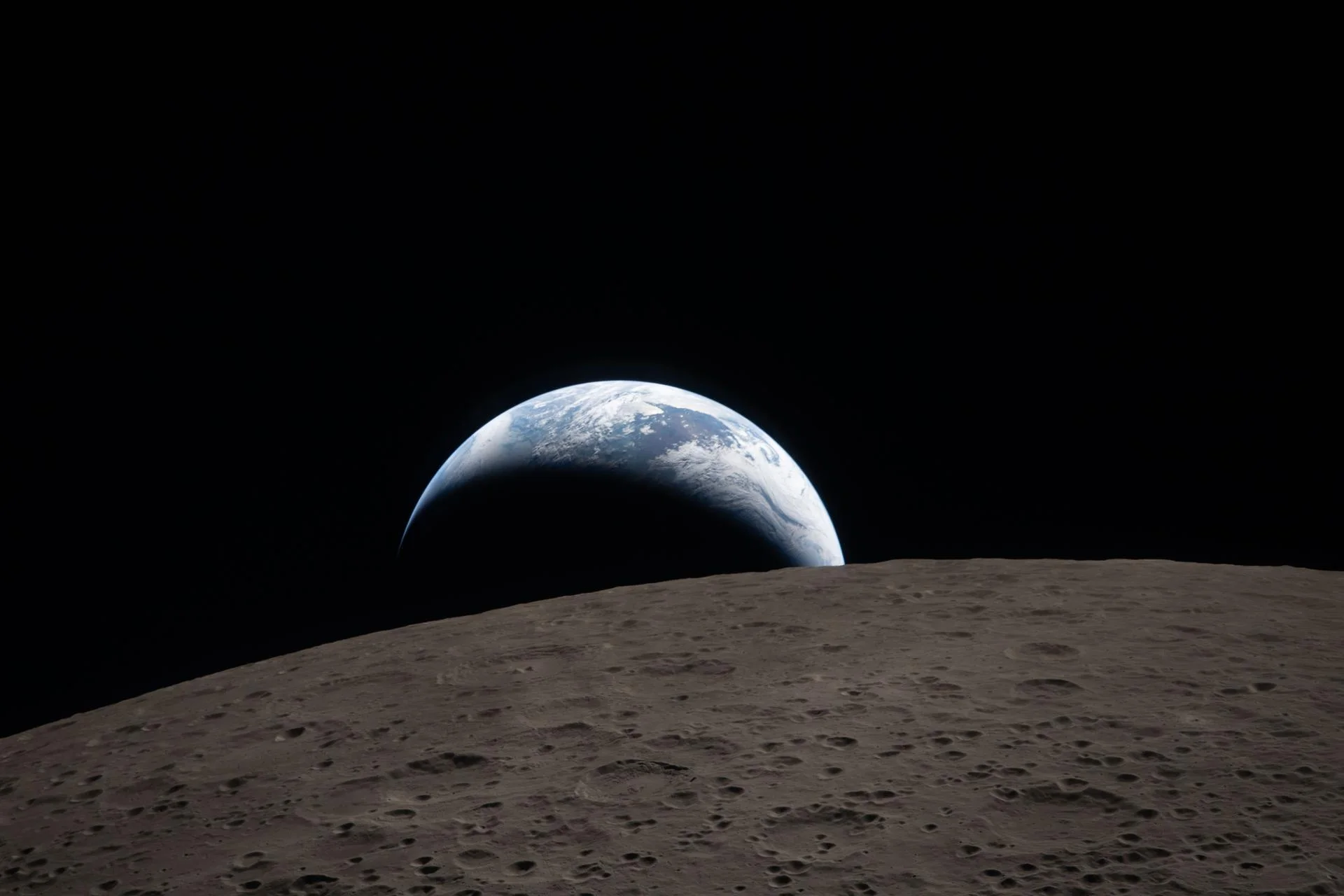
    Earthset captured through the Orion spacecraft window at 6:41 p.m. ET, April 6, 2026, during the Artemis II crew’s flyby of the moon.

    by Kerry Breen, CBS News on Google

    Stunning photos taken by the Artemis II crew were released on Tuesday, showing spectacular views from the far side of the moon and an eclipse in space. 

    One image from NASA showed “Earthset” — the Earth dipping behind the moon. Part of the Earth is seen in darkness, while Australia and Oceania are visible on the planet’s surface. Details of the moon appear in the photo’s foreground. 

    “from the other side,” the White House said about the image.

    Earthset captured through the Orion spacecraft window at 6:41 p.m. ET, April 6, 2026, during the Artemis II crew’s flyby of the moon.

    Another stunning photo showed the moon eclipsing the sun. The eclipse was not visible from Earth, only to the crew aboard the spacecraft, and the astronauts needed to wear eclipse glasses to protect their eyes until the moon completely covered the sun.

    “From the crew’s perspective, the Moon appears large enough to completely block the Sun, creating nearly 54 minutes of totality and extending the view far beyond what is possible from Earth,” NASA said about the image.

    This image taken by the Artemis II crew during their lunar flyby on April 6, 2026, shows the moon eclipsing the sun.
    This image taken by the Artemis II crew during their lunar flyby on April 6, 2026, shows the moon eclipsing the sun.

    Astronaut Victor Glover said the sun’s corona remained visible and bright during the eclipse, creating “a halo almost around the entire moon.” He said the photos of the eclipse didn’t do the display justice.

    Another photo shared by NASA on Tuesday morning shows the ridged craters and long shadows of the moon as parts of it come into view along the boundary between lunar day and night.

    The Artemis II crew is now making their trip back toward Earth. They are expected to splash down off the California coast, near San Diego, on Friday evening.

  • First Black crew member to join International Space Station

    By Shantella Y. Sherman (AFRO/NNPA Member)

    jeanetteepps_nasa_web120
    Astronaut Jeanette Epps prepares to go into space
    The National Aeronautics and Space Administration (NASA) has selected astronaut Jeanette Epps to join the crew of the International Space Station in 2018. Epps will become the first Black crewmember to represent the U.S. on the station. The journey will mark the first time Epps has traveled to orbit, allowing her to follow in the footsteps of the women who, she said, inspired her to become an astronaut.
    While other Black astronauts have flown to the Space Station for brief stays during the outpost’s construction, Epps will be the first Black crewmember to live and work on the station for an extended period of time. Her journey aboard the Soyuz spacecraft and stay at the station places her as the only American and female among a crew made up of mostly Russians and men.
    “I’m a person just like they are. I do the same work as they do,” Epps told a group of STEM students at her Syracuse alma mater, Danforth Middle School. “If something breaks, anyone of us will have to be able to go out the door. We have to be jacks of all trades. It’s not a job that’s like any other.”
    While working on her doctorate, Epps was a NASA graduate student Researchers Project fellow, authoring several journal and conference articles about her research. After completing her graduate studies, Epps worked in a research lab for more than two years, co-authoring multiple patents, before being recruited by the Central Intelligence Agency (CIA). She was a CIA technical intelligence officer for about seven years before being selected as a member of the 2009 astronaut class.
    “Anything you don’t know is going to be hard at first,” Epps said in a video statement about the launch. “But if you stay the course, put the time and effort in, it will become seamless eventually.”
    Epps, in the NASA video interview, shared when she was first introduced to the idea that she could be an astronaut. “It was about 1980, I was nine years old. My brother came home and he looked at my grades and my twin sisters’ grades and he said, ‘You know, you guys can probably become aerospace engineers or even astronauts,’” Epps said. “And this was at the time that Sally Ride [the first American woman to fly in space] and a group of women were selected to become astronauts — the first time in history. So, he made that comment and I said, ‘Wow, that would be so cool.’”
    Epps will join veteran NASA astronaut Andrew Feustel at the Space Station. On Feustel’s first long-duration mission, he served as a flight engineer on Expedition 55, and later as commander of Expedition 56.
    “Each space station crew brings something different to the table, and Drew and Jeanette both have a lot to offer,” said Chris Cassidy, chief of the Astronaut Office at NASA’s Johnson Space Center in Houston, in a statement. “The space station will benefit from having them on board.”