Tag: small business

  • Newswire: Cashless Payment Systems are the Boring Move Every Black Shop Needs

    Newswire: Cashless Payment Systems are the Boring Move Every Black Shop Needs

    By Amy Kang, BlackPressUSA

    Silently guard your small shop’s revenue with the understated cashless payment systems. Do not let that card-and-phone sale miss your counter. If you want to grow your black-owned business, this clean record really matters compared to any flashy storefront feature.

    Customers are changing their habits as time progresses. Federal Reserve research found that Americans averaged 48 payments a month in 2024 and used cash for only seven of them, leaving credit and debit cards far ahead. Most shoppers who use cash payments would rather use their cards.

    This system, when done right, gives you a clean record of every sale. Cashless payment systems are not glamorous, but they recover lost transactions, document cash flow, and build the records Black businesses need to grow.

    What Cashless Payment Systems Actually Do for a Small Shop?

    A modern setup can turn each of your sales into a dated, searchable entry, not just reading cards. This does not leave you guessing at the end of each month. This visibility is the actual product.

    A connected system handles these tasks at once:

    • Accepts cards, taps, and phone wallets at the counter
    • Logs each sale with a time, date, and amount
    • Tracks which items move and which sit
    • Flags refunds, voids, and tips on their own

    These actions reduce the friction that chases buyers away. Smooth payment processing keeps that line moving.

    Why Cash-Only Quietly Costs a Neighborhood Business

    Going cash-only feels safe, but it narrows your pool of shoppers and sends them to other retailers. Completely dropping the use of cash can also be costly since there are people who solely rely on it. FDIC data shows that two-thirds of unbanked households rely entirely on cash, and Black households are more than five times as likely to be unbanked as white households.

    The smartest move is to adapt to both forms of payment. This balance has modernized black-owned businesses and leaves no buyer out. Cards allow shoppers to leave a deposit for a service, tip on the screen, or order ahead for pickup.

    How Digital Records Open Doors To Credit and Growth

    If your business only uses cash, it is very hard for you to receive loans from moneylenders. Cashless payment systems allow lenders to verify the sales history of your enterprise. This can help them decide to allow or reject your loan request.

    Many business owners struggle to get capital. A Federal Reserve analysis noted that credit availability is a challenge for more than a quarter of small businesses, and lenders lean on documented, steady revenue when they decide.

    Steady digital records help an owner do more than borrow. They;

    • Build a credit profile that lenders trust.
    • Spot best sellers and slow weeks
    • Prove income for leases and suppliers
    • File cleaner, faster taxes each year

    None of this is possible when your earnings are in a cash box. These records also help you receive grants, relief programs, and get a lease for your shop.

    Choosing Payment Hardware That Fits a Small Storefront

    A proper small business payment hardware matches the foot traffic, the counter, and the budget.

    When weighing point of sale systems, a few questions cut through the noise:

    • Does it take cards, taps, and phone wallets
    • Are the fees flat and easy to predict
    • Will it keep working if the internet drops
    • Can it grow with a second register?

    Answering these keeps you from paying for features your small shop will never use. Tools built for accepting cashless payment at a small storefront keep checkout quick and the data clean. For everything to flow, choose a system you can run without a manual.

    This is an excerpt; read the original article here.


    Featured Image: Credit cards in wallet 1 (Chris Potter/Wikimedia Commons)
  • Newswire: Black-led nonprofits didn’t see the lasting funding boosts promised after 2020’s racial reckoning

    Newswire: Black-led nonprofits didn’t see the lasting funding boosts promised after 2020’s racial reckoning

    by The Associated Press

    The racial reckoning that followed George Floyd ‘s murder in 2020 carried hopes of new support for disproportionately underfunded, Black-led nonprofits. American companies stepped up donations to historically Black colleges and universities. Major climate funders pledged to give more toward minority groups. Large donors sought to narrow the racial wealth gap.

    But new research released Tuesday shows that such financial gains for many Black-led nonprofits were short-lived, if they happened at all. A subset of large, Black-led nonprofits saw only temporary funding increases between 2020 and 2022, according to the analysis by nonprofit research service Candid and Black philanthropy group ABFE. Smaller organizations saw no significant change.

    The pattern of disinvestment put many community groups at a greater disadvantage when President Donald Trump’s policies curtailed funding for diversity, equity and inclusion. The nonprofit sector’s struggles deepened as the administration threatened a range of social service programs, left future grants uncertain by cutting agency staff and chilled racial justice funding through anti-DEI executive orders.

    Black Voters Matter co-founder Cliff Albright noted these community nonprofits are the same ones now tasked with helping more and more low-income families deal with spiking healthcare costs and rising food prices.”We’re literally being asked to do more with less resources,” Albright told The Associated Press.

    Small, Black-led nonprofits tended to have to rely on new rather than continuing funders, losing out on transformational relationships that sustain their longer-term goals and cushion them through challenging periods. These small organizations — those with annual expenses of $1 million or less — got just over one-third of their funding from continuing supporters, according to the report.

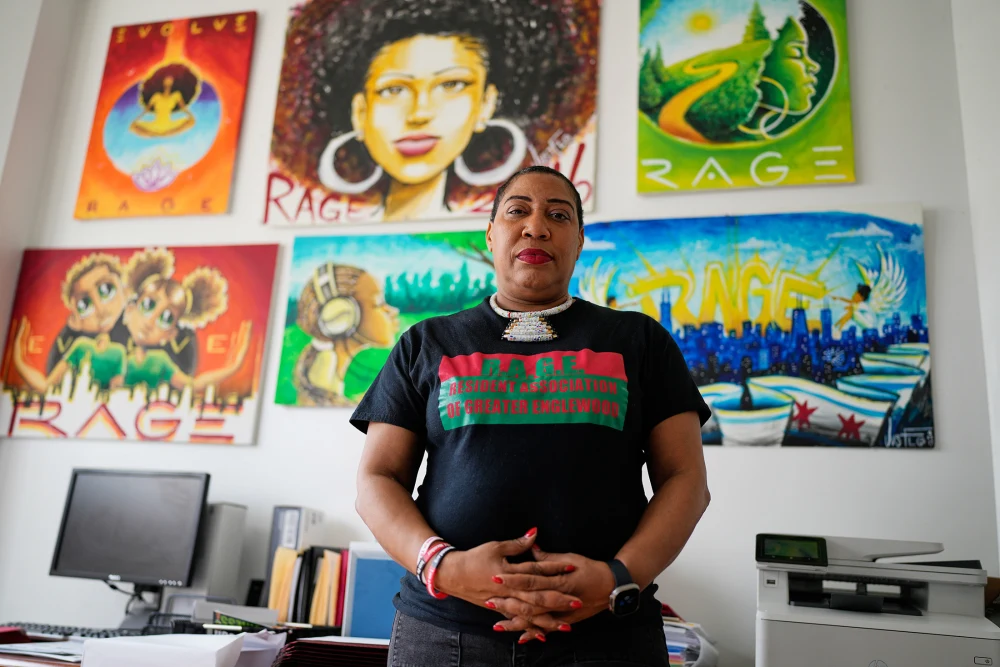
    The dynamic rang true for a South Side Chicago group serving a predominantly Black neighborhood among the city’s most impoverished. Asiaha Butler, the CEO of the Resident Association of Greater Englewood, cofounded the nonprofit more than 15 years ago to empower her neighbors to combat their area’s negative narratives.

    That mission had a handful of consistent backers. But summer 2020 brought more than two dozen new funders. “All of a sudden, we were desirable for people to fund,” recalled Butler, adding the “spurt” became a “curse” as the quick infusion of capital tapered off.

    “We started seeing this revenue and thinking we’re gaining really great relationships with funders,” she said. “And, really, those priorities shifted quickly.”

    Lacking relationships

    Foundations lacked relationships with Black organizations of any scale prior to 2020, according to ABFE CEO Susan Taylor Batten.

    Black philanthropy professionals say that distance created a scramble when protestors demanded businesses and philanthropies address systemic racism.

    Kia Croom, whose fundraising firm works with nonprofits in Black communities, said her clients received more funding than ever from corporations. Some hired additional development staff to meet the demand — and then underwent layoffs when funds disappeared. “It was just a very transactional gift at best,” she said.

    Positive Results Center CEO Kandee Lewis oversees a Los Angeles nonprofit assisting survivors of domestic violence and other harms. It was wonderful, she said, to receive checks from new supporters. But oftentimes, the support turned out to be a one-time donation rather than the beginning of a relationship. Lewis felt the funding came only because her group was Black-led — not because funders understood its work. “They were so busy trying to figure out who was who that they didn’t really take time to get to know people,” she said.

    Limited networks

    Jaleesa Hall knows philanthropy is a relationship game. She heads Raising A Village Foundation, which aims to advance educational equity through tutoring programs. She didn’t have many high net worth members in her network when she founded the Washington, D.C., nonprofit more than six years ago.

    That circle made it difficult to catch the attention of foundations, which she said “haven’t really cracked” how to find potential grantees outside of their existing web of connections. “Small, Black-led nonprofits simply aren’t in those rooms to begin with,” Hall said.

    Most of their foundation grant dollars came from first-time funders, according to the report.

    Cathleen Clerkin, the associate vice president of research at Candid, said the nonprofits’ work is made even more challenging by the “song and dance” necessary to secure long-term investment every year. “They’re just constantly going on first dates with new funders and hoping that somebody will invest in them and understand them,” she said.

    Small nonprofit leaders are so focused on day-to-day upkeep and financial viability that they don’t have time to attend networking opportunities or money to fly out for national convenings.

    T’Pring Westbrook, a nonresident fellow at the Urban Institute’s Center on Nonprofits and Philanthropy, co-founded a consulting group that works with small nonprofits. The problem isn’t that foundations don’t want to support marginalized communities, she said, but that they do so through “trend funding.”

    “Maybe during Black History Month there will be a funding campaign,” she said. “But the thing about a campaign is a campaign doesn’t build sustainability.”

    Restrictive practices

    Small nonprofits say they face additional barriers, regardless of race, including grant eligibility requirements. And limited staff may prevent qualifying organizations from keeping up with foundations’ required weekly or monthly reports on the status of projects they’ve funded.

    “It ends up feeling like a burden,” Hall explained. “The juice isn’t worth the squeeze.”

    Philanthropy has seen a sector-wide shift towards trust-based models that offer general operating support and multi-year grants, acknowledging nonprofits’ expertise on how to best fulfill their missions. But Batten, the ABFE leader, said Black-led nonprofits generally have not reaped the benefits of those best practices.

    The report showed Black-led nonprofits had significantly fewer continuing funders than their non-Black counterparts. Only one-third received general operating support, compared to just over half of other nonprofits.

    “We are still seeing remnants of bad practice when it comes to investing in Black communities,” Batten said. “There’s just no way for a foundation to move its mission for communities in this country, let alone Black nonprofits to move theirs, if we do not evolve this sector.”

  • Newswire: A blueprint for the nation’s infrastructure urges inclusion in housing, small business, and student debt

    Rolled House Blueprints and Construction Plans.


    By Charlene Crowell

    (TriceEdneyWire.com) – As the country continues to increase COVID-19 vaccinations, businesses and consumers alike still struggle with evolving versions of daily life. At the same time, there is little disagreement that sustained effort is needed for a return to stability – not only in public health, but in personal finance and the larger economy as well.


    By the end of July, the moratoriums on housing evictions and foreclosures will expire. Without a timely and broad-ranging federal response, the nation’s homeless population could explode to unprecedented levels.


    President Biden and majorities in Congress are pushing for enactment of an infrastructure plan to serve as a financial antidote for a nation wracked with myriad social and economic challenges. A recently negotiated and bipartisan multi-year plan has the support of the Biden Administration, 22 U.S. Senators, and a diverse coalition of business, labor, policy and professional organizations. In the first five years of the plan, $579 billion in new revenues would be directed to transportation investments.


    According to the White House web, “The historic Bipartisan Infrastructure Framework will make life better for millions of Americans, create a generation of good-paying union jobs and economic growth, and position the United States to win the 21st century, including on many of the key technologies needed to combat the climate crisis.”


    President Biden expanded his view of the plan in a June 28 Yahoo guest column.


    “The Infrastructure Deal is part of my economic strategy that, taken as a whole, will help create millions of jobs for years to come and add trillions of dollars in economic growth. According to one study of my Jobs Plan, nearly 90 percent of the jobs it will create won’t require a college degree, and 75 percent won’t require an associate’s degree. It’s a blue-collar blueprint to rebuild America.”


    “This deal will also make it easier for all Americans to get to work each day, including communities of color who in some cities are twice as likely to take public transit but often have fewer good transit options,” continued President Biden. “In fact, it contains the largest federal investment in public transit in American history — making the public transportation that millions of working people rely on safer, quicker, cleaner, more frequent and more reliable.”


    For much of Black America, Biden’s remarks reflect the wish list of our working poor: livable wages, and reliable public transportation. No one wants or needs for their work commute to be a job in itself. Yet that is indeed a daily reality where public transit is limited and predictably unreliable.


    A diverse coalition declared its support of the revised plan, bringing additional pressure to bear on lawmakers expected to vote on the measure in the coming days.


    Supporters such as the AFL-CIO, U.S. Chamber of Commerce, Laborers International Union of North America, National Association of Manufacturers, National Retail Federation and others overcame historic labor and business rivalries to make a united call on July 8 for Congress to act with dispatch.

    “Now is the time to turn these promises into projects,” stated the coalition. “We urge Congress to turn this framework into legislation that will be signed into law, and our organizations are committed to helping see this cross the finish line. Enacting significant infrastructure legislation, including investments in our roads, bridges, ports, airports, transit, rail, water and energy infrastructure, access to broadband, and more, is critical to our nation and will create middle-class family sustaining jobs,” the coalition urged.

    “Don’t let partisan differences get in the way of action — pass significant, meaningful infrastructure legislation now,” warned the coalition.

    Other major provisions in the plan propose closing tax gaps, redirect unspent emergency relief funds and targeted corporate user fees to finance economic benefit projects such as:


    • Improvements to combat the multiple impacts of climate change, cyber-attacks, and extreme weather events; 


    • Long-term, billion-dollar investments in clean energy and transportation via a first-of-its kind Infrastructure Financing Authority; 


    • Creation of good-paying jobs to mitigate and support environmental justice; and 


    • Construction of thousands of miles of new, resilient power transmission lines to facilitate the expansion of renewable energy, including through a new Grid Authority. 


    Even though this plan proposes a major economic boost, many in Congress are debating exactly what ‘infrastructure’ means. Which meaning prevails will determine which investments will be made and for whom.


    For some, infrastructure is only about systems of roads and bridges, electrical grids, or water delivery and disposal – and as reflected in the Bipartisan Infrastructure Framework. Others endorse a much broader view of the term that includes the underpinnings of a functioning society: affordable housing, day care, and education – to name a few.


    Even a review of the Merriam Webster dictionary’s definition of ‘infrastructure’ offers two meanings. The first reads, “the system of public works of a country, state, or region also; the resources (such as personnel, buildings, or equipment) required for an activity”. The second expands the term as follows: “the underlying foundation or basic framework (as of a system or organization)”.

    For consumer advocates like Mike Calhoun, President of the Center for Responsible Lending, what qualifies as infrastructure is clear. “Equitable housing investment and policy, student debt relief and reform, and grants for struggling small businesses, particularly those owned by people of color, must be a part of the infrastructure and recovery plan to come,” noted Calhoun. “We are hopeful for the nation’s future and look forward to working with the President and with Congress on enacting a plan for these communities to achieve financial security, build wealth, and thrive, all while stimulating the overall economy.”


    Similarly, California Congresswoman Maxine Waters, Chair of the House Financial Services Committee is equally lucid on infrastructure and what it includes. “As Chairwoman of the Financial Services Committee and a longtime advocate for ending homelessness and promoting fair, affordable, and accessible housing, my number one priority has been to ensure that President Biden’s infrastructure plan recognizes that Housing Is Infrastructure through robust funding,” stated Waters.


    “To say that the pandemic destabilized an already unstable housing market is an understatement,” continued Waters. “Our nation’s chronic shortage of affordable housing has left millions of people at all income levels struggling to pay their housing costs, and in the worst cases, has locked people out of homeownership, led to people being evicted or foreclosed on, and exacerbated our homelessness crisis… I look forward to continuing to work with the President, his administration, my colleagues in the House and Senate, and America’s housing advocates on enacting once-in-a-generation investments in our nation’s housing programs.”