Author: Maya Quinn

  • Greene County principals report a great start to the school year

    Greene County principals report a great start to the school year

    By Maya Quinn, editor

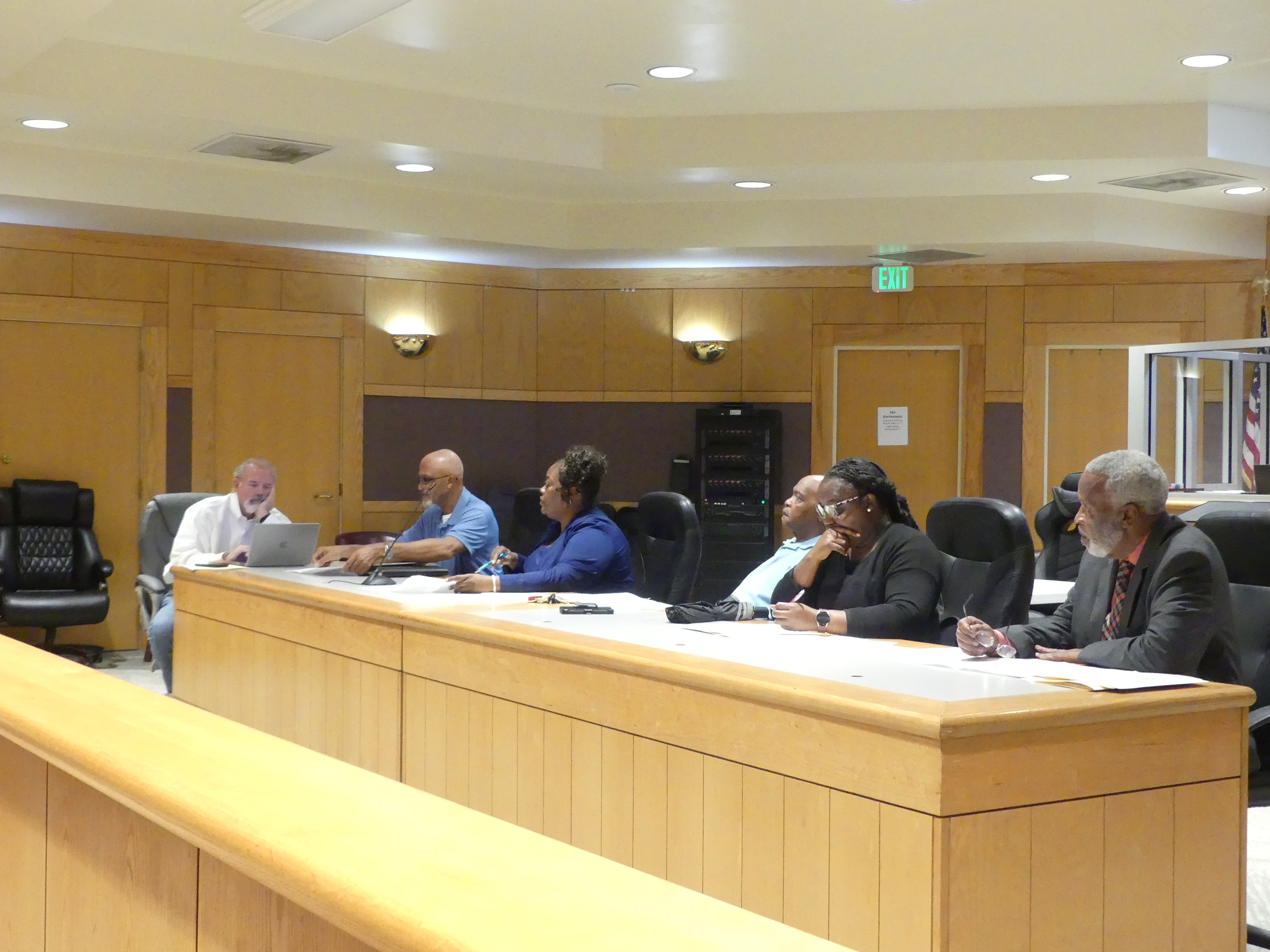
    The Greene County Board of Education met this past Thursday to discuss attendance records, professional development, and upcoming testing after Labor Day. Superintendent Dr. Timothy Thurman welcomed the principals of each Greene County School to provide status reports to the board and attendees. Each principal reported an exciting start to the school year and said they are eager to continue cultivating an environment where students feel loved and teachers are appreciated. 

    The meeting began with the school board’s financial report. Marquita Lennon, CSFO, reported all accounts as reconciled with no fraudulent activity. As of August 27, 2026, the school board’s combined ending funding balance was reported as $9,034,805.25. Local revenue brought in $329,079.18. Mrs. Lennon extended thanks to the Greene County Racing Commission for a quarterly donation of $195,000 to the board’s general fund.

    Superintendent Dr. Thurman began his report by inviting the principals from each school and the career tech center to address the board and attendees. Testing days from the previous school year are already being used to provide academic intervention for the county’s students. Administrators have begun professional development sessions to analyze the student data for after-school enrichment, with talks of providing a Saturday school session. 

    Principal Andrea Perry from Robert Brown Middle School reported that 305 students are currently enrolled. She stated that all students are being given a fresh start with the school’s theme “Level Up: Unlocking our Potential.” She announced that the main office is giving birthday shout-outs to every student, and congratulated the boys football team on their most recent win.

    Eutaw Primary’s Principal Dr. Brittany Harris reported that 286 students are currently enrolled with an average of 270 students per day and only 2 no shows. Third grade teachers are analyzing ACAP data and participating in professional development for i-Ready reading data. Teachers are using the data for their after school enrichment program that already has 85 sign-ups. 

    Career Tech Center Principal Joann Smoot Bryant reported that 37 students are currently enrolled in welding, cosmetology, and health science access programs. Twelve students will begin CNA clinicals at Greene County Hospital in January. The JAG Program has also begun to provide career readiness support by educating students on how to remain focused and make positive decisions. She also stated that Troy and Miles College will be visiting next month.

    Principal Alphonzo Morton III of Greene County High reported “positive energy and strong collaboration” throughout the school. On Fridays, students are given shout-outs for supporting their classmates and taking pride in their school environment. Principal Morton also told attendees that the GEAR UP program is returning for the 10th grade students. The high school’s  after school program begins September 8th from 3:15-5:15 Monday-Thursday. Students will receive academic support, enrichment activities, and explore post graduate career paths. Snacks will be provided.

    The board entered an executive session before voting on the Superintendent’s recommended action and personnel items. No decisions were made and no votes were cast. 

    The board approved the following action items:

    1. Updated Additional Service Salary Schedule FY 2026
    2. Service contract between Greene County Board of Education and Zachary Rutledge to develop and provide a Dual Enrichment (Welding Level I Lab) program for students at a rate of $250 every other Friday at Greene County Career Center, for the 2026 – 2027 school year
    3. Quote in the amount of $14,987 from Divot Assets for district-wide inventory services and software renewal
    4. Quote in the amount of $30,310 from RTI for the purchase of Chromebooks for GCHS
    5. Quote in the amount of $16,990 from PowerUP EDU for ActiveFloor Mobile Max Laser: Power Edition 1 to be installed at RBMS
    6. Implementation of two Saturday School sessions per month at Robert Brown Middle School from 8:00 a.m. to 12:00 p.m.
    7. Payment of all bills, claims, and payroll
    8. Bank reconciliations as submitted by Mrs. Marquita Lennon, CSFO  

    The board approved the following personnel items:

    Retirement

      1. Dr. Aslean Jones, English Teacher at GCHS, effective September 1, 2026

    Employment for the 2026 – 2027 school term:

        1. LaQuita Hunter, Long term substitute – Greene County Learning Academy, effective August 19, 2026; Dancy opposed and Hunter abstained
        2. Gwendolyn Webb, Long term substitute – Greene County Learning Academy; Dancy opposed
        3. Kayla Thomas, Long term substitute (First Grade) – EPS, effective August 5, 2026; Dancy opposed
        4. Chatia Lewis, Long term substitute (Second Grade) – EPS, effective August 17, 2026; Dancy opposed
        5. Dorthea Smith, Long term substitute (ACCESS) – GCCC, effective August 12, 2026; Dancy opposed
        6. Jordan Henley, Maintenance Helper – District 
        7. Daniel Mark Posey – Fifth grade teacher – RBMS
        8. Cassandra Kelly – Long term substitute (self-contained) – EPS, effective August 12, 2026; Dancy opposed
        9. Tiera Harris – Pre-K Auxiliary teacher – EPS, effective August 17, 2026
        10. Stanley Lucious, Full-time Bus Driver – District
        11. Dr. Leanita Hunt, English teacher – GCHS 
        12. Bernice Burton – Long-term substitute (Paraprofessional); Dancy opposed
    • Authorization of the following employees to work Concessions and Ticket Booths for the 2026-2027 school year at the Greene County High School:
      1. La Tanya Cockrell
      2. Tracey Hunter; Hunter abstained
      3. Sarah Brewer
      4. Twelia Morris
      5. Sharon Washington 
      6. Mary Henderson
      7. Wanda Gaitor
      8. Makane Morrow
      9. Jacqueline Edwards – Custodial Services

    Personnel for Saturday School sessions at Robert Brown Middle School

      1. Garry Rice- Assistant Principal
      2. Felecia Smith- Teacher
      3. Raven Bryant- Teacher
      4. Vanessa Bryant-Teacher
      5. Jennifer Smith- Teacher
      6. Daniel Posey- Teacher 
      7. Talicia Williams- Teacher
      8. Akia Williams- Teacher
      9. Nashondra Ruffin-Brown
      10. Kathryn Soule – ACCESS 

    Personnel for After-School Tutorial Program and the 21st CCLC at Greene County High School

    Eutaw Primary 

    1. Carla Durett
    2. Pamela Pasteur
    3. Angela Hill
    4. Keisha Williams
    5. LaShaun Henley
    6. LaShonna Thurman
    7. Mary Hobson, Paraprofessional
    8. Shalanda Collins, Nurse
    9. Sheila Tillman

    Robert Brown Middle School

    1. Vanessa Bryant
    2. Glenara Faust
    3. Jennifer Smith
    4. Talicia Williams
    5. Raven Bryant
    6. Felecia Smith
    7. Dorthea Childs, Paraprofessional

    21st CCLC – Greene County High School 

    Educators

    1. Barbara H Martin-Program Coordinator
    2. Drenda Morton-Site Coordinator
    3. Angela Harkness
    4. Dr. Dutchess Jones
    5. Tameshia Porter

    Rescind Employment

      1. Betty McCollum, Pre-K Auxiliary teacher – EPS
      2. Alton James – Fifth grade teacher – RBMS

    Reassign

    1. Tomora Morris-Hill from Business/Marketing teacher at GCCC to JAG Instructor (10 month) at GCCC

    When the floor was opened for public comments, Greene County Park and Recreation (PARA) Director Tyesha Weeks also expressed excitement for the changes to the school system. “I can see the change all the way across the board,” she stated. PARA plans to regularly donate to the student athlete’s hydration station and offer additional support to athletics and other extracurriculars.

    Coach Wesley and Coach Crawford brought concerns to the board regarding the athletic department. They explained that to truly have success and growth on each team, more coaches are necessary. The few coaches the district has are stretched thin and competing against teams that have upwards of seven coaches. A parent of a student-athlete at Robert Brown also raised a concern with feeding students before and after games. 

    The board encourages parents, staff, and supporters to attend all public meetings. The next regular session is scheduled for September 21st. There will be two budget hearings for the 2027 fiscal year on September 8th and September 10th at 4:00 pm. 


    Featured Image: Greene County School District’s principals for the 2026-2027 school year: Perry, Smoot Bryant, Dr. Harris, and Morton

  • Sewell blasts SCOTUS ruling clearing path for mail-in voting reforms

    Sewell blasts SCOTUS ruling clearing path for mail-in voting reforms

    By Staff, Alabama Political Reporter

    U.S. Representative Terri Sewell, D-Alabama, spoke out  last Tuesday against a U.S. Supreme Court decision that opened a path for mail-in voting restrictions sought by the Trump administration to take effect ahead of the November midterm elections.

    The Supreme Court ruled 6-3 on Monday that 23 states and the District of Columbia lacked standing to challenge President Donald Trump’s executive order. The court did not rule on the legality of the order itself. 

    The order directs the Department of Homeland Security to create state-by-state lists of U.S. citizens and directs federal authorities to prioritize investigations and prosecutions involving election officials who provide federal ballots to people who are not eligible to vote. It also directs the U.S. Postal Service to implement new requirements for mail-in ballots, including limiting delivery to voters included on state-submitted lists. 

    States challenging the order argued that the Constitution gives states and Congress authority over federal elections and that the president’s directives could disrupt election administration. Litigation over the order remains ongoing, and lower-court rulings could still affect whether its provisions take effect before the November election

    Sewell, in a Tuesday written statement, argued that the executive order is an attempt by the Trump administration to restrict legal avenues for voting.

    “President Trump is terrified of losing at the ballot box in November. He knows his policies are raising costs and hurting families, so instead of changing course, he is trying to change the rules to make it harder for Americans to vote,” Sewell said.

    “It is shameful that the Supreme Court would allow these restrictions to proceed—especially when we know that voting by mail is safe, secure, and used by millions of Americans, including President Trump himself,” Sewell said. “With just weeks left until the midterm elections, this decision will cause chaos and confusion for voters across the nation.”

    Sewell vowed to continue opposing Trump administration efforts to restrict mail-in voting. “As a daughter of Selma and the top Democrat on the Elections Subcommittee, I will not stand for these attacks on the ballot,” Sewell said. “I will keep fighting to protect the right to vote and ensure every eligible American can make their voice heard.”

    The Supreme Court’s decision does not immediately change voting procedures nationwide. The administration and states remain engaged in litigation over implementation of the executive order, including Postal Service rules governing mail ballots.

    Another lawsuit was filed by state Attorney Generals and others, immediately after the Supreme Court’s decision, since the U. S. Postal Service has now released its notice of changes in handling mail-in ballots, including their review against lists provided by the Federal government.

    The executive order has also drawn opposition from American Postal Workers Union President Jonathan Smith, who has described the administration’s approach as an effort to politicize the Postal Service.

    In July, a group of Republican attorneys general led by Alabama Attorney General Steve Marshall issued a letter supporting the administration’s proposed Postal Service rules, arguing they would “help states provide Americans with confidence in our system.”

  • Tigers rally past Choctaw, 22–14, in season opener    (1-0)

    Tigers rally past Choctaw, 22–14, in season opener (1-0)

    By Joe L. Powell and Ke’Undra Cox

    BUTLER, Ala. — Greene County High School opened its season with a statement Friday night, overcoming an early two-touchdown deficit to defeat Choctaw High School, 22–14, on the road.

    Choctaw controlled the opening quarter and appeared poised to run away with the game early. With 6:12 remaining in the first, quarterback Roderick Crawford connected with Miles Ray on a 40-yard touchdown pass. The Tigers’ two-point conversion attempt failed, giving Choctaw a 6–0 advantage.

    The home team struck again with 1:39 left in the quarter when Tracey Poke broke free for an 80-yard touchdown run. Crawford followed with a successful two-point conversion, extending Choctaw’s lead to 14–0.

    But Greene County refused to fold.

    The Tigers’ comeback began on special teams with 9:30 remaining in the second quarter. Eric Williams blocked a Choctaw punt, resulting in a safety and putting Greene County on the board. Greene County’s offense then found its rhythm.

    With 7:10 remaining before halftime, quarterback Prentice Taylor Jr. kept the ball and raced eight yards for the Tigers’ first touchdown. The two-point attempt was unsuccessful, but Greene County had cut the deficit to 14–8.

    Less than a minute later, Taylor struck again—this time through the air. With 6:51 remaining, he connected with Cornelius Hunter for a 10-yard touchdown pass. Another unsuccessful two-point attempt left the game tied at 14.


    The Tigers continued to apply pressure as the quarter progressed. With 4:20 remaining on the clock, Taylor broke loose on a 28-yard quarterback keeper, helping set up a one-yard scoring opportunity as Greene County completed its turnaround.

    After surrendering 14 unanswered points in the opening quarter, Greene County’s defense shut Choctaw out the rest of the way as the Tigers secured the 22–14 victory.

    Taylor Leads Greene County Offense
    Taylor turned in a strong performance under center, completing 14 of 23 passes for 174 yards while also making an impact with his legs.

    Chance Richardson accounted for 92 receiving yards, Javeon Carpenter added 50 yards and Quentin Walton finished with 28. On the ground, Rodney Banks carried the ball six times for 49 yards, while Walton added 30 yards on two carries.

    Greene County also made several game-changing plays defensively and on special teams. Cornelius Hunter returned an interception 35 yards, while Roderick Bulock recorded one solo tackle and seven assists. Lathuren Peebles contributed one solo tackle, six assists and a sack, and Javeon Carpenter added five assists along with a blocked punt.

    The victory gives Greene County an impressive start to the season, not simply because of the final score, but because of how the Tigers responded after falling behind 14–0.

    Greene County will return to the road for its next matchup against Dallas County High School, with kickoff scheduled for 7 p.m.


    Featured Image: Greene County High School Tigers at their opening season game vs Choctaw High School’s Yellowjackets (Joe Powell and Ke’Undra Cox)

  • Children’s Policy Council details local needs assessment and upcoming September conference 

    Children’s Policy Council details local needs assessment and upcoming September conference 

    By Maya Quinn, editor

    The Greene County Children’s Policy Council (CPC) met on Monday, August 26th at 10:00 am in the W.M. Branch Courthouse. Members discussed upcoming initiatives for Greene County’s youth and families as well as progress within each committee. 

    Attorney Tonjula Carey, district judge-elect, opened with a meditation for policy council members. The theme cautioned against burnout and reminded attendees to take time to replenish themselves. This can be done by setting boundaries, gently slowing down, and permitting ourselves to clear away what no longer serves us.

    Program Director of Community Outreach and Engagement from the Alabama Department of Family and Childhood Education, Nichole McCants, informed attendees with updates from the Alabama Children’s Policy Council. She announced that a conference would be held September 21-22, 2026. The event will feature a guest speaker and opportunities for attendees to earn Continuing Education Units approved by the National Board for Certified Counselors. Judge Lillie Jones Osborne will be awarded the Champion for Children Award at the event for her CPC work: Little Library, Little Outdoor Pantry, and Read Greene Read. Greene County will be featured in the CPC newsletter for these initiatives. 

    McCants also detailed the results of the Greene County needs assessment for the upcoming year. The top three categories are mental health, parental involvement and family engagement, and substance use. She encouraged the council to visit Alabama Family Central online for resources that are curated by county and can upload their own agency. 

    Following Nichole McCants updates, the floor was opened for updates from the council’s committees: early care, education, health, strengthening family, safety, parental involvement, and economic security. 

    Judge Osborne gave updates for early care and education, informing attendees that the council paid for children to attend other camps instead of hosting and coordinating their own. She stated that the One Book, One Community reading of Imagine That and The Square Nosed Pig was a huge success. The next reading event will be held in December, and the council is searching for community members to come read their favorite stories. 

    The council also partnered with Eutaw Housing Authority to give all children a school supply-filled backpack to begin the year. They are currently in search of mentors for students at Robert Brown Middle School starting in September. The council hopes to send every student to the Legacy Museum in Montgomery this year as well. 

    Following Judge Osborne’s updates, Mildred Morgan with Strengthening Families reported eight families graduating from their spring session. She stated that to hold a session this fall, the program needs four more volunteers to lead the parent and teen class.

    Safety Committee leader Jeremey Rancher plans to speak with student athletes about drinking and substance abuse during homecoming weekend, on October 9th. He wants to organize regular sessions throughout the school year during periods when teens will be out of school or out late to deter dangerous behavior.

    The floor was then yielded to the council’s agencies and supporters. Alabama Department of Public Health representative Janise Norman came to remind the council of her Safe Sleep Initiative. The program includes safe sleeping arrangements for infant families and safe sleep training sessions. She can be reached at (205) 759-6166 or Janise.Norman@adph.state.al.us

    The council is eager for project ideas that meet the needs of children and families in Greene County. The next meeting will be held on October 19th. To learn more about the policy council and its resources, visit: https://www.alcpc.org/


    Featured Image: Nichole McCants and Judge Osborne

  • The Black Belt Folk Roots Festival Continues

    The Black Belt Folk Roots Festival Continues

    Submitted by Dr. Carol Prejean Zippert  

    The 51st annual Black Belt Folk Roots Festival, held August 22-23, 2026 in Eutaw, AL, embraced the challenge of community celebrating community. The 2025 Festival marked the 50th anniversary but instead of signaling a conclusion to this mainstay event, the call was loud and clear: The Festival Must Continue. The Society of Folk Arts & Culture answered the call. 

    Dr. Carol P. Zippert, Director of the Society and the longtime volunteer coordinator of the annual Festival, enlisted the creative help of two young women who know the culture of the Black Belt Region and could infuse new energy and inspiration for a transitioning leadership. Barbara Amerson Hunter, who assisted Zippert with the festival for many years, and Teresa Atkins, an experienced event planner, entrepreneur and educator assumed the front-line production of the 51st annual Black Belt Folk Roots Festival. Three hearts and heads working together.

    Hunter and Atkins reviewed records of the components leading to the production of the annual Festival. This included considering participating artists (blues and gospel singers, dancers, storytellers, food ways and craft vendors, and artists mentoring children); contacting all participants, technicians, and on-site workers; securing tents, tables, chairs and shop fans, ordering souvenir t-shirts and securing additional funding as costs rose.

    To the delight of all attendees, the Festival featured several artists who are longtime participants, including bluesmen Clarence Davis, Jock Webb, Nigel Speights, Terry ‘Harmonica’ Bean, The Fingerprint Band, Russell Gulley, Mississippi Blues Boys; gospel artists included Eddie Mae Brown, New Generation Men of Promise, The Melody Kings, the Mississippi Traveling Stars, the Golden Gates, Greene County Mass Choir, and St. John Baptist Church Choir.

    Local artist, Maya Steele again guided the children (under the Kids Tent) in expressing their creative gifts using simplistic materials. Maya is committed to helping our youth know that they have a place at the Festival.

    The special treat for all at the Festival were the young artists sharing music, spoken word and variety of crafts and food. Their presence extended the hope that even as traditions evolve and cultural expressions change, our history must continue to be lifted as our powerful story. The gifts we share at the Festival reflect how we live together, how we care for each other and how we build community. 


    Featured Image: Jock Webb and Clarence Davis performing an ol’ timey blues set

  • City council meets to discuss infrastructure progress and cleaner streets

    City council meets to discuss infrastructure progress and cleaner streets

    By Maya Quinn, Editor

    Eutaw City Council met for a regular session on Tuesday, August 25th, at 5:00 pm at Eutaw City Hall. The event was held in person and streamed on the city’s Facebook page. All council members and administrators were present. Councilwoman Hunter established decorum, and Councilwoman Watkins offered the invocation. The agenda for the evening was unanimously approved. 

    Mayor Cockrell began the meeting by reciting a quote on the importance of coming together in unity for a shared purpose. The quote explained that unity does not mean likeness or agreeing about everything, but rather “standing side by side for something greater than ourselves.” The council then agreed to enter a short executive session in which no votes were cast or decisions made. Council members then approved minutes from the August 11th regular session before discussing new business items on the agenda.

    The following agenda items were approved during the session:

    1. Special Authority Loan Conditions Agreement between the City of Eutaw, Alabama Drinking Water Finance Authority, and Alabama Department of Environmental Management for $1.2-1.3 million; the city will receive 100% loan forgiveness
    2. Resolution for 2027 Severe Weather Preparedness Tax Holiday, February 26-28, 2027
    3. City of Eutaw Rebuild Alabama Transportation Plan Fiscal Year 2027
    4. Submitting an application to Alabama Communities Excellence (ACE) Plan for technical assistance in strategic, long-term planning by September 15th
    5. Denied claim from Destin Cockrell regarding replacement of tires allegedly damaged by a pothole.
    6. Payment of bills

    Following new business, Mayor Cockrell gave a report regarding street cleaning and other infrastructure progress. City workers are currently being trained to operate the street sweeper and will meet with ADEM on garbage collection and burn boxes on September 1st at 9:30 am. He informed attendees that the city’s boom truck was down, meaning that large debris and waste cannot be collected at this time. He also reported that construction on City Hall’s roof is ongoing and the Robert Young Community Center’s gym roof has been completed. He encouraged citizens to use the community center, as it is open to the public and managed.

    Councilman French raised concerns about events held in city-owned buildings that are organized by for-profit entities. He requested that a work session be held to discuss bringing all for-profit events scheduled in city-owned buildings to the council for review. He is particularly concerned about events such as “after parties” being held without regulation.

    Councilwoman Hunter reminded citizens that it is everyone’s job to keep the streets of Eutaw clean. She implored citizens to wait until they get home, or to their destination, to dispose of trash instead of littering. “We have to take better pride in our city,” she stated. Danny Cooper, Chairman of the Greene County Industrial Development Board, thanked Hunter for her call to action. 

    Before adjourning the meeting, Joe Powell wanted to thank Leah Banks, community relations specialist for Alabama Power, for helping the city procure a $500 grant for Christmas activities this upcoming December. He also informed attendees that water department employees will be trained on August 26th to begin accepting online billing payments.

    The city also announced that garbage collection will run on Labor Day, September 7th, and National Night Out will be held in Eutaw’s historic square on September 24th from 5:00-8:00 pm. The next regular session is scheduled for September 8th at 5:00 pm.


    Featured Image: Mayor Cockrell and city council officials discussing plans for the city’s streets

  • Doug Jones, Shomari Figures push voting rights at Troy town hall

    Doug Jones, Shomari Figures push voting rights at Troy town hall

    By Alabama Political Reporter, Staff

    Democratic gubernatorial nominee Doug Jones joined U.S. Representative Shomari Figures, D-Alabama, last week for a town hall at Troy University, where the two candidates took questions from students, community members and voters ahead of the November election.

    The event, hosted by the Troy University College Democrats and Pike County Democrats, focused heavily on congressional redistricting and the continuing fight over Black voting power in Alabama.

    Alabama’s 2026 congressional elections are proceeding under the Legislature’s 2023 map after the U.S. Supreme Court stayed a lower-court injunction in June. The order followed the court’s April decision in Louisiana v. Callais, which changed the legal standard governing discriminatory-effect vote-dilution claims under Section 2 of the Voting Rights Act.

    The decision restored the Republican-drawn 2023 plan and displaced the court-ordered map used during the 2024 election. That remedial map established a second Black-opportunity district following the Supreme Court’s 2023 decision in Allen v. Milligan.

    Figures won the reconfigured 2nd Congressional District in 2024, joining U.S. Representative Terri Sewell, D-Alabama, as Alabama’s two Black members of Congress. He is now seeking reelection against Republican state Representative Rhett Marques under dramatically different district lines.

    Both Figures and Jones argued Tuesday that the new district remains competitive. A DCCC-sponsored poll released this week showed Figures and Marques tied at 46 percent, with 8 percent of voters undecided.

    Jones said reaching voters in parts of Alabama where Democrats have not competed consistently represents an opportunity for candidates heading into November.

    “We are moving into areas that Democrats haven’t gone in a while. That’s why we’re doing these town halls,” Jones said. “We are not just going out trying to preach to the choir. We’re talking to people, and we’re listening to people. That’s the critical piece.”

    Holding the town hall in Pike County carried additional significance. Civil rights leader and longtime Georgia congressman John Lewis was born and raised near Troy, earning him the enduring nickname “the Boy from Troy.” His nephew, Ron Lewis, was among those attending Tuesday’s event.

    Figures also pointed to what he described as growing enthusiasm surrounding Jones’ campaign and argued that energy at the top of the Democratic ticket could help candidates across the state.

    “Doug Jones is running one of the most exciting and inspiring campaigns that we have seen for governor in recent memory,” Figures said. “And that energy is what’s going to lead the top of the ticket in November. And I am thrilled to stand in the winner’s circle with you in November.”

    The joint appearance highlighted the candidates’ strategy of expanding Democratic outreach beyond the party’s traditional base and increasing turnout in communities that have often received little attention during statewide campaigns.


    Featured Image: U.S. Representative Shomari Figures and gubernatorial candidate Doug Jones host a town hall in Pike County. (Alabama Political Reporter)

  • Big Mama Said: “When Spider Webs Unite, They Can Tie up a Lion”

    Big Mama Said: “When Spider Webs Unite, They Can Tie up a Lion”

    By Terry Allen, Texas Metro News

    TEXAS METRO NEWS — An Ethiopian proverb, “When spider webs unite, they can tie up a lion,” highlights how collective effort transforms individual fragility into power. This wisdom reflects the history of voting in America, especially for Black Americans, where ordinary citizens organized and demanded their rights. 

    There is a powerful Ethiopian proverb: “When spider webs unite, they can tie up a lion.”

    Big Mama understood that kind of wisdom. One spider web looks fragile and insignificant. But connect enough strands, working together with purpose, and what appeared powerless becomes powerful.

    That is the story of voting in America—and especially the Black American experience.

    The Voting Rights Act of 1965 did not happen because powerful people suddenly decided to share power. Ordinary Americans organized, marched, registered voters, and demanded that America honor its promises.

    Fannie Lou Hamer, a Mississippi sharecropper, refused to accept that Black citizens should be denied their voices. John Lewis crossed the Edmund Pettus Bridge and was beaten while demanding voting rights. Behind them stood thousands of unnamed people who organized churches, knocked on doors, and risked their jobs, safety, and lives for the ballot.

    Their spider webs united—and changed America.

    More than sixty years later, voting remains at the center of national battles. America continues to debate congressional maps, voter registration, voter-roll maintenance, identification requirements, ballot access, and election procedures. These debates remind us that democracy cannot simply be inherited. Every generation must participate in protecting it.

    Too many eligible citizens remain disconnected or discouraged from the voting process. Others simply assume their registration is current.

    That is why my family practices something we call “Gimme 5.”

    It is simple: I commit to getting five people to vote. Those five reach five more. We confirm registrations, share election information, remind one another of voting dates, and encourage one another until the votes are actually cast.

    Then we have a party—not to celebrate a candidate or political party, but to celebrate the actual votes cast.

    Do the math: one plus five equals five. Five reach 25. Twenty-five reach 125. Imagine that multiplication happening through families, churches, fraternities, sororities, and neighborhoods.

    So here is my two-part challenge:

    First, confirm that you are registered to vote.

    Second, Gimme 5. Activate five voters and challenge each of them to activate five more.

    Our ancestors built the web. Now we must strengthen it.

    Big Mama said, “When spider webs unite, they can tie up a lion.”

    Terry Allen is an NABJ award-winning Journalist, DEI expert, PR professional,
    and Vice President at FocusPR, founder of the charity City Men Cook, and Dallas Chapter President of NBPRS.org


    Featured Image: Family Gimme 5 party (Malcolm Lloyd)

  • Rural Coalition stands with Massachusetts Food Advocate Liz Wills-O’Gilvie, calls for action as SNAP cuts threaten families, farmers and communities

    Rural Coalition stands with Massachusetts Food Advocate Liz Wills-O’Gilvie, calls for action as SNAP cuts threaten families, farmers and communities

    Rural Coalition joins O’Gilvie in urging state and federal leaders to immediately address barriers to food assistance and listen directly to families, farmers and rural and urban communities

    WASHINGTON, D.C. — August 12, 2026 — Rural Coalition and its members stand today in solidarity with our colleague and member Liz Wills-O’Gilvie, Executive Director of the Springfield Food Policy Council (Mass.), in demanding urgent action from policy makers to address the growing hunger crisis facing families across Massachusetts and throughout the nation.  

    O’Gilvie, 63, also a member of the Governor’s Anti-Hunger Task Force in Massachusetts, stopped eating over a week ago because “I couldn’t sleep at night, with a full belly knowing that children and their families across the State were hungry.” She is calling on Massachusetts Governor Maura Healey and all Governors across the country to immediately “find any loose change in their [state] pockets,” to expand state agency staffing and take action to reach all SNAP (Supplemental Nutrition Assistance Program) recipients who have lost SNAP benefits “through no fault of their own,” but due to the draconian rule changes, and to immediately restore them to the program.

    O’Gilvie explained that it started like this: “My neighbor came to my house and asked if she could borrow some food. She told me that her kids had been playing with some neighbor kids and their mother gave her own kids sandwiches. Her kids told the neighbor that they were hungry too, but the mother did not offer them a sandwich – instead she called the Department of Children and Families.”

    “My neighbor told me that DCF was coming by to visit her house but that the pantries that usually open on Friday did not open that Friday. I told her ‘You don’t borrow food’, and that I would buy her some food.  Liz read DTA correspondence and helped her to set up an online account with DTA.  Her lapse in SNAP benefits was all paper – her signature was needed on one document and a birth certificate was not on file for one of her children. “The idea that DCF might be coming to her house due to paperwork was horrifying for me,” said Liz.  “I understood that this was happening in every single city and every single state. I had to do something.”

    “I am standing in hunger out of love for my neighbors—I am sad and mad that people don’t have what they need,” O’Gilvie continued.


    SNAP crisis arises as a result of H.R. 1 cuts

    The current crisis emerged due to changes enacted in the “One Big Beautiful Bill Act”, also known as H.R.1, which took effect on July 4, 2025. According to the Center for Budget and Policy Priorities, H.R.1 made “deep cuts in the Supplemental Nutrition Assistance Program (SNAP)…shifting significant new costs to states…We expect these harms to grow as states fully implement eligibility restrictions and take actions to lower their error rates.” (see SNAP Tracker- Center for Budget Policies and Priorities)

    Since then, over 64,000 children have been dropped from SNAP rolls in Massachusetts alone. The total number of Massachusetts families who lost benefits through these attempts to bring down payment error rates is over 160,000, which includes eligible families who shouldn’t have been terminated. Behind those numbers, families are being forced to make impossible choices about how to put food on the table, at a time when food costs remain high and community food systems are under immense pressure.

    In their consideration of the long-delayed renewal of the 2018 Farm Bill, Congress has thus far failed to restore cuts made to the SNAP Program in H.R 1. On August 6, 2026, the Senate Agriculture Committee considered only partial delays to the deep cuts to the program already going into effect, cuts which will force states to cover more of the costs administering SNAP and other program costs based on SNAP payment error rates in each state.

    O’Gilvie’s action is directed at bringing increased attention to the causes and real-life consequences families can face when so-called “error rates”—which encompass administrative barriers, paperwork problems, staffing limitations or delays—interrupt access to nutrition assistance. As the impact of these changes grows, O’Gilvie reflected that “I needed to do something to help them to understand what is happening.”

    For the Fiscal Year 2027 state budget, Massachusetts’ Anti-Hunger Task Force recommended $147.7 million in funding to bolster staffing at the Department of Transitional Assistance (DTA), the state agency responsible for administering SNAP.  Only $122 million was approved—more than $25 million below the Task Force’s recommendation—was signed into effect. Community members across Massachusetts continue to report widespread disruptions to program services as a result of staffing shortages at DTA.

    For O’Gilvie, this funding gap has significant consequences for families navigating an already strained system. In the second week of May 2026, she assisted a 70-year-old woman with setting up her online SNAP account and uploading required recertification documents. That same woman notified her  that her SNAP benefits were finally reinstated in late July 2026. 

    “Elders at 70 years old can’t travel to the offices to recertify or correct errors in addresses and often don’t have the ability to access online systems” said O’Gilvie. “At the Department of Transitional Assistance, only one in 5 calls is now being answered. And because elders often have special health needs, they can’t find the food they need at food pantries.”


    Farmers are losing critical markets as SNAP access declines

    She noted that she worked closely legislators and advocates Massachusetts Healthy Incentives Program (HIP), a state-funded SNAP matching program that is automatically added to every SNAP recipient’s account each month, and accessed when their EBT card is used to buy healthy, local fruits and vegetables from HIP-approved farm vendors. The program was first piloted in Springfield, Mass. These HIP benefits are accessible to every SNAP recipient, even if they have only one cent left on their SNAP benefit card. The HIP benefit ranges from $40-$80 per month  depending on family size, helping to fill the gap until the family’s next SNAP benefit arrives.

    A farmer herself, Liz works with a network of producers across the state. She noted that, as this program grew since its formal enactment in 2016, farmers in Massachusetts have expanded their markets with over $100 million in additional SNAP sales.

    That is another key point she, and Rural Coalition, want policy makers and the public to

    understand. SNAP is not just a critical and effective food program. It also expands the economic viability of farm and ranch operations and local grocers and retailers, and benefits rural communities and their livelihoods, and the health of our overall national economy.

    Passage of a strong Farm Bill is essential to addressing the dire economic conditions farmers and ranchers nationwide are facing, including impacts of tariffs and lost markets, high input costs, disruptions in federal funding, extreme weather conditions, inflation, and much more. As an organization representing thousands of farmers and ranchers across the U.S., Rural Coalition members join O’Gilvie’s call for full restoration of SNAP funds at the national level. These cuts are hurting not just hungry communities, but also producers, because the dollars invested in SNAP and related programs support a critical market for producers in Massachusetts and across the nation.


    Rural Coalition calls for immediate action at the State and Federal levels

    Rural Coalition members across the nation ask you to join us in calling on policy makers and the public to support and amplify O’Gilvie’s call for immediate action at the State and Federal level to restore SNAP benefits to children and families. This includes concerted cooperation and action to provide states more time and funds for staffing to assist the additional populations, including elders up to age 65, veterans, caregivers of children over age 14,  people experiencing homelessness, and those living in areas with few job opportunities who under H.R. 1 were newly added to the groups who must submit  detailed documentation to meet the program’s work requirements.

    We further call on you to reach out to your own state leaders and members of Congress to examine what is happening in your own states and determine to what extent eligible residents are losing or struggling to recertify their SNAP benefits because of administrative barriers, and what funding and action is necessary to meet these needs.

    Finally, during last week’s Senate Agriculture Committee Farm Bill Mark-up Senator Cory Booker noted that the Agriculture Committees have heard from so many constituencies who benefit from this nation’s Farm Bill, but not the voices of the people who need and use SNAP and other federal food programs. As Members of Congress return home for town halls, State Fairs, and other public events in the coming weeks, we encourage you to reach out to SNAP recipients, farmers and ranchers, advocates, and rural community members and to help ensure their experiences and needs are uplifted and widely shared.

    We stand in solidarity with O’Gilvie as she calls attention to families struggling to access Supplemental Nutrition Assistance Program (SNAP) benefits and urges leaders to recognize the broader consequences for families, farmers and local economies.

    We urge supporters across the country to call their Governors and demand action to protect families who have lost or are at risk of losing SNAP benefits. We also call on Congress to hear directly from families, farmers and ranchers, and rural communities affected by these cuts and to restore SNAP funding through the Farm Bill.

    Stand with Liz: Take action to protect SNAP and those who need and use the program

    As we reach the end of the month, as SNAP benefits run out for many families, Rural Coalition joins Ms. Wills-O’Gilvie in her call to the public to commit to taking additional actions to help our neighbors including:

    Rushing support to your local Food Banks.

    Donating half of your CSA share to someone who needs it.

    Asking producers to open your fields to faith communities willing to glean and distribute foods after the harvest.

    Making sure policymakers know of your actions and concerns.

    Finally, please share this message widely on social media and in your community. 

    Liz Wills-O’Gilvie has chosen to go without food because too many of her neighbors are being forced to do the same. Her choice is a call to action. We cannot allow her to stand in hunger alone. Please join us. 


    Featured Image: Anti-hunger advocate Liz Wills-O’Gilvie, 63, said she has not eaten for 15 days in a bid to push Governor Maura Healey to raise funding for Massachusetts’ shrinking food stamp program (REUTERS)

  • UWA awards honorary doctorates to McCampbell, Singleton during summer commencement exercises

    UWA awards honorary doctorates to McCampbell, Singleton during summer commencement exercises

    By Betsy Compton, University of West Alabama

    LIVINGSTON, Ala. — The University of West Alabama conferred honorary doctorates upon Rep. Artis J. “A.J.” McCampbell and Alabama Sen. Bobby D. Singleton during summer commencement exercises on August 14. Each received the Doctor of Humane Letters, honoris causa, in recognition of distinguished public service, commitment to educational opportunity, and leadership on behalf of the people and communities of Alabama’s Black Belt.

    McCampbell and Singleton were honored during separate commencement ceremonies at 10 a.m. and 1 p.m. 

    UWA President Dr. Todd G. Fritch said the honors recognize two leaders who understand that the University’s work extends well beyond its campus, saying both have been strong advocates for UWA and its role as a regional university serving the educational, workforce, and community needs of West Alabama.

    “Senator Singleton and Representative McCampbell recognize the important role a regional university plays in the lives of the people and communities it serves,” Fritch said. “They understand that our graduates become the teachers, healthcare professionals, business leaders, counselors, coaches, and public servants who strengthen communities across our region. Both have demonstrated confidence in UWA’s ability to serve the Black Belt and have advocated for investments that help us meet the needs of our students and the people we serve. We are deeply grateful for their partnership and their belief in the work of this University.”

    A graduation ceremony featuring a man in a black gown receiving a hood from a fellow faculty member, with other graduates and faculty members seated in the background.
    UWA President Dr. Todd G. Fritch and UWA Provost Dr. Amy Jones hood Representative McCampbell at the 10 a.m. summer commencement ceremony Aug. 14.
    (Cody Ingram)

    Representative Artis J. “A.J.” McCampbell
    A native of Greene County, McCampbell has represented Alabama House District 71 since 2006, following a career in public safety and community service. His public service has focused on education, healthcare, economic opportunity, and quality of life in Alabama’s rural communities.

    Fritch remarked that McCampbell recognizes UWA as an important regional resource for expanding educational opportunity, preparing graduates for meaningful careers, and responding to the workforce and community needs of the Black Belt. His advocacy for investments in the University’s campus, academic programs, and workforce initiatives reflects his confidence in UWA’s ability to serve the region and its people.

    “I am humbled and honored and thankful,” McCampbell said. “I do not take this recognition lightly and promise to do all I can to walk worthy of the designation. This university continues to be one of the shining stars of West Alabama that began educating young ladies in Livingston, Alabama, when they opened the doors in 1835 as Livingston Female Academy. I applaud the school’s leadership for a continued dedication to academic excellence and student development as the foundational pillars of this great institution.”

    A speaker in academic regalia delivers a speech at a graduation ceremony, standing behind a wooden podium featuring the University of West Alabama seal.
    Senator Singleton addresses graduates and guests at the 1 p.m. summer commencement ceremony Aug. 14
    (Cody Ingram)

    Senator Bobby D. Singleton
    A native of Greensboro, Singleton began his legislative service in the Alabama House of Representatives before his election to the Alabama State Senate in 2005. He represents District 24 and serves as minority leader of the Senate.

    Fritch shared that throughout Singleton’s career he has advocated for education, healthcare, economic development, infrastructure, and other priorities important to Alabama’s rural communities. His support for UWA reflects his belief in higher education as an investment in people and in the future of the region. He has advocated for investments in the University’s facilities, academic programs, and initiatives that strengthen UWA’s ability to serve students and communities throughout West Alabama.

    “God has granted me the strength to be here today, for the work that I do in the Black Belt, in this region, in this state, and especially for this University, which I call the ‘jewel of the Black Belt,’” Singleton said. “The University of West Alabama gives so many opportunities to kids in an area that may not otherwise get that opportunity. I want to thank the University for what you do to in countless lives, for being that beacon of hope for families who otherwise would not see that hope.”

    UWA’s summer commencement exercises recognized more than 700 summer graduates during two ceremonies on August 14, ranging from associate to doctoral degrees.


    Featured Image: Greene County native Artis McCampbell and Senator Bobby Singleton are holding their honorary doctorates (Cody Ingram)