Author: Maya Quinn

  • Newswire: Iran will receive significant concessions in the deal to end the war, according to officials

    Newswire: Iran will receive significant concessions in the deal to end the war, according to officials

    BY JON GAMBRELL, ZEKE MILLER, MICHELLE L. PRICE AND SAMY MAGDY, AP NEWS

    DUBAI, United Arab Emirates (AP) — Iran will immediately take steps to reopen the Strait of Hormuz once a tentative deal with the U.S. to end the war is signed and will be allowed to sell its oil without restrictions, according to leaked copies of an interim agreement that officials say broadly matches the document. 

    The accord, due to be signed in Switzerland on Friday, also envisions Iran receiving at least $300 billion to rebuild after the war and says the U.S. would work to end all American and United Nations sanctions imposed on Tehran — if a final agreement addressing Iran’s nuclear program is reached.

    The deal will stop the fighting and start more negotiations

    Much of the agreement would restore the status quo before the war, including ending hostilities, restarting negotiations between the U.S. and Iran over Tehran’s nuclear program, and reopening the strait, which is a crucial passage for the world’s oil and natural gas and whose closure created a historic energy crisis.

    The deal includes an end to the fighting in Lebanon between Israel and the Iranian-backed militia Hezbollah. That is one of the most delicate parts of the agreement because Israel has maintained it will continue to defend itself and to occupy vast swaths of Lebanon. Iran has said Israel must withdraw under the deal, although the leaked versions make no mention of withdrawal.

    A person who was briefed on the memorandum of understanding after it was signed and another who viewed a copy beforehand said it largely matched the text of what was published by the Saudi-owned broadcaster Al Arabiya, which reported details of the deal on Tuesday. The two people spoke on condition of anonymity because of the sensitivity of the discussions.

    Another two officials in the Mideast, who spoke on condition of anonymity for the same reason, also said the versions published by Al Arabiya and Bloomberg broadly matched the final agreement.

    The White House and other American officials have not published the terms and did not immediately respond to questions. However, White House communications director Steven Cheung wrote online Wednesday after CNN published a leaked version of the deal that it “does not reflect the language of the actual” agreement, without elaborating. 

    Iran also has not published an official version of the deal. Iran’s semiofficial Tasnim news agency, close to its paramilitary Revolutionary Guard, claimed Wednesday that Bloomberg’s version had missing portions, without offering a full accounting. 

    Trump has cited various goals for the war, including at times vowing it would end Iran’s nuclear and missile programs and its support for Hezbollah and other proxy groups in the region. He also suggested it could lead to toppling the Iranian government. 

    The interim deal falls short of all of these goals, but Trump hailed it Wednesday. “Nobody knows what it is but it’s very strong,” Trump said in France, where he is attending a Group of Seven summit.

    But he also opened the door to abandoning it: “It’s a memorandum of understanding and if I don’t like it, we’ll go back to shooting at them, dropping bombs.”


    The deal provides major concessions to Iran

    Some concessions to Iran — including the full lifting of sanctions and the release of frozen assets — would happen gradually and be linked to progress in the nuclear talks, according to officials from Pakistan, a key mediator. They outlined some of the deal’s major points on condition of anonymity because of the sensitivity of the issue.

    But in the meantime, the U.S. will issue waivers to sanctions that allow Iran to sell oil freely. Iran’s main buyer of oil, China, is believed to have bought at below-market prices because of its willingness to ignore the sanctions.

    Granting oil waivers at the start of the 60-day talks strips the U.S. of a major point of leverage. Only at the conclusion of the overall deal in 2015 were sanctions on Iran’s oil lifted.

    The interim deal also opens the door to ending all sanctions Iran faces from the U.S. and at the U.N. — though it says the schedule for that will be worked out later. Still, that is far beyond the 2015 deal, which only lifted some sanctions in exchange for Iran drastically reducing its enrichment and stockpile of uranium.

    The accord would also provide Iran with at least $300 billion to rebuild after an intense U.S. and Israeli bombing campaign — an extraordinary figure and another major benefit for Iran. That also appears dependent on the progress of further negotiations. 

    U.S. Vice President JD Vance has said Gulf Arab nations would invest that amount. Trump reiterated Wednesday that the U.S. would not contribute and said it was up to other countries if they wanted to invest.


    The deal would provide relief to the global economy

    The deal provides a major win for the global economy — the reopening of the Strait of Hormuz, the narrow mouth of the Persian Gulf through which a fifth of all oil and natural gas traded once passed before the war began. Since then, Iranian attacks on shipping and the threat to vessels effectively shut the strait. 

    The strait’s closure drove up energy prices around the world and made many basics, including food, more expensive. Iran let out some vessels that paid tolls, something never done before in the strait, which has long has been considered an international waterway. The U.S. later provided military support to get other tankers out, but traffic was nowhere near levels before the war. 

    The deal also says the U.S. will lift a blockade imposed on Iranian ports and that the strait will return to its prewar traffic levels in 30 days, while acknowledging Iranian mines may need to be destroyed.


    The deal leaves much more to be resolved in future negotiations

    The interim deal sets a 60-day window, which can be extended, to negotiate over limiting Iran’s nuclear program, which has been discussed at multiple rounds of talks during Trump’s second administration without success. The U.S. promises not to make threats of military action under the current deal after two rounds of talks were interrupted by attacks.


    Featured Image:  A small motorboat passes anchored vessels in the Strait of Hormuz off Bandar Abbas, Iran, Wednesday, June 17, 2026. (Amirhosein Khorgooi/ISNA via AP)
  • Newswire: Advocates Say SCOTUS Voting Rights Decision Has Already Started to Reshape Black Political Power

    Newswire: Advocates Say SCOTUS Voting Rights Decision Has Already Started to Reshape Black Political Power

    By Edward Henderson, California Black Media

    U.S. Rep. Sydney Kamlager-Dove (D-CA-37), a member of the Congressional Black Caucus (CBC) whose district spans parts of Los Angeles County, joined fellow CBC member U.S. Rep. Troy Carter (D-LA-2) for a May 21 briefing with Black media outlets in California. 

    The lawmakers highlighted what they describe as a mounting threat to Black political representation resulting from an April 29 U.S. Supreme Court ruling that weakened key protections under the federal Voting Rights Act.  

    Kamlager-Dove and Carter warned that the decision, which narrowed the role of race in redistricting, is already reshaping congressional districts across the South and undermining Black voters’ ability to elect candidates of their choice. 

    “While I support building coalitions, we have to make sure that as a Black community we are not yielding our power,” she added.

    Calling the fight “not unique to the South,” Carter urged Black communities nationwide to recognize the broader implications of the legal and political battles unfolding in Southern legislatures and courtrooms. 


    The Supreme Court ruling centers on Section 2 of the Voting Rights Act of 1965, the portion of the law that prohibits voting systems or district maps that dilute the voting strength of racial minorities. For decades, Section 2 allowed civil rights groups to challenge district maps that weakened Black political representation even when lawmakers did not openly state discriminatory intent.

    Now, advocates fear that standard has fundamentally changed. 

    The implications could stretch far beyond congressional elections, Brown said.  


    Section 2 protections have historically applied not only to U.S. House districts, but also to state legislatures, school boards, county commissions, judgeships, and local governing bodies. Voting rights advocates warn that weakening those protections could reshape political representation throughout the South, particularly in states with large Black populations. 

    “This is not just a Southern issue,” said Amir Badat, manager of Black Voters on the Rise and voting special counsel at the NAACP Legal Defense and Educational Fund. 

    Badat described the current moment as part of a much longer historical pattern. 

    “This is the same move,” Badat said. 


    Advocates also emphasized that the consequences of weakened voting protections extend into everyday life. 

    Local elected offices such as school boards, city councils, county commissions, and judgeships often determine funding priorities, public safety policy, education standards, and infrastructure investments. 

    “These are not abstract numbers,” Badat said. “These have real political consequences and policy consequences on people’s day-to-day lives.”


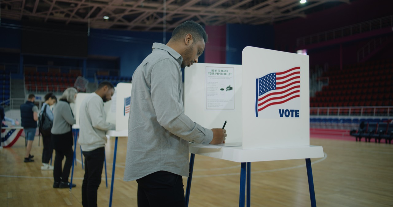
    Featured image: Black voter (Shutterstock / NNPA)

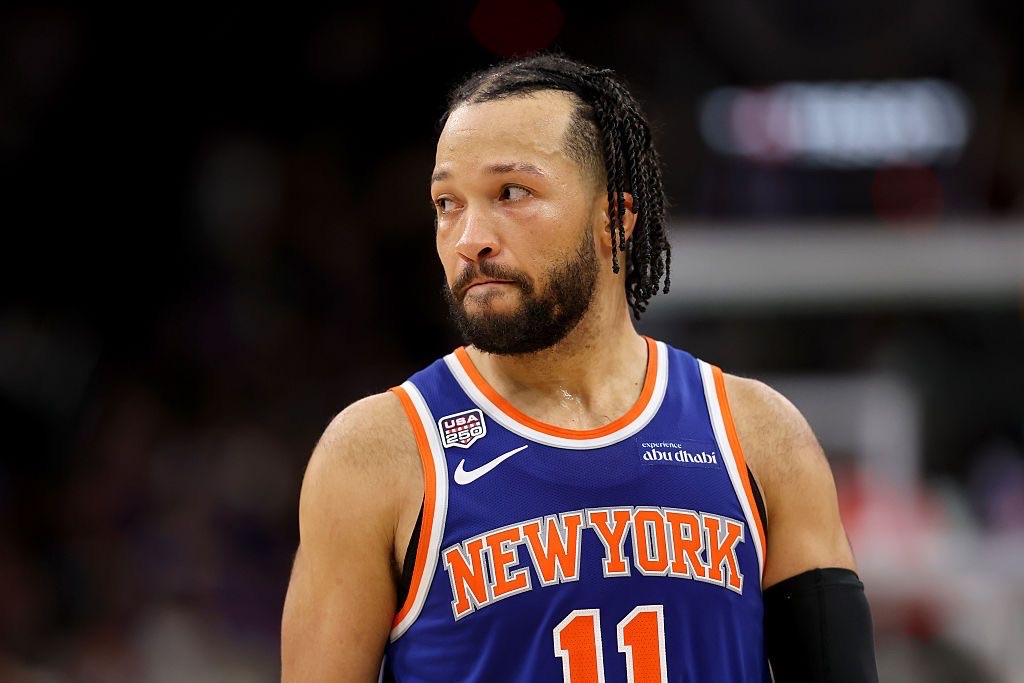
  • Newswire: The Rise, The Sacrifices, And The Victory Of Jalen Brunson

    Newswire: The Rise, The Sacrifices, And The Victory Of Jalen Brunson

     BY STEPHEN A. CROCKETT JR, NEWSONE

    In order to understand Jalen Brunson’s sacrifice – the financial, emotional, and physical toll the lead guard made for the New York “championship” Knicks – you need look no further than his mom and Game 5 of the NBA Finals.

    Brunson’s mom, Sandra, didn’t want to take the team flight to Game 5 in San Antonio because she had a prior obligation to a charity she refused to miss. She knew what was at risk, but she wanted to be there for the kids in her and Jalen’s Second Round Foundation that empowers children to determine their own success by understanding that their background doesn’t determine their future.

    Sandra missed her connecting flight the night before the game, so she flew to Austin instead, rented a car, and drove an hour and a half to make it to the game.

    Because that’s what commitment looks like. It’s the work you do when no one is watching. It’s the sacrifice you make when there is no audience to cheer you on. It’s the willingness to make the drive when you could’ve just forgotten the kids and taken the flight.

    Brunson could have forgotten his teammates, the city of New York, and the people and taken the bag. He could’ve dropped the top on the whip and pressed play on Southern epistemologist, Young Dolph’s “Get paid, young n–ga, get paid” as he left Madison Square Garden. 

    Players leave. Teams trade franchise icons. Owners cry poor while printing money. Every contract negotiation becomes a public debate about maximizing value, securing the bag, and making sure nobody leaves a dollar on the table.

    And generally speaking? That’s good advice.

    Get your money.

    Because if sports have taught us anything, it’s that organizations don’t care about feelings or facts. They care about money. That’s it. 

    Currently, the New York Knicks are the NBA champs from a division often overlooked, in a conference that doesn’t get respect, in a city that hasn’t won a championship in 53 years. To fully understand how long 53 years ago actually was, just know that the number one song in 1973 was “Tie a Yellow Ribbon Round The Old Oak Tree” by some old people named Tony Orlando and Dawn.

    Respectfully.

    Because if sports history has taught us anything, it’s that organizations rarely reward loyalty. They reward production. The moment that production slips, loyalty suddenly becomes a very flexible concept.

    Which is what makes Jalen Brunson’s championship feel so significant.

    Because this isn’t just a story about the New York Knicks winning their first NBA title in generations. It’s a story about a star who chose to believe in something bigger than his next paycheck—and was proven right.

    Brunson could’ve waited and signed a projected five-year, $269 million max contract; instead, he signed a four-year, $156.5 million extension to help bring in better players. It led to the Knicks signing OG Anunoby, Mikal Bridges, and Karl-Anthony Towns. It led to a championship. Leaving $113 million on the table with inflation higher than Willie Nelson standing on top of a giraffe, which is standing on top of the peak of Mount Everest, is insane.

    People called it foolish. People called it risky. Some treated it like financial malpractice. After all, NBA careers are short. One injury can change everything. Why voluntarily leave millions on the table?

    The answer became clear the moment the Knicks raised the Larry O’Brien Trophy.

    Brunson wasn’t thinking about what he could get. He was thinking about what the team could become. Every dollar he didn’t demand gave New York more flexibility. More room to keep talent. More room to build depth. More room to chase a championship instead of merely chasing headlines.

    And now that championship belongs to him. Not because he was the highest-paid player. Not because he had the flashiest endorsement deals. Not because he was chasing individual accolades. Because he understood something that gets lost in today’s sports culture.

    The point isn’t to win the negotiation. The point is to win the damn championship. That’s what makes Brunson’s story resonate beyond basketball.

    We live in a culture obsessed with individual accumulation. More money. More followers. More status. More attention. More everything. Brunson chose a different path. He chose investment. He bet on teammates. He bet on organizational stability.

    Most importantly, he bet on himself.

    And let’s be honest: betting on himself is something Brunson has been doing his entire life. The Dallas Mavericks certainly weren’t doing it. Before he became the face of New York basketball, Brunson was sitting in Dallas, practically begging the Mavericks to recognize what was right in front of them.

    Instead, they hesitated. Again and again.

    Dallas treated Brunson like a complementary piece when he was already becoming a cornerstone. They saw a solid player. New York saw a franchise leader. The Mavericks looked at him and saw someone who benefited from playing alongside Luka Dončić. The Knicks looked at him and saw somebody capable of carrying a franchise on his back.

    Only one organization got it right.

    Now one franchise is celebrating a championship while the other is still living with one of the most expensive miscalculations in modern NBA history. The beauty of Brunson’s rise is that it feels familiar to anyone who has ever been underestimated.

    Too small.

    Not athletic enough.

    Not flashy enough.

    Not marketable enough.

    Not enough.

    For years, Brunson heard some version of that message. Now he’s a champion. Not because he transformed into somebody else. Because everybody else finally caught up to who he already was. And that’s why this title matters so much.

    And in order to understand this, you have to understand how Brunson was raised. 

    The Knicks didn’t just win because Brunson took less money. Basketball is more complicated than that. But his sacrifice helped create the conditions that made winning possible. It set a tone. It established trust. It sent a message to the rest of the roster that the franchise star was willing to prioritize the collective over the individual. Championship cultures don’t magically appear. They’re built through a thousand decisions that prioritize winning over ego. Brunson made one of those decisions. The ring is the reward.

    And perhaps the sweetest part of all this is how completely it rewrites the narrative. For months, people talked about the money Brunson supposedly lost. Today, nobody is talking about the money. They’re talking about the parade. They’re talking about the banner. They’re talking about the championship. Years from now, nobody will remember the salary-cap calculations. Nobody will care about the spreadsheets. Nobody will debate the exact dollar figure he left on the table. They’ll remember that Jalen Brunson became the face of the franchise that brought a championship back to New York.

    They’ll remember that he helped resurrect the Knicks.

    They’ll remember that he won.

    And somewhere in Dallas, they’ll probably remember him too.

    Just not for the reasons they hoped.


    Featured Image: Jalen Brunson (Gregory Shamus / Getty)

  • Newswire: More Than 770,000 Children Are No Longer Receiving SNAP Benefits After Trump Changes Federal Food Program

    Newswire: More Than 770,000 Children Are No Longer Receiving SNAP Benefits After Trump Changes Federal Food Program

    BY NICOLE SANTA CRUZ, PROPUBLICA

    As a House committee debated President Donald Trump’s signature domestic policy bill last year, Republican backers repeatedly emphasized that its changes to the Supplemental Nutrition Assistance Program, also known as food stamps, wouldn’t affect vulnerable people.

    SNAP reforms would “restore integrity” to the program and ensure it works for the “most vulnerable among us, including children,” said Rep. Glenn “GT” Thompson, a Pennsylvania Republican and chair of the House Agriculture Committee.

    Passing the bill would be a “historic accomplishment” that will ensure “those in need can continue to receive the assistance they need,” said Rep. John Rose, a Republican from Tennessee.

    And Rep. Dusty Johnson, a South Dakota Republican, said the bill would focus resources on the “neediest” Americans. “If you are a pregnant woman, your benefits are unaffected. If you have young children at home, your benefits are unaffected by this bill. If you are disabled, your benefits are unaffected by this bill.”

    But nearly a year after the measure was signed into law, the number of children receiving food assistance has plummeted by at least 776,000, according to a ProPublica analysis. At least 12 states break down program participation by age, and of the 1,670,011 people who are no longer receiving benefits in those states, 776,134, or 46%, were children.

    Another analysis reached the same conclusion: Just last month, the nonpartisan Center on Budget and Policy Priorities found there were 700,000 fewer children receiving food assistance.

    Arizona has seen the nation’s largest percentage decline in SNAP participants; 205,223 children are no longer receiving the benefit since July 2025, a 55% drop. Louisiana had the second largest percent decline among children, 22%.

    The U.S. Department of Agriculture, which oversees SNAP, hasn’t detailed the impact on children aided by the program, but initial figures show that compared to February 2025, 4.3 million fewer people received SNAP nationwide in February 2026, leaving 37.8 million participants.

    Although children weren’t the intended targets of the legislation’s changes, they’re increasingly “collateral damage,” said Katie Bergh, a senior policy analyst at the Center on Budget and Policy Priorities.

    If states are trying to comply with the law’s changes to SNAP, they’re likely not focusing on making the program accessible, Bergh said. Other experts said that people may be pushed off the program because of increased paperwork requirements to remain eligible.

    States are required to impose work requirements for most adult recipients, while preparing for two major cost shifts. In October, states will begin covering 75% of the program’s administrative costs. States have been paying 50% of those costs.

    In addition, states will have to pay a larger share of SNAP benefits starting in October 2027, based on their error rate. Error rates reflect overpayments or underpayments of SNAP benefits. While sometimes characterized as fraud, such errors are usually the fault of the state agency or the SNAP recipient, according to USDA, which describes them as “largely unintentional.”

    If a state agency is facing staffing shortages and struggling to comply with new regulations, it will be harder for low-income families to access the benefits, Bergh said. “Families are falling through the cracks.”

    In Massachusetts, for example, the share of SNAP applicants who called an assistance line and couldn’t reach a worker rose from 61% in November to nearly 81% in March, according to the Department of Transitional Assistance, which administers SNAP in the state. The state agency did not respond to a request for comment.

    A USDA spokesperson did not address ProPublica’s questions about the number of children who have lost access to SNAP. “There is no shortage of resources for the most vulnerable among us, including children,” the spokesperson said.

    The three members of the House Agriculture Committee who defended last year’s bill before its passage — Rose, Thompson and Johnson — did not respond to ProPublica’s questions about their statements now that many children no longer receive SNAP benefits.

    Rep. Jim McGovern, a Massachusetts Democrat, asked Secretary of Agriculture Brooke Rollins about her recent comments that it was “good news” that millions of people no longer receive SNAP. If more than 700,000 children have been dropped in the 12 states that report those figures, “that number’s going to be into the millions” when other states are included, he said.

    Rollins responded, “The 700,000 number of children is not correct,” contending that most people who were kicked off SNAP were “fraudulent.”

    “That is not a nonpartisan group that gave you that number,” she said. (ProPublica independently verified the figures reported by the Center on Budget and Policy Priorities.)

    McGovern said he has talked to people who have lost food assistance. “These are people who actually need and rely on this food assistance to provide basic nutrition for their families,” he said.

    Pressure to lower error rates “creates a temptation for the states to bump off working families,” said Parke Wilde, a food economist at Tufts University. Working families may have more volatile incomes, making it harder for state agencies to assess benefits accurately.

    “When they say we want to preserve SNAP for those with the greatest need, they’re sort of acknowledging that they want the scale of the SNAP program to be smaller,” he said.

    Mariana Chilton, an expert in child hunger at University of Massachusetts, Amherst, said a smaller program won’t save money in the long run. Research shows that children who receive SNAP benefits are healthier, have better academic outcomes, use hospitals less often and have better mental health as teenagers.

    She called the situation a “public health crisis” in the making. “When children are not healthy, this affects children today and it affects them throughout their lifetimes,” she said, likening hunger during early childhood to a brain injury.

    As Arizona’s SNAP participation drops, nonprofits are feeling the effects. St. Mary’s Food Bank, the largest in the state, has seen a 15% increase in need this year, which translates into 300,000 more visits from people in search of food, said Milt Liu, the chief executive officer.

    “It’s important for everyone to realize that policies have implications for people on the edge, and we’re seeing that in our line every day,” he said.

    On a recent morning, Ana Alvarez waited in a line of vehicles at a St. Mary’s food bank in Phoenix. Alvarez, a single mother of five who works at a restaurant, started coming to St. Mary’s after she lost her SNAP benefits in September.

    She reapplied for SNAP with the Arizona Department of Economic Security in December, but the application is still pending. The department did not respond to questions about its backlog.

    She clips coupons and has cut out trips to the zoo and restaurants with her children. The slow season at the restaurant where she works is about to hit. And as summer temperatures rise, Alvarez wonders how she will afford her electric bill, her rent and her car payment.

    At least once a week she contacts the agency about her application. The last time she called, a worker told her what others have in the past: She will have to keep waiting.


    Featured Image: Mary’s Food Bank in Phoenix (Rob Schumacher/THE REPUBLIC/IMAGN)

  • County Commission Financial Report May 2026

    Subscribe to continue reading

    Subscribe to get access to the rest of this post and other subscriber-only content.

  • City council addresses sudden water bill increases and announces a myriad of June events

    City council addresses sudden water bill increases and announces a myriad of June events

    by Maya Quinn, managing editor

    On Tuesday, June 9th, the Eutaw City Council met for its regular session. All city council members were present for the session, with Councilwoman Watkins arriving shortly after new business discussions began.

    The City of Eutaw’s water system recently received updates through satellite upgrades and new meters. Mayor Cockrell explained that the city had been operating under a billing rate from 2024 and was required by state auditors to implement the 2026 rate moving forward. “We are working diligently to improve the water system,” Mayor Cockrell began, “We want to serve every customer the right way.” Cockrell acknowledged that many citizens are receiving heavily inflated bills due to antenna readings that do not account for water leaks. He urges citizens to come to city hall to have their rates adjusted, and that city workers are working up to 14-hour days on leaks. New pipe installations are underway as well.

    During council member reports, Councilman Woodruff also testified to the city workers’ efforts. “We have some tremendous workers,” he stated as he recounted personnel answering a 5:00 am call on a Friday morning in his district. Workers solved the issue in less than 2 hours and continued to work well into the evening, ensuring water services were not impeded by any leaks.

    Council members and attendees also presented several upcoming events across the city this June:

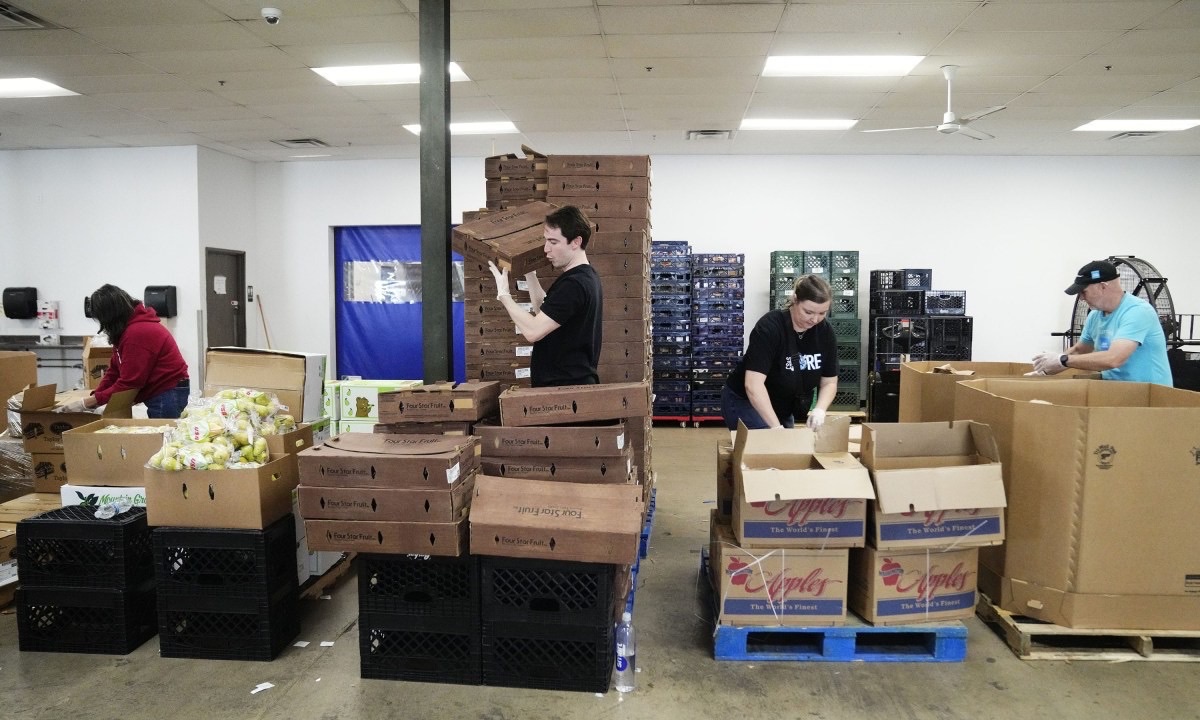
    • June 13: Councilwoman Watkins will be handing out free, fresh produce at 218 Boligee St. at 10:00 am
    • June 16: Councilman French reminded everyone that there are run-off and Senate elections to vote for
    • June 19: Councilman Woodruff announced a Juneteenth Celebration at Boligee Community Center Stadium from 5:00-8:30 pm
    • June 20: Councilman French announced a community play on bullying in Demopolis, performed by local youth
    • June 27: Councilwoman Logan announced a 250 Years of America Celebration starting with a parade at 3:00 pm and ending with fireworks at R.H. Young Community Center at 8:30 pm


    The following business items were approved or discussed during the session:

    1. Approved the proposal from Shawn Home Improvement, LLC for painting of the gym; Councilwoman Logan opposed. Council confirmed that there is no mold in the building.
    2. Approved travel, registration, and meals for Councilwoman Hunter to attend CMO training ALM 2026 in Birmingham, AL, on June 25, 2026
    3. Approved travel, registration, and meals for Councilwoman Logan to attend CMO training ALM 2026 in Montgomery, AL, on July 30, 2026
    4. Approved travel, registration, and meals for Chief Kendrick Howell to attend a Conference in Fort Payne, AL, June 9-12, 2026
    5. Approved ARSES/APEAL’s Retiree Longevity Bonus Legislation (Act 2026-608)
    6. Discussed intent to re-negotiate Property Use Agreement between the City of Eutaw and the Sixth Days Saddle Club

    The next regular session will be held on June 23, 2026, at 5:00 pm. Please urge your fellow citizens to attend and bring any concerns before the council. As Mayor Cockrell stated, the council is eager to “follow up on community engagements for ideas and visions from citizens.”


    Featured Image: Eutaw City Council members at the June 9th regular session (The Democrat media library)
  • Newswire: Congressional Black Caucus presses companies in the US to oppose Republican redistricting push

    Newswire: Congressional Black Caucus presses companies in the US to oppose Republican redistricting push

    by Matt Brown, AP News

    WASHINGTON (AP) — The Congressional Black Caucus on Tuesday called on major corporations across the U.S., including those that previously expressed support for voting rights and racial justice, to oppose redistricting efforts by Republican-led states that seek to eliminate majority-Black U.S. House districts.

    In a letter sent to more than 250 companies, members of the Black Caucus urge them to condemn the redistricting efforts, which the lawmakers describe as “coordinated efforts to silence Black voices at the ballot box.” Some of the companies had cosigned their own message to Congress five years ago urging lawmakers to pass the John Lewis Voting Rights Act, a Democratic proposal to restore and update the Voting Rights Act.

    That 2021 coalition, Business for Voting Rights, was backed by many of the country’s most valuable and influential companies, including Apple, Amazon, Google, Meta, Microsoft, Tesla, Salesforce, Target, PayPal, Intel and Starbucks.

    Tuesday’s letter is the latest effort by the Congressional Black Caucus and its allies to gather support for preventing more Republican-led states from redrawing their legislative maps in ways that would dilute Black political representation. Several states have moved to eliminate congressional districts represented by Black Democratic lawmakers after a U.S. Supreme Court ruling last month that severely weakened a key provision of the Voting Rights Act.

    “Corporations that have profited from Black consumers, relied on Black workers, and amassed wealth in part from Black communities cannot look away while Black political power is dismantled in plain sight,” Rep. Yvette Clarke, chair of the Black Caucus, said in an interview.

    A woman wearing an orange patterned jacket holds a decorative fan and a document labeled 'U.S. House of Representatives' outside the Capitol building, with a crowd in the background.
    Rep. Yvette Clarke, D-N.Y., chair of the Congressional Black Caucus, prepares for a news conference at the Capitol (AP Photo by J. Scott Applewhite)

    Clarke described the letter as “putting corporate America on notice,” but she said the caucus was not seeking an adversarial relationship with corporations. Among those receiving Tuesday’s letter were companies based overseas that have a significant presence in the U.S.

    The caucus last week called for Black athletes to boycott public universities in states that are gerrymandering their congressional maps to eliminate districts held by Black lawmakers. The 59-member Congressional Black Caucus consists entirely of Democrats, including more than a third from Southern states.

    Some lawmakers have said mass protests and federal legislation might be necessary to undo the efforts underway in Republican-led states. Any new federal voting rights law would almost certainly require Democrats to secure majorities in both chambers of Congress and win the presidency.

    It is unclear how companies will respond to the demands. One firm, the outdoor clothing company Patagonia, said that it had received the caucus’ letter and endorsed its message. 

    “A healthy business depends on a healthy democracy,” said Corley Kenna, an executive at Patagonia. “Patagonia stands with those who work to increase representation and defend free and fair elections.”

    The Associated Press reached out for comment to dozens of companies that were sent a letter by the caucus, but did not receive a response from most firms. Microsoft declined to comment.

    “Many companies that previously issued statements after the murder of George Floyd, pledged billions toward racial equity initiatives, and spoke forcefully in defense of democracy following January 6 now face a defining test of whether those commitments were rooted in principle or convenience,” the caucus’ letter states.

    It also represents the latest instance of the caucus expressing frustrations with corporate America. A 2024 Black Caucus report noted that lawmakers were “troubled that some corporations that made pledges in 2020 have taken several steps in the opposite direction,” such as rolling back or failing to follow through on pledges to diversify their workforces.

    “We understand who the occupant in the White House is and the reality of Republicans being in charge,” Democratic Rep. Steven Horsford of Nevada said of the caucus’ message. “But what corporate America also understands is that there will be a shift at some point.”

    The letter calls on companies to publicly condemn the redistricting plans, meet with Black Caucus members to discuss corporate America’s role in protecting voting rights and disclose their political donations to Republican politicians in states that are redistricting their congressional maps.

    President Donald Trump last year kicked off the unusual mid-decade round of congressional redistricting when he pushed Texas lawmakers to redraw their maps in a way that would add Republican seats. Democratic-led California responded, but it has been mostly Republican states redrawing their lines since as the party tries to maintain its majority in the U.S. House during this year’s midterm elections.

    The effort was supercharged by the Supreme Court decision, which allowed even more Republican states to redraw congressional maps that previously had protected minority communities.


    Horsford, who chaired the Black Caucus during President Joe Biden’s Democratic administration, said the caucus is demanding that companies “stand on the side of democracy, fairness and equal representation.” 

    “This is about power, who holds it and what it’s used for,” he said. “And when you’re diluting Black economic and political power, we need to know where these companies stand in this moment, and what side of history they’re on.”


    Featured Image: Rep. Terri Sewell, D-Ala., center, is surrounded by members of the Congressional Black Caucus as they speak to reporters in the wake of the Supreme Court ruling to strike down a majority Black congressional district in Louisiana, at the Capitol in Washington, Wednesday, April 29, 2026. (AP Photo/J. Scott Applewhite, File)
  • Newswire: Music Is Medicine: A Love Letter To Black Music Month

    Newswire: Music Is Medicine: A Love Letter To Black Music Month

    by Eboni Williams, LPCC, NewsOne

    In honor of Black Music Month, I believe it is necessary to give flowers to my very favorite medium of expression: music. 

    Coming from a musical family — and having multiple symbols of music tattooed on my skin — I know intimately that few things can capture the full spectrum of human emotion the way music does. And I mean the full spectrum. The kind of range that makes you laugh, ugly cry, throw your hands up, and feel seen, all within the same three minutes and forty-two seconds.

    Music isn’t background noise. For so many of us, it’s the thread woven through every significant moment of our lives. It’s the song playing on the night you fell in love, the one that got you through the worst morning of your life, the one you can’t hear anymore without being teleported right back to that place, that person, that version of yourself. A good friend of mine described it perfectly when he said, A song can be a marker for a time, event, person, or experience. It’s an emotion creator.”


    Music as Catharsis: Feeling It All So You Don’t Explode

    Music can be a vehicle for cathartic release. It’s a safe place to feel all of it: the love, the rage, the longing, the sorrow, the joy and pain, and the victory lap (shouts out to Frankie Beverly and Nipsey Hussle for those last two). There’s something profoundly freeing about a song that meets you exactly where you are and refuses to rush you out of your feelings.

    Take Erykah Badu’s Green Eyes. In that song, we follow a woman reconciling the deeply complicated emotions of a relationship coming to an end. If you listen closely, you can hear her moving through the stages of grief in real time: denial, anger, bargaining, depression, and finally, achingly, acceptance. It’s not a song so much as it is a sonic therapy session. And anyone who has ever loved someone through a painful ending knows exactly what she means with every note.

    That’s what music does. It takes the unspeakable and makes it singable.


    When Words Aren’t Enough

    Sometimes, even language fails us. The English language has its limits when it comes to expressing the depths of human suffering. This is where music steps in and does what words simply cannot.

    There’s a particularly poignant scene in the Oscar-winning film Sinners in which Delta Slim, played brilliantly by Delroy Lindo, recounts the harrowing and traumatizing story of his friend’s brutal lynching. At one point in the scene, Slim is so overcome by emotion that only a guttural moan — raw and unfiltered — can accurately convey the agony conjured by the memory. That moan, accompanied by Sammie’s guitar, morphs into an impromptu Blues tune. In my opinion, it’s one of the film’s most powerful moments because it perfectly illustrates music’s ability to express what we feel when our own words aren’t up to the task.

    The Blues, after all, wasn’t born in a recording studio. It was born in the fields, in the grief, in the survival. Black music has always been a container for pain that could not otherwise be safely articulated or held.


    Music as Motivation (For Better or Worse)

    Here’s where it gets interesting — and a little complicated.

    Music can motivate us, both positively and negatively. We’ve all been there: you’re in the gym, you’re tired, you’re done, and you are *this close* to packing it up early. Then a banger drops in your playlist that somehow rewires your entire nervous system, and suddenly you’ve got three more sets in you. That is not a coincidence. Music activates the brain’s reward system, releases dopamine, and genuinely shifts your physiological state. The right song, at the right moment, can push you past what you thought your limit was.

    Beyond the gym, music can move people to make real changes. It can drive you to finally do that thing you’ve been sitting on. It can restore your faith when it’s running on fumes. It has historically started movements, not figuratively, but literally. Think about the role of music in slavery, in the Civil Rights Movement, in the rise of hip-hop as social commentary, in protest anthems that galvanized generations. Music doesn’t just reflect culture. It shapes it.

    We also can’t ignore that the power of music can go both ways. Some of us can recall a time when hearing a particular song put us in the mood to do a very wrong thing and feel completely justified doing it. You know, the ones that can “make you do wrong” (*cough*…hot grits…*cough*). 

    The power of music is morally neutral; it amplifies whatever it touches. There have even been legal cases where people tried to argue that “the music made them do it.” That should tell you everything you need to know about just how deeply music can reach into our psychology.


    Music as Medicine: The Neurological Component

    Dr. Oliver Sacks, renowned neurologist and author of Musicophilia: Tales of Music and the Brain, put it this way: “Music can lift us out of depression or move us to tears — it is a remedy, a tonic, orange juice for the ear. But for many of my neurological patients, music is even more — it can provide access, even when no medication can, to movement, to speech, to life. For them, music is not a luxury, but a necessity.”

    Read that again. Even when no medication can.

    Music therapy is a legitimate clinical practice used with patients experiencing dementia, Parkinson’s disease, stroke recovery, trauma, and more. Patients who have lost the ability to speak can often still sing. People with severe memory loss can recall songs from decades ago with perfect clarity. Music accesses parts of the brain that standard treatment sometimes cannot reach. It doesn’t just feel healing; it is healing, documented, and clinically supported.


    Music as the Group Therapy We Didn’t Know We Were In

    In some ways, music benefits us the same way group therapy does. One of the reasons group therapy can be so powerful is that it allows us to hear our own feelings articulated by someone else, which validates our experience in a way that our own personal reflection may not. You stop feeling like something is wrong with you. You realize you’re not alone.

    Music gets us. It sees us. It confirms that someone else has felt exactly what we’re feeling: the jealousy, the anger, the grief, the hope, the heartbreak, the complicated joy. It tells us we’re not crazy and we’re not alone. And when we sing along, or rap every word, or hum it quietly under our breath, we get to release it all. The good, the bad, the ugly, and the in-between.

    That’s not a small thing. In a world that often pushes us to perform wellness rather than practice it, having a space (even if that space is just your car, a pair of headphones, or your shower) where you can feel it all and let it move through you? That’s medicine. And Black music, in particular, has been giving it to us for generations.

    Turn it up.


    Featured image: Black woman listening to music (Westend61 on Getty Images)
  • Newswire: Former NBA Star Derrick Coleman Rejects Alabama Honors Over Redistricting

    Newswire: Former NBA Star Derrick Coleman Rejects Alabama Honors Over Redistricting

    Subscribe to continue reading

    Subscribe to get access to the rest of this post and other subscriber-only content.