Category: Newswire

  • Newswire: U.S. is one of three countries to vote against U.N. resolution calling slavery a ‘crime against humanity’

    Newswire: U.S. is one of three countries to vote against U.N. resolution calling slavery a ‘crime against humanity’

    by The Associated Press

    UNITED NATIONS — The U.N. General Assembly on Wednesday adopted a resolution declaring the trafficking of enslaved Africans “the gravest crime against humanity” and calling for reparations as “a concrete step towards remedying historical wrongs.”

    The resolution also urges “the prompt and unhindered restitution” of cultural items — including artworks, monuments, museum pieces, documents and national archives — to their countries of origin without charge.

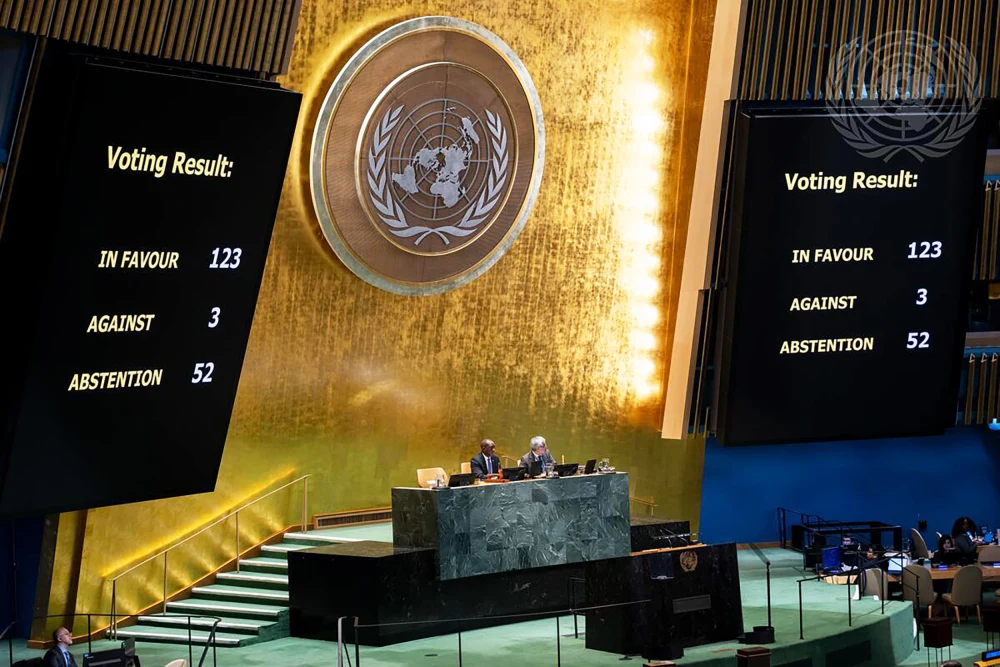
    The vote in the 193-member world body was 123-3, with 52 abstentions. Argentina, Israel and the United States were the three members voting against the resolution. The United Kingdom and all 27 members of the European Union were among those that abstained.

    While the United States opposes the past wrongdoing of the transatlantic slave trade and all other forms of slavery, it “does not recognize a legal right to reparations for historical wrongs that were not illegal under international law at the time they occurred,” deputy U.S. ambassador Dan Negrea said before the vote.

    “The United States also strongly objects to the resolution’s attempt to rank crimes against humanity in any type of hierarchy,” he said. “The assertion that some crimes against humanity are less severe than others objectively diminishes the suffering of countless victims and survivors of other atrocities throughout history.”

    In the United States, support for reparations gained momentum in the wake of the murder of George Floyd by a Minneapolis police officer in 2020. However, the issue has been a difficult one and has been caught up in a broader conservative backlash over how race, history and inequality are handled in public institutions.

    Unlike U.N. Security Council resolutions, General Assembly resolutions are not legally binding but are an important reflection of world opinion.

    “Today, we come together in solemn solidarity to affirm truth and pursue a route to healing and reparative justice,” Ghanaian President John Dramani Mahama, a key architect of the resolution, said before the vote.

    “The adoption of this resolution serves as a safeguard against forgetting,” he said. “Let it be recorded that when history beckoned, we did what was right for the memory of the millions who suffered the indignity of slavery.”

    Mahama noted that the vote was taking place on the International Day of Remembrance of the Victims of Slavery and the Transatlantic Slave Trade, honoring the memory of about 13 million African men, women and children enslaved over several centuries.

    Diplomats applauded and some cheered the adoption of the resolution.

    The history of slavery and “its devastating consequences and long-lasting impacts” must never be forgotten, said British acting U.N. Ambassador James Kariuki, speaking on behalf of mainly Western nations, including some that enslaved Africans.

    Western nations are committed to tackling the root causes that persist today, he said, pointing to racial discrimination, racism, xenophobia and intolerance. He said “the scourge of modern slavery” also must be addressed — trafficking, forced labor, sexual exploitation and forced criminality.

    Cyprus’ deputy U.N. ambassador, Gabriella Michaelidou, speaking on behalf of the E.U., echoed the U.S. and U.K. on concerns about “the use of superlatives” that imply “a hierarchy among atrocity crimes.”

    Michaelidou also cited the E.U.’s concern about the resolution’s “unbalanced interpretation of historical events” and legal references that are inaccurate or inconsistent with international law, including “suggestions of a retroactive application of international rules which was non-existent at the time and claims for reparations.”

    The resolution “unequivocally condemns the trafficking of enslaved Africans and racialized chattel enslavement of Africans, slavery and the transatlantic slave trade as the most inhumane and enduring injustice against humanity.”

    In approving the resolution, the General Assembly affirms the importance of addressing the historical wrongs of slavery that promotes “justice, human rights, dignity and healing.”

    The resolution calls on U.N. member nations to engage in talks “on reparatory justice, including a full and formal apology, measures of restitution, compensation, rehabilitation, satisfaction, guarantees of non-repetition and changes to laws, programs and services to address racism and systemic discrimination.”

    It encourages voluntary contributions to promote education on the transatlantic slave trade and asks the African Union, the Caribbean Community and the Organization of American States to collaborate with U.N. bodies and other nations “on reparatory justice and reconciliation.”
  • Newswire: 14 ICE detainees have died in custody; Mexican President and authorities question recent deaths

    Newswire: 14 ICE detainees have died in custody; Mexican President and authorities question recent deaths

    By Laura Strickler, Colleen Long and Daniella Silva, NBC News

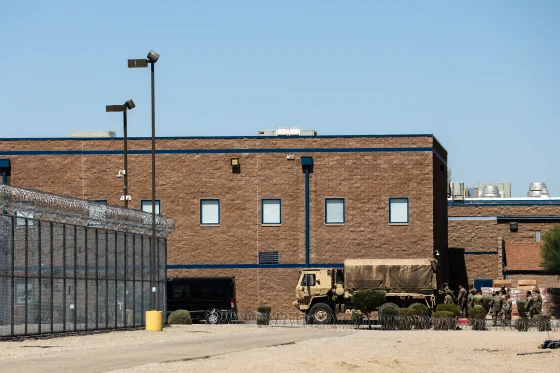
    So far this year, 14 people have died in U.S. Immigration and Customs Enforcement custody, including a Mexican man who was found unresponsive last week at a facility outside Los Angeles, according to data from the Department of Homeland Security.

    As of mid-February, ICE was holding more than 68,000 immigrants, among the highest numbers ever, according to federal data. The figure fluctuates as immigrants get deported and others are taken into custody.

    In 2025, ICE reported 33 total in-custody deaths and in 2024 there were 11.

    As the Trump administration has sought to drastically increase space to detain immigrants as part of its mass deportation campaign, holding facilities have struggled with disease and overcrowding.

    Homeland Security recently changed contractors at its largest immigrant detention center at Fort Bliss outside El Paso, Texas, just seven months after it opened.

    The tented facility known as Camp East Montana has had a troubled history, starting with a fatal construction accident and three detainee deaths in less than six weeks, one of which was ruled a homicide. There have also been outbreaks of both tuberculosis and measles.

    The Trump administration has said it is shifting its deportation strategy to increase its focus on arresting and deporting immigrants who have criminal records, following the shooting deaths of two U.S. citizens by federal immigration officers during deportation operations in Minnesota.

    On March 25, Jose Guadalupe Ramos-Solano, who was in federal custody in California after he was convicted of possession of a controlled substance and theft, was found by security to be unresponsive in his bunk. ICE said in a statement that staff performed CPR and other life-saving procedures, and he was taken to Victor Valley Global Medical Center, where he was pronounced dead.

    Mexico President Claudia Sheinbaum said during her daily press conference Monday that Mexico would take stronger measures to protest following the reported death, focusing particularly in the Los Angeles region.

    “There are several actions we are going to take to protest the death of another Mexican, one of our fellow citizens, in the United States.”

    Ex-FBI agents on Trump cases cite Todd Blanche’s remarks in suit over ‘illegal’ firings

    Ramos-Solano was arrested by ICE on Feb. 23 and sent to the Adelanto detention center. He received a physical evaluation during his intake screening and was found to have diabetes, hyperlipidemia and hypertension. ICE said he received routine medical care in custody, including daily medication for his conditions.

    Ramos-Solano’s cause of death was not immediately made public, and Homeland Security officials didn’t respond to questions about his cause of death.

    At the Mexican Consulate in Los Angeles on Monday, members of Ramos-Solano’s family wept as they spoke out against his death and demanded answers.

    “What happened to my dad was very inhumane,” said Gloria Ramos, the daughter of Ramos-Solano. “I think my family and I deserve to know the truth of what happened to my dad.”

    The man’s son, Jorge Ramos, paused often as he spoke, becoming overcome with emotion.

    “He was a good dad. He was a good person. He was not a criminal. He was a hard worker,” he said.

    An official with Mexico’s foreign ministry attended the news conference and denounced the number of deaths in ICE custody this year.

    “Four Mexican nationals have died, apparently due to medical complications, highlighting a pattern of persistent structural deficiencies,” Vanessa Calva Ruiz, the director general of consular protection and strategic planning said. “The recurrence and frequency of these deaths are absolutely unacceptable.”

  • Newswire: Civil Rights leaders and Congressional Black Caucus unite to challenge Trump Administration policies

    Newswire: Civil Rights leaders and Congressional Black Caucus unite to challenge Trump Administration policies

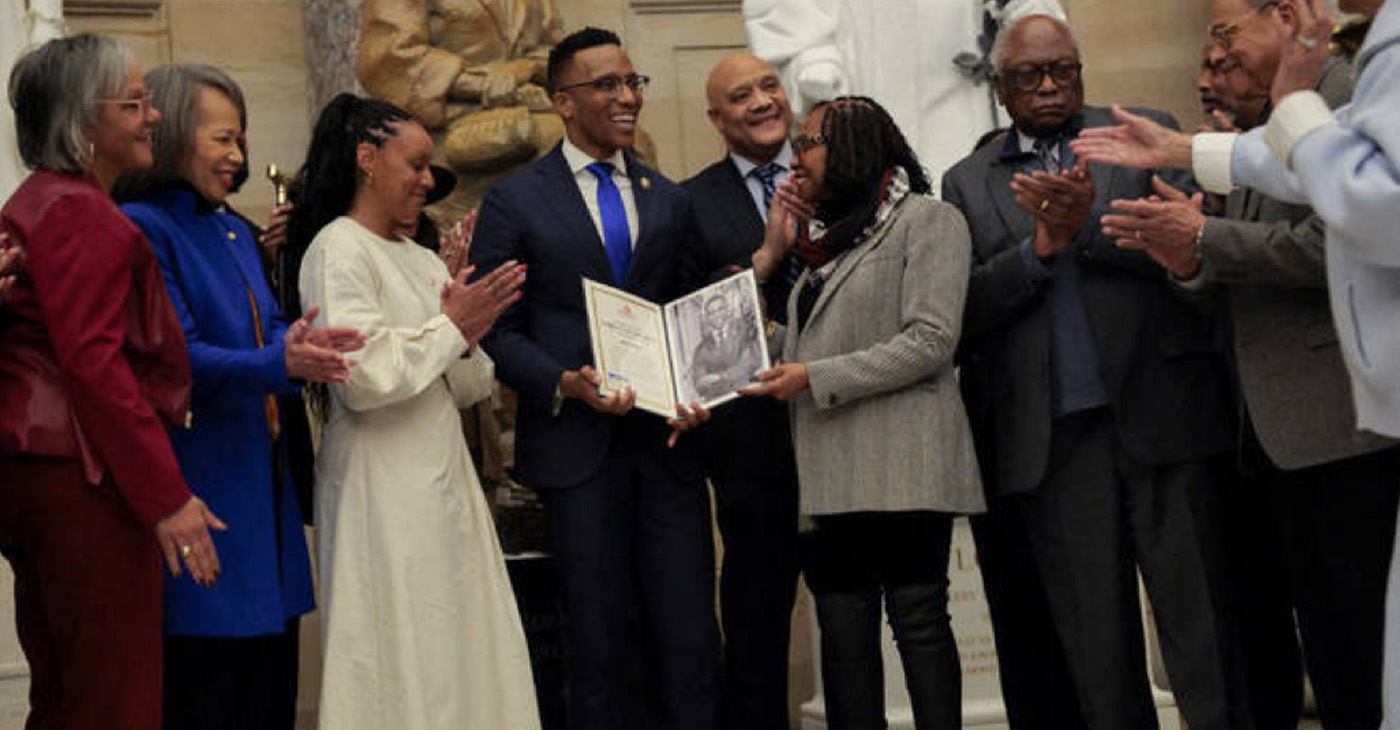
    During a recent gathering on Capitol Hill, lawmakers and advocacy leaders sharply criticized a series of policy decisions implemented since Trump’s return to the White House, as well as the president’s rhetoric and governing approach. While participants outlined broad areas of concern, they provided limited specifics regarding immediate tactical responses.

    Representative Yvette Clarke of New York, chair of the CBC, accused the administration of pursuing policies that undermine civil rights protections, restrict voting access, weaken social safety programs, and concentrate economic and political power among elite interests at the expense of marginalized communities.

    Throughout a series of strategy sessions, activists and legislators coordinated outreach plans and policy priorities spanning education, historical curriculum standards, healthcare access, immigration enforcement, and anti-discrimination protections. Participants described the discussions as both sobering and motivating, emphasizing the urgency of collective action ahead of upcoming elections.
    Several meetings focused on safeguarding voter access during the midterm elections, amid growing concerns among activists following a federal law enforcement raid at an elections facility in the Atlanta metropolitan area. Lawmakers also examined potential legislative and legal responses to an anticipated Supreme Court ruling that could weaken a key provision of the Voting Rights Act of 1965.

    House Minority Leader Hakeem Jeffries signaled that a wide range of responses remains under consideration, including public demonstrations, organized boycotts, and expanded legal challenges. “It’s an all-hands-on-deck moment, and every tool available to the leadership collectively has got to be deployed to get this thing turned around,” Jeffries said following a press conference.

    The renewed mobilization comes as the administration continues efforts to curtail diversity, equity, and inclusion (DEI) initiatives across federal agencies, higher education institutions, and segments of the private sector. Early in his second term, Trump signed executive orders prohibiting what his administration described as “illegal DEI” programs within government entities and organizations receiving federal support, alongside threats to withhold funding from institutions that fail to comply.

    Administration officials have also advanced initiatives aimed at reshaping how American history and national culture are presented in schools, museums, and public institutions. Concurrently, federal agencies have increased scrutiny of civil rights complaints alleging discrimination against white individuals.
    In response, civil rights groups and Democratic lawmakers have launched numerous lawsuits challenging anti-DEI measures. Recent legal developments included the administration’s decision to abandon an appeal of a federal court ruling that blocked attempts to deny funding to educational institutions over DEI-related policies.

    With Democrats currently lacking majority control in either chamber of Congress, oversight options remain limited, prompting advocacy groups to focus on litigation, state-level action, and grassroots organizing ahead of the midterm elections. Many leaders acknowledged that the rapid pace of policy changes over the past year has forced civil rights organizations into a period of strategic recalibration.

    Maya Wiley, president and CEO of the Leadership Conference on Civil and Human Rights, argued that the administration’s agenda repurposes legal frameworks originally designed to advance equality. “This is about how this administration is using the tools we built as a Black community to ensure that all of our people are protected,” she said.

    Parallel efforts are emerging at the state level, where a coalition of civil rights organizations and Democratic attorneys general from fourteen states and the District of Columbia has launched a legal initiative to defend DEI and accessibility policies. Illinois Attorney General Kwame Raoul said the campaign aims to ensure that fundamental civil rights protections remain enforceable through coordinated legal action.

    The effort unfolds amid an evolving judicial landscape. Federal courts remain divided over race-conscious policies in hiring and workplace protections, while the Supreme Court’s conservative majority has already curtailed the use of race in college admissions and signaled skepticism toward race-based considerations in public policy.
    Despite acknowledging the scale of the challenge, civil rights leaders framed the moment as a defining political and legal struggle. Marc Morial, president of the National Urban League, underscored the movement’s resolve, declaring: “We commit today to fight and fight and fight until hell freezes over, and then, I can assure you, we will fight on the ice.

  • Newswire: First 6 days of War on Iran cost US $11.3 Billion, Pentagon says, But we can’t afford SNAP, right?

    Newswire: First 6 days of War on Iran cost US $11.3 Billion, Pentagon says, But we can’t afford SNAP, right?

    “They got money for war, but can’t feed the poor.” – Tupac Shakur

    According to the Pentagon, the first week of the war against Iran that President Donald Trump involved the U.S. in voluntarily, not out of any discernible necessity, has cost the nation upwards of $11 billion.
    The New York Times reported that Pentagon officials revealed the estimated price tag for the first six days of this war of choice to lawmakers in a closed-door briefing on Capitol Hill on Tuesday, saying the cost of the war had already exceeded $11.3 billion.
    What’s worse is that the estimate doesn’t include all costs, and it’s much higher than previously projected.


    From the Times: The estimate did not include many of the costs associated with the operation, such as the buildup of military hardware and personnel ahead of the first strikes. For that reason, lawmakers expect the number to grow considerably as the Pentagon continues to calculate the costs that accumulated just in the first week.

    Still, it appeared to be the most comprehensive assessment Congress had received so far amid mounting questions about the objectives, scope, and time frame for the war. The New York Times and The Washington Post reported earlier that defense officials had said in recent congressional briefings that the military used up $5.6 billion of munitions in the first two days of the war.

    That is a far larger amount and munitions burn rate than had been publicly disclosed. The Center for Strategic and International Studies had estimated that the first 100 hours of the operation cost $3.7 billion, or $891.4 million each day.

    Not long ago, the U.S. government was shut down for roughly a month and a half, largely because one particular party thought we couldn’t afford to extend health care subsidies. MAGA Republicans are still trying to convince the nation that cutting SNAP benefits is an absolute necessity, lest they bankrupt the U.S. Trump has been telling U.S. citizens to cut back on their spending because his promise to bring down the price of goods turned out to be big, beautiful bullsh-t.

    But we can afford a war of choice that has cost a billion dollars nearly a dozen times over in the first week.

    Oh, well — at least our strikes on Iran aren’t killing innocent school children or anything like that.

    Meanwhile, the Trump administration just keeps boasting about how it is “DEVASTATING” Iran with constant missile strikes. The tweet below was posted by the White House on the same day it was revealed that a preliminary investigation showed the U.S. was likely responsible for a missile striking an Iranian elementary school, reportedly killing 175 people, the overwhelming majority of whom were children.

    “We won’t stop until the military objectives are met,” the White House tweeted.

    Apparently, the administration means what it says, no matter the cost, whether we’re talking about the cost of lives or additional billions in spending that we’ve been told the nation can’t afford to spend on education, food security, healthcare, or anything else that would actually put “America first.” (And that’s their slogan, not all ours.)


    Seriously, if there was any nation in need of an actual regime change, it’s currently the good, old U.S. of A.

  • Newswire: U. S. Senate passes most robust Affordable Housing Bill in decades

    Newswire: U. S. Senate passes most robust Affordable Housing Bill in decades

    Affordable housing has long been one of the biggest roadblocks to wealth generation for the average American. Home building has never truly recovered since the 2008 financial crisis, with housing demand far outpacing supply. In an effort to address the issue, the Senate passed a bipartisan bill to dramatically increase the supply of affordable housing nationwide.

    According to NBC News, the 21st Century ROAD to Housing Act, drafted by Sens. Tim Scott (R-S.C.) and Elizabeth Warren (D-Mass.), passed in a 89 to 10 vote. “It’s Democrats. It’s Republicans. It’s pieces they built out together,” Warren told NPR. “That is the strength of this bill.”

    “It’s not a Republican issue or a Democrat Issue,” Scott said ahead of the vote. “It’s an issue about helping moms like the one who raised me, the amazing woman that she was, become homeowners.”

    It’s rare to see this level of bipartisanship in modern-day U.S. politics, but affordability is one of the top issues facing everyday Americans. With a growing number of voters feeling like the Trump administration, and by extension, the GOP, aren’t doing anything to address the issue, this bill gives both Democrats and Republicans a needed victory ahead of the midterms.

    The 303-page bill takes a two-pronged approach toward creating more affordable housing. It creates grants and pilot programs to encourage the building of more affordable housing, while also “cutting regulatory red tape, lowering costs and expanding housing supply while generating no new spending,” according to Scott.

    “If we want to bring down the cost of housing, we’ve got to build a lot more,” said Warren. “And what I love about this bill is that it has more than 40 different provisions in it, all of which aim in the same direction, which is to give a push toward building more housing.”

    The bill also targets the growing trend of private equity firms and hedge funds buying homes in a section called “Homes Are For People, Not Corporations,” which “prohibits large institutional investors from purchasing certain single-family homes, in an effort “to promote home ownership opportunities for American families, not corporations.” One of the key provisions in this section requires corporations to sell any single-family homes they may own after seven years.

    This section received the most push back from several congress members, including Sen. Brian Schatz (D-Hawaii), the lone Democrat who voted against the bill.

    “There’s literally no reason for this,” Schatz said on the floor. “Anyone who wants to build housing and then provide it for rent is going to be forced to sell after seven years. … A lot of these folks are not actually in a position to sell after seven years. They will not have made their money back.”

    It appears Schatz is missing the point of this provision, which seems to be discouraging the slow creep of private equity into the housing market.

    The House passed a similar, more limited version of the bill last month. Many of the provisions of the House bill were included in the Senate’s version, so hopefully, it won’t take long for the House to reconcile the two bills. Should the bill pass in the House, it’s unclear if President Donald Trump would sign it, as he recently said he would refuse to sign any legislation until the SAVE America Act passes. House Speaker Mike Johnson recently told his colleagues that Trump privately relayed his laser focus on the SAVE America Act and said, “no one gives a (bleep) about housing.”

    White House Spokesperson Davis Ingle told NBC News that Johnson’s account was “not accurate whatsoever” and that Trump “has been laser-focused on making housing more affordable.” You know, I have serious doubts about that.

    At a time when prices are going up for basically every essential good as a result of his misguided war in Iran, it would behoove Trump to give a damn about affordable housing.

  • Newswire: Advocates revitalize push for Medicaid Expansion in Alabama

    Newswire: Advocates revitalize push for Medicaid Expansion in Alabama

    MONTGOMERY, Ala. – More than 50 advocates with the Cover Alabama coalition came to the Alabama State House on Tuesday, March 10, 2026, to urge their lawmakers to expand Medicaid. The advocates highlighted a new analysis from Families USA, a nationwide nonprofit consumer health advocacy and policy organization.

    Alabama is losing $181.6 million in 2026 by covering millions in state health care spending that otherwise could be paid for by the federal government under Medicaid expansion, according to the new Families USA report. Medicaid expansion would generate $71.8 million in net savings for Alabama this year, the report estimated. And that amount would not include additional revenue from economic activity resulting from expansion.

    The report points to numerous potential funding sources that could help the state address our health care crisis. These include increasing the state cigarette tax and closing an income tax loophole that overwhelmingly benefits the wealthiest households.

    “Alabama can’t afford not to expand Medicaid,” said Debbie Smith, Alabama Arise’s Cover Alabama campaign director. “The most costly option is doing nothing.”

    160,000+ Alabamians are in state’s health coverage gap

    Tens of thousands of Alabamians have seen soaring costs this year for Marketplace health coverage under the Affordable Care Act (ACA). These price increases came after Congress failed to renew enhanced Premium Tax Credits (ePTCs) that make plans more affordable. The increases also came on the heels of other significant federal cuts to health care in HR 1, the so-called One Big Beautiful Bill Act.

    Many Alabamians have elected to drop health insurance altogether after losing the ePTCs. An estimated 161,000 adults statewide fall into the “coverage gap,” meaning they earn too much to qualify for Alabama Medicaid but not enough to afford private insurance on their own. Expanding Medicaid could ensure coverage for more than 150,000 of these Alabamians. That is roughly equivalent to the combined capacities of Bryant-Denny Stadium in Tuscaloosa and Protective Stadium in Birmingham.

    “In states that have expanded Medicaid, we’ve seen a 6% to 9% increase in the workforce. Just because people can make choices to support themselves and their families,” said Mary-Beth Malcarney, Families USA’s senior adviser on Medicaid policy.

    Presenters at Tuesday’s event included Smith, Malcarney and Formeeca Tripp, Alabama Arise’s senior regional organizer. Many attendees also described their own health care experiences and explained why they support Medicaid expansion in Alabama.

    “No one should have to decide between rent or medicine,” one advocate shared.


    Cover Alabama is a nonpartisan alliance of more than 130 advocacy groups, businesses, community organizations, consumer groups, health care providers and religious congregations advocating for Alabama to provide quality, affordable health coverage to its residents and implement a sustainable health care system.

  • Newswire : On 61st Anniversary of Bloody Sunday, worries about the future of voting rights and calls to action

    Newswire : On 61st Anniversary of Bloody Sunday, worries about the future of voting rights and calls to action

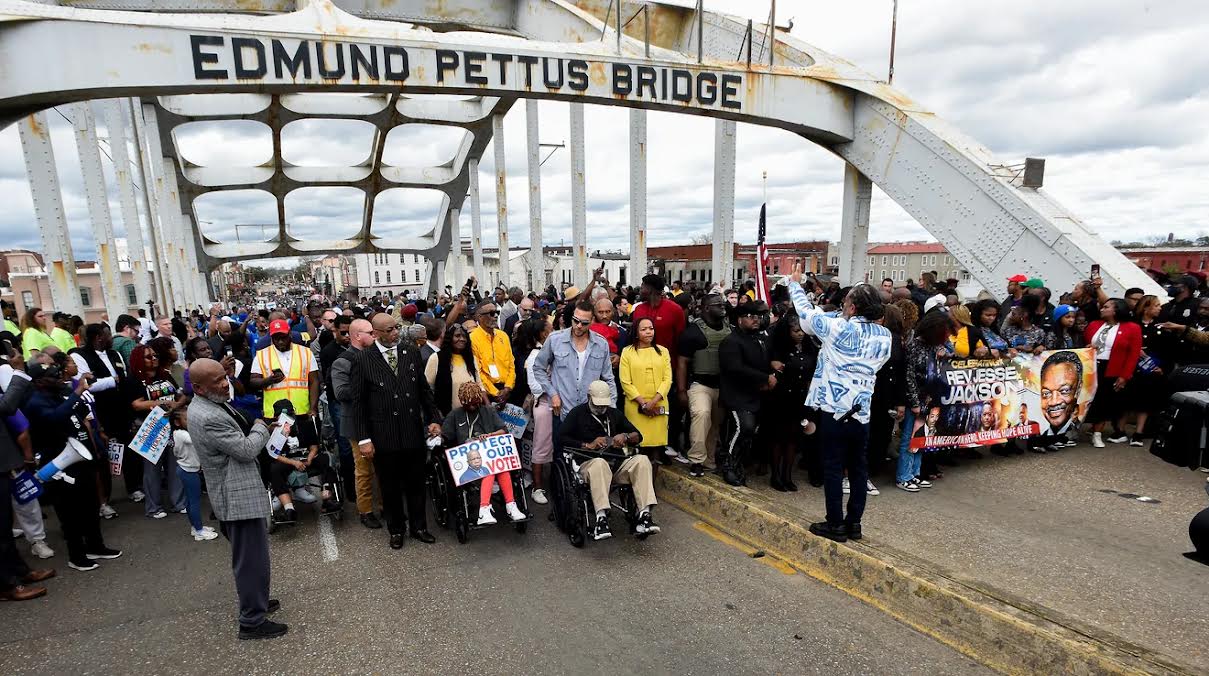
    A diverse group of people, including several public figures, gathered on the Edmund Pettus Bridge, singing and celebrating while holding signs advocating for voting rights.

    People crossing the Edmund Pettus bridge on Sunday and  Spiver Gordon, Greene County civil rights veteran and foot soldier next to Congresswoman Sewell on bridge

    By Kim Chandler, Associated Press and other sources

    SELMA, Ala. (AP) — Sixty-one years after state troopers attacked Civil Rights marchers on the Edmund Pettus Bridge in Selma, thousands gathered in the Alabama city this weekend amid new concerns about the future of the Voting Rights Act.
    The March 7, 1965, violence that became known as Bloody Sunday shocked the nation and helped spur passage of the landmark legislation that dismantled barriers to voting for Black Americans in the Jim Crow South.
    The anniversary was celebrated in this city that served as crucible for the voting rights movement, with events through the weekend ending with a commemorative march across the bridge Sunday. But the commemoration came as the U.S. Supreme Court considers a case that could limit a provision of the Voting Rights Act that has helped ensure some congressional and local districts are drawn so minority voters have a chance to elect their candidate of choice.
    “I’m concerned that all of the advances that we made for the last 61 years are going to be eradicated,” said Charles Mauldin, 78, one of the marchers beaten on Bloody Sunday.
    Former and current Democratic officeholders, civil rights leaders and tourists descended on Selma to pay homage to the pivotal moment of the Civil Rights Movement and to issue calls to action. Speakers warned of the looming court decision and criticized the Trump administration’s actions on immigration and efforts to roll back diversity, equity, and inclusion.
    Standing at the pulpit of the historic Tabernacle Baptist Church, Maryland Gov. Wes Moore, said that like the marchers on Bloody Sunday, they must press forward.
    “Years after Bloody Sunday, the progress that stemmed from that sacrifice is now being rolled back right in our faces,” the governor said. Moore is the nation’s only Black governor currently in office.
    “We are choosing this fight because those who marched across the Edmund Pettus Bridge deserve better than us cowering while the freedoms that we inherited and they fought for, are being ripped away,” Moore said.
    Illinois Gov. JB Pritzker, speaking at a rally at the foot of the bridge, said racism is on the rise in America and “Trump’s Supreme Court is gutting the Voting Rights Act.”
    “Let’s march forward today with the knowledge that we are the inheritors of the faith that brought marchers to the bridge 61 years ago. It is now on us to bend the arc of the moral universe toward justice,” Pritzker said.
    The annual commemoration in Selma is a mix of a civil rights remembrances, church services and a street festival filled with vendors and food trucks. It is also part political rally with an eye on November’s midterm elections and a longer view to the 2028 presidential race.
    The commemoration included a tribute to the late Rev. Jesse Jackson, the civil rights leader and two-time presidential candidate who regularly attended the annual Selma march. He died on Feb. 17 at age 84.
    Yusef Jackson said his father’s legacy will be carried forward. “In November, we will go back to the polls and take our government back, setting our country on the right path,” Jackson said.
    The looming court decision cast a shadow over the festivities. Justices are expected to rule soon on a Louisiana case , Calais vs Louisiana, about the role of race in drawing congressional districts. A ruling prohibiting or limiting that role could have sweeping consequences, potentially opening the door for Republican-controlled states to redistrict and roll back majority Black and Latino districts that tend to favor Democrats.
    U.S. Rep. Shomari Figures won election in 2024 to an Alabama district that was redrawn by a federal court to give Black voters a greater voice. His district will likely be targeted if the state gets the opportunity to redraw lines. He said what happened in Selma and the subsequent passage of the Voting Rights Act “was monumental in shaping what America looks like and how America is represented in Congress.”
    In 1965, the Bloody Sunday marchers led by John Lewis and Hosea Williams walked in pairs across the Selma bridge headed toward the state capital of Montgomery. Mauldin, then 17, was part of the third pair behind Williams and Lewis.
    At the apex of the bridge, they could see the sea of law enforcement officers, including some on horseback, waiting for them. But they kept going.
    “It wasn’t that we didn’t have fear, it’s that we chose courage over fear,” Mauldin recalled.
    Spiver Gordon, Greene County civil rights leader said this anniversary was a little bitter-sweet, since three close friends, Rev. Jesse Jackson, Joanne Bland and Rev. Bernard Lafayette, had all passed in the three weeks leading up to this 61st anniversary of Bloody Sunday.
    A crowd of several thousand filed behind elected officials on this Sunday for the march across the bridge, this time protected by state law enforcement officers.

  • Newswire : After a president-filled celebration, Rev. Jesse Jackson’s family gathers for an intimate homegoing

    Newswire : After a president-filled celebration, Rev. Jesse Jackson’s family gathers for an intimate homegoing

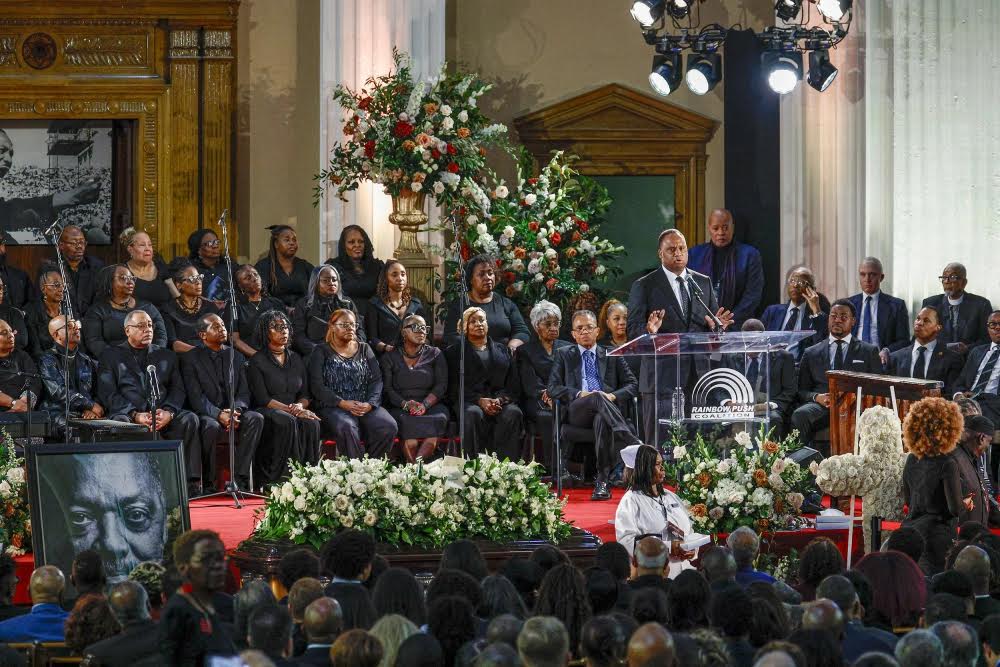
    Private family funeral for Rev. Jesse Jackson

    By The Associated Press

    CHICAGO — A day after former presidents, sitting governors and local Chicago residents alike attended a vibrant, televised celebration for the late Rev. Jesse Jackson Sr., the family and friends who knew him best hosted a more intimate gathering Saturday to grieve the civil rights leader at his organization’s headquarters.

    The private memorial service at the Rainbow PUSH Coalition’s headquarters on the South Side of Chicago includes only a few hundred attendees, most of whom are family members, allies and confidants. The homegoing is meant as a capstone to a week of services held across the country

    “I foresee tomorrow will represent everything that Rev. Jackson stood for,” the Rev. Chauncey D. Brown, a pastor to a Chicago-area church and mentee of Jackson’s, said Friday.. “It will include dignitaries and icons, as well as many from where the true power lies, with the people in the streets.”
    Some members of the public who gathered outside the PUSH headquarters were allowed to enter the chamber.
    “Over the last two weeks, we’ve been focusing on connecting to people that Reverend worked with across the years,” said Rev. Janette Wilson, a longtime senior advisor to Jackson and executive director at Rainbow PUSH Coalition. “When you look at his work, it is so vast in the economic and political arenas.”
    Since his death last month, Jackson’s family and allies have honored the late reverend with commemorations, community service and demonstrations they say continue his work.
    Mourners were first allowed public visitations at the Rainbow PUSH headquarters in February, giving Jackson’s longtime neighbors a chance to say goodbye to the civil rights leader.
    The late reverend then lay in state at the South Carolina Capitol. Jackson grew up in segregated Greenville, South Carolina. As a high schooler, he led fellow students into a protest that desegregated a local library, starting a lifetime of civil rights activism.
    Services honoring Jackson in Washington, D.C., were postponed after a request for him to lie in honor at the U.S. Capitol was denied. House Republican leadership cited the precedent that only former presidents and senior generals regularly receive the privilege.
    Jackson’s mentees also honored his legacy by organizing on issues such as voting rights, economic inequality and political organizing in the weeks after his passing. Rainbow PUSH hosted a forum for community organizers and clergy whom Jackson mentored to discuss his impact on their careers.
    Wilson said that the best way to honor Jackson is to continue advocating for progressive, inclusive solutions to the pressing economic and political challenges of the day. She cited policies that addressed the impending socioeconomic effects of artificial intelligence, improved public schools and a focus on youth mental health as areas he was contemplative on at the end of his life.
    She also said that Jackson never shied away from being political.
    “We’re in a global moment where peace in the world is in jeopardy, where we just have bombs being dropped carelessly, killing children, innocent victims of political actions,” said Wilson of the ongoing war in the Middle East. “When the government cuts SNAP benefits and you have millions of children and families who will be food insecure, I think you have to tell them that we’re fighting for you.”
    Services honoring Jackson in Washington, D.C., were postponed after a request for him to lie in honor at the U.S. Capitol was denied. House Republican leadership cited the precedent that only former presidents and senior generals regularly receive the privilege.
    Jackson’s mentees also honored his legacy by organizing on issues such as voting rights, economic inequality and political organizing in the weeks after his passing. Rainbow PUSH hosted a forum for community organizers and clergy whom Jackson mentored to discuss his impact on their careers.
    Wilson said that the best way to honor Jackson is to continue advocating for progressive, inclusive solutions to the pressing economic and political challenges of the day. She cited policies that addressed the impending socioeconomic effects of artificial intelligence, improved public schools and a focus on youth mental health as areas he was contemplative on at the end of his life.
    She also said that Jackson never shied away from being political.
    “We’re in a global moment where peace in the world is in jeopardy, where we just have bombs being dropped carelessly, killing children, innocent victims of political actions,” said Wilson of the ongoing war in the Middle East. “When the government cuts SNAP benefits and you have millions of children and families who will be food insecure, I think you have to tell them that we’re fighting for you.”
    The headquarters also greeted nearly 100 progressive activists from Minnesota. The assembled groups represented civil, labor and immigrants’ rights groups who were recently thrust into the national spotlight after President Donald Trump’s administration’s enhanced immigration enforcement operation in the state sparked protests.
    “It’s really empowering, at least for me, to see the coalition coming together and to understand the history of civil rights and human rights and immigrants’ rights,” said Yeng Her, the organizing director at the Immigrant Defense Network, one of the organizations that has protested the Trump administration in Minnesota.
    The Jackson family invited the activists to Chicago to learn more about Jackson’s strategies and find resources for their own organizations. Organizers met Rainbow PUSH alumni and some of Jackson’s children.
    The gathering was a prelude to both the private service for Jackson’s family and another commemoration.
    On Sunday, members of the Jackson family and many of Jackson’s mentees will travel to Selma, Alabama, to commemorate the “Bloody Sunday” protest marches when civil rights activists were beaten by police on the Edmund Pettus Bridge in 1965.
    Jackson himself often attended the same anniversary march.
    “Reverend always thought three-dimensionally,” said Jimmy Coleman, a longtime aide to Jackson and native of Selma.
    “Selma has always stood for the basics of what civil rights is, what we are debating in policy. He was always focused on what we needed in terms of policy in any given political moment, and that’s what the march represents,” said Coleman.

  • Newswire : Iran War already increasing gas prices, mortgage rates 

    Newswire : Iran War already increasing gas prices, mortgage rates 

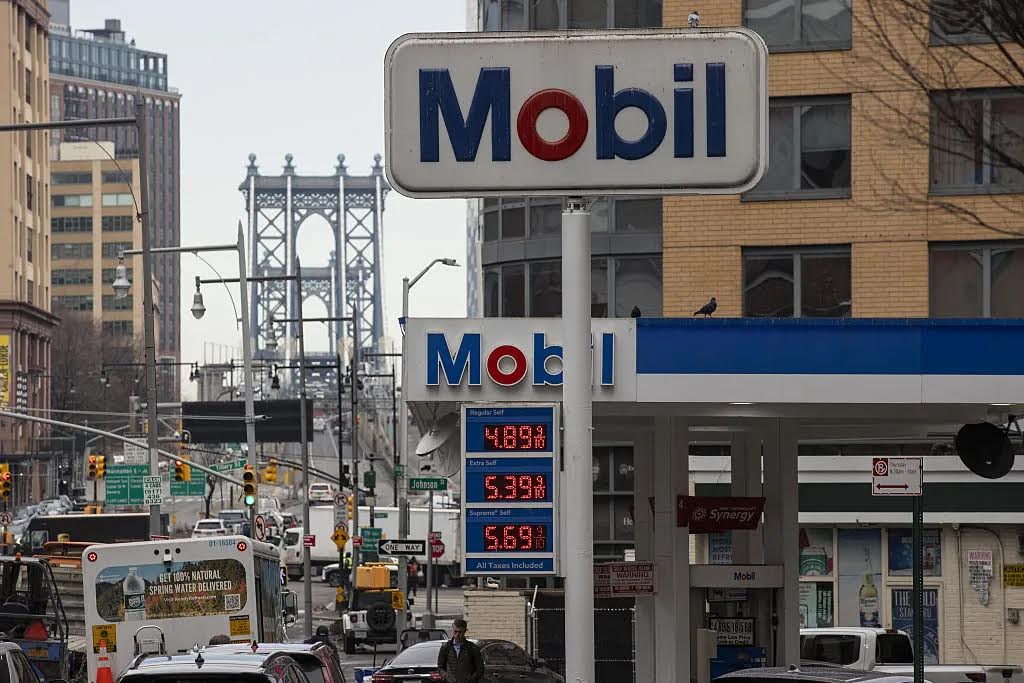
    President Donald Trump said he wasn’t concerned about rising gas prices, despite celebrating how low prices were during the State of the Union. 
    By Joe Jurado, NewsOne
    Last week, President Donald Trump shocked the world when he authorized targeted strikes against Iran while still negotiating terms over Iran’s nuclear capabilities. The consequences for this war are already being felt stateside as gas prices and mortgage rates have increased.
    CBS News reports that gas prices have gone up on average by 26 cents since the war started. Patrick De Haan, a petroleum expert at GasBuddy, told CBS News that the increase represents an “unusually strong weekly climb.

    While prices dipped below $3 in December, they’ve been steadily rising as the conflict between Iran and the United States has begun to simmer. “Oil prices have been creeping up on the possibility of attacks,” De Haan told CBS News. “The actual attacks themselves, obviously, are a major escalation.” De Haan predicts that prices will continue to increase by another 10 to 15 cents in the upcoming week before stabilizing.

    One of the key oil shipping routes is the Strait of Hormuz, which runs through Iran. The prolonged bombings have slowed shipments through the Strait of Hormuz to a crawl, with Iran’s counterattacks also impacting oil production in Saudi Arabia. De Haan estimates that the United States is losing access to 20 million barrels of oil supply a day as a result of the bombings.
    “Nothing can replace that,” De Haan told CBS News.
    Like many of us, I’ve seen the impact of the Iran war on gas prices firsthand. Two weeks ago, gas prices in my native area of Phoenix were around $3.15. Last week, when I filled my tank up on Wednesday, it was about $3.60. On Thursday night, as my best friend and I were driving home from a Joey Valence and Brae concert, we were both shocked to see gas prices had increased to $4.15 in just a day. Nothing quite kills a post-concert high like the realities of the U.S. economy.
    The increases come just over a week after Trump bragged about how low gas prices have been during his State of the Union address. Trump was asked by Reuters if he had any concern about how the Iran war would affect domestic gas prices.
    “I don’t have any concern about it,” Trump replied. “They’ll drop very rapidly when this is over, and, if they rise, they rise, but this is far more important than having gasoline prices go up a little bit.”
    The lack of concern is crazy work, considering that affordability is one of the biggest issues facing Americans. We’re in the buildup to the midterm elections, and Trump has no concern about how his shortsighted actions in Iran. Polling shows that the majority of voters already disapprove of Trump taking military action in Iran. According to the Hill, a poll by Fox News also revealed that the majority of voters feel that Trump’s actions in Iran have made the United States less safe.
    If it’s only been a week and the majority of people aren’t on board with the war, public opinion is only going to fall further as the war in Iran continues to negatively impact their wallets. According to NBC News, the effects have already extended past the gas pump, as mortgage interest rates have ticked up from 5.98% to 6.13%.
    The reason the Iran war is affecting mortgage prices is that mortgage rates are heavily tied to the price of U.S. 10-year Treasury bonds. The yield on those bonds has increased as concerns rise that the war in Iran will lead to higher inflation. Should inflation increase, it could also lead the Federal Reserve to refuse to cut interest rates.
    At a time when the average American is already struggling to afford the cost-of-living, and the labor market continues to contract, Trump decided to make that problem worse over weapons of mass destruction that Iran doesn’t even have.
    Trump’s second term really feels like a monkey’s paw moment for Republicans. On paper, they’ve been getting everything they’ve wanted from mass deportation to a more hawkish approach to foreign policy, yet it’s only resulted in more widespread disapproval for the GOP.

  • Newswire : President Trump refuses to sign bills until SAVE America Act passes 

    By NewsOne staff
    On Sunday, President Donald Trump posted on social media that he wouldn’t sign any more legislation unless Congress passes the SAVE America Act.
    According to NPR, Trump took to Truth Social, demanding that the SAVE America Act “be done immediately” and “supersedes everything else.” While Republicans have tried to position the SAVE America Act as a simple voter ID bill, the changes the bill would make to voting would disenfranchise millions. The voter ID aspects would require a voter to provide two forms of ID that prove citizenship, such as a passport or birth certificate. This could create problems for married women who could have a different name on their birth certificate than on their driver’s license.
    The bill would also place a blanket ban on mail-in ballots except for military and people with disabilities. The GOP’s justification for all these changes is that it’s intended to prevent noncitizens from voting, despite all evidence showing that’s an incredibly uncommon occurrence. Trump and the GOP seem to think these changes will exclusively hurt Democrat voters, despite 1 in 3 voters using mail-in ballots.
    “MUST GO TO THE FRONT OF THE LINE. I, as President, will not sign other Bills until this is passed, AND NOT THE WATERED DOWN VERSION – GO FOR THE GOLD,” he wrote. The Guardian reports that Trump also demanded new provisions be added to the bill that would ban transgender people from participating in women’s sports and gender-affirming surgeries for minors.
    Trump is a deeply unpopular president, as more and more voters disapprove of his handling of the economy, the tactics employed by ICE in their mass deportation campaign, and the war in Iran, which is already having a pronounced, negative impact on the American economy. It was already looking like the Democrats would flip the House last year, which is why Trump pushed several red states to engage in mid-decade redistricting efforts. Several blue states, most notably California, began redistricting efforts of their own to neutralize the gains.
    So now Trump is trying to make it that much harder to vote in the hopes that the GOP maintains its narrow majority in Congress. In addition to pushing for the SAVE Act, Trump has also called for the transfer of control over elections from states to the federal government. Several of Trump’s advisers are reportedly drafting an executive order that would declare a national emergency and allow the president to make changes to how elections are conducted.
    While the SAVE America Act passed in the House, it’s facing significant pushback in the Senate, where it needs to clear a 60-vote threshold to pass. The GOP has only a 53-47 majority in the House, meaning several Democrats would need to vote for the bill. Senate Minority Leader Chuck Schumer has publicly stated that no Democrats will vote for the bill.
    Additionally, a study by the Brennan Center found that 21.3 million Americans lack immediate access to proof of citizenship, meaning nearly a quarter of eligible voters could be disenfranchised. “The SAVE Act would disenfranchise Americans of all ages and races, but younger voters and voters of color would suffer disproportionately,” the Brennan Center for Justice wrote in February.
    “If Trump is saying he won’t sign any bills until the SAVE Act is passed, then so be it: there will be total gridlock in the Senate,” Schumer posted on X Sunday. “Senate Democrats will not help pass the SAVE Act under any circumstances.”