Apr. 17, 2023 (GIN) – The label says “Fairtrade” but the conditions at some of South Africa’s money-making vineyards are anything but…
That’s what two academics from Rhodes University of South Africa concluded in a study of the country’s wine industry once characterized by the use of enslaved workers and the exploitation and paternalistic control of Black and coloured laborers by white farmers for over 300 years.
Following the end of apartheid and the country’s reintegration into the international community, winegrowers were able to import modern technologies and access global export markets for the first time. As a result, South Africa is now the ninth-largest producer of wine in the world and generates more than US$550 million in export value annually.
A number of wineries have formed to fulfill the standards of Fairtrade International such as workers’ rights and environmental protections.
The group certifies products and ingredients after reviewing company practices and is a symbol commonly associated today with chocolate, coffee, cotton and various other items.
Fairtrade products are sold at a higher price because a percentage of the sale value is designated for day care centers, literacy programs and medical centers.
But interviews with a number of farmworkers suggest that while the wine bottles might bear the Fairtrade label, the workers on these farms do not feel fairly treated.
Of some 30 farmworkers interviewed, most were not even aware that the farm they worked on was Fairtrade certified. Several farmworkers reported poor and unsafe living and working conditions. One woman complained of the vineyard lacking toilets for women. “We have to relieve ourselves in the vineyards. The only toilets you see is when there is an audit.”
“We were promised that these houses would be temporary,” said another. “It is cold and when it rains the rain comes in. … We have reported this, and nothing happens. I have to constantly move my bed when it rains because the water comes through. I have been here since 1979. They [farm management] have ignored me. They don’t care.”
An investigative documentary (Cheap Wine, Bitter Aftertaste) that spotlights Germany, the second-largest importing country of South African wine after Great Britain, found problems.
Eighty percent of farm workers in the wine sector were seasonal, forcing them to turn to the state’s Unemployment Insurance Fund when the harvest season ends in March.
The minimum wage is about one third below the living wage needed to support a household, as calculated by the NGO Pietermaritzburg Economic Justice & Dignity.
As to working conditions, the workers’ harshest criticism was over the use of pesticides, particularly the herbicide paraquat which is banned in many countries. “There is no simple answer to the problems faced by workers on wine farms in South Africa, wrote Gisela ten Kate from the Dutch activist group SOMO in an article titled: “Labor Conditions in South African wine industry remain appalling.”
“Dutch supermarkets need to take their role in the supply chain seriously, to pay fair prices so that farmers can pay a proper wage.
Finally, the human rights defender Oxfam International wrote: “We found proof of labor rights violations and inhumane conditions.”
Oxfam has been part of the global Fair Trade movement since its inception. Today, it still inspires many of volunteers to champion just and sustainable trade.
“We believe the current trade system is far from just or sustainable. It was captured by imperialistic and colonialist forces in the past and remains, even today, under the control of the powerful and the rich to a large extent.
“Trade justice,” affirmed Oxfam ,”offers an alternative approach. But As long as it excludes people and future generations from its welfare-creating properties, trade cannot be considered just or sustainable.”
By Stacy M. Brown, NNPA Newswire Senior National Correspondent
In 2022, Health and Human Services Secretary Xavier Becerra implemented actions to improve maternal health and reduce health disparities, and this year, the Biden-Harris Administration has continued to champion policies to improve maternal health and equity. Vice President Kamala Harris convened a meeting with Becerra and other Cabinet leaders amplifying a whole-of-government approach to reducing maternal mortality and morbidity. On Monday, April 10, President Biden issued another proclamation to begin Black Maternal Health Week. The president called the week a reminder that so many families experience pain, neglect, and loss during what should be a joyous occasion. Biden called it urgent that all act. “Black women in America are three times more likely to die from pregnancy-related complications than white women,” the president remarked. “This is on top of the fact that women in America are dying at a higher rate from pregnancy-related causes than in any other developed nation.” He insisted that tackling the crisis begins with understanding how institutional racism drives these high maternal mortality rates. Studies show that Black women are often dismissed or ignored in hospitals and other health care settings, even as they suffer from severe injuries and pregnancy complications and ask for help, the president reminded. He said systemic inequities are also to blame. “When mothers do not have access to safe and stable housing before and after childbirth, they are at greater risk of falling ill,” Biden exclaimed. “When women face barriers traveling to the hospital for prenatal and postpartum checkups, they are less likely to remain healthy. Air pollution, water pollution, and lead pipes can have dangerous consequences for pregnant women and newborns. And when families cannot afford nutritious foods, they face worse health outcomes.” He claimed his administration has penned the blueprint for addressing the maternal health crisis, an agenda that lays out specific actions the federal government would take to improve maternal health and secured funding from Congress to help implement it. “Vice President Kamala Harris has been a leader on the issue of maternal mortality for years and led the charge to improve maternal health outcomes, including by issuing a call to action to address disparities in maternal care,” Biden stated. “She continues to elevate the issue nationally, convening State legislators, medical professionals, and others so all mothers can access the care they need before, during, and after childbirth.” The president continued: “Additionally, my American Rescue Plan gave States the option to provide a full year of postpartum coverage to Medicaid beneficiaries — up from just 60 days of coverage. “As a result, my Administration has approved requests from 30 States and Washington, D.C. to provide women with Medicaid coverage with a full year of postpartum coverage, and we have made this option permanent for every State that extends Medicaid postpartum coverage. “My Administration has helped facilitate Medicaid expansion in four States since I took office, and I continue to call on the Congress to close the Medicaid coverage gap. “We are also working to expand and diversify the maternal health workforce, helping health care providers hire and train diverse and culturally competent physicians, certified nurse midwives, doulas, and community health workers to support women during pregnancy, delivery, and postpartum care.” The president’s budget includes $471 million to reduce maternal mortality and morbidity rates, improving access to care in rural communities, expanding implicit bias training for health care providers, and further supporting the perinatal health workforce. “This week, as we continue our work to make pregnancy and childbirth safe, dignified, and joyful for all, let us remember that health care should be a right and not a privilege,” Biden continued. “Let us give thanks to the extraordinary maternal health care workforce, which serves its patients and their families every day. And let us join in common cause to end the tragedy of maternal mortality once and for all.”
By Stacy M. Brown, NNPA Newswire Senior National Correspondent For more than two decades, U.S. Supreme Court Justice Clarence Thomas has accepted luxury trips virtually every year from Dallas businessman and Republican mega donor Harlan Crow without disclosing them, a bombshell new report from ProPublica has revealed. Citing documents and interviews, the nonprofit and Pulitzer Prize winning legal news organization said Thomas who has a salary of $285,000, has vacationed on Crow’s superyacht around the globe. Had Thomas footed the bill himself, one trip on Crow’s yacht would have set him back a cool half-million dollars. What’s more, the controversial conservative justice often flies on Crow’s Bombardier Global 5000 jet. That’s a $70,000 trip. Justices are required to report all gifts of $415 or more that are “anything of value” and not fully reimbursed. There’s no record of Thomas reporting the gifts or reimbursing anyone for the trips. “He has gone with Crow to the Bohemian Grove, the exclusive California all-male retreat, and to Crow’s sprawling ranch in East Texas,” the legal news site reported on Thursday, April 6. “And Thomas typically spends about a week every summer at Crow’s private resort in the Adirondacks.” The extent and frequency of Crow’s apparent gifts to Thomas have no known precedent in the modern history of the U.S. Supreme Court, and ProPublica further notes that the trips appeared nowhere on Thomas’ financial disclosures. “His failure to report the flights appears to violate a law passed after Watergate that requires justices, judges, members of Congress and federal officials to disclose most gifts,” the site reported, citing two ethics law experts. Thomas, the experts said, also should have disclosed his trips on the yacht. “It’s incomprehensible to me that someone would do this,” Nancy Gertner, a retired federal judge appointed by President Bill Clinton, told ProPublica. When she was on the bench, Gertner said, she was so cautious about appearances that she wouldn’t mention her title when making dinner reservations: “It was a question of not wanting to use the office for anything other than what it was intended.” Virginia Canter, a former government ethics lawyer who served in administrations of both parties, said Thomas “seems to have completely disregarded his higher ethical obligations.” “When a justice’s lifestyle is being subsidized by the rich and famous, it absolutely corrodes public trust,” said Canter, now at the watchdog group CREW. “Quite frankly, it makes my heart sink.” As ProPublica noted, federal judges sit in a unique position of public trust. Each justice enjoys lifetime tenure, which is supposed to inoculate them from feeling any temptation toward corruption. Intentionally, a code of conduct for federal judges below the Supreme Court requires them to avoid even the “appearance of impropriety.” Members of the high court, Chief Justice John Roberts has written, “consult” that code for guidance. However, the Supreme Court is left almost entirely to police itself. And many opine that Thomas has exploited that privilege and, along with his wife Ginny, have thumbed their noses at Democracy. “The most glaring example of the Supreme Court’s ethical vacuum is Clarence Thomas,” political columnist Jonathan Chait wrote for New York Magazine. “The right-wing justice has operated, in conjunction with his wife, in the center of a network of conservative activists whose project is indistinguishable from his legal work.” Meanwhile, ProPublica reported evidence that Thomas has taken even more trips on the superyacht. The report noted that Crow often gave his guests custom polo shirts commemorating their vacations. ProPublica found photographs of Thomas wearing at least two of those shirts. In one, he wears a blue polo shirt embroidered with the Michaela Rose’s logo and the words “March 2007” and “Greek Islands.” “Thomas didn’t report any of the trips ProPublica identified on his annual financial disclosures,” the outlet noted. “Ethics experts said the law clearly requires disclosure for private jet flights and Thomas appears to have violated it.”
By Stacy M. Brown, NNPA Newswire Senior National Correspondent
For more than two decades, U.S. Supreme Court Justice Clarence Thomas has accepted luxury trips virtually every year from Dallas businessman and Republican mega donor Harlan Crow without disclosing them, a bombshell new report from ProPublica has revealed. Citing documents and interviews, the nonprofit and Pulitzer Prize winning legal news organization said Thomas who has a salary of $285,000, has vacationed on Crow’s superyacht around the globe. Had Thomas footed the bill himself, one trip on Crow’s yacht would have set him back a cool half-million dollars. What’s more, the controversial conservative justice often flies on Crow’s Bombardier Global 5000 jet. That’s a $70,000 trip. Justices are required to report all gifts of $415 or more that are “anything of value” and not fully reimbursed. There’s no record of Thomas reporting the gifts or reimbursing anyone for the trips. “He has gone with Crow to the Bohemian Grove, the exclusive California all-male retreat, and to Crow’s sprawling ranch in East Texas,” the legal news site reported on Thursday, April 6. “And Thomas typically spends about a week every summer at Crow’s private resort in the Adirondacks.” The extent and frequency of Crow’s apparent gifts to Thomas have no known precedent in the modern history of the U.S. Supreme Court, and ProPublica further notes that the trips appeared nowhere on Thomas’ financial disclosures. “His failure to report the flights appears to violate a law passed after Watergate that requires justices, judges, members of Congress and federal officials to disclose most gifts,” the site reported, citing two ethics law experts. Thomas, the experts said, also should have disclosed his trips on the yacht. “It’s incomprehensible to me that someone would do this,” Nancy Gertner, a retired federal judge appointed by President Bill Clinton, told ProPublica. When she was on the bench, Gertner said, she was so cautious about appearances that she wouldn’t mention her title when making dinner reservations: “It was a question of not wanting to use the office for anything other than what it was intended.” Virginia Canter, a former government ethics lawyer who served in administrations of both parties, said Thomas “seems to have completely disregarded his higher ethical obligations.” “When a justice’s lifestyle is being subsidized by the rich and famous, it absolutely corrodes public trust,” said Canter, now at the watchdog group CREW. “Quite frankly, it makes my heart sink.” As ProPublica noted, federal judges sit in a unique position of public trust. Each justice enjoys lifetime tenure, which is supposed to inoculate them from feeling any temptation toward corruption. Intentionally, a code of conduct for federal judges below the Supreme Court requires them to avoid even the “appearance of impropriety.” Members of the high court, Chief Justice John Roberts has written, “consult” that code for guidance. However, the Supreme Court is left almost entirely to police itself. And many opine that Thomas has exploited that privilege and, along with his wife Ginny, have thumbed their noses at Democracy. “The most glaring example of the Supreme Court’s ethical vacuum is Clarence Thomas,” political columnist Jonathan Chait wrote for New York Magazine. “The right-wing justice has operated, in conjunction with his wife, in the center of a network of conservative activists whose project is indistinguishable from his legal work.” Meanwhile, ProPublica reported evidence that Thomas has taken even more trips on the superyacht. The report noted that Crow often gave his guests custom polo shirts commemorating their vacations. ProPublica found photographs of Thomas wearing at least two of those shirts. In one, he wears a blue polo shirt embroidered with the Michaela Rose’s logo and the words “March 2007” and “Greek Islands.” “Thomas didn’t report any of the trips ProPublica identified on his annual financial disclosures,” the outlet noted. “Ethics experts said the law clearly requires disclosure for private jet flights and Thomas appears to have violated it.”
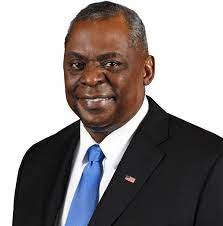
DoD Secretary Lloyd Austin and Alabama Senator Tommy Tubberville
By: Josh Moon, Alabama Political Reporter
Defense Secretary Lloyd Austin, in a rare offensive, spent some time during Tuesday’s Senate Armed Services hearing to publicly call out Alabama Sen. Tommy Tuberville’s blockade of senior military promotions, saying the delays are hurting military readiness and will leave the military poorly positioned should it enter into a global conflict.
“There are a number of things happening globally that indicate that we could be in a contest on any one given day,” Austin said during the hearing. “Not approving the recommendations for promotions actually creates a ripple effect through the force that makes us far less ready than we need to be. The effects are cumulative and it will affect families. It will affect kids going to schools because they won’t be able to change their duty station. It’s a powerful effect and will have an impact on our readiness.”
Tuberville has blocked at least 160 promotions over the military’s policy that allows troops to be reimbursed for travel and granted leave to receive reproductive health care, including abortions. Tuberville argued that the new policy allows for taxpayer money to be spent on abortions.
“I want to be clear on this: My hold has nothing to do with the Supreme Court’s decision to the access of abortion,” Tuberville said. “This is about not forcing the taxpayers of this country to fund abortions.”
But the policy specifically doesn’t pay for abortions, only travel expenses for troops stationed in areas, such as Alabama, where all abortion services are illegal, to travel to neighboring states to receive legally provided care.
Austin said the policy is “on solid legal ground,” and said it provides some 80,000 female troops with access to care that they should have the option to receive but sometimes don’t because of where they are stationed, which is out of their control.
Regardless, Tuberville’s blockade of the promotions – a position that other Republicans on the Armed Services Committee have not joined – comes at the worst possible time. Hundreds of top-level military leaders have retired or are planning to retire in the coming few months. The Pentagon said more than 650 general and flag officers will require Senate confirmation soon, including at least 80 three- or four-star generals or admirals.
Armed Services chair Jack Reed (D-Rhode Island) cautioned that, “If we cannot resolve the situation, we will be, in many respects, leaderless at a time of great conflict.”
Austin also spoke privately with Tuberville recently in hopes of moving him away from the blockade. Tuberville does not appear ready to budge.
Senate Majority Leader Chuck Schumer, during a speech on the Senate floor Tuesday, criticized Tuberville and said his block of military promotions over a political issue risks politicizing a process that has until now remained above the political fray. “If every single one of us objected to the promotion of military personnel whenever we feel passionately or strongly about an issue, our military would simply grind to a halt,” Schumer said. “This level of obstruction—of routine military promotions—is a reckless departure from Senate norm; none of us want to live in a world where military appointments get routinely politicized and that’s just what the Senator from Alabama is doing.
By Stacy M. Brown, NNPA Newswire Senior National Correspondent
Footage from Tyre Nichols’ fatal traffic stop found that police officers issued a barrage of confusing, conflicting, and sometimes impossible to obey commands. If Nichols did not comply, or even if he did, the police would respond with increasing force. According to the footage analyze by the New York Times, police officers shouted a total of at least 71 orders in the roughly 13 minutes before they radioed in that Nichols was in custody. The orders were given in two separate places: one near Nichols’ vehicle, and another where he had run to avoid being beaten severely. The video revealed that often the officers shouted conflicting orders, making it difficult for Nichols to understand and obey. Nichols was ordered by officers to display his hand, even as officers held the young man’s hands. At one point, they shouted for him to get down on the ground while he was already on the ground. And when they had his body under their control, the officers still made him change positions. The experts agree that the actions of the Memphis police officers were a blatant illustration of a widespread problem in policing, in which officers physically punish civilians for perceived disrespect or disobedience, a phenomenon known as “contempt of cop,” the Times reported. Professor of criminology and criminal justice at the University of South Carolina Geoffrey Alpert said, “It was far more rampant in the ‘80s when I started doing police work than in the ‘90s or 2000s.” Before body cameras, police officers were becoming more professional and less likely to take things personally, as appeared to have happened with Nichols, Alpert stated. Because of the potential for escalation and confusion during police encounters, modern police training typically calls for a single officer to be present at the scene to issue clear and specific commands. It also necessitates that police officers respond professionally and proportionally to any perceived act of defiance. The review by the Times, however, shows that the Memphis officers consistently did the opposite. There is no evidence in the footage that the present officers did anything to prevent the excessive use of force. Actually, it seems to prove the opposite. After Nichols attempted to flee the scene, an officer can be heard on camera saying, “I hope they stomp his ass.” The Times noted four “crucial instances” in which police officers reprimanded Nichols for disobeying incorrect orders. An officer is seen pulling up to the intersection where Nichols’ car was trapped between two unmarked police cars at the start of the footage. The cop springs out of the car, gun drawn, to join two others who are racing toward Nichols. When one of the officers pulls Nichols out of the car, the other two immediately begin shouting, “On the ground!” These are the initial instructions in a series of contradictory directives that throw Nichols off.Nichols notes that the police officers have ordered him to sit on the ground.However, several officers can be heard yelling the same order with growing anger and threats of violence. One shouts, “Get down on the ground! I am going to tase your ass.” It appears that the officers’ tension rises when Nichols repositions himself, yet still assures the officers that he’s no threat. “You guys are really doing a lot right now,” Nichols says. “I’m just trying to go home.” Nichols then protests, “I am on the ground!” as officers pinned his arms down, pressed a Taser against his leg, and barked increasingly threatening words at him. Now one of the officers gives more detailed instructions: ‘On your stomach.’ Nichols is hit in the face with pepper spray three seconds later by one of the officers. Nichols is now surrounded by officers who demand to see his hands. However, one of them has a hold on his left arm, while another cop has a hold on his right. The police still hadn’t made it clear how they wanted Nichols to behave. A third officer rushes up with pepper spray. Then he warns, “You’re about to get sprayed good.” The other officers began punching Nichols in the face. Nichols reacts by pulling his hands back to cover his face. As the punching gets more intense, the pepper spray is released. Nichols again tries to reassure the officers that he is attempting to cooperate, all the while he attempts to wipe the pepper spray from his eyes. “OK,” Nichols pleads. “All right. All right.” While one of the officers has a firm grip on Nichols, a second officer arrives and makes the same demand: that he show his hands. Once again, Nichols appears confused by the competing instructions. As he flails about, the police officers issue even more conflicting commands and apply more physical punishment. Again, he is hit with pepper spray. After being pepper-sprayed three more times, Nichols is lying on his side and rubbing his eyes as two officers stand over him. An officer then kicks Nichols in the face. At this point, Nichols is barely conscious or coherent, but the police are treating him as though he is actively resisting them. “Lay flat, goddamn it,” one officer yells. As he lies there, Nichols groans and writhes in pain, having repeatedly been tased, kicked in the head, punched, and pepper sprayed. When another officer yells, “Lay flat!” they behave as if Nichols is refusing to comply. One officer lifts Nichols off the ground and forces him to kneel by grabbing his handcuffed arm. Another officer then repeatedly hits him with a baton while demanding, “Give us your hands!” He tries to avoid being hit with the baton as he is surrounded by four police officers. “Give me your [bleeping] hands!” another officer demands. But Nichols, because of having an officer pin his arms behind his back, another grip his handcuffed wrist, and a third punch him in the face, simply cannot comply. He collapses to the ground and cries for his mom, but the brutality continued. In total, six officers have been dismissed and five stand accused of second-degree murder. In a press conference last week, attorneys for two of them said their clients would be entering not guilty pleas.
By Hubert Hamer, Administrator – USDA National Agricultural Statistics Service
The USDA’s 2022 Census of Agriculture is officially underway across the United States and Puerto Rico. It is important for every farmer, rancher, and producer to make sure they respond by the deadline on Feb. 6. Every five years, America’s producers have the opportunity to take part in the nation’s only, most comprehensive, and impartial data collection for agriculture. Since 1840, the ag census has played a significant role in showing the value of agriculture and informs decision-makers on how and where to allocate resources. The data collected impact everything from farm programs and funding, crop insurance rates, rural development, disaster assistance, the Farm Bill, and more. Producers, your voice needs to be represented in these important data. Who better to tell the story of American agriculture than the producers themselves? These statistics will directly impact our farming and ranching communities for years to come and without your input, your hard work to provide safe and abundant agricultural products to the world risks being underserved. For instance, understanding farm economics like value of production and income can help guide loan and grant assistance. Another example is that this year’s ag census includes updates to internet access questions. Decision-makers can use NASS data to determine service gaps such as the case for investment in broadband access and infrastructure. Also, because the ag census has been conducted for over 160 years, the data can help identify trends. The ability to see how U.S. agriculture has changed over time aids our nation as we plan for the future. If you are a crop, livestock or forestry grower with sales of $1,000 or more, you are eligible and welcomed to participate in the Census of Agriculture. If you did not receive a census form, contact: nass.usda.gov/AgCensus or call 800-727-9540. The questionnaire may look long, but the good news is that producers only fill out the information that pertains to their operation. We have also looked for opportunities to make responding more convenient than ever before, including launching our new online Respondent Portal. Answering the questionnaire online is fast and secure. Just go to agcounts.usda.gov and enter your unique survey code. But whether producers respond online, or by mail, it is important to be counted. Better data can lead to better decisions and better policies. We also want our producers to know that, by law, USDA keeps all personally identifiable information confidential and uses the data collected for statistical purposes only, publishing it in aggregate form to prevent farmers or farm operations from being disclosed. So, though producers are sharing information about their agricultural operation, they remain anonymous in the data. We recognize how incredibly busy our producers are, so I want to thank them in advance for taking the time to respond by Feb. 6, and for all they do in support of U.S. agriculture. USDA NASS will release the results from the ag census in 2024. For questions or to learn more about the Census of Agriculture, visit nass.usda.gov/AgCensus or call 800-727-9540. Hubert Hamer is the Administrator of USDA’s National Agricultural Statistics Service.
Nov. 7, 2022 (GIN) – A new report, titled ‘Impacts of the current drought on wildlife in Kenya” gives a devastating picture of the high mortality of wildlife across the East African nation whose animal kingdom has been the backbone of tourism for years.
Images from the region show feeble cows with ribcages protruding from their sides. According to the Kenya News Agency, herders are calling on the county and national government to buy meat from them as they lose their livestock to an unprecedented drought.
Kenya’s worst climate emergency in four decades has wreaked havoc, writes the Wildlife minister in a report delivered Nov. 4. It is affecting nearly half of the east African nation’s 8 provinces and has left both humans and beasts with very few food sources. The Amboseli and Laikipia-Samburu regions (south) which are home to touristy safaris recorded more than 70 elephant deaths. Some species like the gravy Zebras which are listed as Endangered on the International Union for Conservation of Nature Red List were badly hit. The Kenyan Tourism and Wildlife minister said authorities were dropping off hay for the animals.
Just as in west Africa, Kenya’s problems are being deepened by climate change. More than four million people are “food insecure,” and 3.3 million can’t get enough water to drink.
“African countries need finance urgently and they are calling on developed countries to deliver on their promises, starting with the pledge made at last year’s climate conference in Glasgow, to double adaptation finance to at least $40 billion annually,” commented Amina J Mohammed, deputy secretary-general of the U.N., chair of the UN Sustainable Development Group and former minister of environment of Nigeria, “places such as South Sudan and my homeland, Nigeria, are experiencing devastating flash floods that sweep away homes, businesses and livelihoods. And up to 116 million Africans will face severe risks from rising sea levels this decade.
“African countries need finance urgently and they are calling on developed countries to deliver on their promises, starting with the pledge made at last year’s climate conference in Glasgow, to double adaptation finance to at least $40 billion annually.
“The failure of developed countries to honor their commitments is not just an injustice and a failure of global solidarity. It contributes to the serious tensions and divisions that are preventing global action ona host of other issues, from peace and security to human rights. As the late Archbishop Desmond Tutu said: “Exclusion is never the way forward on our shared paths to freedom and justice.”
Even if it rains now in Ileret, on the northern shore of Lake Turkana, the life of the widow Akuagok won’t improve much. She has no animals left and food prices are unlikely to fall much. The United Nations’ World Food Program, which might step in, usually gets 40% of its wheat from Ukraine.
The UN’s Food and Agricultural Organization is appealing for $172 million in aid for the Horn of Africa to head off catastrophe. But as the war in Ukraine continues, that figure will surely rise.
NEW YORK – The Southern Prisons Coalition, a group of civil and human rights organizations, submitted a new report on Friday to the United Nations Committee on the Elimination of All Forms of Racial Discrimination on the devastating consequences of incarceration on Black people throughout the southern United States. With the long-term goal of eliminating all forms of racial discrimination in the criminal legal system, including the carceral system, the report describes the widespread, disparate harms resulting from the arrests, harsh prison sentences, and incarceration on Black communities. The report also cites the devastating impacts of solitary confinement, prison labor, the school to prison pipeline, and incarceration of parents on Black families. On August 8, 2022, the UN will review the United States’ compliance with the International Convention on the Elimination of All Forms of Racial Discrimination for the first time since 2014. Among the ongoing stark racial disparities throughout prisons in the southern United States, Black people are five times more likely to be incarcerated in state prisons. In states like Alabama, Arkansas, Florida, Georgia, Louisiana, Mississippi, North Carolina, South Carolina, and Texas, where Black communities comprise 38% of the total population, Black individuals account for as much as 67% of the total incarcerated population. While incarcerated, Black people are more than eight times more likely to be placed in solitary confinement, and they are 10 times more likely to be held there for exceedingly long periods of time. By submitting the report to the United Nations, the Southern Prisons Coalition hopes to solicit concrete recommendations from the UN Committee as well as commitments from the United States delegation about their plans to address systemic issues in the United States prison system, particularly in the South. According to the report, several states in the United States have also failed to meet several of the UN’s Standard Minimum Rules for the treatment of incarcerated people, including: • Work should help to prepare incarcerated people for their release from prison, including life and job skills; • Safety measures and labor protections for incarcerated workers should be the same as those that cover workers who are not incarcerated; • Incarcerated workers should receive equitable pay, be able to send money home to their families, and have a portion of their wages set aside to be given to them upon release. “The U.S. has long failed to live up to its international human rights treaty obligations on eliminating racial discrimination, perhaps more so in the area of mass incarceration and prison conditions than in any other context,” said Lisa Borden, Senior Policy Counsel, International Advocacy at the Southern Poverty Law Center. “We hope the Committee will help to shine a light on these very dark truths and prompt the U.S. to take its obligation to make significant improvements more seriously.” “The abuses of forced labor are inextricably tied to racial discrimination in our nation,” said Jamila Johnson, Deputy Director at the Promise of Justice Initiative. “In Louisiana, for instance, people are still sent into the fields to labor by hand in dangerously high heat indexes, for little to no compensation, and with brutal enforcement reminiscent of slavery and the era of ‘convict leasing’.” “This report reveals the suffering of Black people in southern U.S. prisons, whose stories of marginalization and discrimination echo the racial subjugation of slavery and convict leasing during our country’s most shameful past,” said Antonio L. Ingram II, Assistant Counsel at the Legal Defense Fund. “Despite widespread knowledge of the longstanding racial inequalities in the criminal legal and carceral systems, the United States continues to allow egregious human rights violations to persist for Black incarcerated people in violation of international law. This report serves as a sobering reminder of how far we need to go.”
By Stacy M. Brown, NNPA Newswire Senior National Correspondent
Vice President Kamala Harris appeared at the NAACP convention in Atlantic City on Monday, July 18, declaring that freedom, liberty, and democracy are on the ballot in the upcoming midterm elections. She implored the large gathering at the Atlantic City Convention Center to make sure that all voices are heard. “We’re not going to be able to get these days back, so each one of these days we must, with a sense of urgency, ensure that the American people know their voice and their vote matters,” Harris declared. “It is their voice. The right to vote is something that the leaders of this organization and its founders knew to be at the core of all of the other rights and freedoms to which we are entitled,” she further implored. “So, we know what we need to do. And, in particular, to protect the freedom to vote and a women’s right to make decisions about her own body, we need people who will defend our rights up and down the ballot, from district attorneys to state attorneys general, from local sheriffs to governors.” The vice president received several standing ovations as she spoke of the need to vote. The National Newspaper Publishers Association (NNPA), a trade association representing 235 African American-owned newspapers and media companies, has teamed with the Transformative Justice Coalition in an effort to register 10 million more Black voters ahead of the midterm and 2024 general elections. As Harris arrived in Atlantic City, Mayor Marty Small greeted her as she descended from Air Force Two. NAACP President and CEO Derrick Johnson spoke to the vice president and railed against politicians and the U.S. Supreme Court for “the erosion of constitutional freedom, including the right of a woman over her own body.” Harris also decried the sharp increase in mass shootings and gun violence in the United States.“There is no reason for weapons of war on the streets of America,” she asserted. With West Virginia Democratic Sen. Joe Manchin repeatedly stopping the Biden-Harris administration agenda, Harris called on voters to participate in the U.S. Senate election. “We will not, and the president has been clear, we will not let the filibuster stand in our way of our most essential rights and freedoms,” Harris declared. “I visited Buffalo, New York, to attend the funeral of an 86-year-old grandmother who went to the grocery store after, as she often did, spending the day with her husband who was in a nursing home – Mrs. Whitfield.” Harris continued: “I went to Highland Park, Illinois, where there were strollers and lawn chairs scattered up and down a street where there was supposed to be a parade for July 4th. There – as in Uvalde, Texas; as in Greenwood, Indiana, just last night; and in so many communities across our nation – scenes of ordinary life have been turned into war zones by horrific acts of gun violence. “Mass shootings have made America a nation in mourning. And it’s not only the mass shootings. We see it in our communities every day, and it is no less tragic or outrageous. Think about it: Black people are 13 percent of America’s population but make up 62 percent of gun homicide victims. “This issue of the need for reasonable gun safety laws is a real issue when we are talking about the civil right, the right that all communities should have, to live in a place that is safe without weapons of war running those streets.” She concluded that the number of guns manufactured in the country tripled over the last 20 years. “Today we have more guns in our nation than people,” Harris said. “Earlier this month, the president signed the first federal gun safety law in nearly 30 years. And it was an important and necessary step. But we need to do more. We must repeal the liability shield that protects gun manufacturers. And we must renew the assault weapons ban.”
July 18, 2022 (GIN) Nelson Rolihlahla Mandela, an iconic figure who fought South Africa’s apartheid regime, was a human rights lawyer, a prisoner of conscience and an international peacemaker. And he was the first democratically elected president of a free South Africa. In light of these accomplishments, the United Nations General Assembly designated July 18, his birthday, as Nelson Mandela International Day. It celebrates the idea that each individual has the power to transform the world and the ability to make an impact. In honor of his 67 years of public service, the Nelson Mandela Foundation and the U.N. ask that you spend 67 minutes of your time, on his birthday, helping others. In South Africa, celebrations start early at Mvezo, Madiba’s birthplace. Chief Zwelivelile ‘Mandla’ Mandela, Nelson Mandela’s grandson, addressed the community: “Madiba was outspoken in human rights, justice and peace. We continue to utilize his legacy as a voice for many oppressed nations around the world.” He mentioned consultations about the “last colony in Africa – Western Sahara”, as well as the case of the Palestinians, Kashmir, Yemen, Syria, and Ukraine. This year the focus is on food security and fighting global warming. Hundreds of trees will be planted to bring this vision to life. “We’re here to reverse whatever global warming is bringing to Mother Earth,” said one local gardener. At the United Nations, Prince Harry, accompanied by his wife Meghan, has been chosen to give the keynote address on ‘memories and legacy’ of the African leader. According to a post by the Nelson Mandela Foundation on Twitter, he will also be asking for more peacekeeping troops for South Africa. The annual Nelson Mandela lecture held in South Africa will be delivered by Barbados Prime Minister Mia Mottley in November. And in Chicago, Nando’s Peri Peri, a South African style restaurant, will honor the memory of former president and anti-apartheid activist Nelson Mandela with a day of giving on Mandela Day, All Nando’s restaurants will be serving their signature meal of a quarter of a flame-grilled chicken with chips (fries) for free between 3-6pm on July 18. Guests are encouraged to donate schools supplies like pens, erasers and composition books to help children in underserved communities. Nando’s restaurants will also donate 67 meals to local charities, as acknowledgement of Mandela’s 67 years of battling for social justice.