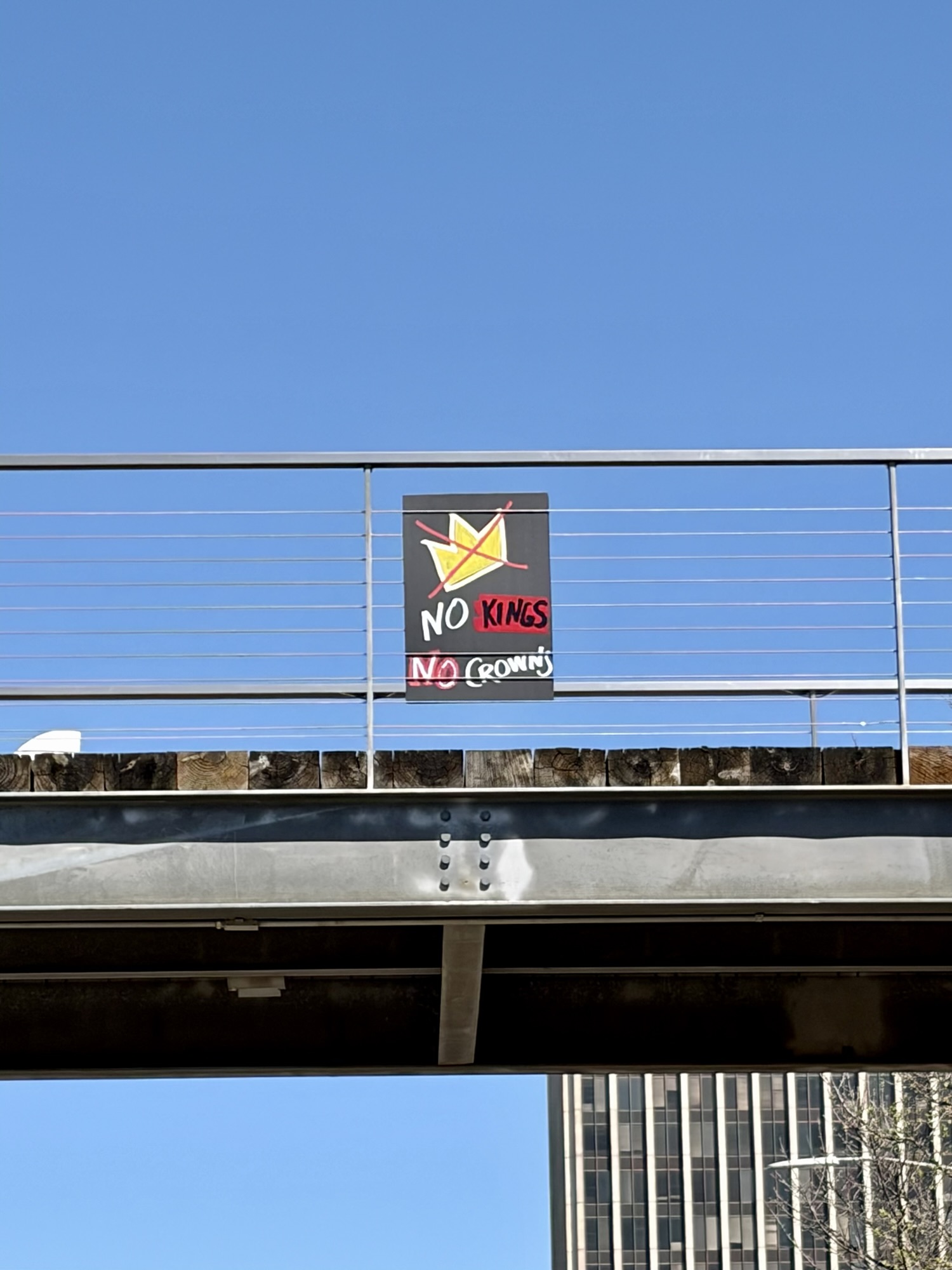
by Maya Quinn, managing editor
Organizers reported eight million protesters gathered in roughly 3,300 cities across the U.S. to challenge the policies of the Trump administration. The third installment of the No Kings in America protest is now recognised as the largest single-day nonviolent protest in modern American history.
The policies of the Trump administration seen thus far have targeted funding in government welfare, employed masked federal agents, and increased the cost of everyday life for Americans. The sentiment that the U.S. government truly operates in the best interest of every citizen has been called into question. In Birmingham, protester Hannah Blackwell told The Democrat, “There’s no sign big enough to list all the reasons why I’m here…We thought it was so important to use our voices to speak up for our immigrant neighbors as well as any black and brown people who are targeted.”
Recently, the power of voting has been called into question due to the nature of American politicians. In a politically divided nation, many politicians are seen promoting platforms to appeal to voters, but seemingly forgetting their promises once elected into office. “In the past 40 years, the government has become less and less about the average citizen,” said a Tuscaloosa citizen.

Indivisible West Alabama, a progressive grassroots organization and organizer for Tuscaloosa’s No Kings 3 event, participated in a mini interview with The Democrat regarding the purpose and intended impact of the protest. The questions and responses are detailed below:
1. What is the overall goal of the ‘No Kings’ rallies, and is this part of a long-term strategy beyond the 2026 election?
“The overall goal of the No Kings rallies is to draw attention to the growing authoritarian behaviors being exhibited by the current administration. Indivisible, both our local chapter and national, will continue to oppose this administration’s tactics via demonstrations and other forms of resistance for as long as the administration maintains these behaviors.”
2. Are there specific strategies in place to transition first-time protesters into long-term advocates?
“Absolutely! Attending protests is just one form of advocacy, but it’s a great way to get started. Our hope is that first-time protesters sign up to be involved with other local organizations to find other ways to be involved. Connecting with others in local communities is the best way to develop long-term advocacy goals and behaviors. Calling representatives, volunteering for campaigns, and spreading awareness are all long-term strategies that occur between protests.”
3. How does Indivisible plan to support local grassroots organizations and first-time organizers to maintain momentum through the 2026 midterms?
“Indivisible IS a local grassroots organization! We work with other grassroots organizations to draw attention to their goals, promote their events, and encourage our members to volunteer as needed. We encourage engagement within and beyond Indivisible’s activities and will continue to do so to improve our community.”
The ‘No King’ rallies are one of many steps to dismantle controlling policies and encourage civic engagement. The practice of rallying and organizing nonviolent protests reminds citizens that they have the power to hold government officials accountable and change the seats of those in office. This national day of action continues to sustain the momentum of a community rooted in defying powers that serve themselves instead of democracy.
Leave a Reply