Category: Community

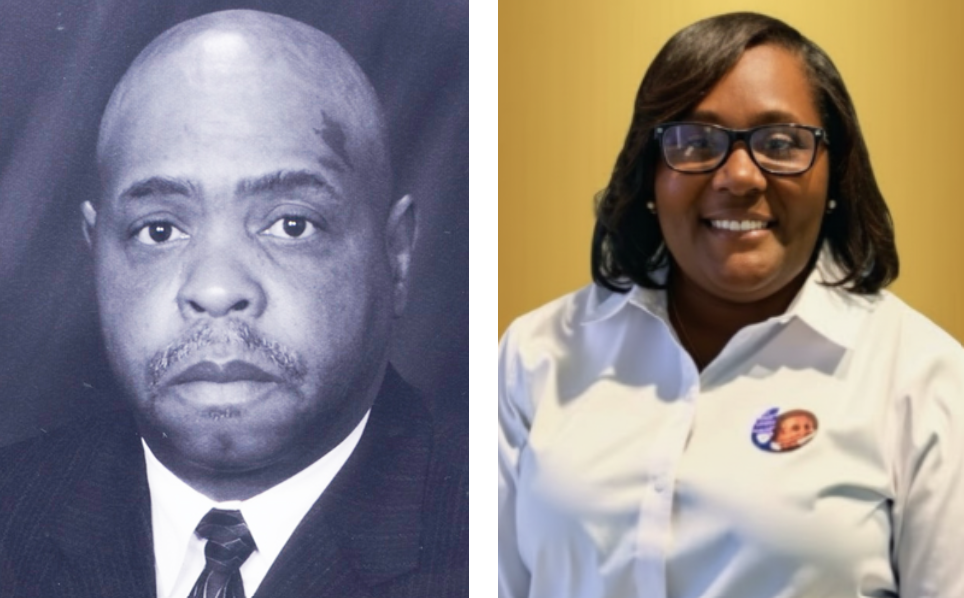
  • Latasha Johnson Announces Candidacy for Greene County Commissioner, District 3

    Latasha Johnson Announces Candidacy for Greene County Commissioner, District 3

    Greene County, Alabama —I, Latasha Jenikco Johnson, proudly announce my candidacy for Greene County Commissioner District #3 in the May 19, 2026 election. Guided by my motto, “Trust God, Do Good,” I bring proven leadership, faith-based values, and a lifetime of service to my campaign.
    I previously served the citizens of Eutaw as both a City Councilwoman and Mayor, where I worked to strengthen local government operations, support community development, and advocate for residents. My experience in municipal leadership gives me firsthand knowledge of budgeting, infrastructure planning, and community engagement.

    I earned my Associate Degree from Shelton State Community College, Bachelor’s Degree from University of West Alabama, and am a Licensed Practical Nurse through Herzing University. My background in healthcare reflects my heart for service and advocacy for families.

    I am the proud daughter of Annie Davis Polk Johnson and the late Major Johnson, an active member of New Peace Missionary Baptist Church, serves as Greene County District Association Youth Advisor, is a member of Order of the Eastern Star, St. John Beauty Chapter #735, and is active in the Greene County Usher Alliance.“As a former Mayor and Councilwoman, I understand how government decisions impact everyday people, “My motto, Trust God, Do Good, guides every decision I make. Greene County deserves leadership rooted in faith, transparency, and action.”

    My campaign priorities include:
    Economic Growth & Job Development – Expanding opportunities and supporting local businesses.

    Infrastructure & Public Services – Improving roads, utilities, and county resources.

    Public Safety & Communities Health- Supporting first responders and promoting wellness. Fiscal Responsibility & Transparency- Ensuring that county funds are managed wisely and decision – making is open and accountable. Youth & Community Engagement- Investing in future generations and building strong partnerships. Greene County has tremendous potential. With experience, faith, and a servant’s heart, I am ready to continue serving and working for every resident of this county.

  • Kelvin Scott announces candidacy for Greene County Commissioner, District 2

    Kelvin Scott announces candidacy for Greene County Commissioner, District 2

    Campaign theme: “Grow Greene Together” — change that’s rooted, shared, and lasting

    EUTAW, AL — Kelvin Scott, a lifelong public servant, local business leader, and Greene County native, today announced his candidacy for Greene County Commissioner, District 2. Scott’s campaign will focus on practical leadership, clear direction, and shared economic growth for Greene County families.

    “I’m running because Greene County deserves a clear path and direction—then consistent follow-through,” Scott said. “We don’t need more confusion or politics as usual. We need steady leadership that listens first, acts responsibly, and delivers results people can feel.”
    Scott, a graduate of Eutaw High School, retired after serving 20 years in the United States Marine Corps. After military service, he continued supporting the mission of the Department of Defense in leadership roles. He is also a local entrepreneur and community member—CEO of Colvin & Daniel Trucking DBA Greene County Carriers and owner of Rooted Farms LLC.

    Scott’s campaign slogan is “Grow Greene Together,” paired with the guiding message: “Change that’s rooted, shared, and lasting.” His platform is built on four key focus areas:
    1) Strategic Economic Development
    Scott is prioritizing economic growth that strengthens local opportunity—supporting small businesses, improving the infrastructure that commerce depends on, and pursuing partnerships that create job pathways in Greene County.“Economic development should be practical,” Scott said. “That means building and attracting and a county government that helps—not hinders—local progress.”
    2) The Future Is Our Children
    Scott’s plan emphasizes youth opportunity and long-term stability, including stronger support for programs and partnerships that connect young people to skills, mentorship, and reasons to stay and build in Greene County.
    “A county that plans for children plans to last,” Scott said.
    3) Health, Wellness, and Food Security
    Scott will advocate for common-sense solutions that improve access to wellness resources and strengthen local food systems—because health should not depend on zip code.
    “Wellness isn’t a luxury,” Scott said. “It’s infrastructure.”
    4) Support for Farming and Land Stewardship
    Scott is committed to supporting farmers and landowners through fair land-use decisions, improved rural infrastructure, and responsible stewardship that protects Greene County’s land and legacy.
    “Land is livelihood here,” Scott said. “We have to protect what makes Greene County strong.”

    Scott said his approach to county government will be guided by transparency, accountability, and open communication. “People deserve to understand what the county’s real plan is for the foreseeable future. We need to understand the decisions being made and why. My commitment is simple: listen, plan, and deliver.”

    For more information, visit: http://www.growgreentogether.com

  • Newswire: Harmful chemicals lurk in extensions and hair braiding marketed to Black women, study finds

    Newswire: Harmful chemicals lurk in extensions and hair braiding marketed to Black women, study finds

    By Claretta Bellamy, NBC News

    The same chemicals found in pipes, pesticides and floor tiles are also present in some wigs, braiding hair and hair extensions, a new study published Wednesday in the journal Environment & Health found.
    Researchers at the Silent Spring Institute, a scientific research nonprofit organization based in Massachusetts, tested 43 hair extension products purchased online and from local beauty supply stores and identified 169 chemicals present overall, including dozens of harmful substances such as flame retardants, pesticides and compounds used to stabilize plastics.
    A dozen of the compounds found are listed under California’s Proposition 65, known as the Safe Drinking Water and Toxic Enforcement Act of 1986, which warns residents of chemicals known to cause birth defects, cancer and reproductive issues. Additionally, 17 compounds that have been linked to breast cancer were found in 36 samples tested, the researchers said.
    In recent years, researchers across the country have been sounding the alarm over harmful hair products, many of which are used and marketed to Black women. Consumer Reports revealed last year that carcinogens were found in samples of 10 popular synthetic braiding hair brands. Nine of the 10 samples also tested positive for lead.
    Chemical hair relaxers also pose risks. The Black Women’s Health Study in 2023 found a 50% increased risk of uterine cancer in postmenopausal Black women who used chemical hair relaxers more than twice a year or used the products for more than five years, compared to a cohort who rarely or never used relaxers. And a 2022 study from the National Institute Environmental Health Sciences found that women who used hair straighteners more than four times per year had more than a double chance of developing uterine cancer than those who didn’t use the products. (Uterine cancer accounted for about 3% of new cancer cases in the U.S. in 2025.)
    Harsh chemicals found in synthetic braiding hair and other hair extensions can be absorbed through the scalp, causing irritation, burning and redness, according to Dr. Chris Pernell, director of the NAACP Center for Health Equity. They can also be inhaled — particularly when heated during styling — and absorbed through a person’s hands.
    Pernell, who was not involved with the new research, said in an email that braiders or stylists may be most at risk for dermal absorption through their hands and fingers, “due to ongoing handling of the products, which they may transfer to their mouths and faces when eating.”
    She said the long-term impact of being exposed to chemicals through hair extensions requires additional research.
    “While some of these compounds are known to be carcinogens, such as benzene, or have neurotoxicity like lead, it is unclear whether these chemicals in hair products lead to cancer or neurological impairments,” she said. However, the fact that these chemicals are present in commonly used products and pose a hazard “warrants attention, inquiry, and regulation.”
    Hazardous hair
    The new study tested 43 synthetic and human hair products. Human hair was classified as raw (unprocessed) or virgin (minimally processed); several types of synthetic hair were included, as well as blended synthetic and human hair, referred to as mastermix.
    Elissia Franklin, a research scientist at the Silent Spring Institute and the lead author of the new study, said that 41 out of the 43 products tested contained hazardous chemicals. The two products deemed to be safe, from the brands Spetra and Latched & Hooked, were labeled as “non-toxic” or “toxic-free.”
    The study also checked its findings against chemicals listed in the PlastChem database, an international scientific initiative that classifies chemicals in plastic. Several of the samples contained chemicals that PlastChem lists as hazardous, particularly in samples of raw, virgin and blended hair.
    Among the chemicals identified were benzyl chloride, a compound used in the production of sanitizers and plasticizers that is possibly carcinogenic and can cause harm to the lungs and digestive tract.
    Seventeen of the chemicals identified were linked to breast cancer, including dibutyl phthalate and DEHP, which are both used to increase flexibility in plastics.
    Four samples tested contained 23 so-called organotin compounds. These samples contained “unspecified” synthetic hair, the study said.

    “It was the organotin compounds that stood out to us, in particular because that’s not commonly found in consumer products,” Franklin said. “It is used in polyvinyl chloride (PVC) as a stabilizer. However, we do know that they are linked to cancer and hormone disruption as well, and they’re really bad for the environment.”
    Lariah Edwards, an associate research scientist at the Columbia University Mailman School of Public Health, said this is the first time she’s heard of organotins in hair extensions.
    “This is definitely concerning,” she said, especially as it relates to endocrine disruptors, which studies have shown are linked to obesity and birth defects.
    For Black women, hair-braiding is often seen as a protective style — it allows the hair to grow and gives it a break from relaxers, Edwards said.
    “To find out that this style is also exposing them to toxic chemicals is really unfortunate,” Edwards added, calling the findings another “catch 22 for Black women.”
    A push for legislation
    More research is needed to determine the exact routes of exposure for chemicals in hair extensions, Franklin said. Still, the responsibility lies on the companies, who need to remove the chemicals from their products. According to the Silent Spring study, hair extension products rarely disclose chemical ingredients on packaging.
    On a legislative level, some efforts are moving in a positive direction. Last summer, Rep. Ayanna Pressley, D-Mass., along with three other members of Congress, reintroduced the Safer Beauty Bill Package to expand the Food and Drug Administration’s regulation of cosmetics. One of four bills in the package includes the Cosmetic Safety Protections for Communities of Color and Salon Workers Act.
    In 2023, the FDA proposed a ban on using formaldehyde in chemical relaxers. Since then, however, the agency has missed four deadlines to act, including its most recent deadline of Dec. 31. Some changes are also happening at the local level. New York’s State Assembly Bill 2025-A7001 would require that hair extensions, wigs and braiding hair containing toxic chemicals must be labeled with a warning.
    For people who are concerned about their hair extensions, braiding hair and wigs, Franklin said to look out for brands that label themselves as nontoxic or toxic-free. She also suggested a possible at-home remedy that is commonly found in kitchen cabinets: apple cider vinegar.
    “We have some support that apple cider vinegar rinses of the hair could reduce the number of chemicals in it — but it’s limited,” she said.
    Pernell, the NAACP Center for Health Equity director, said that people can also limit the frequency of wearing synthetic braids or hair extensions and look for safer alternatives, including plant-based products. She also emphasized the importance of consumer advocacy and the demand for safer products.
    “Consumer advocacy plays a vital role in health advocacy,” Pernell said. “Just as we fight for clean air, safe streets, access to green spaces, and healthy, affordable food, the public and historically marginalized communities, particularly, have the right not to bear disproportionate risks from consumer products.”

  • Newswire: Civil Rights TV launches in Selma as the World’s First 24/7 Civil Rights Television Network

    Newswire: Civil Rights TV launches in Selma as the World’s First 24/7 Civil Rights Television Network

    By Arizona Informant

    SELMA, Ala. — Civil Rights TV, the world’s first 24-hour television network dedicated exclusively to civil rights history, education, and future equity, has officially launched on the Connect To Your City OTT platform powered by Connect2OTT.
    The network debuts from Selma, Alabama — one of the most historically significant cities in the American civil rights movement — marking a new chapter in how civil rights stories are preserved, amplified, and carried forward for future generations.
    Civil Rights TV operates continuously on the Connect To Your City OTT platform powered by Connect2OTT, offering documentaries, news analysis, live discussions, educational programming, global civil rights coverage, and cultural storytelling. The channel functions as both a historical archive and a living platform addressing contemporary civil rights challenges.
    Civil Rights, Technology, and the AI Era
    As technology and artificial intelligence increasingly shape access to information, media, and opportunity, Civil Rights TV launches at a moment when access to digital infrastructure itself is emerging as a civil rights issue.
    Media fragmentation, misinformation, and uneven access to technology continue to reshape public discourse. While on-demand platforms have expanded individual content access, large-scale live broadcasting still faces challenges related to congestion, latency, and energy consumption.
    Civil Rights TV leverages broadcast-efficient OTT architecture designed to reduce bandwidth usage and energy requirements, enabling continuous global distribution without placing added strain on network infrastructure.
    Why Civil Rights TV Matters Now
    Civil Rights TV is not only a media launch—it is a signal.
    The network underscores the importance of preserving civil rights history using the most accurate and comprehensive sources available. For generations, the Black press has maintained some of the deepest and most reliable documentation of the civil rights movement, currents events, news and critical Black history, much of which remains underrepresented in modern digital media archives and inaccessible to artificial intelligence (AI) systems.
    As a result, Civil Rights TV will rely heavily on national Black press for news, historical archives and independent voices. Prominent digital news platforms, podcasts, and broadcasters—will play an instrumental role in shaping continuous coverage, historical interpretation, and public discourse.
    About Connect2OTT
    Connect2OTT currently manages more than 250 live 24/7 television and radio channels streaming to audiences in more than 190 countries. Civil Rights TV joins this ecosystem as a flagship channel, designed to foster global conversation while demonstrating how media distribution, energy efficiency, and AI readiness can coexist responsibly.
    About Larry Witherspoon
    Larry Witherspoon is a technology entrepreneur and founder of Phoenix-based Connect2 Technologies, LLC, including Connect2OTT, Connect2AI, and Connect To Your City OTT Platform.
    In 2006, Witherspoon launched FaithFone Wireless, the world’s first Christian-owned and operated mobile phone company—years ahead of today’s fintech and mobile banking platforms. As a mobile virtual network operator (MVNO), FaithFone introduced mobile banking, digital tithing, live television and radio, content downloads, and branded debit- card-based person-to-person payment functionality before mobile commerce was widely understood by major telecom and financial institutions.
    That early convergence of mobile, media, and financial technology laid the foundation for Witherspoon’s current work across AI, energy efficiency, broadcasting, and infrastructure optimization.

    Community Content Submissions

    Civil Rights TV welcomes article submissions from trusted community voices, journalists, and verified organizations. Content may be submitted through an official upload portal or via email for editorial review.
    Submissions approved for broadcast will be scheduled during the network’s community programming window from 12:00 a.m. to 5:00 a.m., with select pieces considered for prime- time airing based on their significance, accuracy, and value to the broader civil rights dialogue.
    Media Contact Tina Michelle
Connect2OTT / Civil Rights TV Phone: (480) 740-7777
Email: Contact@civilrightstv.com Website: CivilRightsTV.com

  • Leo Branch seeks re-election as District 4, Board of Education seat

    Leo Branch seeks re-election as District 4, Board of Education seat

    Greetings, my name is Leo Branch, Sr. and I am asking for your vote and support on May 19, 2026, in District 4 for re-election for a member of the Greene County School Board of Education, where I presently serve as School Board president.
    I am married. My wife Dorothy, a retired educator, and I live in Forkland. We are members of Mt. Pilgrim Primitive Baptist Church, where I serve as a Deacon and Sunday School teacher. We have four grown children that graduated from the Greene County school system and have gone on to receive graduate degrees from various colleges and universities.
    During my years on the school board, I have educated myself on the state and national educational policies and laws that impact our students, our school staff and our communities. These training in state and federal laws and policy making, school budgeting, hiring and evaluating Superintendents, establishing and creating visions and goals to improve school and students’ achievements is essential in making good School Board decisions.
    Again, I am asking for your vote and support for me, a dedicated candidate who has the best interest of all of our children at heart. Students’ education remains a top priority to me. Thank you for your vote and support.

  • Trey Diveley announces candidacy for Greene County Commissioner

    Greene County, AL — My name is Trey Diveley, and I am announcing my candidacy for Greene County Commissioner, District 3.

    I am a disabled combat veteran who served this country with honor. I know what it means to fight for something bigger than myself, and I believe it is time to bring that same level of commitment, accountability, and results-driven leadership to Greene County. I served my country, and now I am ready to serve Greene County.

    I currently serve as Vice President of Operations for Merchants & Farmers Bank and serve on the Board of Directors for the Eutaw Chamber of Commerce. In my professional career, I specialize in finding money for communities through grants and vendor audits. I know how to identify funding opportunities, recover lost revenue, and ensure taxpayer dollars are spent wisely and responsibly. Greene County should never leave money on the table while our roads, services, and opportunities need improvement.

    For too long, District 3 has dealt with broken promises, lack of transparency, and missed opportunities. Our community deserves leadership that delivers real results — not excuses. We need stronger infrastructure, smarter financial management, and leadership that is focused on the people instead of politics.

    My mission is simple: bring accountability back to local government, fight for every dollar available to our county, improve infrastructure, support economic growth, and make sure every citizen in District 3 has a voice that is heard and respected.

    This campaign is about action, not politics as usual. It is about standing up for our community and moving Greene County forward with strong, honest leadership.

    I humbly ask for your support and your vote.

    Vote Trey Diveley for Greene County Commissioner, District 3

  • Newswire : Supreme Court ruling against Trump tariffs will offer relief, some business owners say

    Newswire : Supreme Court ruling against Trump tariffs will offer relief, some business owners say

    By Megan Cerullo, HBCU News

    Business owners said that a Supreme Court ruling on Friday striking down sweeping U.S. tariffs could spell relief by lowering their costs and potentially leading to refunds.
    The high court ruled that President Trump does not have the authority to impose levies on imports under the International Emergency Economic Powers Act, or IEEPA. Mr. Trump last year invoked the 1977 law to impose tariffs on dozens of U.S. trade partners, claiming that trade deficits and the flow of fentanyl and other illegal drugs into the U.S. constitute national emergencies.Beth Benike, co-founder of  Busy Baby, which makes mealtime accessories for babies, said that uncertainty about the legal status of the IEEPA tariffs had forced her to halt all imports from China, where the Minnesota-based company’s products are made. She also has inventory in China that her manufacturer is holding for her overseas.
    “I should have had it shipped last month, but I was waiting for the Supreme Court decision, because it was the difference between paying an extra $48,000 [in tariffs] or not,” she told CBS News before the Supreme Court issued its long-awaited decision on Friday.
    Not all businesses opposed the emergency tariffs. Before the high court’s ruling, Drew Greenblatt, owner of Maryland manufacturer Marlin Steel told CBS News on Friday that he supported higher levies on U.S. trade partners because they provided a “level playing field” that allowed Marlin Steel to better compete with overseas steelmakers.
    The average U.S. tariff rate on all imports is around 17%, including levies Mr. Trump imposed under IEEPA, according to the nonpartisan Tax Policy Center. Scrapping the IEEPA duties will drop the average tariff rate to the 7% range, according to Michael Gregory, deputy chief economist at BMO Capital Markets Economics.
    A recent analysis from the Federal Reserve Bank of New York found that U.S. businesses and consumers bore the brunt of Mr. Trump’s tariffs in 2025, paying for nearly 90% of the levies. The Trump administration disputes the analysis.
    Billions in potential refunds
    Scott Lincicome, vice president of general economics at the Cato Institute, a nonpartisan think tank, said the Supreme Court ruling against Mr. Trump’s tariffs nullifies “the biggest and baddest of Trump’s 2025 tariffs.”
    “The court’s decision is welcome news for American importers, the United States economy, and the rule of law, but there’s much more work to be done,” he said in an email after Friday’s ruling. “Most immediately, the federal government must refund the tens of billions of dollars in customs duties that it illegally collected from American companies pursuant to an ‘IEEPA tariff authority’ it never actually had.”
    The Treasury Department collected $287 billion in tariffs in 2025, up 192% from the previous year, according to the Federal Reserve Bank of Richmond. As of mid‑December, roughly $130 billion had been collected in IEEPA tariffs, although total refunds for businesses could approach $150 billion, according to economists with PNC Financial Services Group.
    “I am expecting a full refund, but if for some reason we don’t get them, I would have to raise my prices, which will be tough for consumers,” Benike said. “People buying baby products are already buying new stuff they didn’t have to buy before they had the baby, so they are already squeezed.”
    Rachel Rozner, owner of Elden Street Tea Shop in Reston, Virginia, said ahead of the decision that a Supreme Court ruling striking down the IEEPA tariffs could make an “astronomical” difference for her business. Most of the tea and other products she sells come from China, India, Japan and Nepal.
    “If I can just order and get the product, and I know the price is good, that will take away a lot of stress,” she told CBS News.
    Meanwhile, some experts think the issue of tariff refunds could end up in court.
    “[W]e think it’s reasonable to assume a few months would pass before refunds begin, and even longer if the distribution faces significant legal challenges,” Morgan Stanley analysts said in a report.
    Although Rozner’s business could be eligible for a tariff refund following the ruling, she expressed concern that she might never see the money.
    “What if they run out of money before you’re able to get your refund?” Rozner said. “I’m worried that some people might get refunds and others will not, and that people will take advantage of the system.”
    We Pay the Tariffs, an advocacy group of 800 small businesses that opposes the Trump administration’s tariffs, said the IEEPA levies had damaged small businesses by forcing them to take out loans and freeze hiring.
    “Today’s Supreme Court decision is a tremendous victory for America’s small businesses, who have been bearing the crushing weight of these tariffs,” the group’s executive director, Dan Anthony, said in a statement to CBS News.
    The group also urged the White House to issue “full, fast and automatic refunds” to employers that had paid the tariffs.
    Trump announces new tariffs
    The Trump administration has previously said it can deploy other import duties to replace the IEEPA tariffs. To that end, after the high court’s ruling, Mr. Trump promptly announced he would impose a 10% global tariff under Section 122 of the 1974 Trade Act, and then announced the next day he’s raising it to 15%.
    The president also indicated that his administration would expand other existing tariffs, such as levies imposed under Section 301 of the Trade Act and Section 232 of the Trade Expansion Act of 1962.
    Section 301 allows the U.S. president to apply country-based tariffs if the U.S. Trade Representative determines that another nation is engaging in unfair trade practices. Section 232 authorizes the president to impose duties on trade partners to protect national security, based on an investigation from the Department of Commerce.
    Still, those tariffs are more restrictive than the IEEPA levies, however. Section 122 tariffs are capped at 15% and may remain in force only for 150 days, according to Capital Economics. The tariff rate also must be the same for all trade partners, limiting Mr. Trump’s ability to negotiate different deals with different countries.
    Section 301 tariffs also can’t be applied to all foreign imports, according to trade experts. And replacing IEEPA tariffs with substitute levies could also take many months, according to Morgan Stanley.
    If businesses could get a boost from the removal of IEEPA tariffs, consumers may not see a dip in prices, with companies such as Walmart recently saying that they are hiking their prices because of the import duties.
    “Any consumer looking for relief from tariff-driven price hikes did not find it at the Supreme Court today,” Alex Jacquez, chief of policy and advocacy at Groundwork Collective, a progressive think tank focused on economic issues, said in a statement on Friday.
    He added that refunds for businesses could take years to process and that, even if they are eventually administered, “there is little reason to believe companies will pass those savings on to consumers.”

  • Newswire : Rep. Sewell honors the life and legacy of JoAnne Bland on the House Floor

    Newswire : Rep. Sewell honors the life and legacy of JoAnne Bland on the House Floor

    Joanne Bland and Congresswoman Terri Sewell

    • Washington D.C. — Today, U.S. Rep. Terri Sewell (AL-07) spoke on the House Floor to honor the life and legacy of civil rights icon, Ms. JoAnne Bland, who passed away on Thursday, February 19, 2026, at the age of 72. A public viewing will be held on Friday, February 27 from 8:00 a.m. to 8:00 p.m. at Aubrey Larkin’s Lewis Brothers Funeral Home in Selma, Alabama.

    • Rep. Sewell:  Madam Speaker, I rise to honor the extraordinary life and legacy of Foot Soldier, freedom fighter, and civil rights icon, Ms. JoAnne Bland, who passed away on February 19, 2026, at the age of 72.

    • As a proud daughter of Selma, Alabama, JoAnne dedicated her life to the struggle for civil rights and voting rights. As an active member of the Student Nonviolent Coordinating Committee, she joined the movement at a remarkably young age, and at just 11 years old, she was one of the youngest participants in the 1965 march from Selma to Montgomery.
    • But her courage did not end on the Edmund Pettus Bridge. By her early teens, JoAnne had been arrested at least 13 times for her participation in civil rights demonstrations. She  was also among the courageous students who integrated A.G. Parrish High School, where she opened doors of opportunity for countless children to follow in her footsteps.
    • As an adult, JoAnne worked to educate others on Selma’s role in the Civil Rights Movement, ensuring that our legacy would continue to inspire future generations. She founded numerous organizations, including Foot Soldiers Park, Journeys for the Soul, and the National Voting Rights Museum and Institute.  Her tours of Selma, Alabama were celebrated for being both informative and inspiring.
    • On a personal note, I am forever grateful for the sacrifices made by JoAnne Bland in the name of equality and justice. I know that I get to walk the halls of Congress as Alabama’s first Black congresswoman because of her courage, resilience, and determination.
    • I am honored to have brought her as my special guest at President Biden’s 2024 State of the Union Address, and will miss her wisdom and friendship.
    • On behalf of Alabama’s 7th Congressional District, I ask my colleagues to join me in honoring the extraordinary life and legacy of civil rights icon, Selma’s own Ms. JoAnne Bland.
    • May she rest in power and in peace.

  • Newswire : AFL-CIO remembers legendary Civil Rights Leader, the Rev. Jesse Jackson

    Newswire : AFL-CIO remembers legendary Civil Rights Leader, the Rev. Jesse Jackson

    Rev. Jesse Jackson at march for jobs and justice

    by AFL-CIO President Liz Shuler and AFL-CIO Secretary-Treasurer Fred Redmond 

    America’s unions mourn the passing of the Rev. Jesse Jackson, a towering moral force whose lifelong commitment to justice reshaped both the labor and civil rights movements and left a lasting mark on the nation.
    Jackson was a full-time organizer for the Southern Christian Leadership Conference before being appointed national director of Operation Breadbasket by his mentor Dr. Martin Luther King Jr. In this role, Jackson led boycotts and campaigns that secured thousands of new jobs for Black workers.
    His two presidential campaigns would break barriers and expand the political imagination of our country. Through Operation PUSH and the National Rainbow Coalition—later united as Rainbow PUSH Coalition—he brought communities together with a simple, powerful truth: economic justice and civil rights are inseparable.
    Throughout his life, Rev. Jackson fought tirelessly for workers, both at home and around the world. He upheld the labor movement’s highest ideals—walking picket lines, supporting workers at the bargaining table, and insisting that women and people of color be fully included in union protections. He stood with the AFL-CIO at major mobilizations and worker rallies, from the coalfields to campaigns for janitors and public-sector workers. In 2002, he joined the AFL-CIO and local unions in organizing laid-off Enron workers to secure fair severance pay. On the international stage, he  to defend the dignity and rights of workers across supply chains. He confronted global corporations at every turn, he reminded us that the fight for good jobs, living wages, and union rights is inseparable from the fight for justice and equality.
    As we honor the Rev. Jackson’s memory, we reaffirm his belief that “the American worker is not asking for welfare, he’s asking for a fair share—not for charity but for parity.”
    Our hearts are with the Jackson family, his loved ones and all those who are mourning this immeasurable loss. May he rest in power

  • Newswire : Should Alabama provide no-cost school breakfast? Alabama Arise says yes

    Newswire : Should Alabama provide no-cost school breakfast? Alabama Arise says yes

    By Alex Jobin, Alabama Political Reporters

    On Tuesday, members and supporters of Alabama Arise will gather at the Alabama State Capitol in Montgomery for their 2026 Legislative Day—an opportunity for the organization to speak with lawmakers and advocate for their policy priorities amid the ongoing legislative session. This year, Arise is approaching their Legislative Day with one goal in mind: winning free school breakfast for every child in Alabama’s public schools.
    As Arise hunger policy advocate LaTrell Clifford Wood told APR, the organization’s efforts this year will specifically focus on expanding upon a $7.3 million supplemental appropriation for no-cost breakfast options which state lawmakers passed last year.
    “The legislature appropriated a $7.3 million supplemental appropriation last legislative session for no-cost breakfast options,” Wood said during a recent phone interview. “That was the first time that type of appropriation has ever been made to support no-cost school meals, and with that we’ve seen about 2.8 million more school breakfasts served this year than last year. And we know that across the state since 2019, meals access, particularly no cost meals access, has nearly doubled.”
    “So what we’re going to be advocating for [this year] is a $14 million appropriation toward the Department of Education’s budget within the Education Trust Fund budget to ensure that this investment continues,” Wood added. “Not only does it continue, but that it’s available across the state to all Alabama public school children.

    Wood explained that currently, access to no-cost school meals in Alabama is often determined by where a student lives, with some counties electing to allocate local funding toward free school breakfast while others do not.
    “Our counties are not necessarily equal in terms of how much revenue they can acquire to support [no-cost school meals],” Wood noted. “For example, Baldwin County recently elected to serve no-cost meals options through a federal provision, and they were able to do that in-part because of local funding that was appropriated. And this past year, they were also able to support that with the $7.3 million appropriation that came from the state level.”
    “And so I think part of it is whether or not the local authorities are comfortable with the sustainability of electing that federal provision,” she continued. “And as we’re seeing some of the cuts to food access in general at the federal level, it’s really important that at the state level we’re making investments, particularly in our most vulnerable populations.”

    As Wood noted, Arise is now looking to push lawmakers to increase their investment in no-cost school meals through a $14 million appropriation in the Education Trust Fund budget—an investment which the organization says would allow every public school in the state to provide students with free school breakfast. 
    “Yes, so that $14 million appropriation would allow every Alabama school that participates in the National School Lunch Program to allocate that funding,” Wood explained. “So that would be every public school across the state.”
    Wood also emphasized that no-cost school meals are not only beneficial for ensuring that students receive adequate nutrition, but that such programs have also been closely tied to improving education outcomes in Alabama. Arise is hopeful that this reality will attract greater support from lawmakers for their proposal.
    “I think one of the things that has been interesting is seeing the governor’s focus on a ‘strong start, strong finish’ and this focus on the fact that Alabama has shown more growth in 4th grade math than any other state since 2019, and we’re seeing higher reading and math scores among both students who are experiencing poverty and those who are not experiencing poverty,”
    Wood told APR. “I’ve come across a lot of lawmakers that—when they hear that—I think there’s a realization that a lot of the investments that we’ve made in education have not happened outside of the variable of allowing no-cost meals access…Between 2019 and 2024, in the same timeline that we’ve seen those increases in scores, we’ve also seen increased meals access, and removing that variable right now, I think is not necessarily something that many of our lawmakers are looking to do.”
    “I know that we’ve seen wide bipartisan support in terms of folks going and speaking to [Alabama House Ways and Means Education Committee] Chairman [Danny] Garrett about including this funding in the budget,” Wood added. “And my hope is that we continue to see that, and we see that appropriation made prior to the budget moving to the Senate.”
    While Arise remains hopeful that their proposal will materialize into substantial policy change, Wood did note that they have received some pushback.
    “I will say that we do hear a little bit of pushback from time to time about the need to address waste or get back to scratch cooking and those sort of things,” Wood told APR. “The reality is that in order for child nutrition staff to be adequately equipped to address waste and prepare less processed foods for our kids, they have to be adequately resourced. That’s a really important portion of things.”

    “We also hear like, ‘why are we feeding rich kids? Why can’t their parents feed them?’ and just to re-emphasize that learning outcomes have improved for all of our children, regardless of income, is really important,” she continued. “Because part of it is when children are eating, right? If you have children that are spending over an hour or two on the bus route and then sitting and waiting for class to start, they may not see the same benefits that come with school breakfast, because most research shows that you see the same improvements no matter household income because of the time that children are eating.”
    Wood went on to encourage any individuals who may be interested in supporting Arise’s advocacy to become members of the organization, where they can also vote on future legislative priorities. The organization also sends out routine “action alerts,” which inform members of when and how they can take action around specific policies throughout the legislative process—including by participating in Arise’s annual Legislative Day.

    •