Category: Community

  • Dollarhide Health Fair reminds us “Health is Wealth”

    Dollarhide Health Fair reminds us “Health is Wealth”

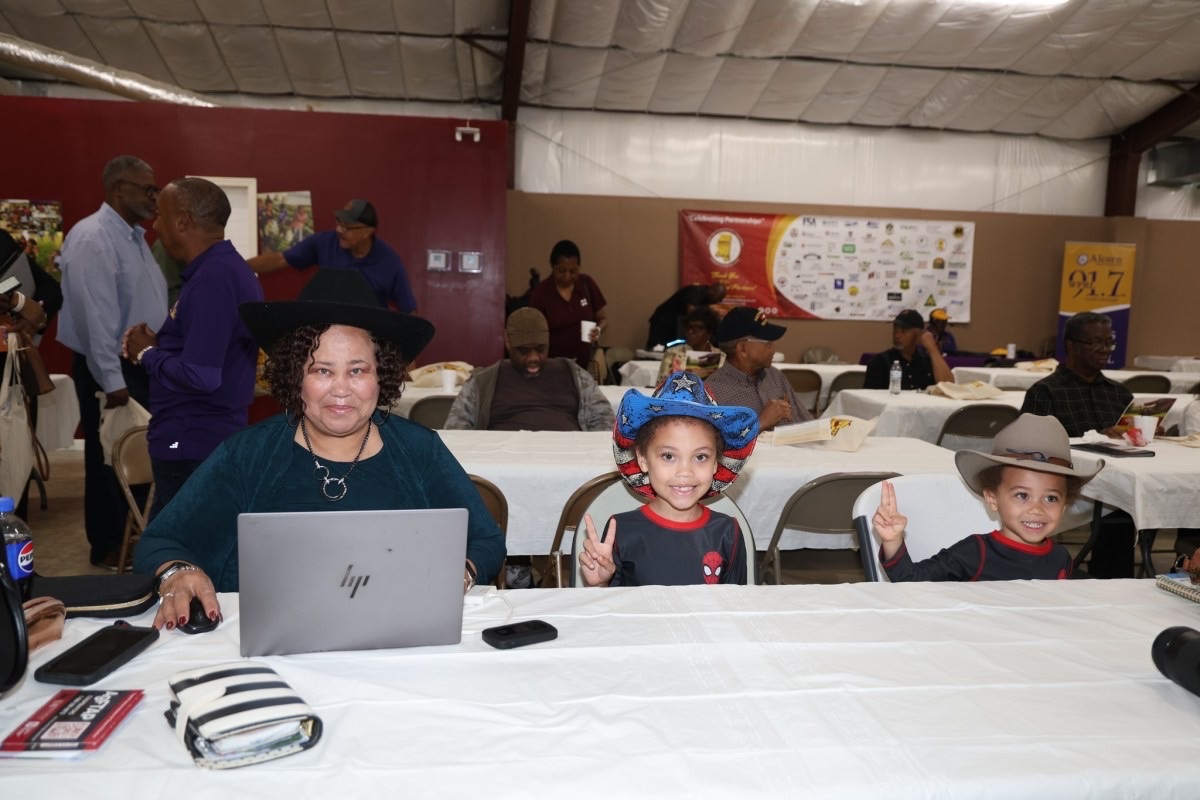
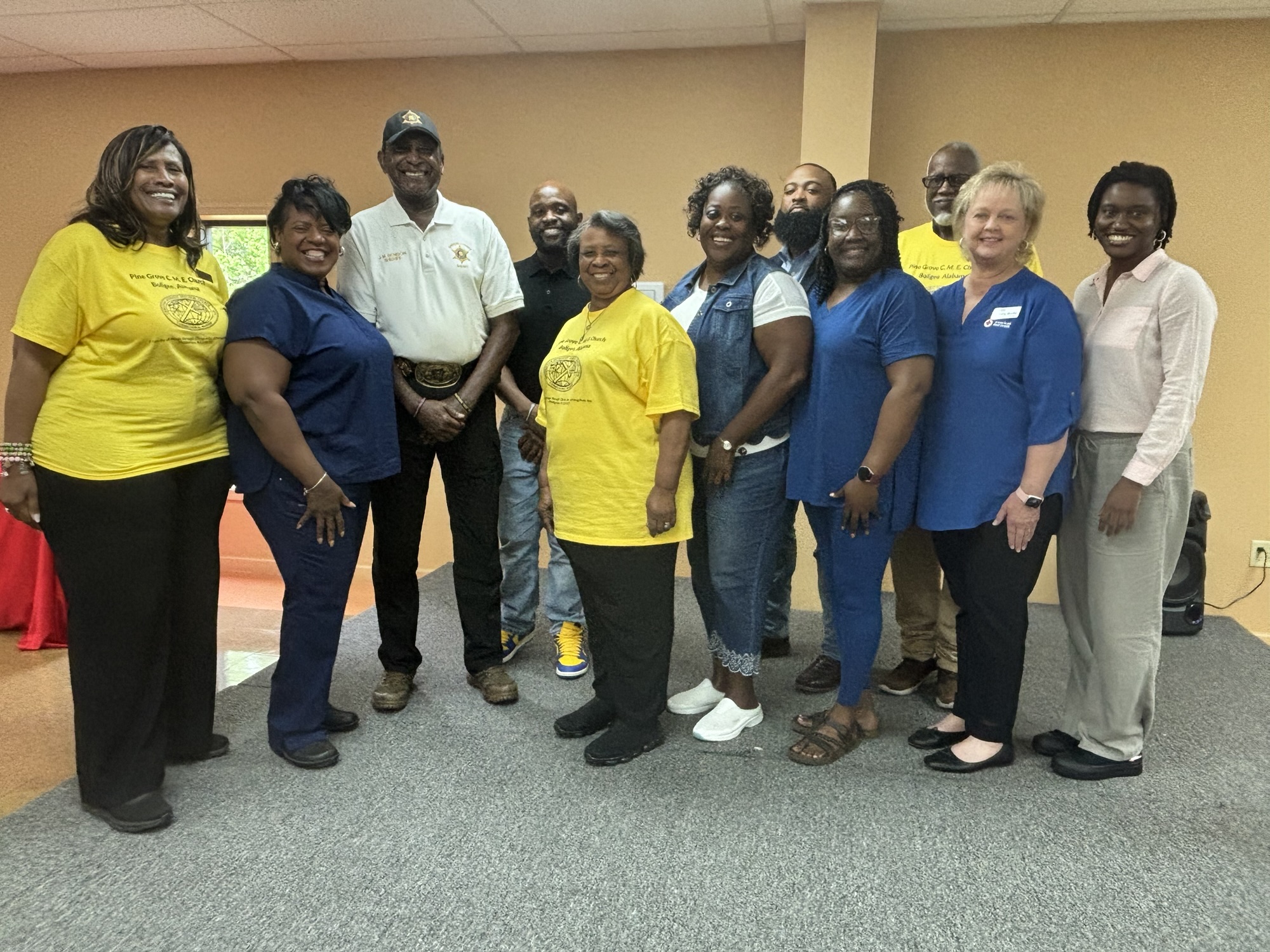
    Above, Wille Esther Austin and Dollarhide Community Health Fair Presenters

    by Maya Quinn, managing editor

    On Saturday, April 18th, Dollarhide Community Center was full of vendors and city representatives who gathered to address a myriad of concerns in the community for their Annual Health Fair. The event was hosted by Pine Grove CME Church, Macedonia CME Church, and the Dollarhide Volunteer Fire Department. The invited presenters focused on the well-being and safety of its citizens as well as the need for higher community engagement from constituents. 

    Dollarhide’s community is upheld by its citizens’ dedication to one another, as many initiatives are operated on a volunteer basis. From storm relief to community resources, the citizens of Dollarhide and neighboring cities such as Boligee and Forkland strive to meet the needs of their community through benevolent commitments to one another. By working with organizations such as Greene County Community in Action Coalition, Greene County Sheriff’s Department, and the Rural Alabama Prevention Center, citizens collaborate to create programs that address concerns ranging from underage drinking to high blood pressure management. This health fair is only one of many events hosted within Greene County to better the everyday lives of all those who reside within. 

    A group of diverse individuals, including adults and children, gathered on a stage in a community center. They are wearing matching yellow t-shirts with a church logo, posing for a photo with smiles.
    Pine Grove CME and Macedonia CME church members at the event

    The event’s program was led by Mrs. Willie Esther Austin, a member of Dollarhide’s Volunteer Fire Department and Pine Grove CME Church. Mrs. Austin welcomed guests and gave a quick summary regarding the purpose of the fair, to supply the community with health and safety resources. The program listed presenters from local governments, health organizations, and the Red Cross disaster relief. Prayers and scripture were intertwined with the program, reminding attendees that physical fitness and spiritual maturity are worth more than gold. “We do this every year,” Mrs. Austin told The Democrat. 

    After a prayer for good health, the fire department began the presentations with a demonstration on how to properly use an extinguisher and the importance of smoke detectors in the home. Fire Chief Keith Young reminded attendees that home fires often begin in the kitchen, so having a fire extinguisher nearby could prevent the loss of life or a home. Attendees were given the acronym PASS: Pull the pin, Aim the hose, Squeeze the trigger, Sweep the flames side to side. 

    Two men posing beside a mounted fire extinguisher in a room with beige walls.
    Dollarhide Volunteer Fire Department Fire Chief and Assistant Fire Chief

    The fire safety demonstration was followed by the EMS Board Director and CEO of Hills Hospital, Mrs. Loretta Wilson, giving a call to action for community members to support the ambulance services. Due to the financial and operational negligence of the previous administration, the EMS services of Greene County are threatened with closure. Wilson explained that there is only one operational emergency vehicle that serves the entire 647 square miles of the county. “We all own the emergency services,” she stated before asking for community members to offer assistance in reaching out to their commissioners and mayors. The EMS services are a nonprofit organization, meaning all proceeds and donations go directly to operating its services.

    Shawn Jackson, born and raised in Forkland, AL, gave a presentation on oncology, the branch of medicine that specializes in researching and treating cancer. Jackson graduated from UAB and has been working in radiation therapy for the last 25 years. “We used to equate cancer with death,” Jackson stated before explaining that medicine has advanced in such a way that early detection is a critical factor in treatment outcomes. “The most important thing is to get your screenings,” he explained. Jackson also encouraged attendees to support members of their communities with reminders for screenings and organizing carpools so appointments are not missed or delayed. “When you hear cancer, there is no need to be afraid…remember hope.”

    Special guest US Marshall and Officer Jeremy Rancher encouraged community elders to be watchful of vaping paraphernalia, as it is often masked by sweet scents that target teens and children, and underage drinking. Officer Rancher implored citizens to use him as a resource in their schools and gatherings. “Invite us out,” he began, “You never know whose life you’re gonna save.” Rancher states that his team can provide demonstrations on the dangers of drunk driving by letting teens wear impaired vision goggles while riding in ATVs. Greene County’s Sheriff Department and the Greene County Children’s Policy Council echoed the sentiment of using them as a resource as well. 

    Transitioning to health and wellness, Mr. Nathaniel Jones gave a testimony on the horrors of addiction. Jones explained that he was a first-generation college graduate and had a loving family, with children who excelled in school, but addiction “cares nothing about demographics” and is mind-altering. “I was in a prison mentally,” he began, “You do not want to mess with this…” Jones is now 7 years clean and talks to the youth in his community about the dangers of addiction to illegal and prescription drugs, alcohol, and smoking. Jones received roaring applause for his stories and reminded attendees to seek help from God and the church.

    An elderly woman with glasses standing alongside a man, both smiling and posing for a photo in a community center setting. The woman is using a cane and wears a light-colored blouse, while the man is dressed in a 'Proud Dad' t-shirt.
    Legendary Dollarhide Volunteer Fire Department member Ms. Quinnie and Mayor Jeff Quinnie (son)

    Dollarhide invites community members and friends to attend the community meeting every third Monday of the month at Dollarhide Community Center, located next to the fire department.

  • Newswire: How To Care For The Environment Beyond Earth Day

    Newswire: How To Care For The Environment Beyond Earth Day

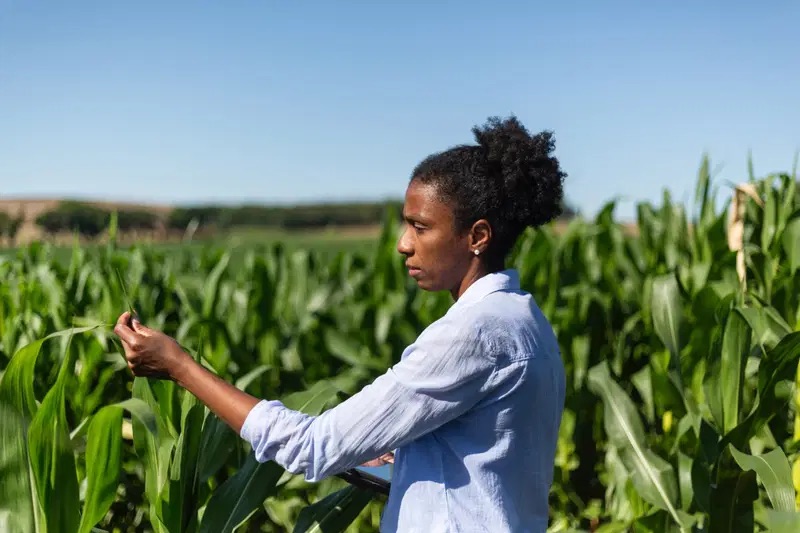
    black woman in agriculture

    by Ahsan Washington, Black Enterprise

    Annually, Earth Day brings significant awareness around environmental sustainability. However, specialists stress that true environmental change requires more than a yearly call to action, it calls for a shift in mindset and continuous daily practices. 

    Protecting the planet demands ongoing work from individual and community participation, and policy impact across various social levels. A great way to kickstart environmental change is understanding how environmental responsibility extends beyond one day. 

    Reduce Waste and Embrace Reusability

    Adopt reusable practices and reduce waste to decrease your environmental footprint. Use reusable items consistently across your home, workplace, and shopping activities. Implement the “reduce, reuse, recycle” model to conserve natural resources and decrease landfill waste and pollution.

    Cut Energy Consumption at Home and Work

    Reducing environmental damage through energy conservation depends on homeowners, renters, and employees. Regular actions, such as disconnecting unused electronics and using energy-efficient appliances, are essential. Properly managing heating and cooling systems in both residential and professional settings also reduces unnecessary electricity consumption.

    The primary objective is to decrease greenhouse gas emissions and reduce pressure on energy infrastructure to fight climate change. According to the U.S. Department of Energy, building energy efficiency improvements represent the quickest and most economical method to decrease emissions.

    Rethink Transportation and The Impact on the Environment

    The public must change travel habits by choosing public transit, biking, walking or carpooling instead of using single-occupancy vehicles for daily commutes. Transportation produces a large portion of greenhouse gas emissions, and vehicle emissions dominate urban and suburban areas. The U.S. Department of Transportation states that cutting vehicle miles traveled produces immediate benefits for air quality.

    Support Sustainable Consumption and Local Economies

    Environmental health depends on consumers supporting sustainability by choosing eco-friendly products and local goods with minimal packaging. These behaviors should be regular habits rather than seasonal choices. As demand for sustainable products grows, companies are pressured to transform production methods and decrease their environmental impact. The Natural Resources Defense Council states that intentional consumer behavior creates systemic transformations in manufacturing and supply chains.

    Engage in Community and Environmental Education

    Community members, educators, and local leaders are encouraged to participate in environmental education programs, including annual cleanups, workshops, and public discussions. These activities occur in neighborhood spaces, schools, and digital platforms to educate the public about pollution, climate change, and biodiversity loss. This engagement is vital because it expands individual contributions through shared responsibility and informed decision-making.

    Advocate for Systemic and Policy Change

    Voters, activists, and organizations are pushing for environmental policies that tackle major problems through emissions regulations, conservation programs, and corporate responsibility initiatives at all levels of government. Citizens can engage in advocacy during elections, legislative sessions, and public comment periods to affect policy decisions.

    Build Long-Term Habits Beyond Earth Day

    People and organizations should move beyond single-event participation in Earth Day activities. Instead, they should adopt permanent environmental habits, such as composting, water conservation, and food waste reduction. These behaviors must become part of regular routines in residential, workplace, and community settings. While single-day initiatives produce minimal results, ongoing actions produce tangible and permanent environmental benefits.

  • Newswire: Spades, The Card Game No Executive Order Can Touch

    Newswire: Spades, The Card Game No Executive Order Can Touch

    by Melissa Rose Cooper, NewsOne

    Mel Alleyne hadn’t played spades in years. Then her sister called.

    “She was like, ‘There’s a tournament [in Brooklyn]. And you’re going to sign up for it and you can’t say no,’” she recalled.

    Alleyne, who first learned the game at a lunch table in high school, knew exactly what was at stake at that table — socially, at least.

    “It was like you were not cool if you did not know how to play spades,” she said. “It was necessary. It was like you had to know. And you had to be good.”

    Last week, Alleyne was one of a roomful of players who gathered at Aunts et Uncles, a Black-owned vegan restaurant in Brooklyn, for The Lunch Room. The spades tournament funneled competitors through a digital qualifier on the Trickster Cards app before bringing the top 16 to a live championship night filled with music, food and the kind of energy many in the Black community have known for years.

    “Everybody that you know that’s Black pretty much has played spades, they know about spades,” said Yantise Jenkins, a member of the card club, the DMV Cardtel, who traveled to support the event. “It’s at family reunions. It’s at cookouts. Thanksgiving after everyone eats dinner and cleans up, there’s somebody pulling out the cards to play spades.”

    That cultural tradition is exactly what The Lunch Room was designed to honor — especially at a moment when Black history is under attack.

    In January 2025, President Trump signed a sweeping executive order dismantling diversity, equity and inclusion programs across federal agencies and institutions. In recent years, states including Florida, have moved to restrict or eliminate African American studies from public school curricula.

    Proposed federal budget cuts have also threatened funding for the National Endowment for the Arts and the National Endowment for the Humanities, two institutions that have long supported Black cultural programming nationwide. The ongoing theme is hard to ignore: the formal structures designed to protect and legitimize Black cultural life are being dismantled one policy at a time.

    What no executive order touches, however, is what gets passed down at the table.

    “It’s been done for generations. And different age groups can do it,” said Jenkins. “I was probably 8 years old when I first learned how to play.”

    Spades was never taught in a classroom. It spread through kitchen tables, rec centers and lunchrooms where the game stretched well past the bell. It has survived without institutional support because it never needed any — it moved person to person, generation to generation, in the spaces where Black people have always gathered.

    Michael Nicholas, co-owner of Aunts et Uncles, knows that story firsthand.

    “Some classes were missed and skipped because of spades games,” he laughed, “but I still graduated timely and it was cool.”

    That experience is the direct inspiration behind the tournament’s name. The restaurant, which Nicholas owns with his wife Nicole, regularly transforms into its own version of the lunchroom, hosting spades games throughout the year. To Nicholas, the game has always been about more than the cards.

    “You learn basically by sitting down and watching the family and friends getting together,” he explained. “So I feel like it’s important for us. It’s just a gathering point and a way to kind of get together, share knowledge, share space. It’s beyond a pastime.”

    That gathering point is increasingly rare. As daily life moves further online and in-person community becomes harder to sustain, events like The Lunch Room carry a different kind of weight. The tournament’s structure — starting with a digital qualifier on the Trickster Cards platform before culminating in a live event — was designed to use technology as an on-ramp, not a destination. The point was always the room.

    “Because depending on how you play and how your partner plays, you kind of like, know how to talk to each other without speaking to each other,” Nicholas said. “You can read the game, you can read the board, just by the cards.”

    For Chevy Wolf, whose agency, The Last Wolves, partnered with Trickster Cards and Aunts et Uncles to produce the event, the cultural stakes were just as clear.

    “If you grew up in Black culture, you know, spades is a part of your DNA,” Wolf said. “It’s just genetics.”

    Part of that DNA is the trash talk — the loud, sharp, loving kind that sounds like an argument to an outsider but reads as affection to anyone who grew up around it. Wolf wanted the evening to capture that, too.

    “You can still compete, but it’s all love at the end of the day. And I think that’s one of the key components we wanted to show everybody.”

    The event drew players who hadn’t touched a deck in years. It also brought people determined to make sure the game never skips a generation.

    Korey Hines, a Trickster Cards ambassador who learned to play as a kid under his Aunt Helen — a serious card player he describes as a major presence in his life — sees that work as a calling.

    “It’s actually a full circle for me,” Hines noted. “Oftentimes, generations get locked into their space and their time, and they don’t pass the torch. I feel that I was given the gift to be able to bring some people together and maybe make those transitions smoother.”

    There is something quietly radical about that mission in this particular moment. When the institutions that were supposed to hold Black history and culture are being hollowed out, the people who carry that culture in their hands — literally, in a deck of cards — become the institution.

    For the players who walked through the door that night, the significance landed personally.

    “It’s kind of nice to be able to come together and see each other and have that community,” Alleyne says.

    In a moment when the formal structures built to support and preserve Black cultural life are being systematically dismantled, that community — gathered around a card game, in a Brooklyn restaurant — is holding the line.

  • Eutaw City Council praises its citizens

    Eutaw City Council praises its citizens

    by Maya Quinn, editor

    The city council held a public meeting on Tuesday, April 15th, 2026. All district representatives were present and accounted for, each recognizing the county’s citizens’ and police department’s most recent efforts.

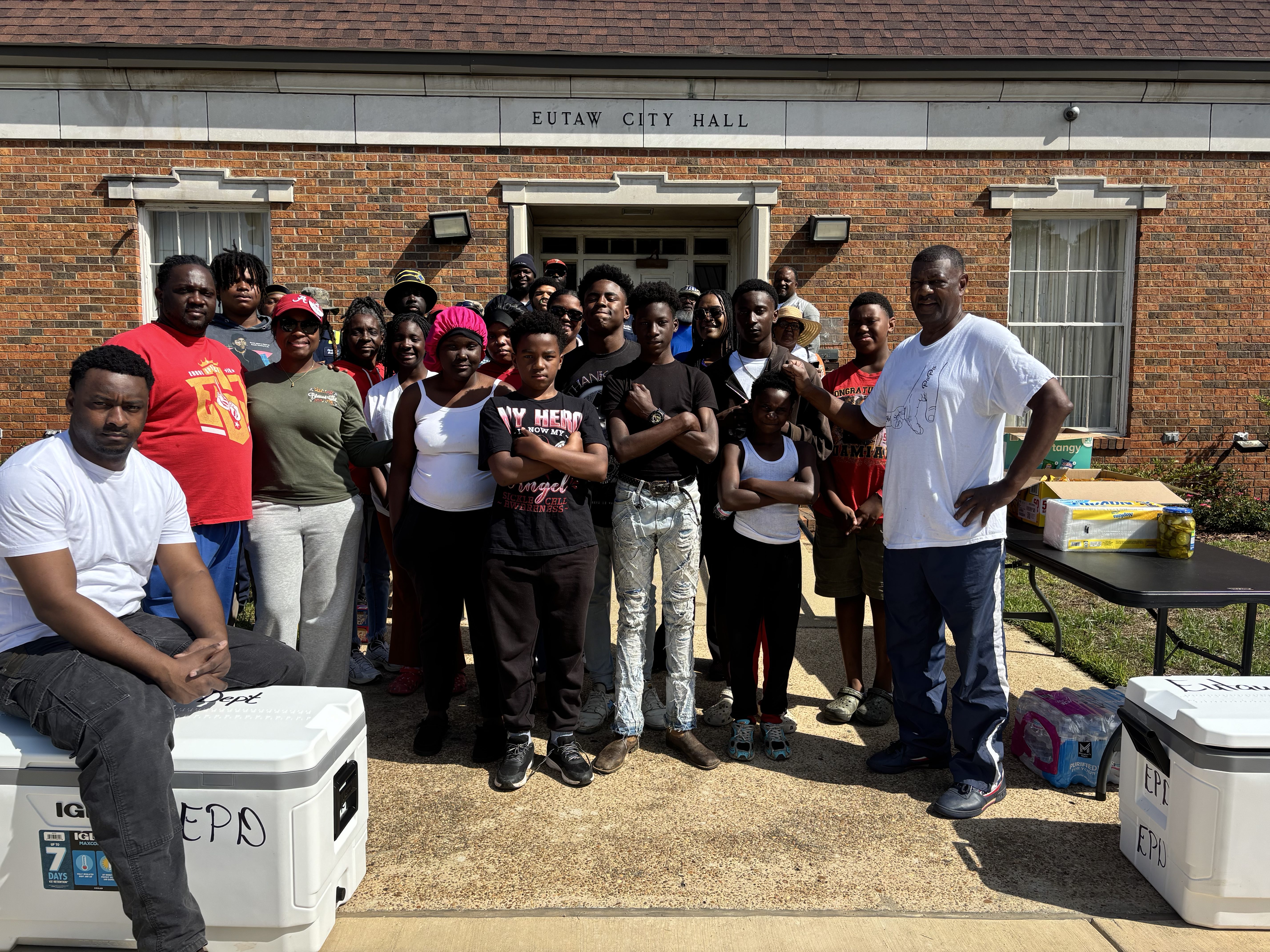
    On Saturday, April 11th, constituents of Greene County gathered at city hall to conduct a city-wide clean-up of Eutaw, Greene County’s most populated city. This initiative is part of a larger statewide spring clean-up campaign, “Don’t Drop it on Alabama.” The statewide campaign was established 40 years ago by Alabama People Against a Littered State (PALS). The council provided water and refreshments for those in attendance. Mayor Cockrell thanked all who took the time to come out and join the efforts.

    Councilwoman Valerie Watkins, District 1, praised Chief Kendrick Howell and the police department for timely and efficient responses to calls. Councilwoman Tracey Hunter, District 3, also recognized Howell for his exemplary mentorship of Eutaw native Raymond Lewis, who will be admitted into the police academy at a ceremony on April 30th, 9:00 am, at the Alabama Criminal Justice Training Center, 1005 Charles Byrd Blvd, Selma, AL 36703, on the campus of George Corley Wallace State Community College. 

    Faye Tyree was also acknowledged for her efforts in coordinating the EMS fundraiser that brought in roughly $18,000 for the ambulance services. As Councilman Woodruff said, this initiative “shows that we can come together as a community and fight for a cause.”

    EMS Admins and Employees at Eutaw’s city wide clean up day

    All minutes for the March 24th regular session and the March 31st called meeting were approved. Here are the approved agenda items for new business:

    1. Resolution CDBG grant 
    2. Payment of Membership dues for the Alabama Rural Water Association-Utility 2026-$600.00
    3. Payment of Membership dues for the City of Eutaw with the National League of Cities-$981.00
    4. Payment of IMC Membership dues for ShaKelvia Spencer and Joe L. Powell-$135.00
    5. Payment of CMRO Membership dues for ShaKelvia Spencer and Joe L. Powell-$25.00
    6. Payment of AAMCA Membership dues for ShaKelvia Spencer and Joe L. Powell-$120.00
    7. Payment of Bills

    Please join the city council for its next scheduled meeting on May 14th, at 5:00pm.

  • Black Belt Community Foundation awards over $358,883.81 in community and arts grants

    Black Belt Community Foundation awards over $358,883.81 in community and arts grants

    by Barbara Amerson, Office Manager and Reporter

    Through this annual grant cycle, BBCF will award Arts Grants ranging from $500 to $3,500 and Community Grants ranging from $500 to $5,000 to support com- munity-led projects across the foundation’s 12-county service area: Bullock, Choctaw, Dallas, Greene, Hale, Lowndes, Macon, Marengo, Perry, Pickens, Sumter, and Wilcox coun- ties in Alabama’s Black Belt region.

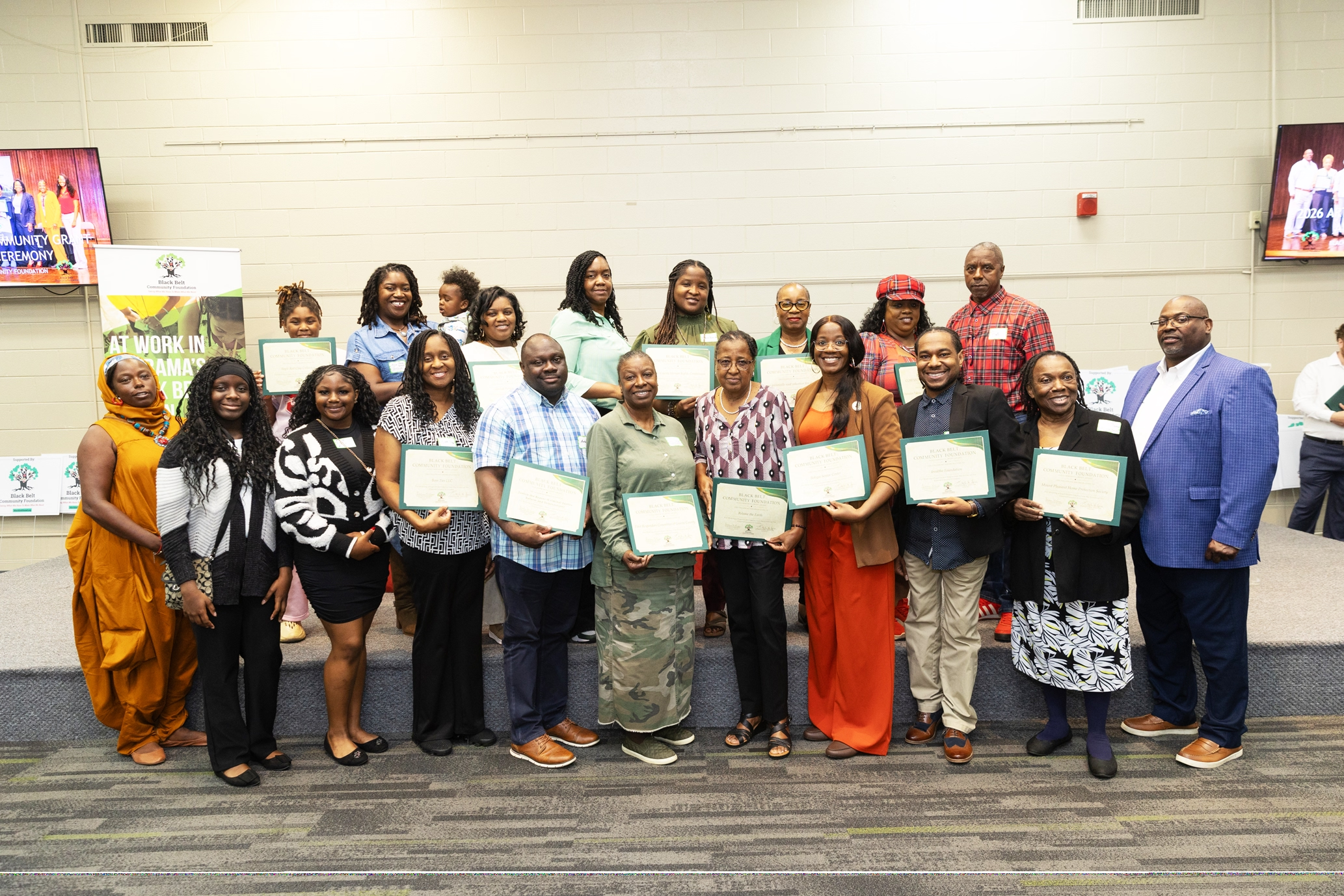
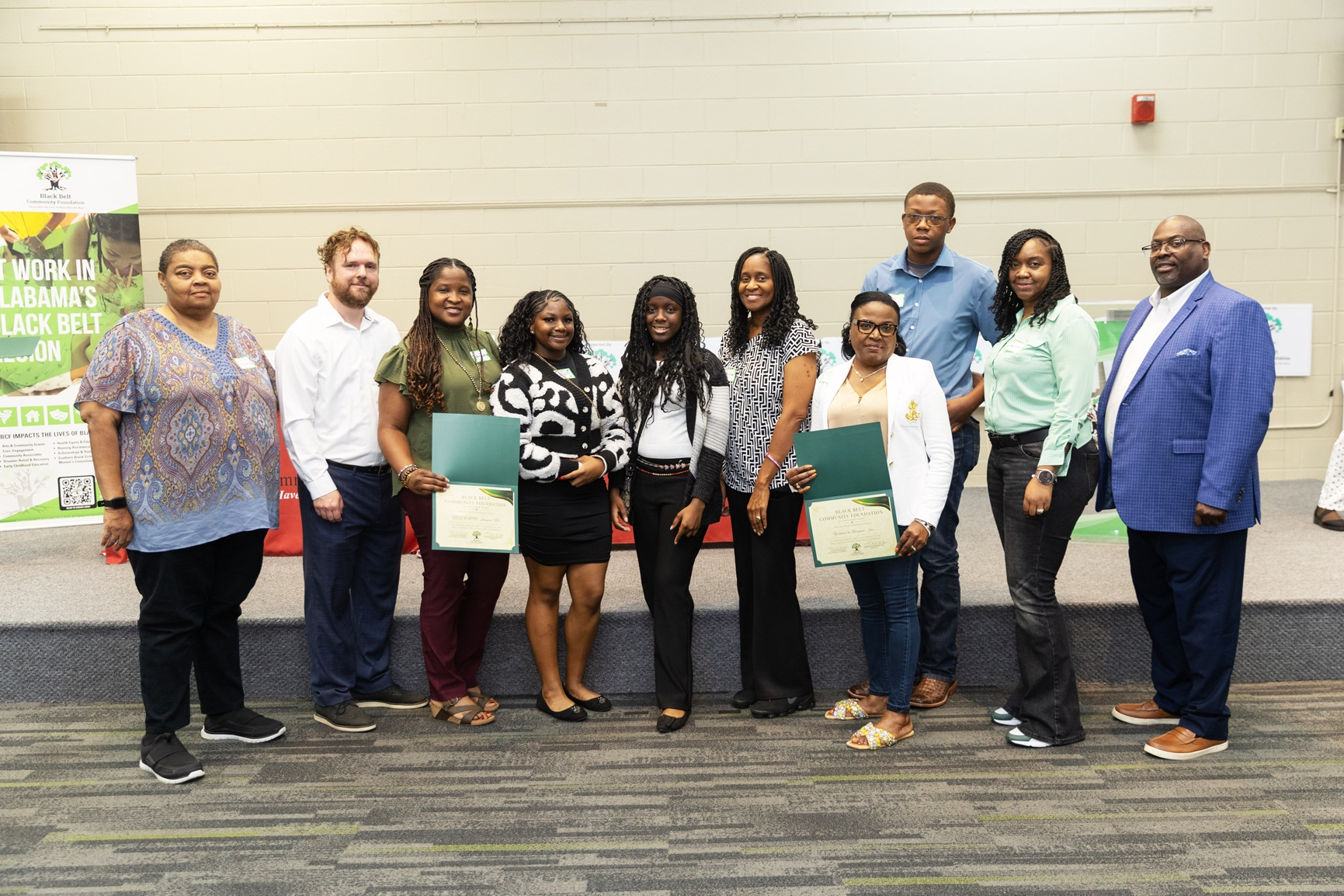
    The Black Belt Community Foundation (BBCF) awarded $358,883.81 to 148 community grants and arts projects across its 12 county service area in the Alabama Black Belt Region, including Bullock, Choctaw, Dallas, Greene, Hale, Lowndes, Macon, Marengo, Perry, Pickens, Sumter and Wilcox. The presentations were made at its 2025 Arts and Community Grant Ceremony held Saturday, May 3, 2025, at Wallace Community College Selma. “As we continue to celebrate BBCF’s 20th anniversary through May, the Black Belt Community Foundation is proud to award these funds in 148 different grants to community and arts organizations across the 12 counties we serve,” said BBCF President Chris Spencer.

    Community organization grant winners

    Greene County received 13 grants for community and arts projects, in the amount of $40,500.00 awarded to the following organizations:

    • 4realtho Foundation Greene County Human
    • Rights Commission “Justice” the Beaver (Criminal Justice Reform and Intervention)
    • Mount Pleasant Home Protection Society
    • First Responders Committee of Green County
    • Freedom Rock Church 
    • Boligee Senior Center Boss Ties, LLC 
    • Operations Taking Back Our Community (TBOC) 
    • Release the Earth United Purpose Inc 
    • Lower Gainesville Road Volunteer Fire Department 
    • Illogic Red Clay Collective
    • GCF & APA Imagine Me
    • Woman to Woman, Inc 

    The 2026 arts grants, including the Black Belt Folk Roots Festival and GCF & APA Imagine Me, totaled $14,000.


    Art grant winners

    Ms. Darlene Robinson,The BBCF board member representing Greene County, stated that each of the 12 counties has a group of volunteers, known as Community Associates, who raise funds for the Foundation, and these resources, which receive a percentage match from BBCF, are allocated in grants to the respective county. “We hold a lot of fundraising activities in Greene County, but that money can only be spent in Greene County through grants,” she said.

    These grants support projects that strengthen, uplift, and empower communities across Alabama’s Black Belt. “These grants are a key part of how we support community-led work across the Black Belt,” said Chris Spencer, President and CEO of the Black Belt Community Foundation. The 2026 grant cycle will conclude with an Arts and Community Grants Awards Ceremony on April 25, 2026, in Selma.

  • Ground-breaking ceremony held for Legends Bingo

    Ground-breaking ceremony held for Legends Bingo

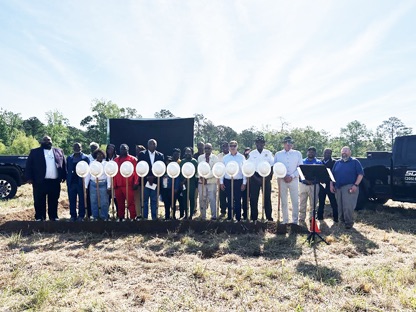
    Above, Attendees of the Legends Bingo groundbreaking ceremony including county commissioners, GCHS CEO, and Greene County Sheriff Joe Benison

    by Barbara Amerson, Office Manager and Reporter

    On April 21, 2026, a groundbreaking ceremony was held to usher in the new Legends Bingo facility located on County Road 220 Knoxville. Many local government officials and administrators were present at the event, including Greene County’s mayors, county commissioners, Greene County Hospital’s CEO, and the Greene County Sheriff Department.

    Pastor Kim Uhren from Alaska and Pastor Michael Barton were also present to bless the land. Legends President Matt Young delivered the welcome, detailing the amenities and multifaceted purpose of the facility. Alongside the bingo hall, the grounds will encompass an RV Park and a 120-person capacity dining hall. Legends hopes to employ approximately 250 people, providing childcare and full and part-time employment benefits.

    Sheriff Benison explained that the erection of the bingo hall is part of his vision to bring more opportunity to Greene County. Benison asserts that bingo proceeds will be allocated to Greene County Hospital, EMS services, Paramount School, scholarships, and more. Benison stated that it’s “time to play ball,” so Greene County can have the “more” that it deserves.

  • Newswire: Black Farmers Aren’t Waiting on Washington to Save Them

    Newswire: Black Farmers Aren’t Waiting on Washington to Save Them

    Above, Eloris Speight, former director of Alcorn’s National Policy Research Center, sits with young farmers-in-training at the conference. (Courtesy of the National Policy Research Center)

    by Aaliyah Wright, Capital B News

    SHANNON, Mississippi — What seemed like almost an empty building on a recent Saturday morning quickly filled with dozens of Black people — from retired federal employees to university officials and even education and land appraisal experts.

    They greeted one another while signing in at the Saving Rural America Small Farmers Conference. Some hugged before grabbing breakfast. Others stopped by Alcorn State University’s table, where a live broadcast took place.

    One thing all the participants and speakers had in common: They were farmers, ranchers, or worked directly with producers. Some were local to the area, located about 10 miles south of Tupelo and about 2 hours from the state capital of Jackson. Others said they drove at least three hours. Many attend the half-day conference every year, hosted by the Mississippi Minority Farmers Alliance and Coalition of Farmers.

    By 8:30 a.m., they’d all taken their seats.

    In a hyper-political climate where resources and support to help farmers have dwindled, this group didn’t focus on the challenges brought on by the Trump administration’s policies and changes to federal programs. Instead, they gathered to talk about how this moment is an opportunity to inspire the youth and build partnerships together. And they aren’t the only ones. 

    Across rural America, Black producers in agriculture shared concerns about the U.S. Department of Agriculture’s continuing efforts to eliminate grants, but they’re not exhausting their energy on navigating such challenges. From Georgia to New York and even in Kentucky, farmers are inviting their own to lead conversations, workshops, and spend time in their communities. In June, the Texas International Ranchers and Farmers will host a three-day convening for farmers and students in rural Nacogdoches.

    When Tiffany Bellfield El-Amin started planning for her organization’s conference, the news hit that Supplemental Nutrition Assistance Program benefits would be delayed. Some funders could no longer support the Kentucky Black Farmers Association, the organization she founded. They realized they couldn’t really rely on the government as they once did. After conversations with farmers, they exclaimed, “We got us,” which birthed the theme for this year’s conference focusing on culture, connection, and collective power. 

    “The funding that we usually received was in partnership with Kentucky State University, and we realized that because of their federal funding, they wouldn’t be able to fund it, either. So ‘We got us’ got even deeper,” Bellfield El-Amin said. “[We said], ‘We’ll figure it out.’ Everybody can bring a dish. We can do this family reunion style.”

    The importance of cultivating a space of collective care, addressing farmer’s needs, and knowing where the resources are is critical, she added. Some participants refused stipends. Others showed up, even though their employers couldn’t pay for them to come. Students attended, too, and got to experience the farms.

    “Food was sourced locally from our Black farmer members. We had Black bourbon, Black wine and spirits. We had steppers come in from Louisville, Kentucky. We had people camp out at the farm,” Bellfield El-Amin said. “It felt like the best family reunion, like I was with all my cousins, and we’re trying to figure out how we’re going to maintain and sustain ourselves and our communities.”

    Many panelists at the Shannon convening shared resources to help farmers and reemphasized their commitment to farming. As Carolyn Jones, director of the Mississippi Minority Farmers Alliance, put it, it’s time to cut the noise and “surround ourselves with positivity.”

    Experts like Eloris Speight, former director of the National Policy Research Center at Alcorn State, shared information about farm business protection programs. Mississippi State University professor Kevin Kim provided an overview of projected market conditions, and Walter Jackson, an agronomy consultant and cattle rancher, told the audience about a regenerative agriculture initiative. There were also sessions led by local pastors on religion and the community and a panel on health and wellness, while other panelists brought awareness of potential business opportunities. 

    Take Malone Buchanan, for instance. He’s a retired forester who owns a pine timber company. He emphasized the importance of timber and how others can take advantage of foresting operations.

    “Whatever county you’re in, you need to know who the movers are, who the shakers are, and you need to know where the money comes from,” Buchanan said. “I would like to grow my business with some new younger people.


    The power of the next generation of farmers

    Kameka Cole-Gray emphasized the importance of youth in agriculture. Cole-Gray works as the 1890 National Scholars Program’s USDA program liaison for Alcorn State and Southern University. She celebrated the students who she works with, including Gary McGhee, an agriculture economics major at Alcorn State. 

    McGhee doesn’t come from a farming family, but he became interested in the agriculture industry when a mentor allowed him to tour farms and learn about the business side of farming — from selling crops and livestock to owning land, he said. It pushed him to secure an internship with the USDA.

    “Hearing different people’s different perspectives on agriculture means a lot to me, so I can learn more and gain as much knowledge as possible and hopefully be my own professional in the ag field,” he said. “Hopefully I get my own farm one day.”

    The current climate and the reality of a declining Black farmer population hasn’t deterred McGhee from entering the profession, he said. If anything, it’s encouraged him to get his friends involved.

    “It’s a lot of older Black farmers and not enough young farmers, and I think that comes from not enough exposure,” he added. “I got a lot of friends that don’t know about agriculture, but now they see me doing it and they want to know more about it.” 

    In the room, on this day, everyone had everything they needed to be successful, John Jones, a retired conservationist and USDA Natural Resources Conservation Service employee, told the group.

    “I just want you all to keep the faith, keep hope alive, because they can’t take it away from us,” he said. “We have nothing to fear.” 

  • Newswire: Mamdani Creates Office to Fight Deed Theft in New York City

    Newswire: Mamdani Creates Office to Fight Deed Theft in New York City

    by Mihir Zaveri, New York Times

    The scammers come in many varieties: The slick broker who “saves” a home from foreclosure, only to vanish with the title. The caregiver who exploits an older man’s trust to hijack his deed. The financial whiz who promises a mortgage renegotiation that ends in an eviction.

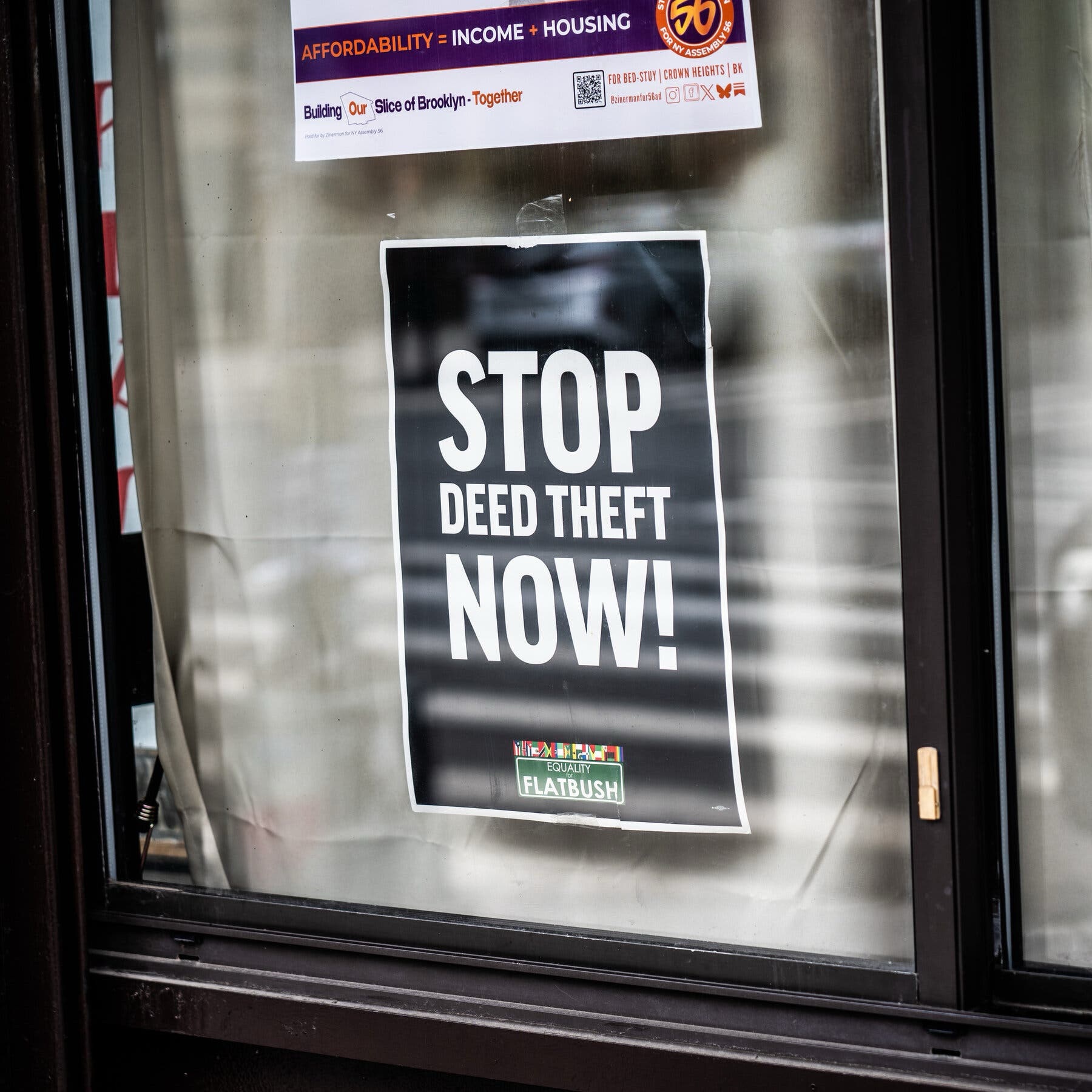
    Every year, cases like these afflict homeowners across New York City. The schemes are examples of deed theft, a practice in which people fraudulently take ownership of others’ homes.

    Just two days ago, a Brooklyn city councilman was among several people arrested at a protest against the crime.

    Now, the city is creating an Office of Deed Theft Prevention that will investigate instances of deed theft and try to stamp them out.

    “The theft of a home is the theft of a family’s future,” Mayor Zohran Mamdani said on Friday as he announced the creation of the office.

    “Deed theft preys on the New Yorkers who can least afford it. Today, we are bringing the full force of city government to bear to stop it — to protect homeowners, defend generational wealth and make clear that this City will not tolerate the exploitation of our communities.”

    Deed theft has been a particular problem in predominantly Black neighborhoods, where investors can capitalize on rising property values and gentrification.

    Mr. Mamdani, who has focused much of his attention on helping the city’s renters, is moving to create the office as he seeks to improve his political standing with Black homeowners and their representatives.

    He appointed Peter White, a lawyer who has worked for more than seven years at Access Justice Brooklyn, a nonprofit group, to lead the office. Mr. White worked on several deed theft and foreclosure related cases at the group.

    “My fundamental goal is to make life better for New York City homeowners,” Mr. White said on Friday, appearing alongside Mr. Mamdani at the Brooklyn Bank, a nonprofit based in the Bedford-Stuyvesant neighborhood that helps people build financial independence. “This is something I’ve tried to do since the beginning of my legal career.”

    Mr. Mamdani said the office would have a budget of $500,000 in the current fiscal year, which ends in the summer, and $1 million in the next. The office is expected to find ways to better educate homeowners on the warning signs of deed theft, as well as connect potential victims with lawyers and law enforcement.

    The office will also work on crafting new city and state legislation that could help public officials crack down on the practice.

    It will be part of the city’s Finance Department and will coordinate efforts between the housing department, the commission on human rights and more.

    While government officials have pursued deed theft cases in recent years, it remains a difficult problem to address. It is not always obvious to homeowners that they have been victims, and years could pass before any offense is reported.

    It can also be tough to determine when behavior is criminal and when a homeowner may simply be making a bad decision involving getting rid of their home. And the legal ownership of a home may be murky, particularly if the property was inherited by several different heirs or is in the hands of a guardian or conservator.

    The protest this week where the councilman, Chi Ossé, was arrested, did not center on an actual example of deed theft, according to the state attorney general’s office, but a property dispute between heirs and relatives of the property’s former co-owners.

    Still, officials have worked to more effectively address the issue. In 2024, state officials passed a law, known as the Heirs Property Protection and Deed Theft Prevention Act, that firmly established deed theft as a crime. The law was written in part by Letitia James, the state attorney general.

    One government estimate from 2023 found that there were at least 3,500 complaints of deed theft filed over the previous decade.

    The Furman Center at New York University released an analysis last April that found that tens of thousands of New York City homeowners were vulnerable to deed theft, scams, under-market sales and other legal problems that could strip them of their equity.


    Jeffery C. Mays contributed reporting.

  • Greene County BOE accredited by Cognia

    Greene County BOE accredited by Cognia

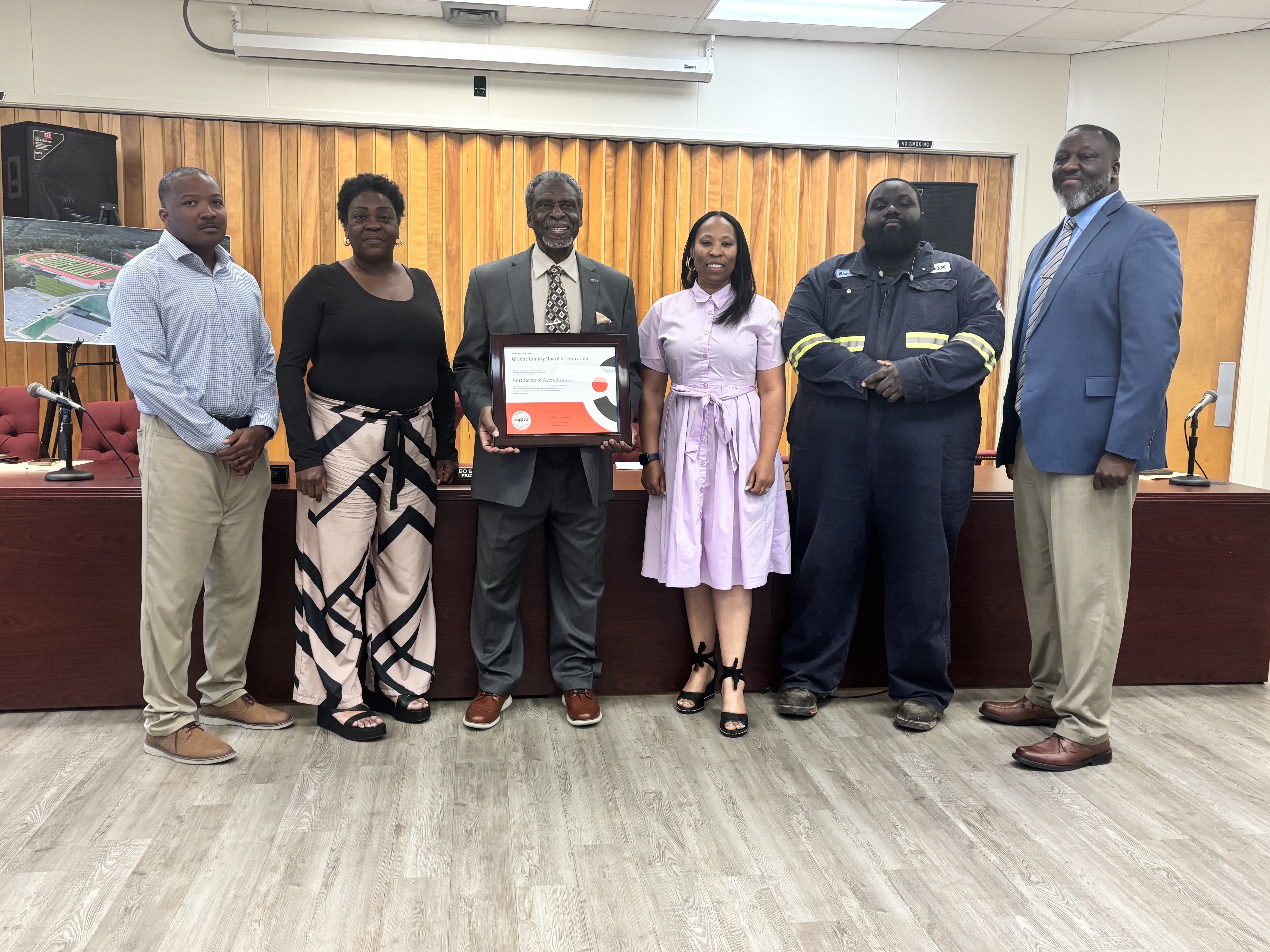
    BOE and Dr. Thurman, superintendent, present Cognia Accreditation plaque during a general session meeting

    This past Monday, April 20th, Greene County Board of Education announced its new accreditation from Cognia during their general session. All districts were represented during the session. 

    According to Cognia, the accreditation “signifies that a school meets or exceeds rigorous standards of educational quality and effectiveness.” The accreditation has been extended to schools in over seventy countries worldwide, serving as a global measurement for quality education. It validates diplomas so students can transfer their credits to universities inside and outside the United States. To learn more about this milestone and the school system’s plans, Dr. Thurman encourages parents to attend the remaining stops of his superintendent community tour and ask questions. 

    After the minutes for the regular meeting on March 12, 2026, were approved, Mrs. Lennon delivered the financial report. As of March 31st, all accounts are reconciled, and no fraudulent activity has been reported. Lennon also thanked the Greene County Racing Commission for donating $177,000, which will be reflected in the April report. 

    During the superintendent’s report, Dr. Thurman thanked parents for their participation during the Superintendent’s Tour. “We want to be transparent in every way that we can Dr. Thurman stated. The next tour stop will be for District 2 on April 23rd, at Paramount in Boligee, AL. The final date for the tour will be May 4th at the Branch Heights Community Center to address all districts. “We want to continue to build relationships with our parents,” Dr. Thurman began, “I’ve been enjoying it (the tour).”

    After the report, the floor was yielded to the board members to ask questions. Robert Davis inquired about the status of long-term planning for the bus stops. The superintendent told Davis that there would be a call meeting to discuss bus stops and other items of importance not included on the agenda. The call meeting is scheduled for Monday, April 27th, at 4:00 pm for board personnel and administrators. 

    All recommendations by the Superintendent were approved. Here they are as follows: 

    1. Memorandum of Agreement for Special Education Services between Community Service Programs of West Alabama, Inc., Head Start/Early Head Start, and Greene County Board of Education to identify, evaluate, and provide special education services to young children (ages 3–4) with disabilities
    2. Greene County Board of Education Organizational Chart
    3. Removal of outdated and unused items from Peter J. Kirksey location by Otis Robinson at no cost to the GCBOE
    4. 2026-2027 Academic Calendar 
    5. Social Studies textbook adoption recommendation: Grades K-5 Studies Weekly and Grades 6-12 McGraw-Hill 
    6. Social Studies textbook quote from Studies Weekly for 6-year terms for $60,376.40
    7. Softbook quote from McGraw-Hill for 6-year terms for $88,063.44
    8. Qofto provide Email Encryption software for $17,913 to be paid of71 (Funding Source: Cybersecurity Grant)
    9. Out of state travel for the following to attend the SREB (Southern Regional Education Board) Conference to be held in Nashville, TN, on July 14 – 17, 2026:
      1. Tammy Anderson
      2. Paula Calligan
      3. Rebecca Coleman
      4. Ka’Needa Coleman
      5. Tura Edwards 
      6. Angela Harkness
      7. Tomora Hill, SREB Presenter
      8. Lorissa Holder
      9. Janice Jeames-Askew
      10. Dutchess Jones
      11. Charlayne’ Jordan-Riley
      12. Drenda Morton
      13. Andrea Perry
      14. Tameshia Porter
      15. Tamika Thompson
    10. Payment of all bills, claims, and payroll
    11. Bank reconciliations as submitted by Mrs. Marquita Lennon, CSFO

    The following personnel action items were approved:

    RESIGNATION

    • Binion, Montoya—​EPS​ 2nd Grade Teacher effective, 5/27/2026

    EMPLOYMENT​​​​​​​​​​​​

    • Coley, Anglee, Special Education Coordinator​
    • Cistrunk, Catherine, Bus Driver (Sub)​
    • Thomas, Kayla, Substitute Teacher​

    EXTENDED LEAVE​​​​​​​​​​​

    • ​Washington, Elona—EPS ​1st Grade Teacher

    As the board attorney was not present, the meeting was adjourned after action items were presented. The next regular meeting is currently scheduled for Monday, May 18th at 4:00 pm. 

    Sign up to receive a weekly newsletter with our latest stories.

    We don’t spam! Read our privacy policy for more info.

  • Judge proclaims April 2026 as “Child Abuse Prevention Month”

    Judge proclaims April 2026 as “Child Abuse Prevention Month”

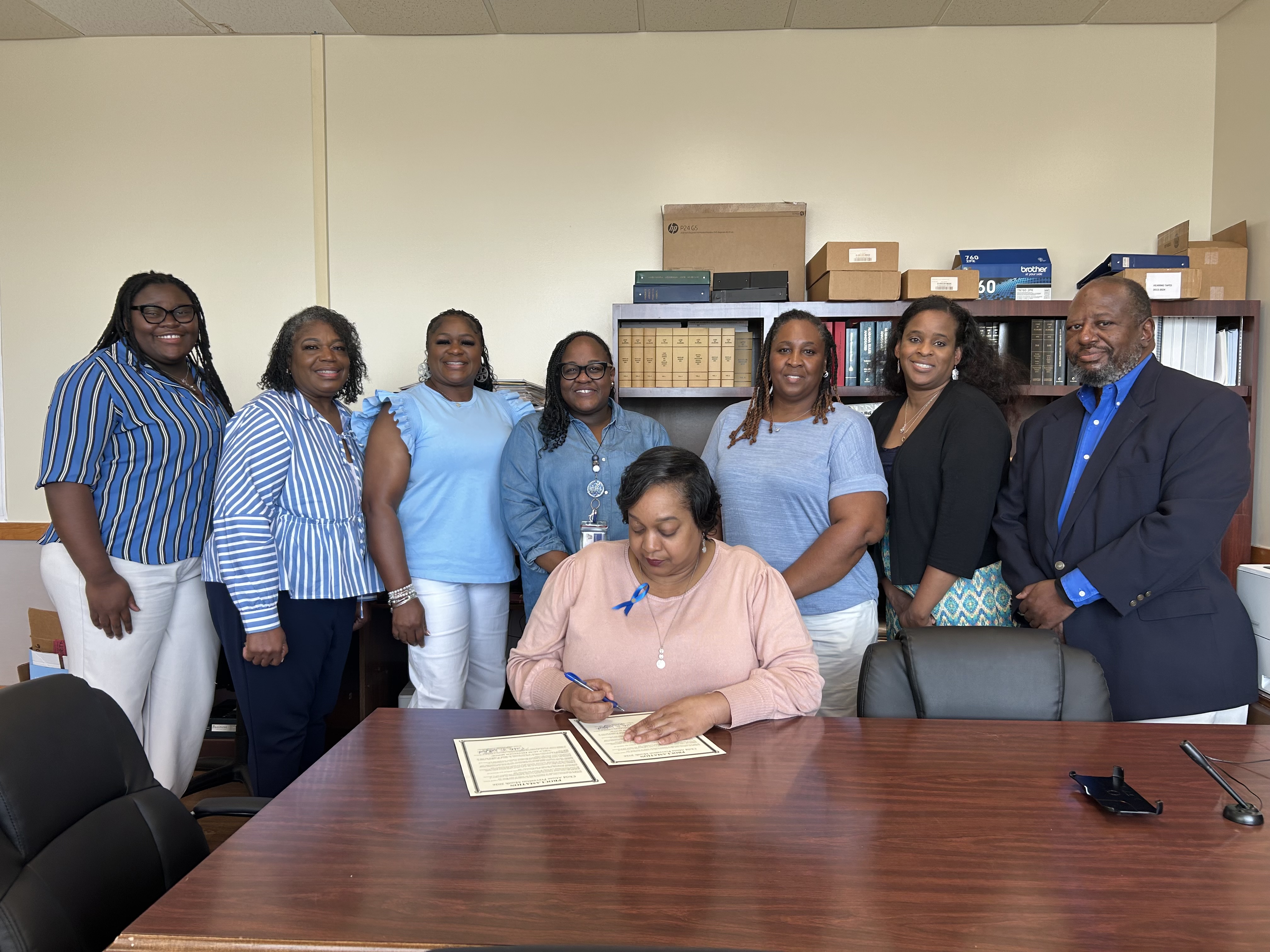
    Judge Rolonda Wedgeworth signing a proclamation for Child Abuse Prevention Month

    PROCLAMATION

    Child Abuse Prevention Month 2026

    Whereas, National Child Abuse Prevention Month will be recognized throughout the United States as well in the Commonwealth of Alabama during April 2026; and

    Whereas, Child Abuse Prevention Month is a time to acknowledge the importance of families and communities working to prevent child abuse and neglect, and to promote the social and emotional wellbeing of children and families; and

    Whereas, preventing child abuse and neglect is a community problem that depends on involement among people through the community; and

    Whereas, child abuse is consdiered to be one of our nation’s most serious public health problems withscienctific tides documenting the link between the abuse and neglect of children and wide range of medical, emotional, psychological andbehavioral disorders; and

    Whereas, effective child abuse prevention programs succeed because of partnership among agencies, schools, religious organizations, law enforcement, and the business community; and

    Whereas, during April and throughout the year; our communities are encouraged to share child abuse and neglect preveniton awarness stratgies and activies and promote prevention across the county.

    Therefore, I, Honorable Judge Ronland Wedgwothby, by virtue of the authority vested in me as Probate Judge of Greene County, do here proclaim the Month of April in the year 2026 to be Child Abuse Prevention Month.”

    In Greene County, we encourage all residents to engage in making a difference in the lives of children in Greene County by promoting safety and awareness to prevent abuse from happening.

    • Judge Rolonda Wedgeworth, Probate Judge of Green County, Alabama

    Sign up to receive a weekly newsletter with our latest stories.

    We don’t spam! Read our privacy policy for more info.