More than 1 million voters are expected to vote via absentee ballots in the Georgia Senate runoff races, according to The Hill, which signals an important voting trend around the power of mail-in ballots directly related to the past election season. Georgia voters and the nation are closely watching the highly contested races where Democratic challengers Rev. Raphael Warnock and Jon Ossoff respectively face Republican incumbents Sens. Kelly Loeffler and David Perdue in separate elections. Joe Biden campaigned in Georgia on Tuesday during day two of early voting in the Peach State in an effort to help boost favorability for Warnock and Ossoff. On day one of early voting a record 168,000 voters came out which was 40,000 more than on the first day of early voting in the November General Election contest. In Georgia, around 1.2 million mail-in ballots were requested while around 200,000 had already been submitted to their respective local board of elections as of Tuesday. As many as 67 percent of those who requested mail-in ballots for November’s election requested them again for January’s runoffs, according to the Journal from U.S. Elections Project. Runoff races in Georgia have historically had low voter turnout. But the numbers show that voters are returning to higher levels of civic participation, attributed to on-the-ground organizers like Stacey Abrams, LaTosha Brown and Nse Ufot who made with Black and brown voters a priority. About 33 percent of Georgians are Black according to the Census, which rates higher than the national average at 13 percent. Black Georgians also lean more Democratic. Due to the onset of the coronavirus, mail-in voting in the primary season and the general election was heavily relied upon than previous than years before, giving voters who usually are unable to vote because of work schedules or lack of accessibility, the opportunity to make their voices heard. It is one of the main arguments why voter suppression occurs in areas with large Black populations. Election officials in Cobb County will audit voter signatures on absentee ballots due to pressure from Trump’s administration over baseless voter fraud claims, the Atlanta Journal-Constitution reported. There are also reports that election officials have reduced the number of dropboxes for voters by 40% in the runoff as compared to the General Election, to make it more difficult for absentee voters. According to the Pew Research Center, Georgia’s absentee ballot numbers are on trend with the national general election where 46 percent of voters opted for mail-in ballots while 54 percent say they voted in person in November. While Black people were less likely to vote by mail, they were more likely to wait in line to vote over an hour according to the study. An estimated 160 million people voted in the election, with 101 million of them voting prior to Election Day through early voting and mail-in ballots, according to PBS NewsHour.
By Stacy M. Brown, NNPA Newswire Senior National Correspondent
On Monday, December 14, the nation’s Electoral College officially stamped Joe Biden and Kamala Harris as President-Elect and Vice-President Elect. A total of 538 electors from every state and Washington, DC, took part in the critical portion of the U.S. electoral process, voting to affirm the votes cast during the 2020 election. To win, a candidate needs 270 Electoral College votes. Biden earned 306 while outgoing President Donald Trump tallied 232. Though largely viewed as a formality, the many challenges and the outrageous – almost treasonous – behavior displayed by Trump, his supporters, and a large swath of Republican officials made this year’s Electoral College gathering more eventful, if not uncertain. In Michigan, where Biden won by 50.6 percent to 47.8 percent, state legislative offices closed due to safety concerns while members of the Electoral College cast their official votes. State authorities there said they closed the offices because of “credible threats of violence.” In Texas, the Houston Chronicle reported that state and local officials of both major political parties warned that Trump’s “increasingly desperate tweets about election fraud and the coronavirus are fueling the potential for violence as well as another ominous trend of 2020, in which public servants and others who disagree are targeted at their offices and homes with armed protests, harassing phone calls and stalkers.” The newspaper added that an “enemies” list of state and federal officials who rejected Trump’s baseless election conspiracy theories floated up from the dark corners of the Web, with home addresses listed and red targets over their photos, the latest in a string of threats to public officials. During a violent outbreak involving the Pro-Trump group, “Proud Boys,” conspiracy theorist Alex Jones told Trump supporters in Washington, D.C., that Biden “will be removed one way or another.” On Monday, as the Electoral College cast its formal vote for Biden, the Daily Beast reported that Trump’s small circle of devoted legal advocates were still determined to carry on its fight to overturn the 2020 election despite the string of resounding defeats in court, including a seemingly terminal rebuke from the U.S. Supreme Court. “But the futility of the effort is apparent in the campaign’s northern Virginia headquarters – the office that is supposed to be devoted to supporting and housing the legal crusade – which, knowledgeable sources said has virtually emptied out,” the newspaper reported, adding that many of the Trump-Pence signs had been stripped from the walls of the headquarters in Arlington, Virginia. “The desks and memorabilia have been largely packed, thrown out, or removed from the office space too. Television sets, mounted to the walls around the rented 14th floor of the building, are being sold off for extra cash,” a source told the newspaper. Following Monday’s Electoral College gatherings, votes must arrive in Washington, D.C. by December 23, fulfilling the nine-day deadline in which certified electoral ballots are due on Capitol Hill. On January 6, three days after the 117th Congress is sworn in, members of the House and Senate are scheduled to meet in the House chamber where the President of the Senate – Vice President Mike Pence – will preside over the reading and counting of the Electoral College votes. Pence will then announce the vote and ask for any objections. The House and Senate consider all objections separately and then decide how to count those votes. The 538 electoral votes are divided – one for each Congress and senator member and three for Washington, D.C. The 435 members of the House decides the election, with each state receiving a vote. There are more Democrats in the House, but Republicans control more state delegations, so it is possible the House could seek to select Trump. Biden and Harris are scheduled for inauguration on January 20. “The peaceful transition of power…is a hallmark of our democracy that has been handed down for more than 220 years,” Governor Hogan of Maryland said. “At times it has been tested, sometimes even questioned. But it is a reminder that despite our differences, we are united as Americans who honor the will of the people through the greatest and most enduring Democratic process that the world has ever known.” Washington Informer Staff Writer William J. Ford contributed to this story.
By Stacy M. Brown, NNPA Newswire Senior National Correspondent @StacyBrownMedia
Insert photo: Jerry Rawlings, retired President of Ghana As citizens in Ghana are poised to pick the country’s next president, Congresswoman Maxine Waters (D-Calif.), Chair of the House Financial Services Committee, recalled the impact of former President Jerry Rawlings, who died on November 12, at the age of 73. “President Jerry Rawlings played a critical role in the history of Ghana, leading the country for twenty years and overseeing its transition to a stable, multiparty democracy,” Waters noted. “President Rawlings was democratically elected in 1992 and again in 1996 and presided over numerous economic and political reforms. When his term in office ended in 2001 under the Ghanaian constitution, he retired and transferred power to his elected successor, a former political rival, thus reinforcing democratic traditions in Ghana.” Waters said Rawlings counted as an outspoken advocate of African unity who served numerous roles as an African statesman and diplomat. He was appointed to serve as the first International Year of Volunteers 2001 Eminent Person by UN Secretary-General Kofi Annan, attending international conferences and events to promote volunteerism and to help raise the profile of volunteers working for peace and development around the world. In October 2010, the African Union appointed him to serve as envoy to Somalia. “As a leading congressional advocate of debt relief for heavily indebted poor countries and a supporter of the Jubilee movement, I am especially proud of President Rawlings’ advocacy for African nations to have their international debts cancelled. Debt relief was critical to free more than thirty-five of the world’s poorest countries – including Ghana – from the burdens of international debts and enable them to invest their resources in health, education, poverty reduction, and infrastructure,” Waters said. “President Jerry Rawlings will always be remembered as a passionate advocate for the people of Ghana and their sisters and brothers throughout the African continent. It is my sincere hope that his family, including his wife Nana Konadu Agyeman-Rawlings, friends and fellow Africans will be comforted by the memory of his love for them and for the African people.”
MONTGOMERY, Ala. (AP) — Former state Rep. Alvin Holmes, who had been the longest-serving member of the Alabama House of Representatives before his 2018 defeat, died on November 21, 2020. He was 81. Holmes, one of the first African Americans elected to the Alabama Legislature after the civil rights era, was for decades a fixture at the Statehouse. His political career included battles over issues ranging from removing Jim Crow language from the state Constitution to taking the Confederate flag off of the Alabama Capitol. With his trademark outspokenness, he had panache for humorous, and sometimes controversial, moments. Holmes was first elected to the House of Representatives in 1974, just four years after African Americans — who hadn’t served since Reconstruction — returned to the Legislature. “I came to the Statehouse out of the civil rights movement. I said I wanted to go up there and make a change,” Holmes said after his defeat in 2018. Holmes had said the accomplishments he was most proud of included establishing Martin Luther King Day as a state holiday and pushing for the hiring of African Americans for professional positions at the Alabama Legislature. He was among lawmakers who fought to take the Confederate battle flag off the Alabama Capitol’s dome where it had formerly flown as symbol of Southern defiance to integration. He sponsored a constitutional amendment to remove an interracial marriage ban from the Alabama Constitution and unsuccessfully fought for years to get sexual orientation included in the state hate crime statute. The short, mustached Holmes had a flair for humor and bluntness at the House microphone, a skill he said he knowingly deployed at times to draw attention to issues. Once, during a floor debate, Holmes pulled out a wad of cash and said he would give $700 to anyone who showed him Bible verses specifying that marriage is between only a man and a woman. The challenge prompted a flood of calls into the statehouse switchboard. “What’s wrong with the beer we got? I mean the beer we got drinks pretty good don’t it.” he also once asked during a debate on a bill, promoted by beer enthusiasts, to allow the sale of higher alcohol content brews. Rep. Christopher England, who also serves as chairman of the Alabama Democratic Party, said Holmes was a great Democrat and a fighter. “He stood on the frontlines of the fight for civil rights and was willing to sacrifice everything in his fight for justice for all. …. Alabama has lost a giant, whose wit, intelligence, fearlessness, selfless determination, and leadership will be sorely missed.”
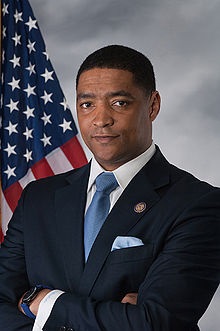
Special to the Trice Edney News Wire from TheNorthStarNewsToday.com (TriceEdneyWire.com) – Cedric Richmond resigned from Congress after being selected to work for President-elect Joe Biden. Richmond will work for the White House Office of Public Engagement, making him one of the highest-ranking Black in the incoming administration, other than Kamala Harris, the Vice President-elect. He announced that he was leaving office Tuesday. His district Baton Rouge and River Road areas. The majority of this district is New Orleans, where he lives.Richmond has held a number of leadership positions including Chair of the Congressional Black Caucus, The House Democratic Assistant to the Majority Whip. He has represented his district since 2011. He is a graduate of Morehouse College and Tulane Law School.
By Stacy M. Brown, NNPA Newswire Senior National Correspondent
Black children pursue virtual learning
Students, teachers, parents, and administrators face ever-rising challenges as the coronavirus pandemic continues to force changes in how young people receive their education. The challenges are particularly pronounced in the African American community, where access to the internet, working parents, and a haphazard learning model have undermined pre-pandemic gains. Education experts have agreed that when students of color in underserved schools must go to blended or fully remote learning models, the digital divide gets broader, more profoundly affecting them. Their school attendance plummets, along with their understanding of the curricula, their motivation to learn, and subsequently their grades. “The digital divide again doubly impacts these students, as it completely stops our tutoring with almost all of our school partners,” said Richard Kaplan, the executive director of IvyTutorsNetwork.com, a New York City Department of Education-approved vendor that teaches students in multiple underserved public and charter schools in the Bronx, Harlem, and Bedford Stuyvesant. “Given that the schools are struggling to pay for and provide the most basic teaching during the pandemic and, further, administrators now lack the budget for outside tutors, we have been unable to help. “We are no longer allowed in the classrooms for health reasons, and the students – many of them homeless – lack reliable Internet connections or suitable devices for effective remote sessions,” Kaplan remarked. “For some, fully remote actually means they might as well be in Tahiti or Timbuktu, inaccessible to effective teaching and all but forgotten.” The distance learning scheme or the online classes method of teaching are good strategies in reducing physical contact and helps limit the spread of the virus, asserted Lewis Keegan, owner and operator of SkillScouter.com, which aims to help potential students find their learning paths via online learning platforms. “However, the solution might not be as inclusive, especially for people of color in other parts of the world,” Keegan observed. “This is because not everyone is privileged for such amenities. Some areas across the globe are still not introduced to the concept of the internet,” he said. Keegan continued: “Aside from this, having devices such as laptops and phones for learning are not cheap and easily accessible. Because of this, more practical options are chosen by parents like spending their money in food and sustenance, rather than education.” As the pandemic shuts most people in for what promises to be a long, cold, and socially distant winter, families are suffering, offered Dr. Karen Aronian of Aronian Education Design LLC. “Without a doubt, people of color are our most vulnerable populations. Special-needs education students in isolated rural communities, those who are homeless, and food insecure, are in dire education straits,” Aronian stated. She noted that some reports have revealed that the pandemic has forced students to lose as much as 50 percent of their academic growth in math, at least 30 percent of ELA, and perhaps a full school year of academic growth in some cases. “Strain, struggle, and hardship abound in communities of color, which carries over into family life and lack of hope,” Aronian continued. “Children’s education becomes secondary to the basic needs of a home and family. The traditional in-person school has been, for many children, a respite from home life, family problems, and dysfunction. Without school, education has fallen off the radar in homes where survival is first, and education is a much lower rung during COVID times.” The pandemic has especially been tough on marginalized communities, including those with special needs, added Lisa Lightner, of A Day in Our Shoes, an organization that advocates on behalf of special education. “I have been chatting with all kinds of families, including Black and Brown families. Here is some of what I’m seeing. The challenges that these families are facing aren’t necessarily due to their skin color – but because their skin color makes them much more likely to be in another category of marginalization,” Lightner proclaimed. “For example, lower socioeconomic status or non-Native English speakers. If assignments and instructions are not being provided in the parents’ native language, then there is much less parent participation and follow up for school and assignments,” she stated. “If a child is in a lower socioeconomic category, then they are less likely to have high-speed internet or a device to use even to access the lessons. I know the Philadelphia School District had to get a grant to purchase tens of thousands of Chromebooks and the like.” According to a recent Duke University panel at the school’s Samuel DuBois Cook Center on Social Equity, many Black and Brown individuals face challenges that affect their and educators’ ability to resume in-person education safely. The panel concluded that the issue is a double-edged sword because wealth inequity also makes it harder for these communities to learn remotely. The average Black household in North Carolina, where the panel convened, is about $800,000 less in net worth than the average white home. According to the Public School Forum of North Carolina, 72 percent of Black and Brown students in the state’s public schools have parents who lack secure employment, compared with 21 percent of white students. That equates to lower-wealth households having had less access to opportunities for higher-quality education and access to post-secondary studies, education officials said. Further, Education Week reported that in-person learning yields superior educational outcomes for primary and secondary students — and that the pitfalls of virtual instruction are especially pronounced in minority communities and those living in poverty. School districts around the country that are strapped for cash have found it increasingly challenging to tackle the learning barriers minority students disproportionately have experienced during the pandemic. “The reality is in many economically distressed counties, over 60 percent of families don’t have reliable internet access, and that disproportionately affects students of color. In one of my counties, over 70 percent do not,” said Alex Beene, an adult and high school teacher in Tennessee. “And while I try to supplement those households with additional packets and materials, it’s just not the same. It’s impossible to attend daily classes and submit assignments digitally if you can’t even connect to join the conversation,” Beene remarked. “Many families of color also lack adequate nutrition and a culture of learning in the home. When schools are closed down, not having access to school lunches or educators that motivate students to go higher academically can have lasting effects that will stretch on long after the pandemic.”
Retired Gen. Lloyd Austin to be named Secretary of Defense
(TriceEdneyWire.com) – A month after the 2020 presidential election, President-elect Joe Biden has begun to announce some of his appointments for potential cabinet and transition team positions. However, his early selections to the Biden team have prompted some criticism. Rep. James E. Clyburn (D-S.C.), who is often credited with reviving Biden’s candidacy after endorsing him in the Democratic primary in South Carolina, is among the most notable to express concerns about Biden’s initial appointments. “I want to see where the process leads to, what it produces,” Clyburn told Juan Williams, a columnist for The Hill newspaper, in regard to the lack of diversity in his selections currently. “But so far it’s not good.” These expressions from Clyburn and others, like NAACP President Derrick Johnson, indicated widespread concern in the civil rights community. Johnson had said on CNN that he was confused as to why Biden “has failed to confirm a meeting with the civil rights groups nearly a month after Election Day”. Due to the criticism about his current team picks, Johnson and representatives of a string of other civil rights groups met with Biden and Vice President-elect Kamala Harris on Tuesday, Dec. 8. On the day before that meeting took place, the Biden administration announced that he has selecretired Army Gen. Lloyd Austin, the former commander of US Central Command, to be his secretary of defense. If confirmed by the Senate, Austin would be the first Black man to become secretary of defense. His other picks of African-Americans include Rep. Marcia Fudge as secretary of the Department of Housing and Urban Development (HUD); Linda Thomas-Greenfield, ambassador to the United Nations, and Cecilia Rouse as chair of the Council of Economic Advisers. But civil rights leaders, apparently pushing for secretary and director level positions, say Biden’s initial appointments and nominations are not enough. They push for appointments to additional key positions such as attorney general. Rev. Al Sharpton, president of the National Action Network, said a Black attorney general is one of his requests given the effort by President Donald Trump and Attorney General Bill Barr to gut voting protections and Civil Rights. This has also been an explosive year for national protests against police shootings of Black people. “We need him to have an Attorney General that will immediately restore those consent decrees and immediately deal with the Voting Rights Act,” Sharpton said in a press briefing by the civil rights leaders following the meeting with Biden and Harris. “You can’t mourn John Lewis on one hand and not move to protect what he was fighting for and what he shed blood for on the Edmund Pettus Bridge.” An official with the Biden-Harris transition, speaking to The Hill, defended the team’s push for diversity, noting that 46 percent of all campaign staff were people of color and 52 percent were women. As well, Biden’s team noted that he is still in the early stages of appointments, having only named fewer than a quarter of the federal positions he plans to highlight. Both Biden and Harris told CNN’s Jake Tapper in a televised interview that they are simply “not finished yet” as Biden repeated his promise to appoint an administration with record level diversity that “looks like America.” After spending nearly two hours with Biden and Harris, the civil rights leaders said in a virtual press briefing that a new day is breaking in terms of African-Americans being in the White House after four hard years of Donald Trump. But they are taking a wait and see attitude. “Today the seven of us spent approximately one hour and 45 minutes with President-elect Biden, Vice-President-Elect Harris and Assistant to the President Cedric Richmond, discussing a range of very important issues relative to the transition of the future Biden administration and the challenges that this nation faces,” said Marc Morial, president/CEO of the National Urban League, who led the briefing after the meeting. “We talked extensively about the need for there to be a diverse cabinet, subcabinet and Presidential appointments,” Morial said. “The president-elect said that he intends to make history when it comes to the appointment of African-Americans and Hispanics to his cabinet and his subcabinet…and while we will not judge the ultimate outcome, to me it was refreshing to hear.” NAACP President Derrick Johnson; Sharpton; Sherrilyn Ifill president and director-counsel of the NAACP Legal Defense Fund, Kristen Clarke, president and executive director of the Lawyers Committee for Civil Rights Under Law; Vanita Gupta, president of the Leadership Conference on Civil Rights; and Melanie Campbell, president/CEO of the National Coalition for Black Civic Participation, were also at the meeting. “There has been diversity with President-elect Biden’s initial appointments but before Rep Marcia Fudge was appointed to Secretary of Housing and Urban Development today there had not been any woman of color appointed to a statuary cabinet post,” said Campbell, also convenor of the Black Women’s Roundtable. Campbell added that one of her top concerns is how people of color are being treated in the Covid-19 Pandemic. “They need to look at the issue of implicit bias in terms of how they are screening people during the Covid-19 pandemic,” Campbell said. “I shared my own story with the President-Elect Biden of being a Covid-19 survivor and how after sent home with Tylenol only to be back in the hospital the next day in ICU.” Johnson said, “I am encouraged that this will be an ongoing dialogue and that racial equity will be a priority. We dedicated people who report directly to the President just like in cooperate America…It is important for our democracy to work for everyone and not just certain people.” Ifill said that she emphasized to the President-Elect about having a “Civil Rights agenda,” that would focus on voting and policing and I also raised the issue of what is happening in our prisons today in terms of COVID. We need a strong Attorney General who has a demonstrated record of criminal justice reform as well as Civil Rights.” In terms of the federal bench, not just at the Supreme Court, “but to think that the reforms that are needed through-out the federal judicial system. I think the President-Elect and the Vice-President-Elect clearly listened,” Ifill said. Clarke concluded, “Under the Trump administration Black people have been silenced, marginalized and ignored. This meeting was intended to make clear that racial justice must be at the center of the Biden-Harris administration’s approach to confronting the profound problems that we face in the nation. This meeting was intended to ensure that Black people will be listened to and this administration will respect our dignity and humanity.”
Nov. 30, 2020 (GIN) – Coal Kills. Choose Renewable. Those were the bedrock principles of environmental activist Chibeze Ezekiel, a grassroots organizer from Ghana, who this month was named one of five winners of the prestigious Goldman Environmental Prize for 2020. Through the efforts of Ezekiel and members of 350 Ghana Reducing Our Carbon (G-ROC), among others, the Ghanaian Minister of Environment was persuaded to drop plans for the so-called “Supercritical Coal Fired Power Plant” in Aboano, a coastal fishing community, and choose renewable energy for the way forward. The Ghana Coal power station, proposed by the Shenzhen Energy Group and the Volta River Authority, was initially planned for Ekumfi, central Ghana, at a cost of $700 million, later upped to $1.5 billion. Once operating, the plant would burn two million tons of coal per year, imported from South Africa. Ezekial and members of G-ROC denounced the plan, whose coal emissions would have negatively affected the health of the people in the area. According to the Ghana Youth Environmental Movement, neither the public nor the media were adequately informed about the project nor its threat to children who make up 55.5% of the local population of 1,900. Children are very vulnerable especially to air-borne pollutants, they pointed out. Finally, after a campaign of four years, Minister of the Environment Mahama Ayariga indicated that the project had been shelved due to climate change concerns. Had the project gone forward, the country would have been in violation of the recent Paris climate change agreement which required countries to work towards reducing greenhouse gas emissions, Ezekiel said. Coal is the world’s most polluting and unsustainable form of power generation, though it still fuels 27% of the world’s energy and 38% of electricity generation. Electricity generated from fossil fuels is the largest single contributor to rise in carbon emissions, driving climate change in dramatic fashion. Goldman prize recipients are selected by an international jury from confidential nominations submitted by a global group of environmental organizations and individuals. The winners are announced every April to coincide with Earth Day. Prize recipients participate in a 10-day tour of San Francisco and Washington, D.C.—highlighted by award ceremonies in those cities—including media interviews, funder briefings, and meetings with political and environmental leaders. Other winners were Nemonte Nenquimo of Ecuador, Lucie Pinson of France, Paul Sien Twa of Myanmar, Kristal Ambrose of the Bahamas, and Leydey Pech of Mexico. For more information, visit www.goldmanprize.org
(TriceEdneyWire.com) – The tumultuous 2020 presidential election triggered a record number of participating voters. Never before had so many people cast their preferences. And similarly, together substantiated how divided the nation is.
For Black America, the financial ravages of the year have brought deeper and more devastating circumstances to bear. Disproportionately affected by the COVID-19 pandemic, our communities have been denied the opportunity to comfort loved ones hospitalized, or even to collectively mourn the loss of family and friends. The continuing pandemic has also depleted the financial resources of those who lack sufficient resources to cover financial emergencies. When these same economically- disadvantaged consumers also suffer job losses, lay-offs and reduced working hours, mounting household debts are inevitable.
“We are in the midst of a pandemic caused by an abject failure of federal leadership that has left tens of millions unemployed, the economy in collapse, nearly half of the nation’s Black small businesses decimated, 40 million Americans at risk of foreclosure and eviction, and Black homeownership at levels not seen since the 1960, when racial discrimination in housing was legal,” noted the National Urban League’s President and CEO, Marc Morial.
In the throes of these challenges, the President-Elect has yet to receive cooperation in our hallmarked peaceful transition of power. He must instead draw upon the expertise and insights of those proficient in key areas of concern to construct a myriad of remedies needed now more than ever.
While pundits focus on the first 100 days of the next Administration, people from all walks of life hope in earnest for an inclusive economic recovery, one that includes communities long-marginalized. And lest anyone purport that communities of color are overly-sensitive, we need only remind naysayers of how the housing recovery from the Great Recession left behind the very people who were harmed the most: Black and Latino communities.
If this recovery is to be different, the calls for action must be heeded. Now is the time to stand up and speak out not just for what we want, but for what we also deserve.
A straightforward first step is for President-Elect Biden to move swiftly to restore fair housing rules that were gutted by President Trump’s Administration.
In 2015, President Obama’s Administration issued the Affirmatively Furthering Fair Housing (AFFH) regulation, which provided long-overdue guidance for local governments and others to implement a key mandate of the same name in the Fair Housing Act of 1968. This key development in civil rights law’s AFFH mandate required active steps to end segregation, promote integration, and ensure all neighborhoods are well-resourced. It also assured that local residents would have access to housing opportunities.
Under President Trump. The Department of Housing and Urban Development, HUD, repealed the regulation and replaced it with a rule that was described as “weak and toothless” by Lisa Rice, President and CEO of the National Fair Housing Alliance.
Similarly, the outgoing leadership at HUD promulgated an administrative rule that would defang the “disparate impact” standard, a critical legal tool to uncover and stop harmful mortgage discrimination. Nikitra Bailey, Executive Vice President with the Center for Responsible Lending (CRL) argued that “[I]t is unfathomable that HUD would gut one of the primary anti-discrimination instruments as the nation reckons with systemic racism.”
Even the collection of data on mortgage discrimination has been cut. These rollbacks and others are described in a report entitled, Turning Back the Clock: How the Trump Administration Has Undermined 50 Years of Fair Housing Progress released by Ohio’s Sen. Sherrod Brown, the Ranking Member on the U.S. Banking Committee.
At the same time, we know that real progress must be pursued beyond familiar and often ineffective remedies. Preserving the status quo will never provide help that is desperately needed.
Toward this end, CRL has proposed a 100-day agenda for the incoming Administration and the new Congress to address financial justice in all of its forms.
To expand fair, inclusive, and sustainable homeownership, CRL calls for several actions including: • Targeted reparations in a homeownership program that includes direct down payment grants for low-wealth, first-time Black and Brown homebuyers as well as others disadvantaged by exclusionary federal homeownership policies; and • Eliminating reliance on credit-scoring systems that entrench historic discrimination.
Recognizing that the broken higher education financing system also perpetuates the racial wealth gap, CRL suggests a range of reforms to immediately relieve the crushing burden of student debt, including broad-based cancellation.
“Too often, predatory financial services and products prevent families and small businesses from accessing opportunities, and instead impede our ability to reduce poverty and close the racial wealth gap”, states a new CRL policy brief that includes a combination of administrative and legislative actions.
Even before the dual crises of the pandemic and a faltering economy, U.S. household debt was on the rise, reaching $14 trillion. CRL’s policy recommendations include an end to the collection of so-called “zombie debt”, bills that are too old to be legally collected.
Another practice of heightened concern is the increased use of bank overdraft fees. These fees harm consumers with low or no cushions in their bank accounts. These are the same consumers who can least afford added fees in already tight budgets. CRL proposes to halt these regressive fees until the economy has recovered. Once achieved, CRL recommends a permanent limit to the number of fees that can be charged monthly and annually.
One action the federal government did take in the COVID-19 crisis was to fund small businesses threatened with closure. However, Black small businesses and entrepreneurs were largely shut out of tis aid. A key remedy for CRL is to launch a focused effort to meaningfully assist them.
The achievements of Black businesses are often overlooked in analyses of America’s economy. According to the U.S. Census Bureau, America’s estimated 2 million Black businesses are about 10 percent of all U.S. businesses and about 30 percent of all minority-owned businesses. Collectively, Black businesses have an annual payroll of $23.9 billion and employ 920,000 people.
As impressive as these numbers are, several reports, including a recent one by Citi Global Perspective and Solutions, show that if Black businesses had greater access to affordable credit, this key sector of the economy would grow significantly and boost the nation’s economy as well.
Black businesses are more often created with their own personal resources than are white start-ups. Instead of business loans, Black entrepreneurs are more likely to use personal and business credit cards that can carry higher interest rates and fees. Additionally, Black-owned businesses are the least likely to receive approval for loans from large banks, or from investors.
The financial playing field could better serve Black and other businesses of color with more robust capital support and technical assistance, according to CRL. A direct grant program tailored to the specialized needs off businesses of color, as well as increased lending capacity at minority deposit institutions and community development financial institutions would be key to accessing affordable credit when needed.
Nor is CRL alone in calling for change that brings genuine relief to Black America. Civil rights groups like the National Fair Housing Alliance and the National Urban League have also identified action plans that will deliver a better day. If some of these proposals seem familiar to readers, it is because our fight for freedom, equality and the American Dream have remained a quest instead of an achievement.
On April 16, 1963 – 57 years ago, Rev. Dr. Martin Luther King, Jr. penned his immortal, Letter from a Birmingham Jail. In part, he wrote, “[W]hen you are harried by day and haunted by night by the fact that you are a Negro, living constantly at tiptoe stance, never quite knowing what to expect next, and are plagued with inner fears and outward resentments; when you are forever fighting a degenerating sense of ‘nobodiness’ – then you will understand why we find it difficult to wait.” As a people, let’s call upon a new Administration to end our long-suffering wait.
Charlene Crowell is a Senior Fellow with the Center for Responsible Lending. She can be reached at charlene.crowell@responsiblelending.org.
By Hazel Trice Edney (TriceEdneyWire.com) – D. B. Wright, former head of a non-profit religious organization in Washington, D.C., was well taken care of by his leadership board. He enjoyed an employment package that included full health care among other benefits. “Being gainfully employed and having one of the best health insurances, I never thought about what medicines cost,” he said in a recent interview. But then crisis hit. Following a divorce he moved back to his hometown of Albany, Ga., where he took a job with no benefits, which he eventually lost due to severe illnesses over the past five years. That’s when reality set in. “I had to borrow money from my family and friends in order to get the medication that I needed to treat various issues.” Those issues included surgery to remove a baseball size tumor on his liver, a gall bladder removal and ultimately chronic pancreatitis. In excruciating pain, Wright was prescribed a medicine called Creon to help with his digestion and relieve the pain. It worked wonders in the hospital. But upon discharge, he learned that Creon would cost him $850 a month, well beyond his income of zero except what he could borrow from friends and family. Even with a coupon or pharmacy discount, he said, the price “was still beyond my financial ability.” Also dealing with high blood pressure and suffering through a spinal disorder that rendered him temporarily unable to walk, Wright has resolved what he believed to be the bottom line in America when it comes to prescription drugs. The doctors and pharmacists may be sympathetic, but the medication simply “costs what it costs,” he said. “It was a horrendous experience. And it’s so interesting that you need these medications to survive. It was horrible to go through. You kind of feel like if you don’t have the money, you don’t matter.” The experience of D.B. Wright, who asked to only use his initials to protect his privacy, is among the reasons that civil rights leaders and lawmakers across the nation are now pressing increasingly hard to establish public policies to monitor and help make prescription drug prices affordable. Best known for their efforts to address police misconduct, voting rights protections, racial inequality, and economic injustices, civil rights organizations are now escalating their focus on issues in the area of health care – particularly the high cost of prescription drugs. “While there has been much partisan back and forth on these issues in Washington, there has not been enough conversation about reining in the profits and excesses of health insurance companies, which refuse to cover critical procedures, medicines and services in order to preserve their billions of dollars in profits,” said the Rev. Al Sharpton in an Oct. 30, 2020 letter to Congressional Black Caucus Chairwoman Karen Bass (D-Calif.) “Let us make 2021 the year of Black health equity.” Sharpton’s letter is part of a growing focus on racial disparities and inequities in health care, partially ignited by findings that people living in predominately Black counties are nearly “three times more likely to die of the COVID-19 than predominately white counties,” he said in his letter. The letter culminates more than a year of efforts by his National Action Network (NAN) and other civil rights and health organizations to deal with the suffering of people who must sometimes risk their lives by choosing to take care of other crucial bills instead of paying for prescription drugs. Similarly focused, the NAACP national board of directors last year passed a resolution calling for Prescription Drug Affordability Boards (PDAB) in every state, which would “act as a watchdog for the public. It will carefully review drug costs and establish fair and affordable costs for state and local government.” The resolution continues, the “NAACP supports the creation of a Prescription Drug Affordability Board in each state to determine how best to make prescription drugs more affordable for their residents, including by examining the entire drug supply chain, including the role of drug manufacturers and Pharmacy Benefit Managers (PBMs), and establishing maximum affordability payment rates for expensive drugs that create significant affordability problems for residents, building upon the tradition of health care cost scrutiny.” The state of Maryland last year became the first state in the nation to successfully create a PDAB with the national and state NAACP chapters “playing a critical role,” as well as dozens of Black faith groups, labor, business and other non-profits, said Vincent DeMarco. DeMarco is president of the Maryland Citizens’ Health Initiative (MCHI), which led the PDAB initiative in the state. The Maryland board has won accolades from DeMarco. “They are doing a very good job right now of examining what drugs are really high cost and what would make prescription drugs more affordable for people,” he says. “So, it’s really an exciting new way at the state level to address this problem.” Meanwhile, the national NAACP has continued to press for national solutions. Following up with another resolution in September 2020, the organization continued to press for equity and affordability in prescription drug access. The resolution outlined the harsh realities that people like D.B. Wright have faced. Quoting the 2019 AARP Prescription Drug Survey of likely voters aged 50 and older, the resolution said that of the 463 African-American respondents, “40% believed they might have to limit necessities such as food, electricity and fuel in the future to afford their prescription medication,” the resolution states. Even with state assistance through programs like PDABs, advocates recognize that prescription drug prices are so out of control that some are still far too expensive. “Maryland has made considerable gains in ensuring that quality healthcare is more affordable and accessible for residents of our state,” said a statement on the MCHI website. “However, expensive life-saving drugs– some of which are close to six figures for treatment– threaten to derail the progress made in expanding health coverage. To contain rising healthcare costs, we must contain skyrocketing prescription drug costs.” The struggle to rein in high prescription drug prices has reached the U. S. Congress, but to no avail. U. S. Sen. Cory Booker (D-N.J.) last year introduced the Prescription Drug Affordability and Access Act, which would have created “an independent agency—the Bureau of Prescription Drug Affordability and Access—tasked with conducting reviews of drug prices and determining an appropriate list price.” However, the bill, S.3166, was sent to the Senate Committee on Health, Education, Labor, and Pensions on Jan. 8, 2020, but went no further during the 116th Congress. Technically, with only a few weeks before Congress goes to Christmas break, this means the bill will likely die in committee, but can be reintroduced in the 117th Congress when it reconvenes Jan. 3. “In a country as wealthy as ours, it’s downright shameful that people have to choose between taking their medicine or paying for other basic necessities,” Booker lamented in a statement. “Every day, millions of Americans struggle to afford their lifesaving medication while the manufacturers of these drugs profit hand over fist with limited to no oversight. On top of that, many of these drugs were developed through research funding from the federal government. We need systemic change that will meaningfully address the exorbitant, rising cost of prescription drugs and put the focus back on patients, not profits.” Health advocates such as Sen. Bernie Sanders and former senator, now Vice-President Elect Kamala Harris—who co-sponsored the bill with Booker — will likely not give up the fight. And given the incoming new Congress and White House administration the NAACP has said it will support the efforts that Sharpton and Booker, a CBC member, have expended. “Sen. Booker’s bill was an excellent first step,” said Hilary Shelton, director of the NAACP Washington Bureau and vice president for advocacy and policy. “The bottom line is that we believe that health care is a civil right. And that means that the full gamut of what is quality health care is very important. This is one of many issues that still needs to be addressed and improved upon. It’s not the only issue and it’s not stand alone. It’s crucially important in the categories of health care and economics. It’s an important component of a comprehensive health care system that provides high quality health care for all Americans.” The issue is no doubt headed for increased debate in Washington as the civil rights community applies the pressure. But outside of the growing political battle, there are real people waiting and fighting alone, says Wright, who recently received a court ruling allowing him 100 percent disability benefits; plus, Medicaid which now covers the cost of his medicines. “It took four years to get disability insurance or Medicaid,” he said. “I would hope that the government grows a heart and recognize that the least that they can do is care for those who cannot care for themselves. I’m not talking about people who are trying to milk the system. I’m talking about real people who are having real challenges in life.” This article is part of a series on the impact of high prescription drug costs on consumers made possible through the 2020 West Health and Families USA Media Fellowship.