Newswire : U. S. Supreme Court allows Texas to use racially gerrymandered map for 2026 Midterms 

Texas legislator holding redistricting map

By Joe Jurado, NewsOne


In news that can be filed under “disappointing, but not surprising,” the U.S. Supreme Court issued a 6-3 ruling allowing Texas to use its recently redistricted map in the 2026 midterms. 
According to CBS News, the ruling came after a panel of federal judges struck down the map last month. In the original ruling, the judges found the map unconstitutional, believing it was racially gerrymandered. In an unsigned order, the Supreme Court said it “has repeatedly emphasized that lower federal courts should ordinarily not alter the election rules on the eve of an election,” and the district court “violated that rule here.” 
“The District Court improperly inserted itself into an active primary campaign, causing much confusion and upsetting the delicate federal-state balance in elections,” the order continued.
So the Supreme Court’s logic boils down to “it doesn’t matter if it’s wrong, they already did it, so just accept it.” 
Supreme Court Justice Elena Kagan pushed back against the ruling in a written dissent. “The court issued a 160-page opinion recounting in detail its factual findings. Yet this Court reverses that judgment based on its perusal, over a holiday weekend, of a cold paper record.” Kagan wrote. “We are a higher court than the District Court, but we are not a better one when it comes to making such a fact-based decision,” she added. 
“We won! Texas is officially—and legally—more red,” Texas Gov. Greg Abbott said in a statement celebrating the ruling. “The new congressional districts better align our representation in Washington D.C. with the values of our state,” Abbott added. “This is a victory for Texas voters, for common sense, and for the U.S. Constitution.”
Texas Democrats were far less celebratory of the ruling, and for good reason. Over the summer, Texas Democrats used every measure at their disposal to block the Texas redistricting effort. They filibustered, fled the state to break quorum, and their efforts even resulted in state Rep. Nicole Collier being held as a political prisoner on the House floor.  
 “The Supreme Court failed Texas voters today, and they failed American democracy. This is what the end of the Voting Rights Act looks like: courts that won’t protect minority communities even when the evidence is staring them in the face,” Texas state House Democratic Leader Rep. Gene Wu said in a statement. 
The Texas map triggered a nationwide redistricting battle. In July, Abbott called a special session focused on redistricting at the request of President Donald Trump. The GOP controls the House by a narrow margin, with Democrats only needing a net gain of three seats to flip control during next year’s midterms. The Texas state legislature eventually passed a map that added five new districts that favor Republicans. 
While the Supreme Court is allowing Texas to utilize its redistricted map, the gains made within it have largely been neutralized by California’s redistricting effort. California Gov. Gavin Newsom was the first Democratic leader to throw a counterpunch when he announced the “Election Rigging Response Act “in August. That move triggered a special election last month focused solely on Prop 50, which transfers control of the state’s congressional maps from an independent redistricting committee to the state legislature through the end of the decade. California voters overwhelmingly approved the measure, and Newsom intends to implement a map that directly cancels out the gains made in Texas. 
Virginia’s Democrat-led General Assembly also announced a surprise redistricting effort last month that aims to create two to three more seats in the House, with Chicago and Maryland also considering redrawing their maps. 
So while the Supreme Court’s ruling undeniably hurts Democratic voters in Texas, the electoral math for flipping control of the House is still reasonably close.
Doug Jones to launch 2026 gubernatorial campaign Friday with Birmingham kickoff rally


Former Senator Doug Jones speaks at the 60th Commemoration of the 16th Street Baptist Church bombing Friday, Sept. 15, 2023, in Birmingham, Ala.  AP Pool Photo/Butch Dill

By Bill Britt, Alabama Political Reporters

Former U.S. Senator Doug Jones will officially kick off his 2026 gubernatorial campaign Friday evening at The Theodore in Birmingham, marking the most significant Democratic entry into a statewide race in more than a decade.
The rally, scheduled from 5 to 7 p.m. CST, will feature performances by six-time Grammy Award–winning singer-songwriter Jason Isbell and DJ Slim Robb, underscoring the campaign’s effort to build excitement ahead of what insiders say will be one of the most consequential elections in recent Alabama history.
Jones, who shocked the nation on December 12, 2017, when he defeated Roy Moore to become the first Democrat elected to the U.S. Senate from Alabama in 25 years, enters the governor’s race with deep national recognition and what party officials describe as “full confidence” from Democratic leadership. A senior strategist told APR the launch represents “a moment when Democrats across Alabama and across the country are lined up behind one candidate,” framing Jones as the party’s best chance to reset the state’s political trajectory.
The campaign says Friday’s event is designed to evoke the broad coalition that powered Jones’ 2017 victory—young voters, suburban moderates, African American communities, and independents frustrated by political dysfunction. “Doug has always believed Alabama is at its strongest when people come together across lines that normally divide us,” a close ally said. “This campaign will reflect that belief in every county we visit.”
Doors open at 5 p.m. at The Theodore, located at 3211 2nd Avenue South in Birmingham. The kickoff will conclude at 7 p.m. Jones will be joined by his wife, Louise Jones, longtime supporters, and additional guests expected to be announced as the event nears.
With Republicans preparing for what could be a bruising primary season, Jones’ entry signals that Democrats believe the 2026 governor’s race presents a real opportunity. Whether that optimism takes hold will begin to come into focus Friday night, as Jones makes his opening case why he is ready to lead Alabama into a better tomorrow for all.


Doug Jones campaign reports $105K raised from 800 Alabama donors

The campaign committee supporting Doug Jones’s bid for governor reported a strong early fundraising effort this week, filing its first financial disclosure with the Alabama Secretary of State.
According to the report, Doug for Alabama raised more than $105,000 from over 800 Alabama residents. The committee was organized three business days after Jones announced his candidacy on November 24, 2025, making the filing an early snapshot of donor activity at the outset of the campaign.
The disclosure shows a broad base of in-state contributors, an indicator often watched closely in statewide races as campaigns work to establish momentum and demonstrate organizational strength. Early fundraising totals can play an important role in signaling viability, particularly in a contest expected to draw significant attention ahead of the 2026 election cycle.
Campaign officials said the report reflects only the initial phase of fundraising, as the campaign continues building its statewide operation and preparing for future outreach and events.

Annual Christmas Parade and Christmas tree lighting held

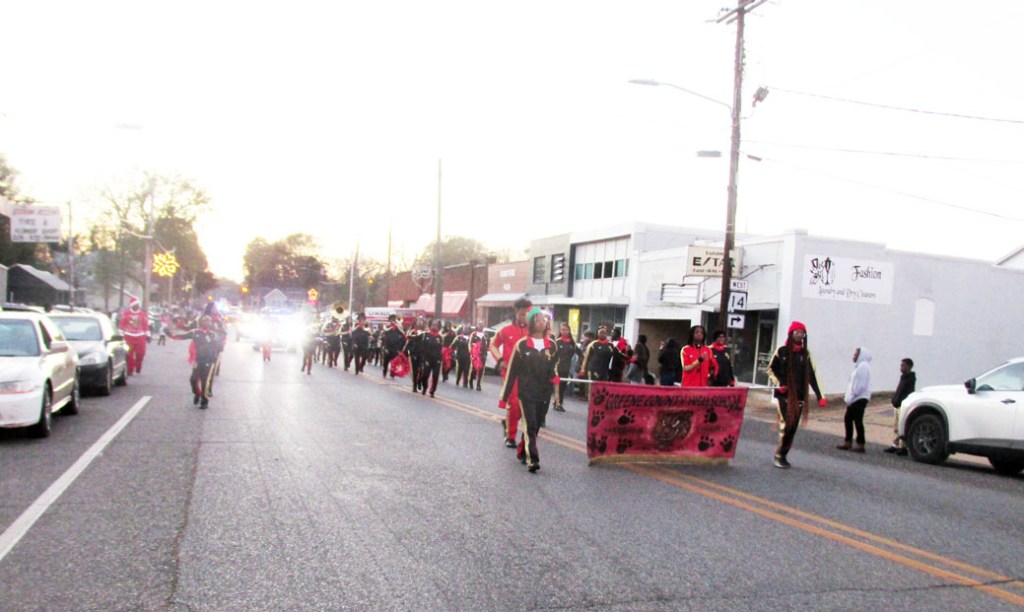
The Eutaw Area Chamber of Commerce and the City of Eutaw held the annual Christmas Parade for Greene County, Tuesday December 9, 2025. Eutaw Mayor Corey Cockrell served as Grand Marshal. Cockrell is the 4th African American to serve as Mayor of Eutaw, Alabama.
This year’s Christmas Parade theme, Festival of Lights, featured a variety of decorated trees on the Old Courthouse Square, sponsored by various local businesses and organizations. Many businesses also decorated their storefronts lifting the Spirit of Christmas.The lighting of the Christmas Tree on the Thomas Gilmore Courthouse Square followed the parade. Many gathered to view this special event.
Other parade participants riding on beautifully decorated floats and vehicles, or walking in unison, included elected and appointed officials, representatives of churches, non-profit organizations, businesses, housing authorities, local school band, fire departments, ambulance service, and Debutantes sponsored by the Greene County Alumnae Chapter of Delta Sigma Theta Sorority, Inc. and more. Even Santa and the Grinch rode in the local parade. The children enjoyed all the candy thrown from the floats.
An exceptionally large crowd was out to view the festivities and purchase snacks from the vendors.

Greene County Commission approves purchase of pothole repair machine

The Greene County Commission at their regular monthly meeting on December 8, 2025, approved purchase of a $344,000 machine to repair potholes, which can be operated by one person. The Commission hopes to secure a bank loan from Merchants and Farmers Bank to buy the machine. Payments will be made from the quarterly funds allocated to the County Commission from the Racing Commission from proceeds of gaming at the Palace. Several commissioners pointed out the value of this machine in repairing roads across the county.
Earlier in the meeting, the Commission approved an allocation of the unrestricted portion of the funds provided by the Racing Commission to the Greene County Commission suggested by Commissioner Allen Turner. Turner’s proposal was modified to allocate 45% to the General Fund, 15% to the Highway Department, 15% to matching funds required to receive state or Federal grants, 15% to other agencies, and 10% for the Commissioner’s discretionary funds.
The Greene County Commission modified Turner’s suggested distribution of these funds coming from simulcasting of horse and greyhound dog racing and historical horse racing machines operated at the Palace, under the administration of the Greene County Racing Commission. The Commission will use the 15% allocation to the Highway Department to finance purchase of the pothole fixing machine.
The Commission approved an extension of time to apply for an exemption to pay for garbage collection, based on age and income, until December 31, 2025. This will allow more people, who qualify for the exemption to apply and secure this benefit.
In other business, the Commission:
• Approved purchase of a full-page advertisement in the Greene County Democrat Annual Progress issue.
• Approved the 2025 holiday schedule for staff.
• Approved appointments to the Greene County Industrial Development Authority (GCIDA) of Kurt Turner for District 4, Darrell Jones for District 5 and Loretta Webb Wilson for District 3.
• Approved Rodgerick Williams, new CEO/Administrator at the GCHS to the EMS Ambulance Board to replace Dr. Marcia Pugh.
• Tabled action for a member on the GreenThumb Board for District 2.
• Approved travel for Highway Department staff to attend training in Huntsville, Alabama.
• Approved Financial Report for November 30, 2025, as presented by the CFO.

Newswire : From Tulsa to Ghana, Mother Fletcher’s long Journey comes to a close at 111

By Stacy M. Brown
Black Press USA National Correspondent

Mother Viola Fletcher, who carried the memory of Tulsa’s shame and the nation’s unfinished business longer than any other living soul, died on November 24 at age 111. She stood as the oldest known survivor of the 1921 Tulsa Race Massacre, the burning of Greenwood, and the attempted erasure of Black prosperity that white mobs tried to silence forever.
Tulsa Mayor Monroe Nichols said her death marks a moment of mourning for a city still learning how to reckon with its own truth. “Today, our city mourns the loss of Mother Viola Fletcher, a survivor of one of the darkest chapters in our city’s history,” Nichols stated. “Mother Fletcher endured more than anyone should, yet she spent her life lighting a path forward with purpose.”
She spent that long life fighting for justice that too many leaders tried to bury along with the bodies from Black Wall Street. In Greenwood, she was a child watching terror reshape a world that had promised her nothing but possibility. For more than a century, she bore witness so the country could never again pretend not to know. “Her legacy will be carried forward with the courage and conviction she modeled every day of her life,” Nichols said.
Mother Fletcher’s mission reached the halls of Congress when she demanded reparations for survivors and descendants of the massacre. She testified with a steadiness that shamed a nation still unwilling to repair what it helped set ablaze. She reminded lawmakers she had lived through state-sponsored violence and had lived long enough to see the excuses that followed. She co-authored her memoir “Don’t Let Them Bury My Story”  with her grandson, refusing to allow America the comfort of forgetting.
She left her words in the archives of Oklahoma State University through oral histories that insisted history would not escape the sound of her voice. Her labor began early. During World War II, she worked in a shipyard as an assistant welder. Later, she cleaned houses with a determination that carried her well into her eighties. She built a life out of the ashes she was never meant to rise from.
The world took notice of her strength. During a 2021 journey to Ghana, she received the title “NaaLamiley,” translated as someone strong enough to stand the test of time. Her vision inspired the Viola Ford Fletcher Foundation, which promotes education, health, and economic opportunity. Community members honored her in ways large and small, including the gift of custom dentures created to recognize her legacy and impact.
Three years ago, she stood with her brother, Hughes Van Ellis, known as Uncle Red, inside Ghana’s embassy in Washington. She was 108 then. He was 101. Both were sworn in as citizens of Ghana in a ceremony filled with music, dancing children, and the full weight of ancestral return. It was the first time anyone had been sworn in as a citizen inside the Ghanaian embassy. “I’m so grateful to all. I thank you so much for this honor,” Fletcher said before signing her citizenship papers. Her brother echoed her sentiment. “I’m so thankful to Ghana, and all of you,” Ellis stated.
Oklahoma State Rep. Regina Goodwin attended the ceremony, along with journalist Tiffany Cross and Ambassador Erieka Bennett. Bennett spoke of heritage that surpasses borders. “You don’t have to be born in Africa to be an African,” Bennett declared. “Africa is born in you.”
Cross spoke of feeling the presence of ancestors moving through the room, a presence made sharper by the endurance of Fletcher and Ellis. Goodwin said their lives proved that the African spirit cannot be broken. “This is what it’s all about,” Cross stated. “The spirit of Africa, its powerful and rich history.”
Their citizenship ceremony became more than a celebration. It became a reminder that the diaspora carries stories the world still needs to hear, and that the road home is long but never closed. Bennett told the gathering that Ghana opens its doors to all who seek connection. “Welcome home,” she said.

Newswire : Fate of Civil Rights Office unknown as Trump continues to dismantle Department of Education 

By Lauren Burke, NNPA

A busy news week heading into the Thanksgiving holiday has distracted from a continuing effort by the Trump Administration to relocate, and in some cases end, the U.S. Department of Education. It has long been known that Trump and his policy advisors want to dismantle the department — but the acceleration over the last week has taken some by surprise.
The U.S. Department of Education was established in 1979 under President Jimmy Carter. It was created to unify and elevate federal efforts to support public schools and protect students’ civil rights. It has also been the department that has amplified the national education policy.
“The Trump Administration cannot close a federal agency without an act of Congress. Nevertheless, the Trump Administration is intent on breaking the law and dismantling the Department of Education,” Rep. Bobby Scott, the senior Democrat on the House Committee on Education and Workforce, said in a written statement on Nov. 20.
“Today’s announcement is part and parcel of the Trump Administration’s larger agenda to reduce federal enforcement of civil rights laws and eliminate support for low-income communities. A core function of ED is to protect and defend students’ civil rights,” Rep. Scott added.
Since taking office again in January, the Trump Administration has made its central focus to dismantle civil rights policies passed in the 1960s. The undoing of civil rights protections and a theme of anti-Blackness is now a cornerstone policy during Trump’s second term in office.
Trump has reversed the 2015 “Affirmatively Furthering Fair Housing” (AFFH) rule, a civil-rights tool aimed at reducing segregation and racial disparities in housing. Trump has also ended disparate-impact liability in civil-rights enforcement, and in 2025, Trump signed an executive order instructing federal agencies to deprioritize enforcement of “disparate-impact” theory — a legal standard used to challenge policies that, while neutral on their face, disproportionately harm protected groups. Trump has also ended key DEI and affirmative-action programs in federal hiring and rescinded Executive Order 11246 (initially signed in 1965), which required federal contractors to maintain affirmative-action programs to promote diversity in hiring.
“The federal government must retain its central role in enforcing students’ civil rights, because historically, when states had no federal oversight, we saw segregation of public schools, a refusal to educate students with disabilities, and a lack of resources for low-income communities,” Rep. Scott also pointed out in his Nov. 19 statement.
At a committee hearing on the morning of November 20, Rep. Summer Lee, who represents parts of Pittsburgh, made a pointed observation. As Republicans held a hearing on career and technical education, Rep. Lee pointed out the irony of the Department of Education being dismantled by President Trump in the background.
“Republicans can’t simultaneously hold a hearing about how to strengthen students’ skills through career and technical education while also allowing this administration to dismantle the sole agency tasked with expanding the same students’ educational opportunities and protecting their civil rights,” Rep. Lee said.
One of the remaining mysteries of the Trump Administration’s efforts to destroy the Department of Education is what will happen to the civil rights division within the department. Will the work of the office be destroyed completely or moved to another department in the government? That remains an open question.

Newswire : The real story behind Rosa Parks’ Bus Ride and what’s often overlooked

Rosa Parks sitting on Montgomery bus

By Shannon Dawson, NewsOne


This wee,, we give thanks to Rosa Parks, who changed the world with her incredible bravery 70 years ago. On Dec. 1, 1955, Rosa Parks ignited one of the most significant civil rights boycotts in American history when she refused to surrender her seat at the front of a Montgomery, Alabama, bus, a section reserved for white passengers. As the bus grew crowded and the driver ordered her to move to the back, the area designated for Black riders, Parks stood her ground. That single act of defiance helped launch the Montgomery Bus Boycott and transform the national struggle for civil rights.
We give thanks to Rosa Parks, who changed the world with her incredible bravery 70 years ago. On Dec. 1, 1955, Rosa Parks ignited one of the most significant civil rights boycotts in American history when she refused to surrender her seat at the front of a Montgomery, Alabama, bus, a section reserved for white passengers. As the bus grew crowded and the driver ordered her to move to the back, the area designated for Black riders, Parks stood her ground. That single act of defiance helped launch the Montgomery Bus Boycott and transform the national struggle for civil rights.
According to Women’s History, Rosa Louise McCauley was born Feb. 4, 1913, in Tuskegee, Alabama. She attended an industrial school for girls and later enrolled at Alabama State Teachers College for Negroes (now Alabama State University), leaving school to care for her ill grandmother. Growing up in the Jim Crow South, she faced racism and violence firsthand and became involved in civil rights work early in life.
At 19, she married Raymond Parks, a barber and committed activist. Together, they worked alongside numerous social justice groups, and Rosa eventually became secretary of the Montgomery NAACP. By the time she boarded that bus in 1955, she was already an influential strategist and leader within Alabama’s Civil Rights Movement. She not only resisted unjust treatment that day but also helped coordinate the Montgomery Bus Boycott that followed. Though some tried to reduce her actions to simple fatigue, Parks later made her true motivations clear.
“People always say that I didn’t give up my seat because I was tired, but that isn’t true. I was not tired physically, or no more tired than I usually was at the end of a working day. I was not old, although some people have an image of me as being old then. I was 42 No, the only tired I was, was tired of giving in,” Parks said about her courageous act at the time.
That December evening, Parks sat in the bus’s middle section, where Black riders could sit but could be forced to move “on the whim of the bus driver,” her website notes. When the bus filled and a white man was left standing, driver James Blake ordered her row to give up their seats. He warned, “You all better make it light on yourselves and give me those seats.” The others “reluctantly” stood, but Parks—thinking of her grandfather and Emmett Till—felt that giving up her seat “wasn’t making it light on ourselves as a people.” Pushed to the brink of frustration, she refused, recalling in an interview, “I felt that if I did stand up, it meant that I approved of the way I was being treated, and I did not approve.”
After sliding to the window to wait, two officers boarded and arrested her. 
The civil rights icon was eventually bailed out by local activist and union organizer E.D. Nixon, with support from white allies Virginia and Clifford Durr, an attorney and social reformer active in Montgomery’s civil rights efforts, according to her website. Although already involved in community activism, Parks would soon become even more deeply embedded in the city’s civil rights movement.
In July 1955, the Durr’s helped secure a scholarship for her to attend an integration workshop at the Highlander Folk School, an experience that strengthened her resolve to challenge the segregated bus system, Stanford University noted. Around that same time, she also connected with the Women’s Political Council (WPC) of Montgomery, an organization that helped bring her case to the spotlight.
E. D. Nixon, Parks and Attorney Fred Gray also attracted Rev. Martin Luther King, pastor of Dexter Avenue Baptist Church in Montgomery, to help spearhead the efforts of the Montgomery Bus Boycott for civil rights and social justice in America.
Throughout the movement, WPC members drove carpools, organized mass meetings, and coordinated daily operations. Burks said that “members of the Women’s Political Council were trailblazers” who mobilized Black middle-class women to challenge Montgomery’s segregated systems. Their work came at great personal cost; many members, especially educators at Alabama State College, faced retaliation and ultimately relocated after years of pressure.

Newswire : Secretary of Defense Pete Hegseth faces deepening scrutiny from Congress over Caribbean boat strikes

Unclassified photo of boat, allegedly carrying drugs in the Caribbean Sea

WASHINGTON (AP) — Pete Hegseth barely squeaked through a grueling Senate confirmation process to become secretary of defense earlier this year, facing lawmakers wary of the Fox News Channel host and skeptical of his capacity, temperament and fitness for the job.
Just three months later, he quickly became embroiled in Signalgate as he and other top U.S. officials used the popular Signal messaging application to discuss pending military strikes in Yemen.

And now, in what may be his most career-defining moment yet, Hegseth is confronting questions about the use of military force after a special operations team reportedly attacked survivors of a strike on an alleged drug boat off the coast of Venezuela. Some lawmakers and legal experts say the second strike would have violated the laws of armed conflict.
“These are serious charges, and that’s the reason we’re going to have special oversight,” said Sen. Roger Wicker of Mississippi, the Republican chair of the Senate Armed Services Committee.
The scrutiny surrounding Hegseth’s brash leadership style is surfacing what Since working to become defense secretary, Hegseth has vowed to bring a “warrior culture” to the U.S. government’s most powerful and expensive department, from rebranding it as the Department of War to essentially discarding the rules that govern how soldiers conduct themselves when lives are on the line.
Hegseth on Tuesday cited the “fog of war” in defending the follow-up strike, saying that there were explosions and fire and that he did not see survivors in the water when the second strike was ordered and launched. He chided those second-guessing his actions as being part of the problem.
Yet the approach to the operation was in line with the direction of the military under Hegseth, a former infantry officer with the Army National Guard, part of the post-Sept. 11 generation, who was deployed to Iraq and Afghanistan and earned Bronze Stars.
During a speech in September, he told an unusual gathering of top military brass whom he had summoned from all corners of the globe to the Quantico Marine Corps Base in Virginia that they should not “fight with stupid rules of engagement.”
“We untie the hands of our warfighters to intimidate, demoralize, hunt and kill the enemies of our country,” he said. “No more politically correct and overbearing rules of engagement, just common sense, maximum lethality and authority for warfighters.”

Unity In The Community


On Monday, November 24, 2025 a cooperative effort between the Black Belt Community Foundation, ASAC Farmers, Federation of Southern Cooperatives, Greene Count HealthCare System Foundation, and Woman To Woman, Inc. provided bags of groceries along with fresh collard greens to citizens of Greene County. Many homes and families were served. The aim was to provide meals and reduce food insecurity during the holiday season.
The Chief of Police, Reverend Kendrick Howell, and his department, provided police protection to ensure a smooth traffic flow and helped to reduce congestion.
The volunteers shown above (Left to Right) Shelia Daniels, Darlene Robinson, Johnnie Knott, Calvin Knott, Mary McInnis, Terrance Bell, Pinna Hines, Barbara Carpenter, and Judy Spree. Not shown Bernice Barnes, Bessie “Bone” Davis, Willie Mae Davis, Annie Gaines, and Geraldine Walton.

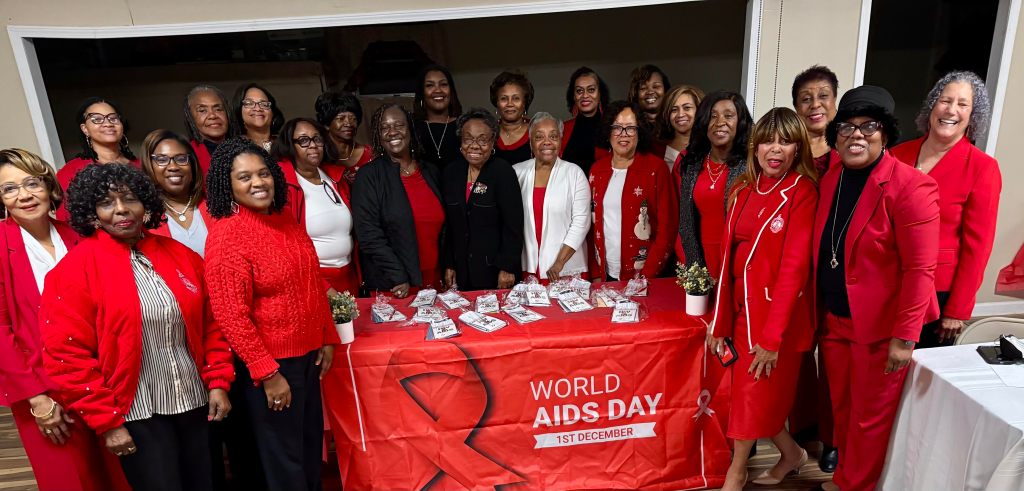
Delta Chapter urges education and advocacy for those affected by HIV/AIDS

Delta Alumnae Chapter distributes educational information on HIV/AIDS. Ms. Fatima Robinson serves as Chairperson for the Chapter’s International Awareness and Involvement Committee. Mrs. Phillis Belcher is Chapter President.


Greene County Alumnae Chapter of Delta Sigma Theta Sorority, Incorporated observes International World AIDS Day.
World AIDS Day, observed on December 1, is a global day dedicated to raising awareness about the AIDS pandemic and supporting those affected by HIV/AIDS. The 2025 observance calls on us to reflect, recommit, and take action to ensure that no one is left behind. People around the world unite to honor the lives lost to AIDS-related illnesses and to continue the fight for prevention, awareness, and advocacy.
Greene County Alumnae Chapter supports World AIDS Day 2025. on World AIDS Day, we stand together—not just to remember, but to ACT. It’s time to raise our voices, raise awareness, and show up for those affected by HIV/AIDS.
Let’s reflect on how far we’ve come, but more importantly, let’s recognize the urgent need for continued progress. This is not just about awareness—it’s about education, advocacy, and dismantling the stigma that continues to hurt people living with HIV.

WHAT IS HIV?
Human Immunodeficiency Virus is a virus that attacks the body’s immune system. Taking HIV medications does not prevent transmission of other sexually transmitted infections (STIs). Condoms can help protect against other STIs.
HOW CAN I REDUCE MY RISK OF HIV?
Use condoms when engaging in sexual activity
Ensure that your partners, who are living with HIV, are taking treatment
Use medications (like PrEP) to prevent getting HIV if you have ongoing risk, including during pregnancy
Use sterile needles and syringes for all injections
Get tested for sexually transmitted infections. We offer reproductive health services (like STI testing) every Thursday. Appointment required. Call 443-523-1700 to schedule.
WHAT WE DO:
HIV/AIDS EDUCATION:
Public presentations are given upon request to community agencies including schools, churches, social organizations, and businesses. The Health Department regularly participates in community health fairs as a means to provide outreach. HIV information is provided regularly through our Substance Abuse, Family Planning, Healthy Start and Sexually Transmitted Infection programs.
HIV/AIDS COUNSELING & TESTING:
HIV rapid testing is available for eligible clients. Anonymous and confidential testing is offered to the public at no charge. Appointments are encouraged but walk-ins are accommodated whenever possible. Each client receives client-centered pretest counseling to promote behavior change to prevent infection, or if infected, to prevent transmission to others. All clients who test positive are referred and assisted in accessing HIV specialty medical care, partner notification and referral services, case management, and any other available supportive service.
HIV/AIDS CASE MANAGEMENT AND SUPPORT:
Medical and/or non-medical case management services are available to all HIV infected clients in Somerset County. Medical case management is a collaborative, ongoing process that assists clients in gaining timely and coordinated access to medical care, psychosocial, and other supportive services as needed. Non-medical case management provides assistance in accessing appropriate services on an as-need basis without regular follow-up. Referrals are accepted from providers or patients themselves.
HIV/AIDS CASE SEROPOSITIVE CLINIC:
The Health Department hosts a monthly clinic to provide HIV specialty medical care. Services are provided by Chase Brexton Health Services, Inc. Fees are based on a sliding scale for non-insured clients. Private clinicians may refer clients for consultation as needed. Residency in Somerset County is not required.

For more information on our HIV/AIDS services, call 443-523-1700.