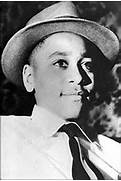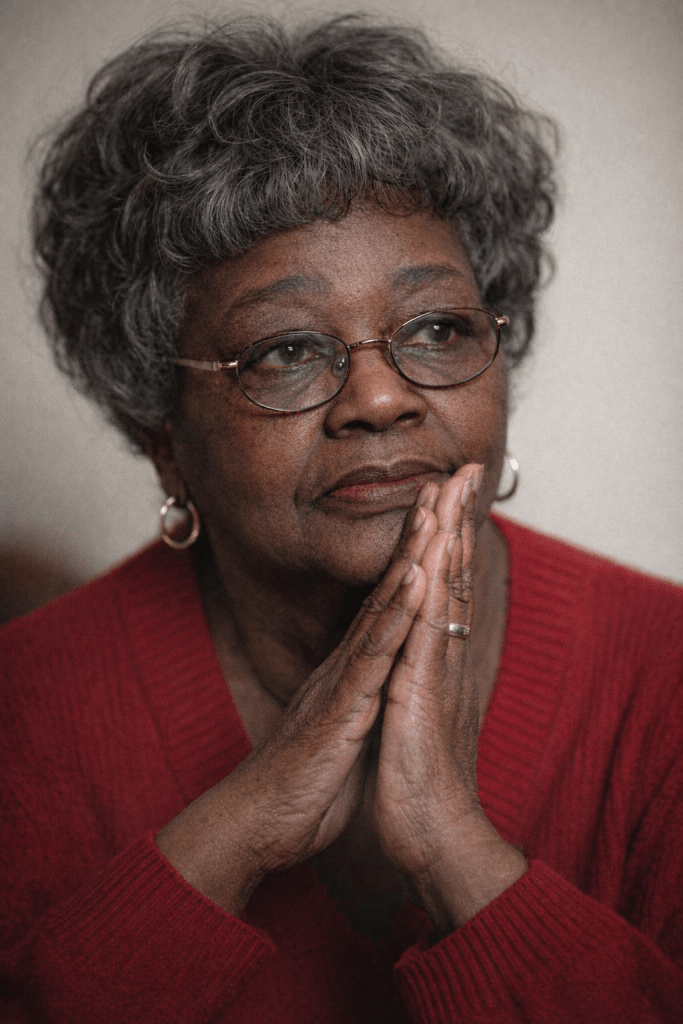
Newswire : Claudette Colvin, who refused to move before the nation was ready, dies at 86

Claudette Colvin

By Stacy M. Brown
NNPA Newswire Senior National Correspondent

History often remembers movements by their most recognizable moments. It less often remembers the teenagers who moved first.
Claudette Colvin, whose refusal to surrender her seat on a segregated Montgomery bus came months before the moment that would enter textbooks, died Tuesday at 86. Her death was confirmed by the Claudette Colvin Legacy Foundation, which said she died of natural causes in Texas.
On March 2, 1955, Colvin was 15 years old and riding home from school when the bus driver ordered Black passengers to give up their seats to white riders. Three students stood. Colvin did not. Police arrested her, charged her under segregation laws, and placed her on probation. She later said she was thinking about the Constitution and the rights she believed belonged to her.
Colvin’s arrest came at a time when Montgomery’s Black community was already pressing against the daily restraints of Jim Crow. Her stand did not ignite a boycott that day, but it did register. It landed in conversations, church meetings, and legal strategy sessions that would soon follow.
“This nation lost a civil rights giant today,” Tafeni English-Relf, Alabama state director of the Southern Poverty Law Center, said. “Claudette Colvin’s courage lit the fire for a movement that would free all Alabamians and Americans from the woes of southern segregation.”
Unlike others whose names became shorthand for the era, Colvin paid a quieter price. She was young and outspoken and was later judged by standards that did not apply to older leaders. She was never elevated as the public face of the movement. Her life unfolded mostly outside the spotlight she helped create.
Yet Colvin’s role proved decisive.
She became one of four plaintiffs in Browder v. Gayle, the federal lawsuit that reached the Supreme Court and ended bus segregation in Montgomery and across Alabama. The case dismantled the legal framework that made her arrest possible.
“At age 15, Ms. Colvin was arrested on March 2, 1955, in Montgomery, Alabama, for violating bus segregation ordinances, nine months before Rosa Parks,” Phillip Ensler wrote. “In 2021, it was the privilege of a lifetime to serve on the legal team that helped Ms. Colvin clear her record from the conviction.”
“As we worked on the court motion, I had the honor of spending time with Ms. Colvin to hear her story and get to know her,” Ensler wrote.
“Today we lost an unsung yet significant hero of the civil rights movement,” Sen. Rev. Raphael Warnock said. “Her courage paved the way for Rosa Parks’ decision and the launching of a movement that would end segregation.”
“History did not always give Claudette Colvin the credit she deserved, but her impact is undeniable,” Illinois Gov. J.B. Pritzker said.
“Her life reminds us that progress is shaped not only by moments, but by sustained courage and truth,” Bernice King said.
 

Newswire : Vandals desecrate monuments honoring Blacks

MLK monument in Denver desecrated


Special to the Trice Edney News Wire from BlackMansStreet.Today

(TriceEdneyWire.com) – The recent vandalism of a statue of Dr. Martin Luther King, Jr. and other Black luminaries involved in the civil rights movement, is part of nationwide pattern of destroying monuments that honor Black leaders. 

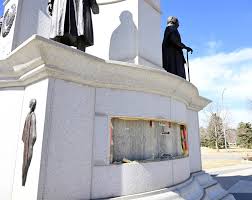
A Martin Luther King Jr. statue in Denver, Colorado’s City Park was found damaged Wednesday morning after a gaping hole was cut out of the bronze plaque affixed to the statue.

The memorial is one of several Black monuments recently reported stolen or vandalized in the United States.

One of the largest targets is the Lincoln Memorial Park Cemetery in Carson-Compton, California.More than 100 bronze nameplates and a 1944 bronze plaque honoring African American veterans were stolen from the cemeteries. Police have not arrested anyone.

In February, Ricky Alderete,45, was arrested by Wichita Police for allegedly stealing Jackie Robinson’s statue and planning to sell it as scrap metal. Police took Alderete into custody, and he is being held on a $150,000 bond.

Robinson’s statue was stolen from McAdams Park in Wichita, Kansas. On January 25, police received reports that the statue was cut off at the ankles. Days later, the statue was found burning in a trash can. Alderete was charged with four counts, including felony theft and aggravated criminal damage to property, according to police.

Also in February, Laneisha Shantrice Henderson was arrested for attempting to burn down Martin Luther King Jr.’s childhood home in Atlanta.

Henderson poured gasoline over the home’s front porch and accent bushes before being stopped and detained by two off-duty New York police officers who were visiting the home as tourists. 

“That action saved an important part of American history tonight,” Atlanta Police Chief Darin Schierbaum said. Henderson was arrested by police officers and charged with attempted arson.

Black churches are not immune to vandalism.

Mother Bethel African Methodist Church, a Black Philadelphia church, designated a National Historic Landmark in 1974, recently had several windows broken, including three of the church’s historic stained-glass windows. Philadelphia police arrested Haneef Cooper, 39. He was charged with criminal mischief for vandalizing Mother Bethel in the Society Hill neighborhood.

Pastor Rev. Mark Kelly Tyler estimated the damage at $30,000 because of the specialized craftsmanship needed to repair the historic stained glass.

Ed Dwight created the memorial in Colorado in 2002, honoring Dr. King and smaller statues of Mahatma Gandhi, Rosa Parks, Sojourner Truth, and Frederick Douglass.
The statue stands where the annual parade begins every year on Martin Luther King Jr. Day. The Denver police department’s bias-motivated crime unit is investigating.

Newswire: Legendary Civil Rights Icon C.T. Vivian dies at 95

By Stacy M. Brown, NNPA Newswire Senior Correspondent
@StacyBrownMedia


Rev. C. T. Vivian receiving medal from President Barack Obama


The Rev. C.T. Vivian, the legendary civil rights activist who marched alongside Dr. Martin Luther King Jr., has died. Rev. Vivian was 95.
Vivian reportedly suffered a stroke earlier this year, but his family said he died of natural causes.
“He has always been one of the people who had the most insight, wisdom, integrity, and dedication,” said former Atlanta Mayor Andrew Young, a contemporary of Vivian who also worked alongside King.
“The Reverend Dr. C.T. Vivian was one of my strongest mentors in the Civil Rights Movement,” National Newspaper Publishers Association President Dr. Benjamin F. Chavis, Jr., stated.
“Rev. Vivian, like Martin Luther King, Jr, and Joseph Lowery was a visionary theologian, genius, and a leading force in the tactical and strategic planning of effective nonviolent civil disobedience demonstrations. C.T. has passed the eternal baton to a new generation of civil rights agitators and organizers. ”
In a statement emailed to BlackPressUSA, the NBA’s Atlanta Hawks expressed their condolences. “The Atlanta Hawks organization is deeply saddened by the passing of Civil Rights Movement leader, minister, and author, Dr. Cordy Tindell “C.T.” Vivian. The City of Atlanta and the entire world has lost a distinguished icon whose leadership pushed the United States to greater justice and racial equality for African Americans,” team officials wrote in the email.
“To inspire the next generation, Vivian founded the C.T. Vivian Leadership Institute in Atlanta, with the intent to create a model of leadership culture in the city that would be dedicated to the development and sustainability of our communities.”
They continued: “Vivian also started Basic Diversity, one of the nation’s first diversity consulting firms, now led by his son, Al, who has been a great partner to our organization. We are grateful for Dr. Vivian’s many years of devotion to Atlanta and thankful that we had the opportunity to honor and share his legacy with our fans. The entire Hawks organization extends its most sincere condolences to the grieving family.”
Rev. Vivan was active in sit-in protests in Peoria, Illinois, in the 1940s, and met King during the 1955 Montgomery bus boycott — a demonstration spurred by Rosa Parks’ refusal to give up her seat to a white rider. The 13-month mass protest drew international attention.
Rev. Vivian went on to become an active early member of the group that eventually became the Southern Christian Leadership Conference, according to his biography. Like King, Vivian was committed to the belief that nonviolent protests could carry the day.
“Some thoughts on the Reverend C.T. Vivian, a pioneer who pulled America closer to our founding ideals and a friend I will miss greatly,” Former President Barack Obama wrote in a statement. “We’ve lost a founder of modern America, a pioneer who shrunk the gap between reality and our constitutional ideals of equality and freedom.”
Rev. Vivian was born in Boonville, Missouri, on July 30, 1924. He and his late wife, Octavia Geans Vivian, had six children.
With the help of his church, he enrolled in American Baptist Theological Seminary in Nashville in 1955. That same year he and other ministers founded the Nashville Christian Leadership Council, an affiliate of the Southern Christian Leadership Conference, according to the National Visionary Leadership Project. The group helped organize the city’s first sit-ins and civil rights march.
By 1965 Rev. Vivian had become the director of national affiliates for the Southern Christian Leadership Conference when he led a group of people to register to vote in Selma, Alabama.
CNN memorialized Rev. Vivian, noting that, as the county Sheriff Jim Clark blocked the group, Vivian said in a fiery tone, “We will register to vote because as citizens of the United States we have the right to do it.”
Clark responded by beating Vivian until blood dripped off his chin in front of rolling cameras. The images helped galvanize more comprehensive support for change.
Vivian also created a college readiness program to help “take care of the kids that were kicked out of school simply because they protested racism.”
“I admired him from and before I became a senator and got to know him as a source of wisdom, advice, and strength on my first presidential campaign,” Obama stated.
“I’m only here to thank C.T. Vivian and all the heroes of the Civil Rights generation. Because of them, the idea of just, fair, inclusive, and generous America came closer into focus. The trails they blazed gave today’s generation of activists and marchers a road map to tag in and finish the journey.”

Emmett Till’s accuser admits it was all a lie

emmett-till

By Stacy M. Brown (The Washington Informer/NNPA Member)

More than six decades after the horrific, racially-motivated murder of Emmett Till, the White woman who accused the Chicago teenager of verbally and physically accosting her in Money, Miss., in 1955, has admitted she lied, according to a new book.

Till had allegedly whistled at and groped Carolyn Bryant, a 21-year-old White woman, while at a country store in the small town.

After the encounter, Roy Bryant, Carolyn’s husband, and J.W. Milam tracked young Emmett down, kidnapped him, tortured him, shot him, and then tied his battered body to a cotton gin fan using barbed wire and dumped him in the muddy Tallahatchie River. Later, the two men were acquitted of the murder by an all-White, all-male jury after an hour’s deliberation. Till’s brutal killing and photos of his open casket at his funeral helped spark the Civil Rights Movement.

During the trial, Carolyn Bryant testified that Emmett, who was 14, had made physical and verbal advances toward her, a sensational claim that increased tensions surrounding the case. She testified that Emmett had grabbed and threatened her inside the store – and that he had used an “unprintable” word when he told her he had been intimate “with White women before.”

But according to a 2007 interview, newly revealed in the book, “The Blood of Emmett Till,” Carolyn Bryant admits that it never happened.

“That part’s not true,” she told writer Timothy Tyson, according to “Vanity Fair,” though she claimed she could not recall what happened the rest of the evening at her husband’s country store, where Emmett stopped by briefly on Aug. 24, 1955, to buy two cents worth of gum.

Till was shot in the head and was found with barbed wire wrapped around his neck; one of his eyes was gouged out. “Nothing that boy did could ever justify what happened to him,” she is quoted as saying. Bryant’s testimony was out of the earshot of the jury, but helped to frame the case publicly.

“I was just scared to death,” she said in court. The two killers later admitted their guilt, after their acquittals.

Emmett Till’s murder became the flashpoint in the American Civil Rights Movement. Mamie Till-Mobley, Emmett’s mother, had even insisted on an open casket at his funeral, leading to photographs of his battered corpse being spread across the country, which helped focus public attention on what was happening in the heart of the country.

In 2004, the FBI reopened the case to see if any accomplices could be hauled to court, but a grand jury decided three years later that there was insufficient evidence to pursue charges.

The young Carolyn Bryant went into hiding after the murder trial — divorcing and marrying twice more — and remained mum on the case until she gave the interview with Tyson, the “New York Post” reported.

Bryant is now known as Carolyn Bryant Donham. Donham told Tyson that she “felt tender sorrow” for Emmett’s mother, who died in 2003, but Tyson doesn’t mention if Donham expressed guilt or apologized.

Civil rights pioneer Rosa Parks has said she thought about Emmett when she refused to give up her seat on a bus in Montgomery, Ala., a few months after his death.

The shocking crime was memorialized in the arts and literature; in Nobel laureate Toni Morrison’s play “Dreaming Emmett,” a Langston Hughes poem, and a song by Bob Dylan.

The whereabouts of the now-82-year-old Donham are unknown.

The Washington Informer is a member publication of the National Newspaper Publishers Association. Learn more about becoming a member at http://www.nnpa.org.